
Why You Should Care About Stink Bugs
If you’re trying to figure out how to get rid of stink bugs, it helps to know why they’re more than just an annoyance. Many people think stink bugs are “just a little smelly,” but their impact on your home goes much further than that. When startled, they release a strong, unpleasant odor that can trigger coughing, headaches, or allergic reactions, especially for sensitive individuals. For more background on the common invasive species in North America, the brown marmorated stink bug is well documented.
Kids might try to grab them out of curiosity, and pets could swat at or even eat them, leading to potential skin irritation, rashes, or other issues. Stink bugs also love to hide in folds of curtains, cracks in walls, and behind furniture. It’s easy to accidentally sit or step on them—gross, smelly, and definitely not conducive to a restful night or a comfortable home environment.
If you pay attention to the seasons, you’ll notice stink bugs often appear in greater numbers during the fall and winter. As temperatures drop, they start migrating indoors to seek warmth for the winter.


In the spring and summer, they breed outdoors, but as it gets cooler, they start “house hunting.” Gaps around doors and windows, openings around pipes, and old, cracked walls become highways into your home. If you don’t address this early, a small stink bug infestation can turn into a problem that lasts all winter. Seasonal patterns like this are also mentioned in guidance from the U.S. Environmental Protection Agency .
For families with children, pets, or those with allergies, reaching for a harsh chemical spray might feel like an easy way to get stink bug control, but it also introduces harmful chemicals into your living space.
Prep Work & Tool Checklist
Before tackling a stink bug problem, it’s crucial to have the right tools. Here’s a list of essentials that are both effective and family-friendly and support long-term stink bug prevention.
Start with a natural spray that contains no harsh chemicals—look for products with ingredients like peppermint or eucalyptus oil. These oils act as a natural stink bug repellent while being much safer for your family. Use the spray on areas where stink bugs are most likely to show up: window sills, door frames, and cracks around or behind furniture.
Next, you’ll need sealing materials such as weatherstripping and insect screens. These materials help seal gaps around doors, windows, and cracks in walls, preventing indoor stink bugs from entering your home. Weatherstripping is easy to apply to doors and windows and offers a long-lasting layer of protection.
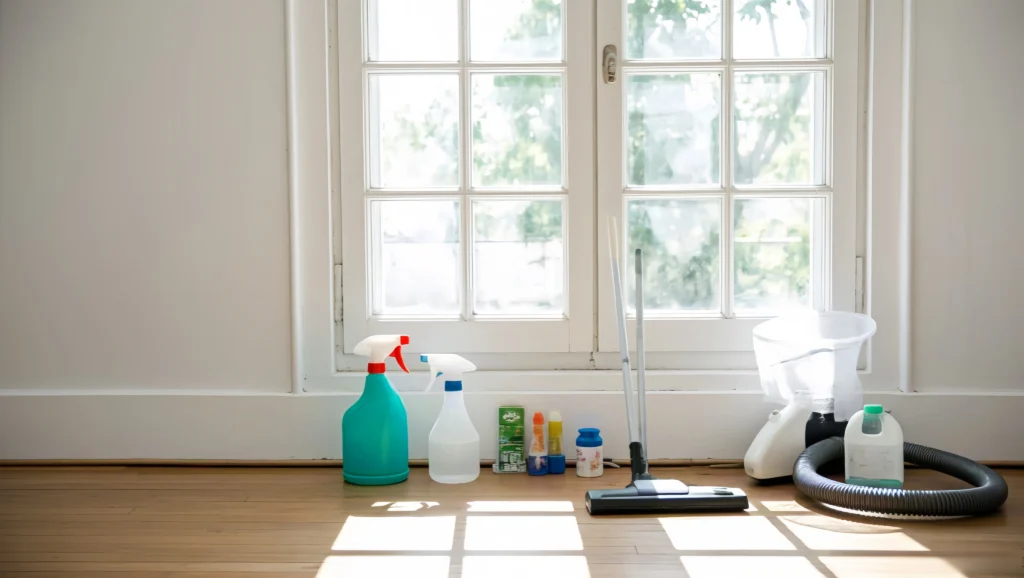
If you’ve already seen stink bugs indoors, it’s worth setting up traps like sticky boards or insect traps. Place them in areas where stink bugs are most active—corners, near windows, and along walls. These traps will help capture any bugs already inside and support ongoing stink bug control.
Soapy water is another simple but highly effective tool. Mix dish soap with water in a spray bottle and apply it directly to stink bugs. The soapy film traps them, making escape impossible.
Finally, don’t forget a vacuum cleaner. Use it to remove trapped or dead stink bugs, as well as any remaining eggs or body parts. Vacuuming thoroughly ensures no eggs are left behind to hatch and cause a future stink bug infestation.
Step-by-Step Guide: How to Get Rid of Stink Bugs
To effectively control stink bugs and truly learn how to get rid of stink bugs in your home, make sure every part of your space is properly protected and cleaned. Follow these five simple steps to tackle the problem systematically.
Step 1: Check Common Entry Points
Stink bugs often slip through door gaps, window cracks, and small openings in walls, even gaps around the foundation. The first step is to inspect your home for any leaks or gaps.
Walk through every room, carefully checking the door and window frames for visible openings. This is particularly important in older homes, where weatherstripping may have worn out over time, leaving a gap large enough for bugs to squeeze through.
Use weatherstripping to seal these gaps effectively. You can buy peel-and-stick weatherstripping for doors and windows—simply clean the surface and stick it on for an immediate improvement.
For larger gaps, install insect screens, which can be fitted over windows or vents. These screens keep stink bugs out while still allowing air to flow, so your home remains ventilated. Ensure that the weatherstripping and screens cover every gap to leave no openings. This will stop stink bugs before they even get inside.
Step 2: Use a Non-Toxic Natural Spray
A natural, non-toxic spray is another essential tool for dealing with stink bugs if you want to get rid of stink bugs naturally. Compared to heavy-duty chemical sprays, natural formulas are much safer for your family and pets, while still being effective.
Look for sprays made with essential oils like eucalyptus or peppermint, as these oils repel stink bugs and often leave behind a pleasant scent.
When using a natural spray, apply it to areas where stink bugs frequently appear: window sills, door frames, baseboards, corners, and around light fixtures. Don’t forget to reach into hidden areas where bugs might be hiding.
If you spot a stink bug, spray it directly for quick results. Many natural sprays will either kill the bug or cause it to flee. Additionally, these sprays leave a protective barrier that helps with ongoing stink bug control and prevents more bugs from entering.
Here’s a quick comparison of some popular natural insect sprays available:
- Eco Defense Organic Insect Spray – Eucalyptus, peppermint oils – Non-toxic, safe for indoor and outdoor use – $10–$15
- Wondercide Flea, Tick, and Mosquito Spray – Peppermint oil, citrus oils – Effective on stink bugs, pet- and family-safe – $12–$20
- Bug Soother Insect Repellent – Vanilla, lemon, peppermint – Plant-based, pleasant scent, great for home use – $8–$12
These sprays are effective, plant-based, and safe for use around children and pets. You can also find real-world experiences from homeowners in threads like this discussion on r/pestcontrol on Reddit, where people share what has and hasn’t worked for them.
Step 3: Use Soapy Water to Catch Stink Bugs
For a simple, budget-friendly solution, a soapy water bottle works wonders. The soap breaks the surface tension and traps the stink bug, preventing it from moving or escaping.
Fill a spray bottle with water, add a squirt of dish soap, and shake gently to mix. Spray directly onto stink bugs, and they’ll be immobilized within seconds.
You can also spray it along baseboards, window sills, or other hotspots to create a “catch zone” for wandering bugs. This method is non-toxic, inexpensive, and reusable, making it an excellent everyday solution for families looking for safe pest control options.
Step 4: Use Traps and Sticky Boards
If stink bugs are becoming a persistent issue, consider using traps and sticky boards. Sticky boards are especially good at catching bugs hiding in corners, behind furniture, or along walls. Traps, which often use attractants or lights, can draw stink bugs in and hold them.
The key to effectiveness is placement. Position traps near windows, doors, and kitchen corners where stink bugs are most likely to enter.
Check the traps regularly and dispose of the bugs to keep them functioning properly and maintain consistent stink bug control.
Step 5: Thoroughly Clean Up Stink Bugs and Eggs
Once you’ve trapped or killed stink bugs, don’t forget to clean up the remains. A vacuum cleaner is the easiest way to remove dead bugs and eggs. It’s also effective at cleaning any bits of the bugs left behind that might attract more.
Pay close attention to hidden areas like curtain folds, couch seams, under beds, and around baseboards—classic hiding spots for stink bugs.
After vacuuming, immediately seal the vacuum bag or empty the canister into a trash bag and take it outside to avoid any potential reinfestation.
Common Mistakes and How to Fix Them
Mistake #1: Relying on Harsh Chemical Sprays
While chemical sprays can kill stink bugs fast, they leave behind harmful residues on surfaces, which can be dangerous for kids or pets. These chemicals can also linger in the air, affecting your health.
Fix: Choose safer, natural alternatives like eucalyptus or peppermint oil sprays. These are effective at repelling and killing stink bugs without the harmful side effects of chemicals.
Mistake #2: Ignoring Entry Points and Hiding Spots
Many people think the job is done once they kill the bugs they see. But stink bugs often sneak in through cracks or gaps in walls and windows.
If you don’t seal up these entry points, new stink bugs will continue to invade, and you’ll never truly learn how to get rid of stink bugs for the long term.
Fix: Don’t just kill the bugs you see—seal up all potential entry points and hiding spots. Use weatherstripping, insect screens, and sealant to close gaps around doors, windows, and other openings.
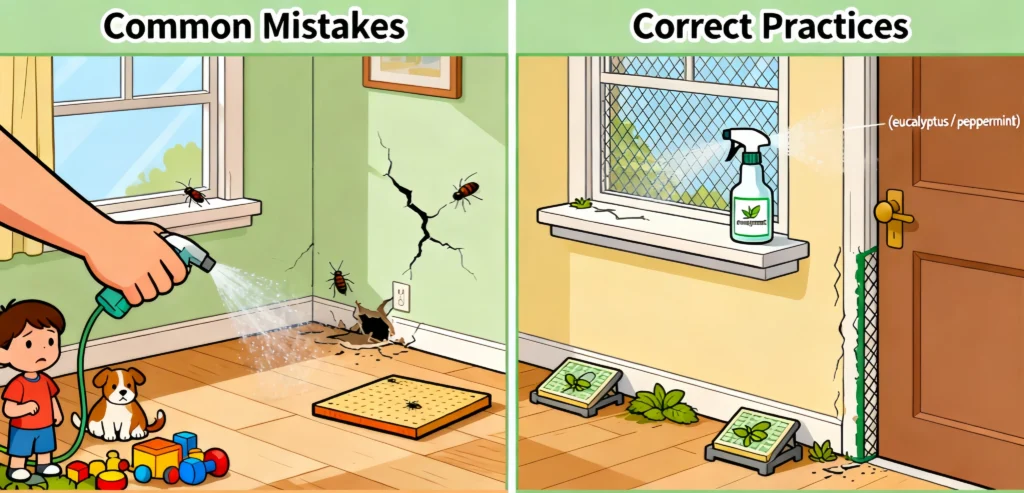
Mistake #3: Using Traps or Sprays Incorrectly
Using traps or sprays in the wrong areas or incorrectly can result in poor performance. For example, placing sticky boards too far from where stink bugs travel or spraying only in open spaces can leave many bugs unaffected.
Fix: Place traps in high-traffic areas and spray hidden spots where stink bugs may be hiding. Make sure to cover all areas, not just the visible ones, for the best results.
Seasonal Strategies and Situation-Based Solutions
Spring and Summer:
Stink bugs become more active in spring and early summer. This is the best time to focus on prevention by cleaning up your yard, removing debris, and trimming overgrown plants. This makes your home less inviting to them and supports long-term stink bug prevention.
Fall and Winter:
During these colder months, stink bugs seek warmth indoors. Make sure to seal gaps around doors, windows, and cracks in walls to prevent them from entering and to reduce indoor stink bugs before they settle in for the season.
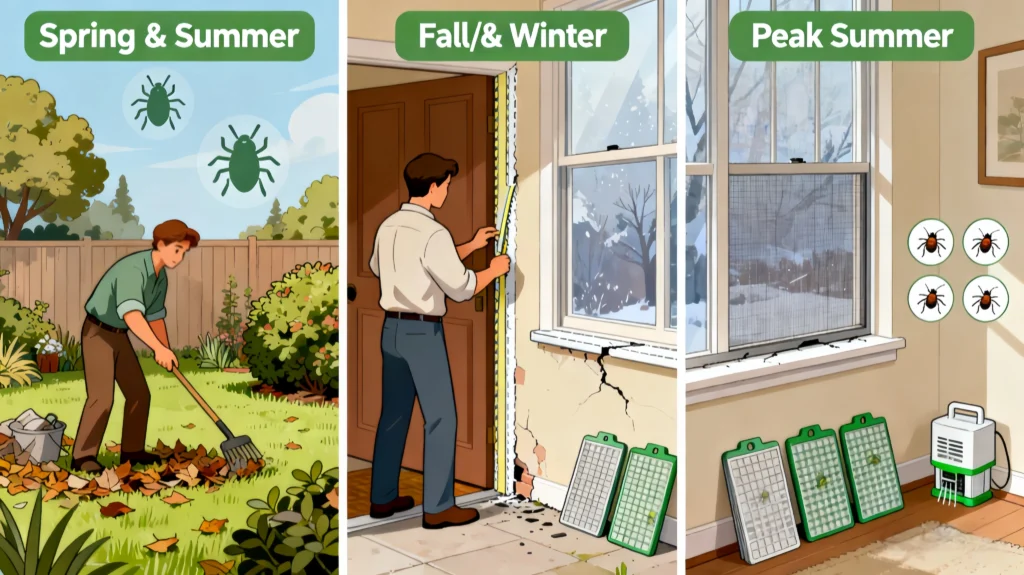
Peak Summer:
Summer is a prime breeding season for stink bugs. Increase your use of traps and sticky boards to keep their numbers in check and avoid a larger stink bug infestation later in the year.
If you’re also dealing with other common pests, you may find this guide on how to get rid of spiders helpful for building a broader, safe pest control strategy at home.
Conclusion
In this guide, we’ve covered how to get rid of stink bugs using nine effective and safe methods that are especially family-friendly. From natural sprays to traps, sticky boards, and sealing entry points, each approach helps you keep stink bugs at bay without resorting to harsh chemicals.
Whether you have kids, pets, or allergies, these methods provide peace of mind while protecting your home and giving you practical stink bug control you can rely on. Choose the strategies that fit your situation and start addressing stink bugs before they turn into a bigger problem. With a little preparation, you can enjoy a comfortable, stink-bug-free home all year long.
This article was created by a professional team. AI tools were used during the research and writing process to enhance efficiency and quality. All information has undergone manual verification and editing to ensure accuracy and practicality. We are committed to providing readers with objective and valuable content.
Publisher::meiruth558@gmail.com,Please indicate the source when reposting:https://gardeningtoolsgarden.com/get-rid-of-stink-bugs/
