Getting rid of stink bugs actually means solving two different problems. Indoors, you need to remove the insects and stop new ones from getting in. In the garden, you need to protect tomatoes, peppers, beans, and other vulnerable plants from feeding damage. The fixes overlap, but they aren’t identical.
Quick answer: How do you get rid of stink bugs?
For stink bugs inside your house, gently knock them into a container of soapy water or collect them with a dedicated vacuum, then seal gaps around windows, doors, siding, vents, and utility pipes to keep more from coming in. A desk lamp aimed at a shallow pan of soapy water can catch indoor stragglers if it’s set up safely. For stink bugs on garden plants, identify the species, inspect the undersides of leaves for eggs, handpick pests, and use correctly installed insect netting where pollination allows. Avoid crushing the bugs or relying on essential-oil sprays.

First, Make Sure They Really Are Stink Bugs
The insect most often found entering U.S. homes in autumn is the brown marmorated stink bug (Halyomorpha halys), usually shortened to BMSB. It is an invasive species, typically about 5/8 inch (17 mm) long, with a broad, shield-shaped body. Not every shield-shaped insect is a BMSB, though, and not every stink bug in a garden is a pest.
Brown Marmorated Stink Bug Identification Checklist
- Body: mottled or marbled brown, with a shield-like outline.
- Antennae: alternating light and dark bands, particularly near the outer segments.
- Abdomen: alternating light and dark patches along the exposed outer edge.
- Shoulders: relatively smooth and rounded compared with some native look-alikes.
- Season and location: adults may cluster on the sunny outside walls of buildings as autumn approaches.
Don’t go by color alone. Some native stink bugs closely resemble BMSB, and one look-alike matters in particular: the spined soldier bug, a beneficial predator that eats caterpillars and other garden pests. If you’re unsure what you have, compare it with the StopBMSB identification guide before you destroy it.
Where to verify: University of Minnesota Extension’s brown marmorated stink bug guide.
House Stink Bugs vs. Garden Stink Bugs: Why Location Matters
| What you see | What it usually means | Best next step |
|---|---|---|
| Adults on windows in fall or winter | Overwintering adults seeking shelter | Collect them and seal entrances |
| Adults emerging from ceiling lights or trim | Insects already sheltering in building voids | Remove visible adults; inspect interior gaps |
| Adults and young insects on tomatoes or peppers | Active plant feeding or reproduction outdoors | Inspect leaves, fruit, and egg masses |
| Barrel-shaped eggs beneath outdoor leaves | A nearby breeding population | Confirm species before removing eggs |
| Only one or two insects indoors | An occasional nuisance, not necessarily an infestation | Remove and monitor before escalating |
Why Stink Bugs Keep Appearing in Your House
Brown marmorated stink bugs feed and reproduce outdoors during the growing season. In late summer and fall, adults look for sheltered places to spend the winter, and they can get in through gaps around siding, attic vents, door frames, window trim, foundations, and plumbing penetrations. Warm winter days can rouse dormant adults, so they may suddenly show up on windows even though nothing new has come in.
They don’t normally breed indoors, and they don’t damage your house. According to the U.S. Environmental Protection Agency (EPA), overwintering BMSB do not cause structural damage, and they are not known to bite people or pets. The real indoor problems are sheer numbers, their unpleasant defensive odor, and possible sensitivity to their secretions.
There is no universal temperature or calendar date that triggers every invasion. Watch for local cooling trends and for clusters on sun-warmed exterior walls, and seal gaps before the insects move indoors.
7 Stink Bug Removal Methods: Which Ones Work?
Use this comparison before spending money on sprays or gadgets. The most useful methods either deal with the bugs already inside or close the gaps that let more in.
| Method | Best use | Limitation or precaution |
|---|---|---|
| 1. Soapy-water jar | Removing visible bugs indoors or from plants | Keep containers away from children and pets |
| 2. Dedicated vacuum | Collecting many visible indoor adults quickly | Vacuum can retain the odor; empty promptly |
| 3. Caulk, sweeps, and screens | Long-term home prevention | Requires careful inspection of entry points |
| 4. Indoor light-and-water trap | Stragglers in an unoccupied, dark room | Electricity/water and spill hazards require care |
| 5. Handpicking and egg checks | Small vegetable-garden outbreaks | Must be repeated as new insects arrive |
| 6. Insect netting or row covers | Protecting high-value garden crops | May block pollinators and trap heat |
| 7. Labeled, targeted pest treatment | Damaging garden outbreaks when other steps fall short | Results vary; follow the crop and pest label exactly |
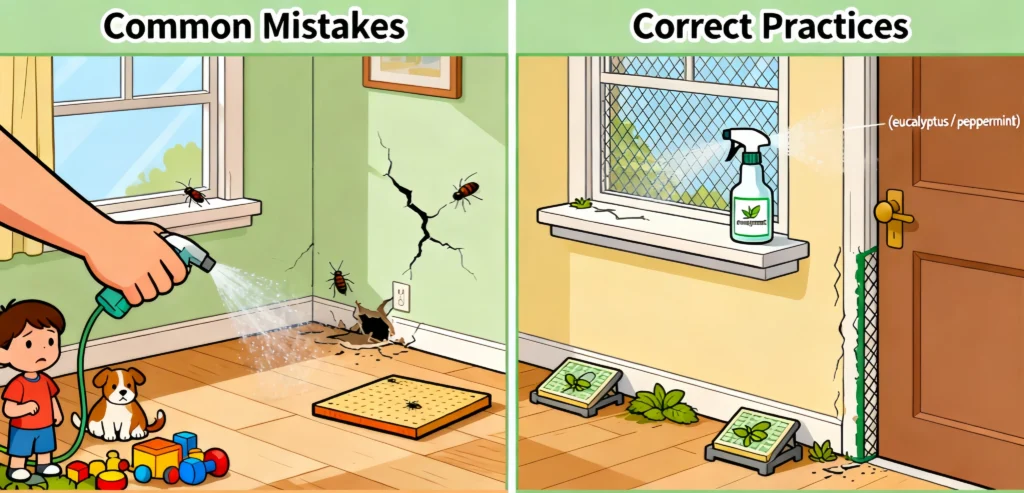
What isn’t a reliable primary solution? Peppermint and eucalyptus scent sprays, ultrasonic devices, indoor bug bombs, and routine spraying into wall voids. None of these replaces physical removal and exclusion, and concentrated essential oils may be hazardous around pets. See the ASPCA’s essential-oil safety guidance.
How to Get Rid of Stink Bugs in Your House: Step by Step
Step 1: Collect Visible Bugs Without Crushing Them
Fill a jar or other stable container with water and a small squirt of dish soap. Hold it beneath the insect and nudge the bug in with a card or brush; stink bugs often drop when disturbed. This avoids the smell and potential staining that come with squashing them.
If you’d rather not touch the bug at all, a cup-and-card method can contain it, but releasing invasive BMSB outside may let it find its way back in. Dispose of collected bugs rather than relocating them next to the house. Avoid spraying dish-soap mixtures broadly onto furniture, pets, or plants.
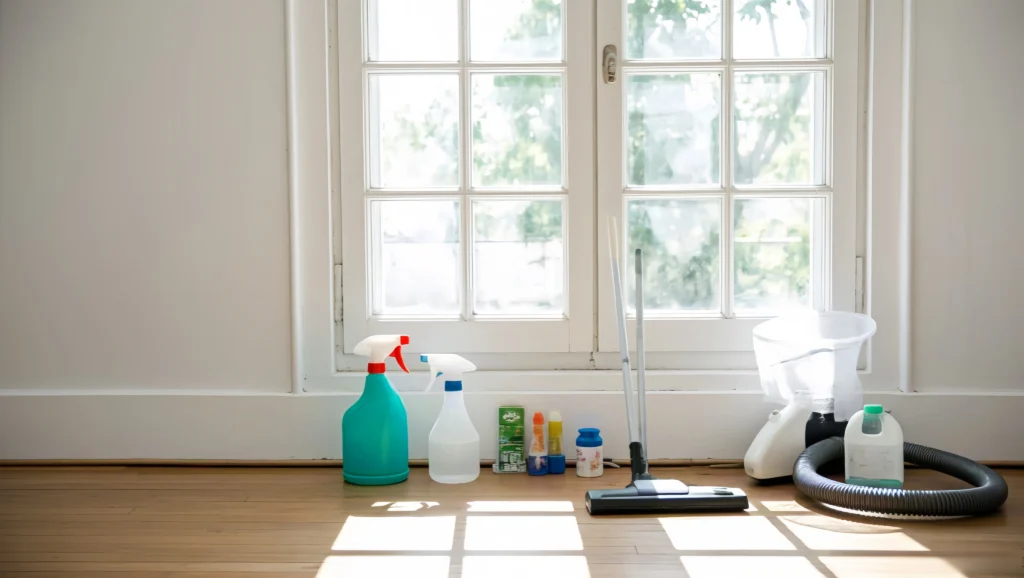
Step 2: Vacuum Clusters and Empty the Machine Promptly
For larger numbers of adults, use a handheld or shop vacuum dedicated to pest cleanup. Focus on window frames, curtain folds, attics you can reach from safe walkways, and gaps beneath trim. The odor can linger in the vacuum, so empty it and seal the debris outside promptly. Never put your hands inside a running vacuum, and don’t reach into electrical fixtures.
Step 3: Try an Indoor Light Trap for Stragglers
Stink bugs can be drawn to a light positioned over soapy water in a dark room. Set out a stable, shallow metal pan of soapy water and aim a securely mounted light into it. Virginia Tech has studied this method, and the EPA also describes it.
Safety first: never let a powered lamp, cable, or outlet touch water. Keep the setup away from children and pets, don’t use an unstable lamp, and skip this trap entirely if you can’t arrange it safely. It can reduce the number of visible adults, but it does not seal the house or eliminate every bug inside the walls.
Step 4: Find the Entry Points
Inspect these areas in daylight, starting where bugs cluster:
- Door sweeps and worn weatherstripping
- Window frames, screens, and cracks around trim
- Gaps around plumbing, cables, and air-conditioning lines
- Siding joints, soffits, fascia, and accessible attic openings
- Foundation cracks and crawlspace openings
Look for daylight at door edges, torn screening, or spaces where trim meets siding. Do not block the intended airflow of vents or cover combustion-air openings. Have a qualified professional inspect roofline gaps you can’t reach safely rather than climbing up yourself.
Step 5: Seal and Screen the Gaps
Install a correctly sized door sweep, replace worn weatherstripping, caulk suitable exterior cracks, and repair screens, using materials suited to the surface and opening. The EPA and Penn State Extension both identify physical exclusion as the primary long-term defense against stink bugs entering homes.
Step 6: Skip Indoor Foggers and Wall-Void Sprays
Spraying into walls or attics is especially unhelpful. Dead bugs may stay out of reach and attract secondary pests such as carpet beetles, and fogging does nothing about the exterior openings. If insects keep coming in by the hundreds, ask a licensed professional about an inspection and any locally approved exterior treatment instead of spraying your living spaces.
Step 7: Monitor for Two Weeks and Repair Missed Gaps
Check the same windows and rooms daily. Record where new sightings turn up rather than keeping a running total of the bugs you’ve removed. If insects keep emerging from the same light fixture or baseboard, the route in may be a nearby wall void, attic space, or exterior opening. That’s a reason to inspect and seal, not to spray more indoors.
What Really Works Naturally Against Stink Bugs?
For this pest, natural control is mainly mechanical: trapping bugs in a jar, vacuuming adults, screening openings, and monitoring your plants. These approaches cut down on pesticide use without relying on an unproven homemade repellent.
Do Peppermint, Eucalyptus, or Vinegar Repel Stink Bugs?
Strong scents are popular online, but there’s little evidence that homemade essential-oil sprays give reliable, long-term protection in a house. Vinegar is a cleaner, not a substitute for sealing gaps in the building. Don’t assume a product is safe for pets just because its ingredients come from plants. The ASPCA warns that concentrated essential oils can cause health problems in cats and dogs, and birds can be especially sensitive to airborne exposure.
Practical recommendation: put your effort into screens, caulk, door sweeps, and removing visible insects first. If you choose a commercial pest-control product, use only one labeled for the intended location and pest, and follow every label restriction.
How to Get Rid of Stink Bugs in the Garden
Outdoors, both adults and nymphs pierce plant tissue to feed, which makes garden stink bugs a different problem from the overwintering guests indoors. Brown marmorated stink bugs and several other plant-feeding species may damage tomatoes, peppers, beans, apples, peaches, and other crops. However, some native stink bugs are beneficial predators, so identify the insect before you treat.
What Does Stink Bug Damage Look Like on Tomatoes and Peppers?
- Pale, yellowish, or cloudy areas just below a tomato’s skin
- Small sunken or corky spots on fruit
- Uneven ripening, distortion, or blemishes
- Adults or wingless nymphs feeding on fruit, stems, or pods
- Groups of pale barrel-shaped eggs on the undersides of leaves
Fruit symptoms alone don’t prove stink bugs are responsible, since sunscald, disease, and other insects can leave similar marks. Check for active insects and eggs before choosing a treatment. The UC IPM stink bug guide for tomatoes covers scouting, biological control, and treatment decisions.
A Five-Step Garden Control Plan
- Confirm the insect. Check adults for banded antennae and compare possible look-alikes. Leave beneficial spined soldier bugs alone once you’ve identified them.
- Inspect twice a week when fruit is developing. Check leaf undersides and the clusters where fruit meets stems for adults, nymphs, and egg masses.
- Remove small populations by hand. Early in the morning, gently knock confirmed pest insects from plants into a container of soapy water. Don’t spray dish detergent across leaves; it can injure foliage.
- Use insect netting where practical. Install fine mesh before insects reach the crop, secure its edges, and keep it from pressing against foliage. Weigh heat buildup and pollination: cucumbers and squash need insect access unless you pollinate them by hand, while tomatoes benefit from air movement for pollen release.
- Escalate only if damage justifies it. Repeated handpicking and physical barriers may be enough for a small garden. For persistent, damaging populations, follow local extension guidance and use only products labeled for both the crop and the insect, taking care to protect pollinators.
For netting specifications and handpicking guidance, see the University of Kentucky’s home-garden BMSB guide and UC IPM’s home landscape recommendations.
Why Insecticides Are Not Always the Best First Step
Outdoor stink bugs are mobile and can recolonize from neighboring vegetation, and broad, indiscriminate sprays can harm predators and other beneficial insects. For a few garden plants, monitoring, identification, egg checks, and barriers are often a more sensible first response. If you also see fine webbing or stippled leaves, a different pest may be involved; our guide to getting rid of spider mites on plants covers that diagnosis and treatment.
For broader pest identification and related plant-problem articles, explore the Pests & Diseases resource hub.
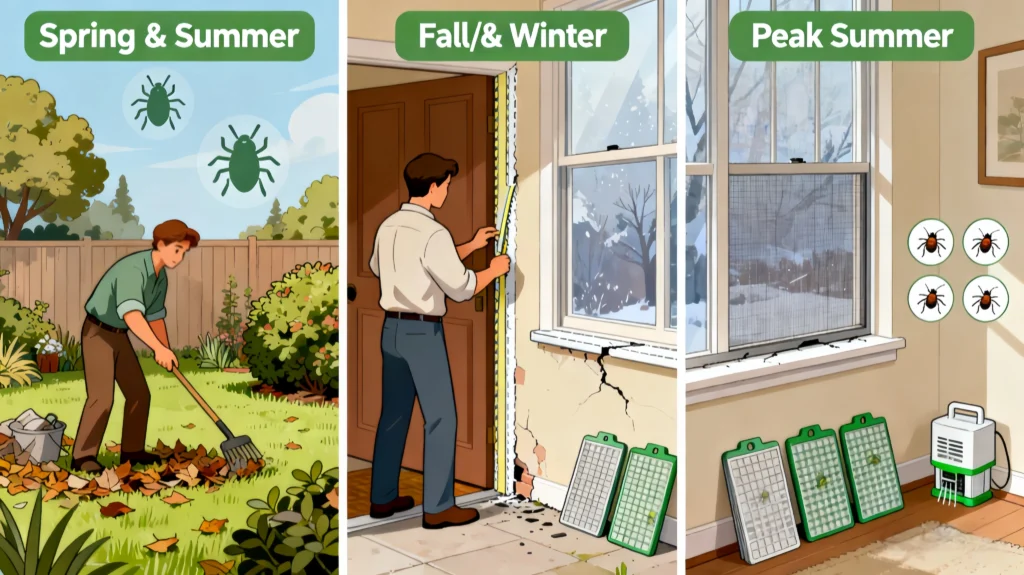
Stink Bug Prevention Calendar: What to Do and When
| Season | House priority | Garden priority |
|---|---|---|
| Spring | Inspect for adults emerging after winter; note gaps | Begin plant scouting as new growth develops |
| Summer | Repair screens, caulk, and weatherstripping before migration | Check leaves, fruit, and egg masses regularly |
| Late summer / fall | Seal entry routes before adults seek shelter | Monitor fruit crops and remove confirmed pests |
| Winter | Collect indoor adults and watch recurring emergence sites | Review next year’s physical barriers and crop protection |
Printable Stink Bug Inspection Checklist
Run through this checklist before buying another spray. Paste the results into notes or a spreadsheet to track repeated entry points.
- ☐ Inspect and repair door sweeps.
- ☐ Check window screens and frame gaps.
- ☐ Inspect pipe, cable, and AC penetrations.
- ☐ Check accessible vents without blocking ventilation.
- ☐ Remove visible indoor adults and record their locations.
- ☐ Check tomato and pepper fruit for feeding marks.
- ☐ Look beneath leaves for eggs and nymphs.
- ☐ Recheck the same areas after several days.
| Date | Location | What I found | Action / result |
|---|---|---|---|
| ________ | ________ | ________ | ________ |
| ________ | ________ | ________ | ________ |
| ________ | ________ | ________ | ________ |
When Should You Call a Pest-Control Professional?
Consider a licensed professional when large numbers of adults keep coming in from wall or attic spaces, sealing what you can reach hasn’t reduced the problem, or the suspected openings are high on the roofline or behind siding. Ask for an inspection and exclusion plan rather than a general indoor fogging service. For significant crop losses outdoors, your local cooperative extension office can help identify the species and review locally appropriate management options.
Watch: Stink Bug Removal and Prevention
This video shows stink bug removal and prevention. If it demonstrates any products, follow the current label instructions for them.
Frequently Asked Questions About Stink Bugs
What is the fastest way to get rid of a stink bug in the house?
Gently knock it into a jar of soapy water or use a dedicated handheld vacuum. That removes the visible insect right away. To keep more from coming in, repair the nearest gaps around windows, doors, and trim.
What kills stink bugs naturally?
A container of soapy water drowns collected stink bugs, and a safely placed light-and-water trap may catch roaming indoor adults. Both remove insects, but neither prevents new ones from coming in unless you also seal the house.
What smell do stink bugs hate?
Peppermint, eucalyptus, and other scents are often promoted as repellents, but homemade scent sprays aren’t well established as reliable long-term control. Essential oils aren’t automatically safe around pets either, so put your effort into exclusion instead.
Why do I have stink bugs in my house in winter?
Adults may have entered in the fall and spent the colder months in protected wall, attic, or trim spaces. Indoor heating or a warm winter day can make them active and visible. Seeing them doesn’t mean they’re reproducing inside.
Do stink bugs lay eggs in your home?
Brown marmorated stink bugs don’t normally reproduce inside buildings. They breed outdoors, laying clusters of eggs on plants during the growing season.
Do stink bugs bite people or pets?
Brown marmorated stink bugs aren’t known to bite people or pets, and they don’t damage a house’s structure. Their defensive secretions can irritate some people, and pets may drool or have digestive upset after mouthing the insects. Contact a veterinarian if symptoms persist or worsen.
Does vinegar get rid of stink bugs?
Vinegar can be useful for general surface cleaning, but it isn’t a proven substitute for collecting the insects and sealing their entry points.
Will stink bugs go away on their own?
Overwintering adults often leave their shelters or die as the seasons change, but doing nothing leaves the same gaps open for next fall’s migration. Remove the insects you see and fix the openings that let them in.
How do I stop stink bugs from eating my tomatoes?
Confirm the species, inspect tomato clusters and leaf undersides, handpick small numbers, and consider fine insect netting if you can manage it without overheating the plants or interfering with flower pollination. If damage is substantial, consult crop-specific extension recommendations.
Do I need to spray pesticides around the outside of my house?
Not automatically. Exclusion comes first. Exterior treatments may give temporary relief in some situations, but consider them only when they’re appropriate, registered for that use, and applied strictly according to the label, ideally after a professional inspection.
Key Takeaways
- For immediate relief: collect stink bugs in soapy water or use a dedicated vacuum; do not crush them.
- For lasting home prevention: seal cracks, repair screens, and install door sweeps before autumn entry.
- For indoor stragglers: a light-over-soapy-water trap may help if it can be arranged safely.
- For garden protection: identify the insect, check eggs and nymphs, handpick pests, and use appropriate netting.
- For household safety: do not equate essential oils with pet safety, and avoid indiscriminate indoor sprays.
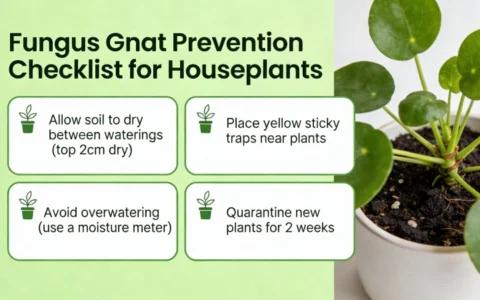
If other insects are getting into your home too, see our guide to getting rid of spiders indoors. For tiny flies breeding in houseplant soil rather than on garden fruit, follow our separate fungus gnat control guide.
Sources and Further Reading
- U.S. EPA — Brown Marmorated Stink Bug: home entry, exclusion, indoor removal, and light traps.
- Penn State Extension — Brown Marmorated Stink Bug: identification, overwintering, and management.
- NC State Extension — BMSB Frequently Asked Questions: indoor removal and limits of indoor pesticides.
- University of Kentucky — BMSB in the Home Garden: netting and handpicking.
- StopBMSB — Look-Alike Insects: distinguish BMSB from beneficial native insects.
- ASPCA — Essential Oils Around Pets: practical safety limitations.
Editorial Note: This article was written and edited by Spring Mei. AI tools may be used to assist with research and organizing information. The final content is reviewed before publication, and important factual claims are checked against reliable sources where appropriate. Personal experience is distinguished from general guidance, and methods are described as personally tested only when they have actually been tested.
Please indicate the source when reposting:https://gardeningtoolsgarden.com/get-rid-of-stink-bugs/
Author: Spring Mei