Updated: October 2026 · Diagnosis steps, treatment options, prevention and plant recovery advice.
How to Get Rid of Fungus Gnats in Houseplants
If tiny black flies keep turning up around your indoor plants, especially after watering, you are probably dealing with fungus gnats.
The most common mistake is treating only the flying adults. They are easy to see, but the real infestation is usually below the soil surface, where larvae feed on fungi, organic matter and sometimes plant roots.
Successful treatment has two parts:
- Step 1: eliminate the larvae in the soil.
- Step 2: remove adult gnats before they lay more eggs.
Fungus Gnats vs Fruit Flies: How to Identify Them
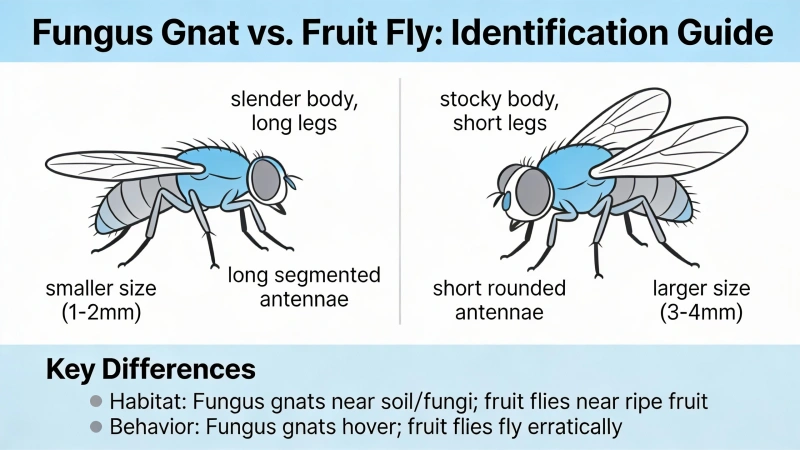
Fungus gnats are often mistaken for fruit flies. They look alike, but they breed in different places and need different treatments.
| Feature | Fungus Gnats | Fruit Flies |
|---|---|---|
| Where they come from | Plant soil | Food scraps and organic waste |
| Where larvae live | Moist potting soil | Rotting fruit or garbage |
| Flying behavior | Hover around plants and soil | Usually around kitchens |
| Best treatment | Soil treatment + adult traps | Remove food source |
Signs Your Houseplants Have Fungus Gnats
Look for these common warning signs:
- Tiny black flies near your plants: especially when you disturb the soil or water.
- Gnats flying around your face: adults are attracted to carbon dioxide.
- Slow plant growth: larvae can damage young roots.
- Yellowing leaves: root damage can look like a watering problem.
- Small white larvae in the soil: check the top inch of potting mix.
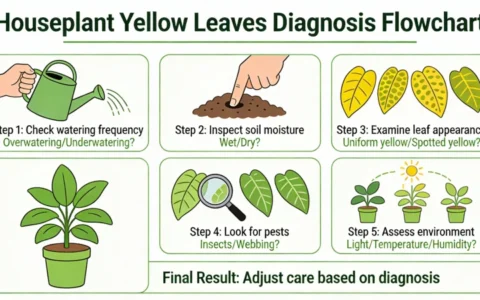
If a plant has yellow leaves and you can’t tell whether insects are the cause, rule out watering, light and nutrient problems first with our guide to why plant leaves turn yellow.
The Potato Test: Confirm Fungus Gnat Larvae
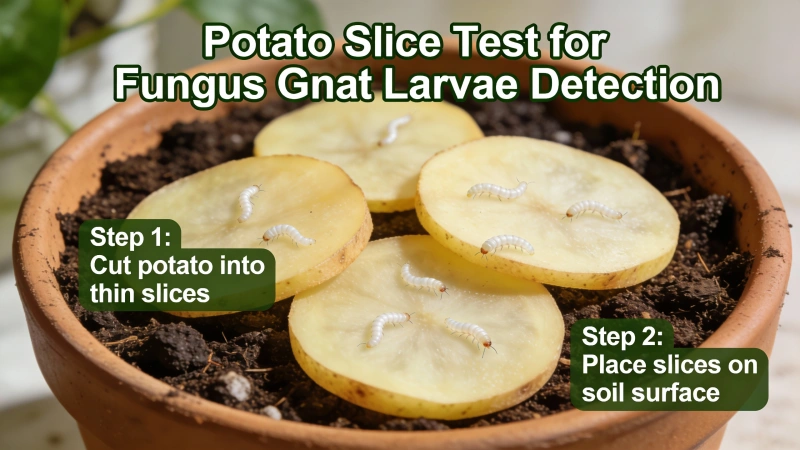
If you’re not sure larvae are present, try this simple test:
- Cut a thin slice of raw potato.
- Place it directly on the soil surface.
- Leave it for several hours or overnight.
- Check underneath for tiny translucent larvae.
If you find larvae, the problem isn’t limited to the adults, and the soil needs treatment too.
Why Common Fungus Gnat Remedies Fail
Many popular remedies cut down the number of flying adults for a while but fail because they ignore the eggs and larvae.
| Method | Why It Often Fails |
|---|---|
| Apple cider vinegar traps | Useful for fruit flies, but fungus gnats are usually not attracted to vinegar. |
| Yellow sticky traps alone | They catch adults but do not kill larvae underground. |
| Only letting soil dry | May reduce activity but does not remove existing larvae. |
| Neem oil spray alone | Does not reliably reach larvae throughout the soil. |
The Best Way to Get Rid of Fungus Gnats: A Two-Step Treatment Plan
The most reliable approach goes after both the larvae in the soil and the adults flying around your home.
Removing only the adults gives temporary relief. Removing only the larvae lets the adults that are already flying keep laying eggs. The goal is to break the whole breeding cycle.
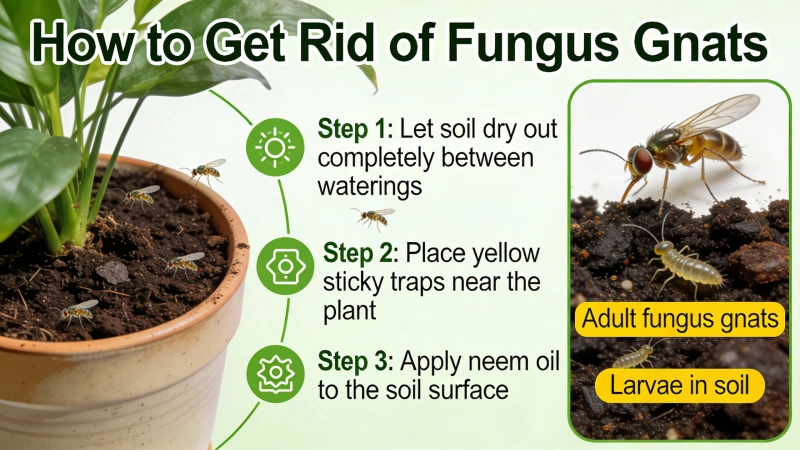
Step 1: Kill Fungus Gnat Larvae with BTI
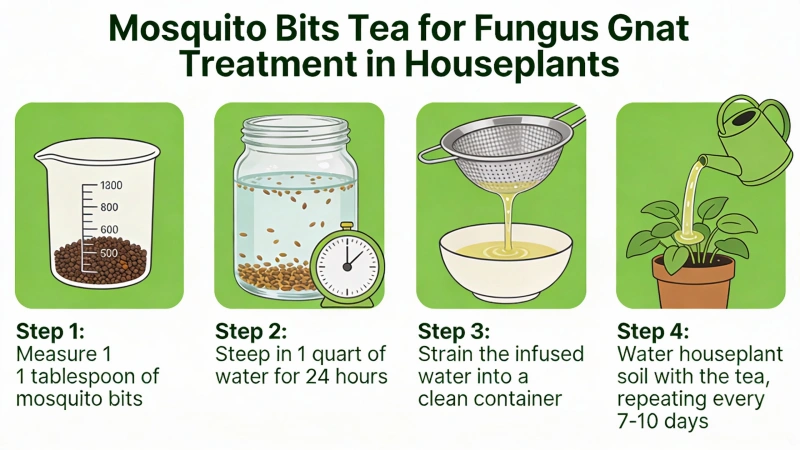
BTI (Bacillus thuringiensis israelensis) is one of the most effective biological treatments for fungus gnat larvae.
Products that contain BTI, such as Mosquito Bits or Mosquito Dunks, target mosquito and fungus gnat larvae specifically and are considered safe for plants when used correctly.
A common method is to make a BTI watering solution:
- Add BTI granules to water according to the product label.
- Let the mixture sit so the active bacteria can release into the water.
- Use the treated water for normal watering.
- Repeat consistently for several weeks.
Repeat applications matter more than a single large dose, because new larvae can hatch after the first treatment.
Step 2: Catch Adult Fungus Gnats with Yellow Sticky Traps
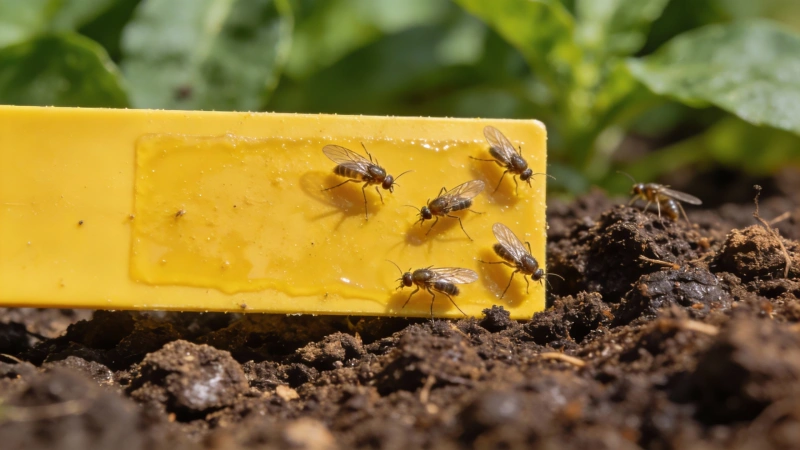
While BTI works in the soil, sticky traps remove adult gnats from the air.
For better results:
- Place traps close to the soil surface.
- Use one trap for each affected plant.
- Replace traps when they become covered with insects or dust.
- Keep using traps even after activity decreases.
Sticky traps help you monitor the population and catch adults, but they can’t reach the larvae.
Optional Step: Add a Soil Barrier
A thin layer of horticultural sand can make the soil surface less attractive for egg laying.
- Use fine sand rather than large decorative stones.
- Keep the layer thin enough that water still drains properly.
- Skip the barrier if it keeps the soil wet longer.
The point isn’t to seal the soil, just to reduce the moist surface where adults lay eggs.
How Long Does It Take to Eliminate Fungus Gnats?
Fungus gnats can’t be cleared overnight, because the life cycle continues inside the soil.
| Time | Expected Results |
|---|---|
| First Week | Sticky traps catch many adult gnats. Activity may appear worse because hidden adults become visible. |
| Weeks 2–3 | Fewer flying adults appear as larvae populations decline. |
| Weeks 4–6 | Most infestations become significantly reduced with consistent treatment. |
| After Elimination | Continue prevention habits to avoid another outbreak. |
What to Do If Fungus Gnats Keep Coming Back
Gnats that keep returning usually mean conditions in the pot still support breeding. Check these common causes:
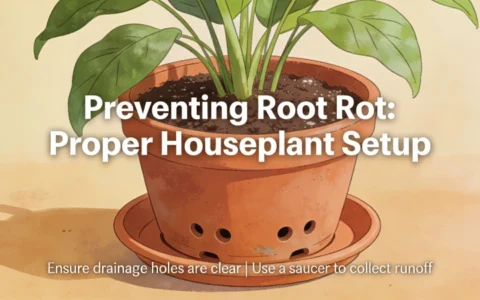
- Soil stays wet too long: improve drainage and adjust watering.
- Plant pots lack drainage holes: excess moisture encourages larvae.
- New plants introduced without quarantine: eggs may already be present.
- Old contaminated soil: larvae can survive in stored potting mix.
Overwatering is one of the biggest reasons fungus gnats appear, and correcting it also lowers the risk of root problems. If your plant has soft roots, yellow leaves or a bad smell coming from the soil, see our root rot treatment guide.
How to Prevent Fungus Gnats From Coming Back
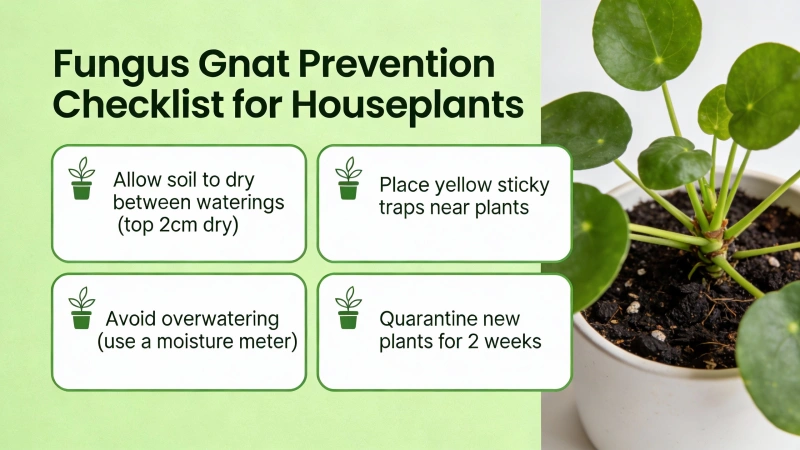
- Let soil partially dry: avoid constantly wet potting mix.
- Water correctly: follow each plant’s watering needs instead of a fixed schedule.
- Quarantine new plants: keep new purchases separate for several weeks.
- Use clean potting soil: avoid questionable outdoor soil indoors.
- Remove dead leaves: decomposing organic matter supports fungus growth.
- Improve drainage: choose suitable pots and soil mixes.
For more on watering, see our guide to houseplant watering schedules.
Soil choice also affects how long moisture lingers. Our soil and fertilizer guide explains how growing media affects moisture control.
Fungus Gnats and Different Houseplants
Plants that prefer consistently moist soil are more likely to develop fungus gnats. Common examples include:
- Peace lilies
- Calatheas
- Prayer plants
- Ferns
- Seedlings and young plants
With moisture-loving plants, the aim is balance: enough water for healthy growth without leaving the soil permanently wet.
Care guides for three of them:
Frequently Asked Questions About Fungus Gnats
How quickly can I get rid of fungus gnats?
Most infestations improve within several weeks when larvae and adults are treated at the same time. BTI soil treatments combined with yellow sticky traps usually show noticeable improvement before the gnats are completely gone.
Why do fungus gnats keep coming back?
They return when breeding conditions remain. The most common causes are constantly wet soil, poor drainage, contaminated potting mix and newly purchased plants carrying eggs.
Can fungus gnats damage my houseplants?
Adult fungus gnats are mainly an annoyance, but larvae in the soil can damage small roots. Heavy infestations may slow growth, cause yellow leaves and stress young plants.
Are fungus gnats harmful to humans?
No. Fungus gnats don’t bite humans and aren’t considered dangerous. The problem is how quickly they can reproduce in indoor plant soil.
Do yellow sticky traps kill fungus gnats completely?
No. Sticky traps remove adult flies but can’t reach larvae below the soil surface. They work best alongside a soil treatment such as BTI.
Can I use hydrogen peroxide for fungus gnats?
A diluted hydrogen peroxide soil drench may kill larvae on contact, but it is less targeted than BTI and may affect beneficial organisms in the soil. It shouldn’t be your only treatment.
Should I throw away soil with fungus gnats?
Not always. Mild infestations can usually be controlled with treatment. Replacing the soil can help when the infestation is heavy or the soil stays wet for too long.
Do fungus gnats live in all houseplant soil?
They can appear in any moist organic potting mix, but they are especially common in plants that are watered frequently or kept in consistently damp soil.
How to Protect Plants After Fungus Gnats Are Gone
Once the gnats are gone, a few habits keep conditions from favoring them again:
- Check soil moisture before watering.
- Avoid watering every plant on the same schedule.
- Remove dead leaves from the soil surface.
- Provide enough light so plants use water efficiently.
- Repot plants growing in compacted soil.
If a plant suffered during the infestation, hold off on fertilizer until normal growth returns.
For more help with pests and plant problems, visit our pests and diseases guide.
What You Need for Fungus Gnat Treatment
| Item | Purpose |
|---|---|
| BTI products (Mosquito Bits/Dunks) | Kills larvae in soil |
| Yellow sticky traps | Captures adult gnats |
| Fresh potting mix | Useful for severe infestations |
| Horticultural sand | Reduces egg-laying areas |
| Moisture meter (optional) | Helps prevent overwatering |
Helpful Video Guide
This video shows how to identify fungus gnats and the main control methods:
Key Takeaways
Remember These Points
- Attack both life stages: kill larvae in the soil and trap adult flies.
- BTI is the foundation: treating the soil is the most important step.
- Sticky traps are support: they remove adults but can’t replace soil treatment.
- Avoid constantly wet soil: moist soil is where fungus gnats breed.
- Be patient: breaking the breeding cycle takes several weeks.
- Prevent recurrence: quarantine new plants and keep watering in check.
Fungus gnats are one of the more manageable houseplant pests once you know where they breed, and chasing the adults around the room won’t fix it. Treating the soil, trapping the adults and keeping the mix from staying wet will.
Related pest guides:
Editorial Note: This article was written and edited by Spring Mei. AI tools may be used to assist with research and organizing information. The final content is reviewed before publication, and important factual claims are checked against reliable sources where appropriate. Personal experience is distinguished from general guidance, and methods are described as personally tested only when they have actually been tested.
Please indicate the source when reposting:https://gardeningtoolsgarden.com/how-to-get-rid-of-fungus-gnats-in-plants/
Author: Spring Mei