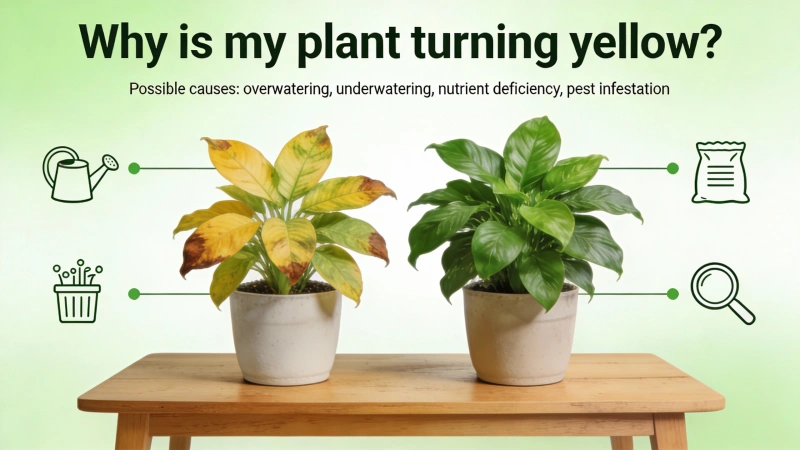
Why are your plant leaves turning yellow? In indoor houseplants, the usual suspects are waterlogged roots, soil that has stayed dry too long, unsuitable light, fertilizer problems, pests, and normal leaf aging. Two plants with identical yellow leaves can need opposite treatment: a thirsty peace lily may need water right away, while a yellowing snake plant in wet soil may need less water and a root inspection.
This guide starts with a repeatable diagnosis instead of guesswork. In a few minutes you can gather the most useful clues, compare nine possible causes, follow a recovery plan, and track whether new leaves improve. It covers potted indoor plants; garden vegetables, trees, and other outdoor plants can have different causes.
How to Diagnose Yellow Leaves on Houseplants in 3 Minutes
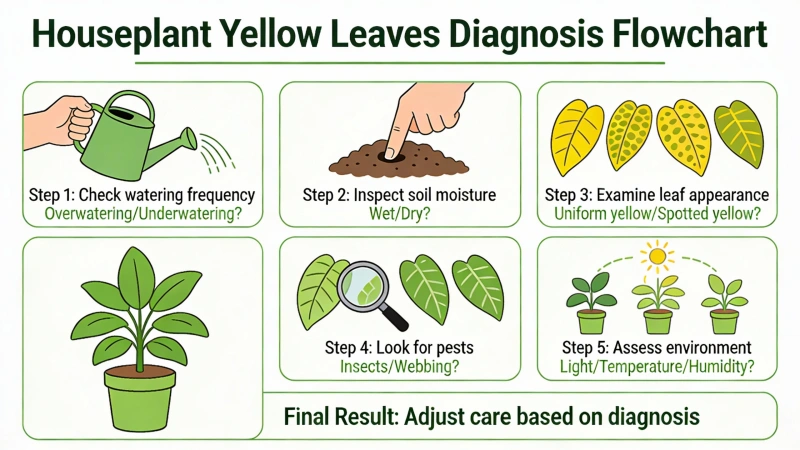
Work through these checks in order. You don’t need a moisture meter or fertilizer yet; a finger, a wooden skewer, your phone camera, and a look under the leaves are enough to get started.
- Check below the soil surface. Feel the top 1–2 inches of mix, then push a clean wooden skewer deeper in larger pots. Damp soil clinging to the skewer means moisture remains below a dry-looking surface. Set the watering threshold for your species instead of applying one rule to every plant.
- Look at the yellowing pattern. Are just one or two bottom leaves affected, or is yellowing spreading through the whole plant? Do new leaves emerge yellow with greener veins?
- Inspect texture and look for pests. Soft leaves, dry crisp edges, bleached patches, fine stippling, webbing, and sticky residue point to different problems. Check leaf undersides and stem joints, not just the tops of the leaves.
- Review the last two weeks. Did you change the window position, water more often, bring the plant indoors, repot, fertilize, or notice cold drafts? The timing can be more revealing than the color alone.
Fast decision guide: choose the condition that matches
These expandable checks work without an app or JavaScript. Open the one that best matches your plant.
The leaves are yellow and the soil is wet
Look for standing water in the cover pot or saucer. If the plant is wilting despite wet soil, the base is soft, or there’s a sour smell, check the roots for loss of firmness. Improve drainage, and don’t water again just because the leaves droop. If you find damaged roots, see the root rot treatment steps.
The leaves are yellow and the potting mix is very dry
Find out whether the whole root ball is dry or only the surface. If that fits the plant’s needs, water thoroughly and let the excess drain. If water races straight through, the mix may have shrunk or become hard to rewet; soak the nursery pot briefly, then drain it. Avoid repeatedly letting the plant go bone-dry.
The newest leaves are yellow but the veins stay green
This pattern is called interveinal chlorosis. Iron or manganese availability may be involved, but root damage, unsuitable pH, and other stresses can look similar. Check root health and the potting mix before adding an iron supplement.
There are tiny yellow dots, webbing or sticky areas
Inspect both sides of each leaf and the joints where leaves meet stems. Spider mites, scale, and mealybugs can cause discoloration. Isolate the plant while you identify the pest. Start with physical removal, then consider a product labeled for that pest and plant.
Only one or two of the oldest leaves are yellow
If the plant is putting out healthy new growth, the rest of the leaves look normal, and watering is appropriate, normal aging may explain it. Photograph the plant and watch for more yellowing before changing anything.
Yellow Leaf Patterns: What They Suggest (and What They Do Not Prove)
| What you observe | Possible explanation | Next diagnostic check | Urgency |
|---|---|---|---|
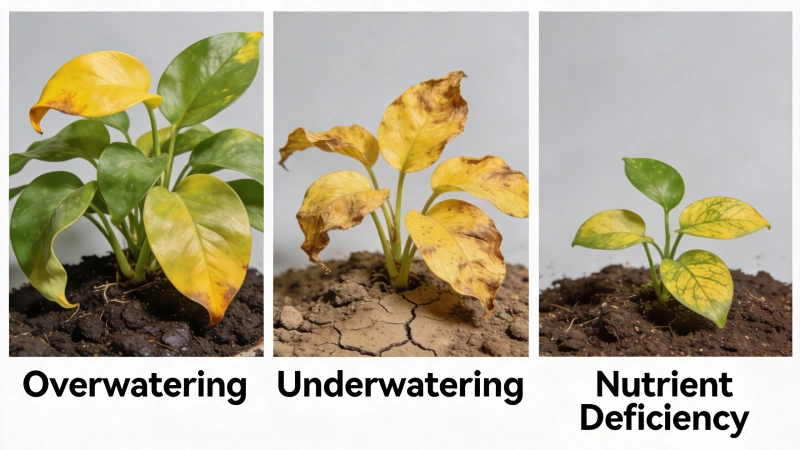
| Yellow, limp leaves; persistently wet soil | Overwatering, poor drainage, root damage | Inspect pot drainage and roots if wilting persists | High if worsening |
| Yellow, curling or crisp leaves; very dry soil | Underwatering, poorly rewetting mix | Check moisture throughout root ball | Moderate |
| One or two oldest lower leaves yellow | Natural leaf aging; sometimes stress | Are newer leaves vigorous and green? | Low if isolated |
| Several older leaves uniformly pale; slow growth | Possible nitrogen shortage or root stress | Review feeding, roots and potting mix | Moderate |
| Young leaves yellow between green veins | Possible iron/manganese availability issue | Check pH context, drainage and roots | Moderate |
| Bleached areas facing direct sun | Sun scorch or rapid light change | Review timing and window exposure | Moderate |
| Yellow stippling, webbing or sticky leaves | Sap-feeding pests | Inspect undersides with magnification | Moderate–high |
| Brown tips and yellowing after feeding | Possible salt buildup or fertilizer injury | Review fertilizer history and white crust | Moderate |
| Yellowing soon after repotting or moving | Acclimation or root disturbance | Check soil and changes over 1–2 weeks | Watch closely |
Keep in mind: a pattern tells you what to investigate, not what’s confirmed. Yellow new leaves don’t automatically mean you should add iron, for example, because roots in compacted or persistently wet soil may be unable to absorb nutrients that are present.
9 Reasons Indoor Plant Leaves Turn Yellow — and How to Fix Each
1. Overwatering or Poor Drainage
Overwatering is less about how much you pour at once and more about how long the roots go without enough air. Heavy, compacted mix, an oversized pot, a cover pot holding water, and frequent watering can all create the same problem. Iowa State University Extension’s houseplant diagnosis guide notes that prolonged wet soil can contribute to yellowing, wilting, leaf drop, and root rot.
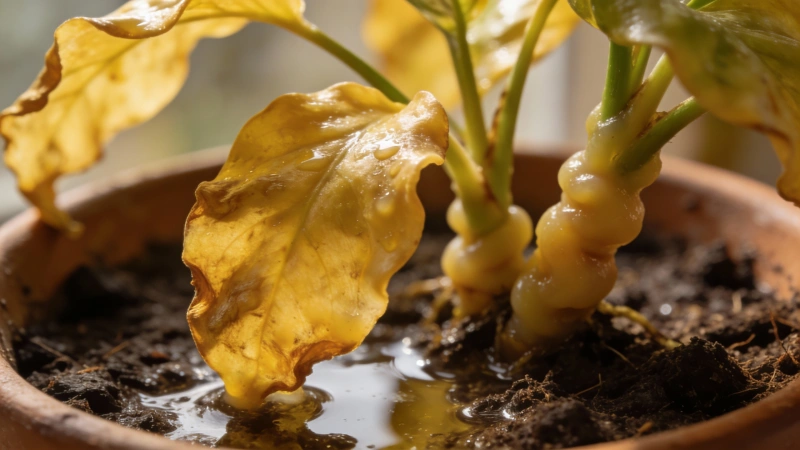
Check: Are the top and deeper layers still damp several days after watering? Is water trapped inside a decorative pot? Does the plant wilt despite wet soil? If the problem is severe, carefully slide out the root ball. Healthy roots vary in color by species but stay firm; rotten roots are often soft, slimy, or collapsing. Color alone doesn’t prove rot.
- Empty standing water from saucers and cover pots.
- Pause watering and see how quickly the mix dries; don’t assume every species should dry out completely.
- Make sure the inner pot has drainage holes and the mix suits the plant.
- If roots are collapsing or smell rotten, remove the affected tissue with clean tools and repot into appropriate fresh mix. The root rot treatment guide walks through the full rescue.
Avoid: fertilizing yellow, waterlogged plants, or watering a wilted plant before checking the soil. Both can make root stress worse.
2. Underwatering, Including Potting Mix That Repels Water
Underwatering causes trouble too. Yellowing may come with drooping, curling, wrinkling, leaf drop, or crisp edges, though the look varies by species. When peat-based potting mix gets extremely dry, it can shrink away from the container and become hard to rewet. Water may run straight out while the center of the root ball stays dry.
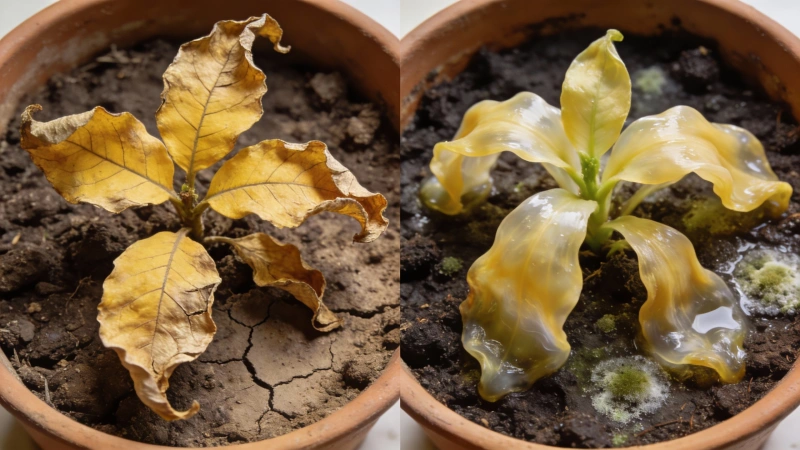
Check: Does a skewer come out dry even near the bottom of the root ball? Is the pot light? Is the mix pulling away from the edge?
- Water slowly and evenly until the mix absorbs moisture and the excess drains.
- If the mix is extremely dry and won’t rewet, set the nursery pot in shallow water briefly, then lift it out and drain it thoroughly.
- Check moisture more often in hot or bright conditions instead of fixing a watering day.
- Adjust to the species: a fern shouldn’t be managed like a drought-tolerant succulent.
If a plant keeps wilting before your next check, the answer may be a better checking routine, a less root-bound pot, or a different mix rather than simply more water.
3. Insufficient Light
Many plants survive in low light without growing well there. Older foliage may fade and drop, new growth may be small, and stems may stretch toward the window. Very low light also slows water use, so the mix stays wet longer, which can add a watering problem to the light problem.
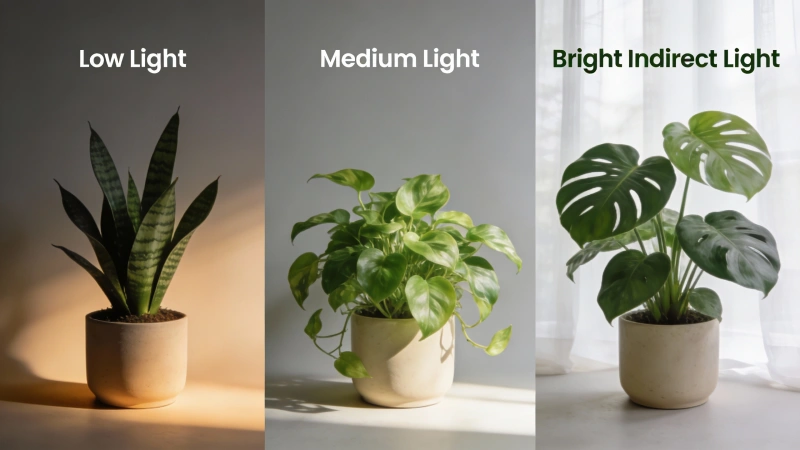
Fix: compare the light your plant gets with what its species needs. Move it gradually to a brighter spot, or add a suitably sized grow light if natural light falls short. Recheck soil moisture after any move, since brighter light often changes water demand.
For two plants with very different needs, compare pothos care with bird of paradise light requirements; they shouldn’t be placed by the same light rule.
4. Excessive Direct Sun and Sudden Light Changes
At the other extreme, plants adapted to filtered light can develop bleached patches, tan or brown scorch, and localized yellow tissue after sudden exposure to harsh sunlight. Damage often shows up on the side facing the window and may follow a recent move.
Fix: move shade-preferring plants out of intense direct rays, using a sheer curtain if appropriate. Introduce stronger light over several days rather than going from a dim room to direct sun overnight. Sun-scorched patches don’t heal, so judge success by whether new damage stops.
Don’t move every yellowing plant to a darker corner, though. Some species need plenty of sun, and the right response depends on the plant and the pattern of damage.
5. Nutrient Deficiency or Nutrients Unavailable to Roots
Plants need a suitable nutrient supply, but foliage color is only a clue. Nitrogen deficiency often shows up first on older foliage. Iron-related chlorosis commonly appears on newer leaves with greener veins. Magnesium deficiency can produce interveinal yellowing on older leaves. University of Maryland Extension’s nutrient symptom reference describes these patterns, though exact symptoms vary among plant types.
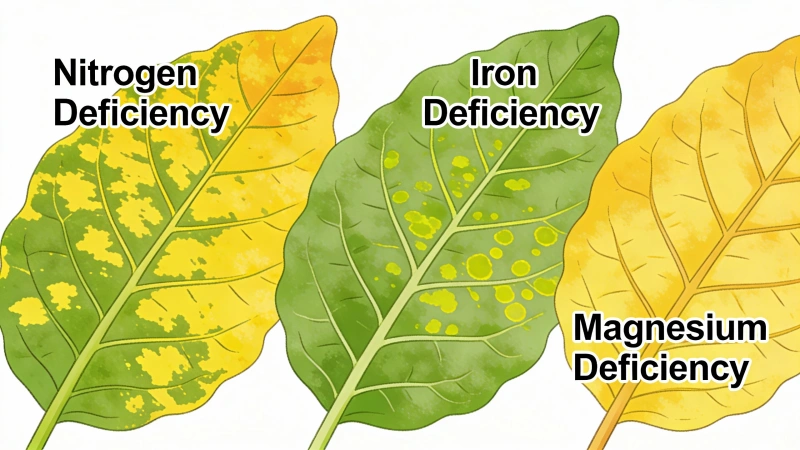
| Potential issue | Typical clue | Rule out first |
|---|---|---|
| Nitrogen limitation | Several older leaves gradually fade, slow growth | Natural aging, root damage, exhausted mix |
| Iron availability problem | Young leaves yellow between greener veins | Unsuitable pH, wet roots, manganese issues |
| Magnesium limitation | Older leaves show interveinal chlorosis | Root or pH problems, natural aging |
Fix: first correct moisture and drainage, then review when the plant was last fed and whether the mix still contains nutrients. If the plant is actively growing and healthy enough to take up nutrients, use a balanced houseplant fertilizer at a conservative rate, following the label. For persistent interveinal chlorosis, testing the pH or the growing mix tells you more than adding iron, magnesium, or Epsom salts at random.
6. Too Much Fertilizer or Mineral Salt Buildup
Overfertilizing can burn roots and contribute to yellowing, brown tips, leaf drop, and wilting. A white or pale crust on the soil surface or pot rim can indicate accumulated salts, though a crust alone doesn’t confirm fertilizer injury. Iowa State University Extension advises reducing fertilizer strength and frequency and feeding mainly while plants are actively growing.
Fix: pause fertilizing while you assess the roots and soil. If the roots are healthy and the pot drains freely, water thoroughly through the mix to help carry soluble salts out, then empty the saucer. For severe buildup or a badly degraded mix, repotting may suit better. Don’t repeatedly flush a waterlogged plant without checking the roots first.
More fertilizer doesn’t necessarily mean greener leaves. Slow-growing houseplants in low light usually need less feeding than plants in active growth.
7. Root-Bound Conditions or Stress After Repotting
When roots fill most of a container, water can run quickly around the root ball, the plant may dry out much faster than expected, and growth may slow. A recently repotted plant may also lose some leaves as it adjusts, especially if roots were damaged or the new pot holds much more water.
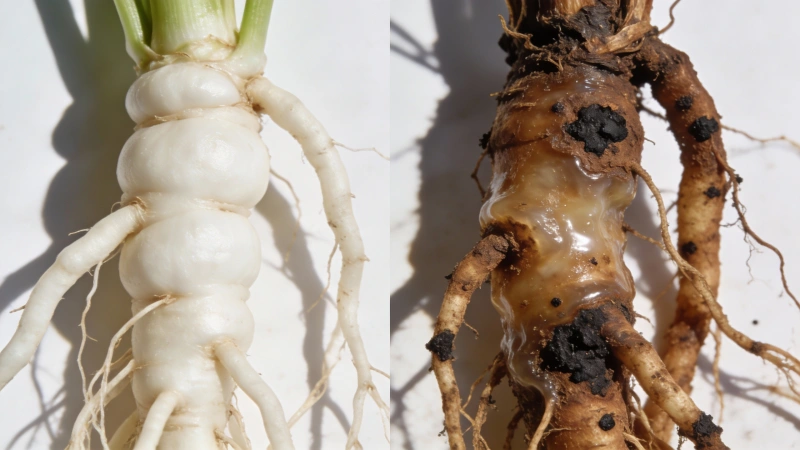
Check: Are roots circling tightly inside the pot? Is the root ball mostly roots with little mix left? Was the plant moved to a much larger container?
Fix: repot only when the evidence suggests it’s necessary, generally into a pot modestly larger than the root mass, with appropriate drainage and mix. Avoid tearing healthy roots apart unnecessarily. After repotting, monitor moisture closely and hold off on fertilizer while the plant stabilizes.
If leaves are yellowing broadly, roots are rotting, or the plant keeps declining, treat it as more than routine transplant adjustment. The dying houseplant recovery guide covers broader emergency assessment.
8. Pests and Leaf Diseases
Spider mites, scale, mealybugs, and other pests remove sap or damage leaf tissue. Symptoms may include pale yellow speckles, sticky surfaces, cottony clusters, webbing, or general weakening. Some fungal or bacterial leaf diseases also cause yellow halos around spots, but appearance alone may not identify the pathogen.
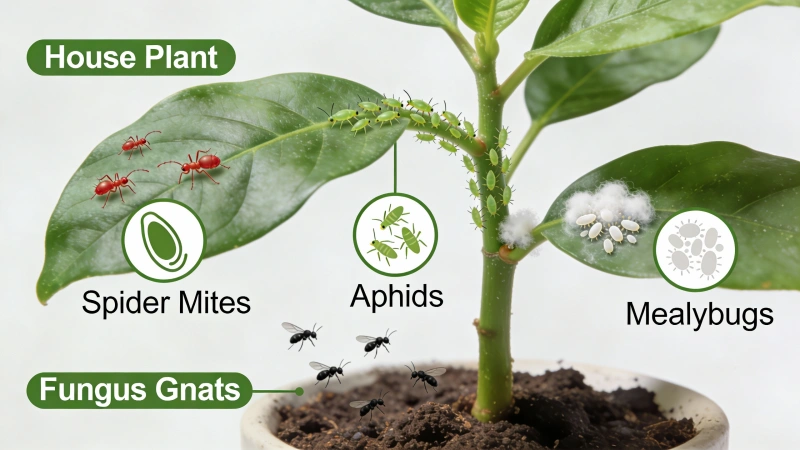
Check: use your phone camera’s magnification or a hand lens to inspect both leaf surfaces and the stems. Gently tapping a leaf over white paper can help you spot spider mites. If the leaves are yellow but you see no pests or feeding marks, don’t assume an infestation.
- Move the affected plant away from other houseplants while you investigate.
- Rinse or physically remove pests where that suits the species.
- If you need a product, choose a commercially formulated treatment labeled for the specific pest, plant, and indoor use, and follow its directions. Test for plant sensitivity as directed.
- Keep checking new growth and leaf undersides to confirm the problem is under control.
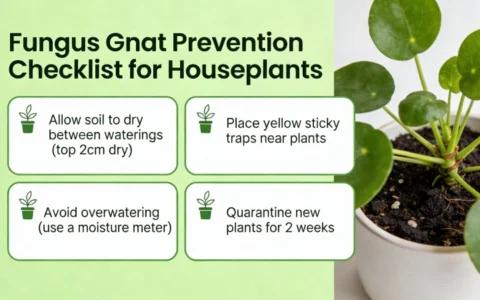
For pest identification and species-specific treatment, see our spider mite control guide or fungus gnat guide. Fungus gnats often indicate moist potting mix, but adult flies alone don’t prove they caused the leaf yellowing. The University of Minnesota Extension’s indoor-pest reference has more identification help.
Avoid homemade dish-soap insecticides. Household detergents can injure foliage, and an improvised mixture is no substitute for a labeled horticultural product.
9. Temperature Stress, Seasonal Changes and Acclimation
Cold drafts, hot vents, sudden moves, and seasonal drops in light can trigger yellowing or leaf drop. Species vary widely in temperature tolerance, so no single temperature range can serve as a diagnosis. Plants brought inside after a summer outdoors may also shed some leaves as their light environment changes.
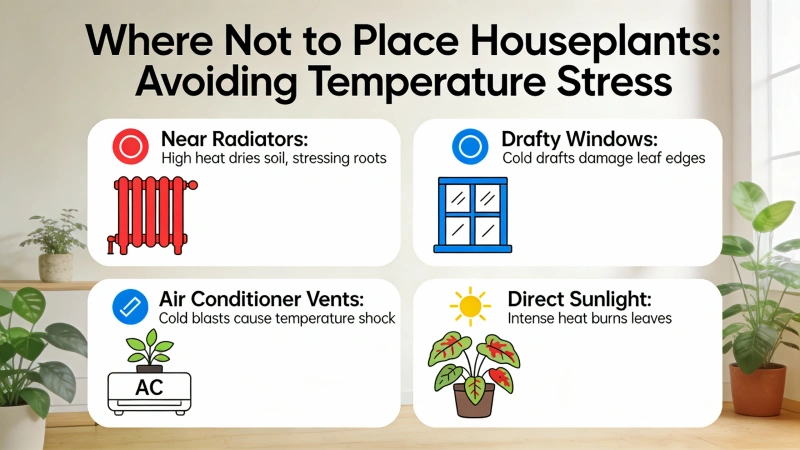
Fix: move the plant out of the direct airflow of heaters and air conditioners. Keep lighting and care as consistent as possible while it acclimates, but keep checking moisture, since a plant in a cooler, darker room generally uses water more slowly. If widespread yellowing began after sudden chilling, look at the growing point and roots for further damage rather than waiting indefinitely.
Is It Just Natural Aging? When a Yellow Leaf Is Normal
A plant sheds old leaves as it grows. Normal aging is a plausible explanation when only one or two of the lowest leaves turn yellow, the rest of the plant is firm and healthy, and new leaves are developing normally. It’s less reassuring when several leaves yellow quickly, new leaves come in distorted, or the stem base turns soft.
Natural yellowing also isn’t the same as the cream or yellow pattern of a variegated plant. A golden pothos’s stable variegation, for example, isn’t an illness. Compare any new patches with older healthy leaves of the same variety.
What to do: photograph the change, confirm that basic conditions are suitable, and avoid unnecessary repotting or fertilizing. A completely spent leaf can be trimmed off with clean scissors, but green or partly green tissue still contributes to the plant. Removing yellow leaves doesn’t fix the cause.
Yellow Leaves Emergency Plan: What to Do in the Next 24 Hours
This order of operations avoids the most common mistake: taking several aggressive actions before you understand the cause.
- Document the symptom. Take a photo in even light of the whole plant and one close-up of the affected leaves. Note whether new or old foliage is involved.
- Inspect moisture and drainage. Check root-zone moisture, the drainage holes, and the cover pot. Water only if your plant’s actual moisture needs call for it.
- Escalate if there are warning signs. A mushy stem base, collapsing roots, foul-smelling mix, or rapidly spreading leaf loss calls for a prompt root inspection. Don’t wait out an arbitrary number of days.
- Check for pests. Inspect leaf undersides and separate suspect plants from healthy ones.
- Correct the strongest evidence-based problem first. Usually that’s a drainage, moisture, light, or exposure issue. Avoid applying fertilizer, pesticide, and a repot all at once.
- Reassess using new growth and the rate of new yellowing. Old damaged leaves may stay yellow even after the plant is recovering.
Yellow Leaves by Plant Type: The Same Symptom Can Need a Different Fix
The biggest limitation of generic yellow-leaf advice is that plants differ in their water and light needs. Use this chart as a starting point, then follow the species-specific guide.
| Plant | Common confusion | Best first check | Related guide |
|---|---|---|---|
| Snake plant | Yellow, soft base can suggest wet-root damage | Check lower stem and deep soil moisture | Snake plant yellow leaves |
| Peace lily | Wet-root stress and thirst can both cause drooping | Check soil before assuming it needs a drink | Peace lily drooping causes |
| Pothos | Normal older leaf drop versus root/watering stress | Look for pattern and inspect mix | Pothos growing conditions |
| Jade / other succulents | Soft yellow leaves versus wrinkled dehydration | Check drainage and how much of the mix has dried | Succulent care guide |
| Calathea / prayer plant | Inconsistent moisture, temperature or light | Inspect moisture and environmental changes | Calathea care |
For the wider collection of care articles, browse Plant Care Guides. If your plant has several overlapping symptoms and you’re not sure where to begin, the Plant Problems & Solutions hub brings together our pest, rot, and recovery content.
How Long Does It Take for Yellowing to Stop?
No recovery deadline fits every plant. A mildly thirsty plant with functional roots may regain firmness fairly quickly after watering, while a plant recovering from major root damage may need weeks or longer to produce healthy new growth. Light and nutrition corrections can also take time to show in new foliage.
- Measure the rate of new yellowing. Are fewer additional leaves yellowing each week?
- Look at new leaves. Do they emerge with more normal color, size, and firmness?
- Watch the roots and stems. Are they stable and firm rather than deteriorating?
- Don’t judge success only by existing yellow leaves. A badly yellowed leaf often won’t turn uniformly green again; improvement may show in the foliage the plant produces afterward.
Since every plant and environment differs, track observable changes rather than relying on promises like “all plants recover within 14 days.”
14-Day Yellow Leaves Recovery Log (Copy or Print)
On day 1, count or estimate how many leaves are yellow and take a photo. Recheck at regular intervals, and record your moisture reading or observation before you water.
| Check date | Soil / pot condition | New yellow leaves? | Action taken | New growth / notes |
|---|---|---|---|---|
| Day 1 | ________________ | ________ | ________________ | ________________ |
| Day 3 | ________________ | ________ | ________________ | ________________ |
| Day 7 | ________________ | ________ | ________________ | ________________ |
| Day 10 | ________________ | ________ | ________________ | ________________ |
| Day 14 | ________________ | ________ | ________________ | ________________ |
What the log tells you: if yellowing is continuing or accelerating, revisit your diagnosis. If it has slowed but older leaves remain discolored, look at new growth before taking further action. Keep logging past 14 days if needed; the table is a monitoring template, not a recovery guarantee.
Weekly Prevention Checklist for Houseplant Yellow Leaves
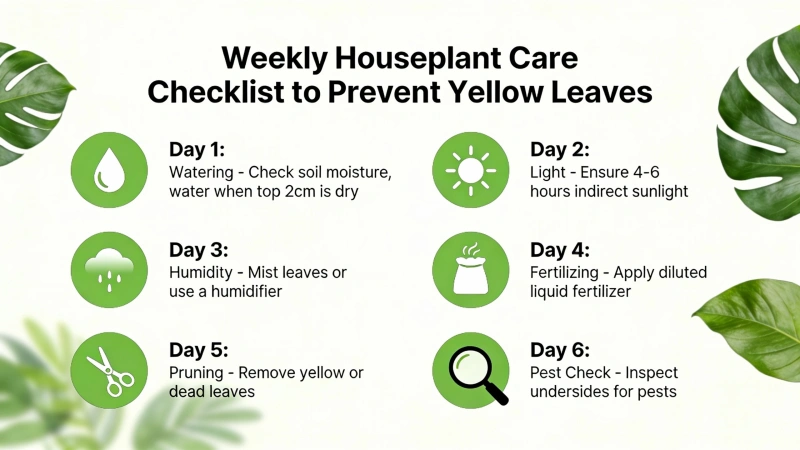
- Check each pot’s root-zone moisture, not just the day of the week.
- Look for newly yellow leaves and note whether they are older or newer.
- Inspect leaf undersides for early signs of pests.
- Empty standing water from cover pots and saucers.
- Watch for seasonal light changes and direct heating or cooling drafts.
- Feed according to the species, the product label, and active growth, not just to treat every yellow leaf.
- Photograph plants with recurring symptoms so you can compare new growth over time.
Frequently Asked Questions About Yellow Plant Leaves
Why are the bottom leaves on my plant turning yellow?
One or two of the oldest leaves yellowing while the rest of the plant stays healthy may be normal aging. If several lower leaves yellow at once, check root-zone moisture, root condition, and feeding history. Lower-leaf yellowing alone doesn’t confirm nitrogen deficiency.
Why are my plant’s leaves yellow even though I water it?
Watering regularly doesn’t prove the roots can use that water. The mix may stay too wet, may dry out between waterings, or may be hard to rewet. Check moisture at root depth and inspect the pot’s drainage before adding more.
Can overwatering and underwatering both cause yellow leaves?
Yes. Both stresses can interrupt normal leaf function. Soil and root condition help tell them apart: persistently wet soil with wilting suggests a drainage or root problem, while a dry root ball suggests the plant isn’t getting enough water.
Why are my new leaves yellow with green veins?
This is often called interveinal chlorosis. Iron or manganese availability may be involved, but potting-mix pH, waterlogging, and unhealthy roots can cause similar symptoms. Check growing conditions and consider testing before adding supplements.
Should I cut off yellow leaves?
You can remove a completely yellow or dead leaf with clean scissors for looks or hygiene. Don’t remove large amounts of still-green foliage just because the plant is stressed. Cutting leaves doesn’t treat the underlying cause.
Can a yellow leaf turn green again?
Severely yellowed or dying tissue usually won’t regain its original color. Some mild discoloration may improve if the cause is corrected early, but the most reliable sign of recovery is healthy new growth and fewer additional yellow leaves.
Why are my plant leaves turning yellow after repotting?
Possible reasons include root disturbance, a change in potting mix, a much larger pot that stays wet longer, or a change in light. Check the soil and watch the trend over time. Persistent wilting with wet soil, a soft base, or spreading yellowing needs more investigation than simply calling it transplant shock.
Why are yellow spots appearing on my houseplant leaves?
Tiny dots may point to sap-feeding pest damage, while larger localized patches can reflect sunburn, leaf-spot disease, or physical injury. Inspect both sides of the leaf, note whether the spots have dark centers or yellow halos, and check nearby plants for similar symptoms.
Does a plant with yellow leaves need fertilizer?
Not necessarily. Yellow leaves often come from moisture, light, or root problems, and fertilizing damaged roots or an already overfertilized plant can make things worse. Investigate growing conditions first, then feed only when there’s a reasonable basis for it.
Final Takeaway: Diagnose Before You Treat
Yellow leaves aren’t a single disease. Start with the root zone, compare old and new foliage, check light and pests, and think about recent changes in care. Avoid changing everything at once: a specific diagnosis, one appropriate intervention, and a short record of results will serve you better than a generic “yellow leaves fix.”
If your plant is actively deteriorating, see our step-by-step dying plant recovery guide. If you’ve found damaged roots, start with root rot treatment rather than adding more fertilizer or water.
Editorial Note: This article was written and edited by Spring Mei. AI tools may be used to assist with research and organizing information. The final content is reviewed before publication, and important factual claims are checked against reliable sources where appropriate. Personal experience is distinguished from general guidance, and methods are described as personally tested only when they have actually been tested.
Please indicate the source when reposting:https://gardeningtoolsgarden.com/why-is-my-plant-turning-yellow/
Author: Spring Mei