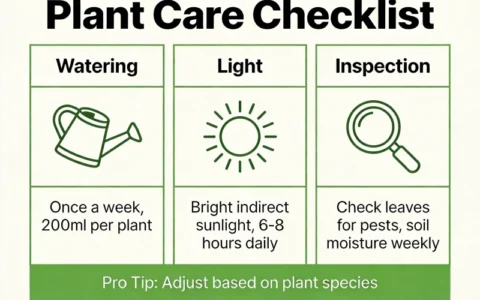
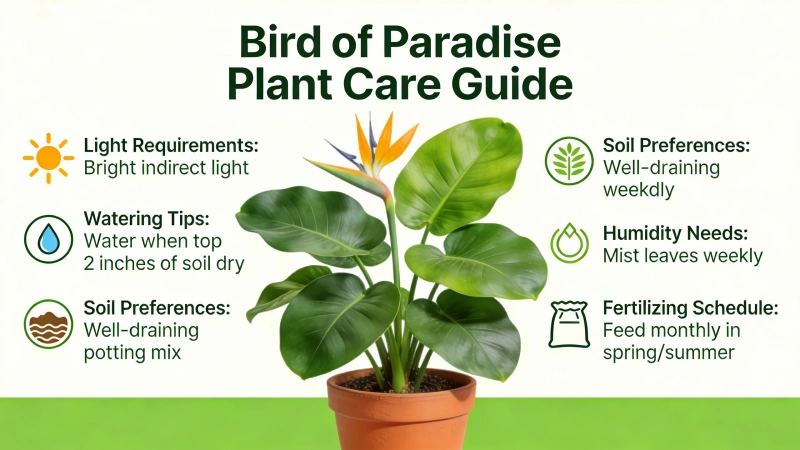
This guide covers both the orange-flowering Strelitzia reginae and the larger white bird of paradise, Strelitzia nicolai. Start with the quick-care chart, then use the symptom checker to find out what your plant needs next.
Bird of Paradise Types: Strelitzia reginae vs. Strelitzia nicolai
These two species share similar basic care, but their mature size and flowers are different. Knowing which one you own also helps set realistic expectations for indoor blooming.
| Feature | Orange bird of paradise | White / giant bird of paradise |
|---|---|---|
| Scientific name | Strelitzia reginae | Strelitzia nicolai |
| Typical look | Smaller, clump-forming habit with relatively narrow leaves | Much larger, banana-like leaves and tall, upright stems |
| Flowers | Orange and blue | White and blue |
| Space planning | Often a better fit for a bright, roomy indoor area | Can outgrow normal rooms; allow considerable height and width |
| Indoor flowering | Possible but dependent on plant maturity and strong light | Uncommon in normal indoor containers |
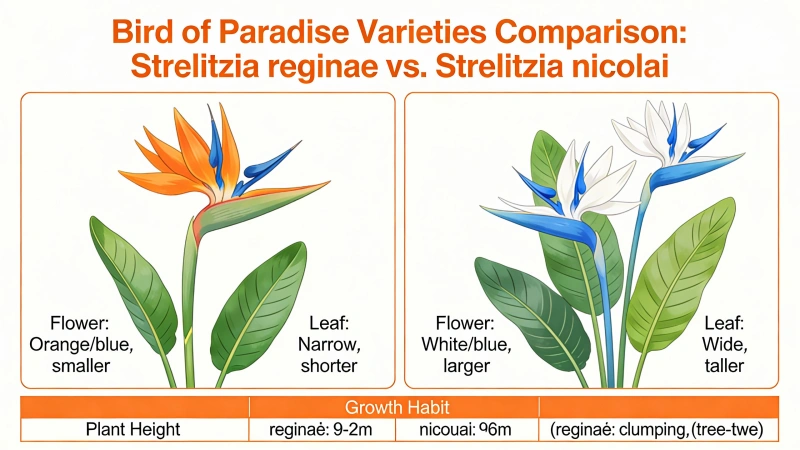
University of Florida IFAS describes S. reginae as a smaller clumping plant and S. nicolai as a much larger species whose foliage can tear in wind. Both originated in southern Africa. For more species-specific indoor guides, browse our houseplant care guides by plant type.
1. How Much Light Does a Bird of Paradise Need Indoors?
Bright light is the single most important placement factor. A bright south-facing window in the Northern Hemisphere is often a good starting point; west-facing windows can also work. An east-facing window may support foliage growth, but flowering is less likely if total light is limited. Window orientation, shading, season, and distance from the glass matter more than the compass direction alone.
How to choose the best spot
- Place the plant close to a bright, unobstructed window, while leaving enough space for leaves to expand.
- If it has been growing in low light, increase direct sun gradually over approximately 1–2 weeks to reduce sunscald risk.
- Observe new leaves: progressively smaller leaves, leaning, or very slow growth may indicate insufficient light.
- In a dark winter room, consider a suitable full-spectrum grow light and follow the fixture maker’s coverage and distance guidance.
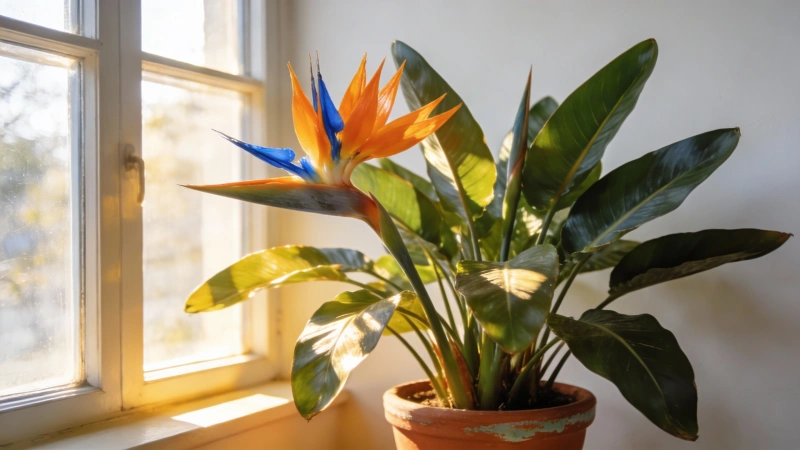
Not sure whether the spot is bright enough? Take a photo of the same plant from the same position every four weeks and compare leaf size, stem lean, and new growth. If your room stays dim most of the day, a more shade-tolerant plant such as a snake plant or dracaena may be a better match.
2. How Often Should You Water a Bird of Paradise?
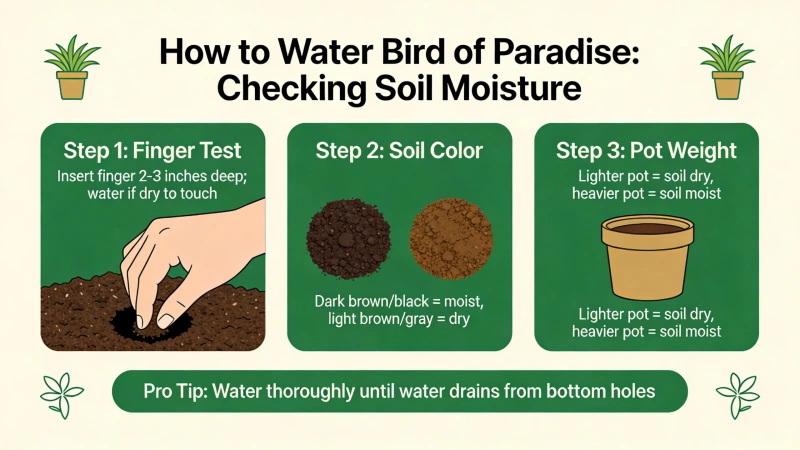
There is no reliable rule that every bird of paradise needs water once a week or every 10 days. Water use changes with the size of the pot, season, temperature, light, root growth, and potting mix. Check the soil before you water.
A practical 3-step watering test
- Feel the soil: for a smaller pot, test the top 1–2 inches. For a large, deep container, also use a clean wooden skewer or probe to see whether the lower root zone is still very wet. If it comes out cool and coated in soggy mix, wait and check again.
- Water the entire root ball: when the upper mix is dry and the pot is no longer saturated deeper down, water slowly until a little flows through the drainage holes.
- Empty the saucer: do not leave the pot standing in collected water. Recheck in a few days rather than immediately watering again.
A thirsty plant may have dry soil, a lighter-than-usual pot, and drooping leaves. An overwatered plant can droop too, but the soil often stays wet, and yellowing or soft stems may accompany poor root health. If you are unsure, compare the signs in the problem diagnosis table below before adding more water.
Does tap water cause brown bird of paradise leaf tips?
Sometimes, but brown edges do not automatically mean the water is too hard. Dry soil, excess fertilizer, low humidity, and damaged roots can create similar symptoms. Over time, dissolved salts from fertilizer or sodium-softened tap water can accumulate in container soil and injure roots.
Check for a white crust on the soil surface or pot rim, review how much fertilizer you use, and ensure water drains through. If your water supply is sodium-softened or unusually high in dissolved salts, collected rainwater or distilled water may be helpful. Leaving tap water out overnight does not remove dissolved mineral salts, and ordinary pitcher filters differ in what they remove. See the University of Maryland Extension’s watering guidance.
For recurring soggy-soil problems and tiny flies around the pot, see our fungus gnats in houseplants guide.
3. Best Soil and Pot for Bird of Paradise
Use a high-quality, moisture-retentive but freely draining potting mix rather than dense garden soil. An illustrative starting blend is approximately two parts indoor potting mix to one part perlite or fine orchid bark; adjust it for the mix you already have and how quickly your pot dries. This is a starting recipe, not a mandatory formula.
- Drainage holes: essential; decorative cachepots should not hold standing runoff.
- Pot stability: select a sturdy container, especially for tall S. nicolai plants.
- Pot size: when repotting is necessary, choose a container only modestly wider than the current root ball rather than doubling the pot size.
- Planting depth: keep the crown at approximately the same depth as before; do not bury the base of the stems.
When should you repot?
Repot when roots are tightly circling the pot, the plant becomes unstable, or a formerly moisture-retentive pot dries unusually quickly despite correct watering. A little crowding is acceptable, but severe root restriction is not a goal in itself. Spring, when active growth resumes, is a practical time to repot. If you see dark, mushy roots instead, follow the root rot treatment process rather than simply moving into a larger pot.
4. Humidity and Temperature: Keep Conditions Stable
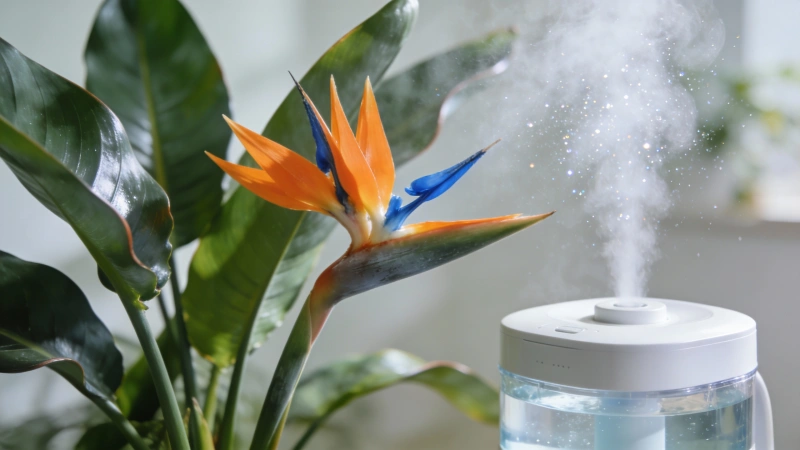
Bird of paradise does well in ordinary warm rooms, especially when temperatures are stable. Clemson Cooperative Extension lists moderate relative humidity (around 60%) as favorable for bird of paradise and advises bringing outdoor plants inside when temperatures approach 60°F (16°C). Avoid freezing conditions, cold exterior doors, hot heater blasts, and harsh air-conditioning drafts.
If leaf edges crisp during a dry heating season, check both soil moisture and room humidity. A clean humidifier can help; avoid repeatedly soaking the foliage in a room with little air circulation. Wiping dust gently from the broad leaves can also help you inspect for pests.
5. Bird of Paradise Problems: Identify the Symptom Before Treating It
A symptom alone rarely identifies one cause. The table below pairs visible clues with a simple confirmation check, so you do not accidentally water a plant that already has wet roots.
| What you see | Likely possibilities | Check first | What to do next |
|---|---|---|---|
| Brown, crispy leaf edges | Irregular watering, very dry air, salt buildup, root stress | Is the mix bone dry, wet for days, or showing white mineral crust? | Correct the actual watering or drainage issue; review fertilizer and water source. |
| Lower leaves turning yellow | Natural aging or excess moisture; sometimes insufficient light | Is it one old leaf or several leaves quickly yellowing in wet mix? | Remove fully spent leaves; if widespread, inspect root-zone moisture and light. |
| Drooping with dry, light pot | Underwatering | Is the mix dry below the surface? | Water thoroughly, drain, and monitor recovery. |
| Drooping with wet mix | Poor drainage, root stress, possible root rot | Does the pot remain saturated? Are roots soft or foul-smelling? | Stop automatic watering; investigate the roots and drainage. |
| Long splits along leaf blade | Normal tearing, wind, rubbing, damage during unfurling | Is the leaf otherwise green and healthy? | Usually no treatment is needed. |
| Small speckles, fine webbing | Possible spider mites | Inspect both sides of leaves, especially undersides. | Isolate the plant and use a correctly labeled treatment if needed. |
| Slow growth, smaller new leaves | Low light, cool temperatures, seasonality, crowded roots | What changed in light and temperature? Is growth season active? | Improve light first; then assess roots and nutrition. |
| Bleached or dry tan patches after moving | Sunscald | Was the plant suddenly moved into stronger direct sun? | Reduce intense exposure temporarily and acclimate in stages. |
For broader symptom comparison, see why houseplant leaves turn yellow. If the whole plant is declining and you do not know where to begin, use our step-by-step guide to saving a dying houseplant.
Why Are My Bird of Paradise Leaves Turning Brown?
Look at the pattern, not just the color. Crispy tips on multiple leaves often point to repeated moisture stress or dissolved salts. A large, pale-tan patch on the sun-facing side after relocation points more toward sunscald. Isolated dark spots that spread in consistently wet conditions may indicate a separate leaf-health problem.
- Check soil moisture through the root zone and confirm the container drains.
- Inspect the plant for spider mites and scale insects.
- Review fertilizing frequency, sodium-softened water, and white crust on the potting mix.
- Check whether heater vents or intense sun suddenly changed the leaf environment.
- Correct one clear issue at a time; photograph the next emerging leaf to judge whether the fix worked.
Important: brown tissue cannot turn green again. The goal is to prevent further injury and support healthy new growth. If only the dry margin bothers you, trim it with clean scissors while leaving a slim border of dead tissue rather than cutting into healthy green areas.
Why Are Bird of Paradise Leaves Splitting?
Clean tears or splits in an otherwise green leaf are often normal. Large bird of paradise leaves can split along their veins when moved by wind, brushed against furniture, or damaged while unfurling. The effect is especially noticeable in giant white bird of paradise; University of Florida IFAS notes that S. nicolai leaves can shred in the wind.
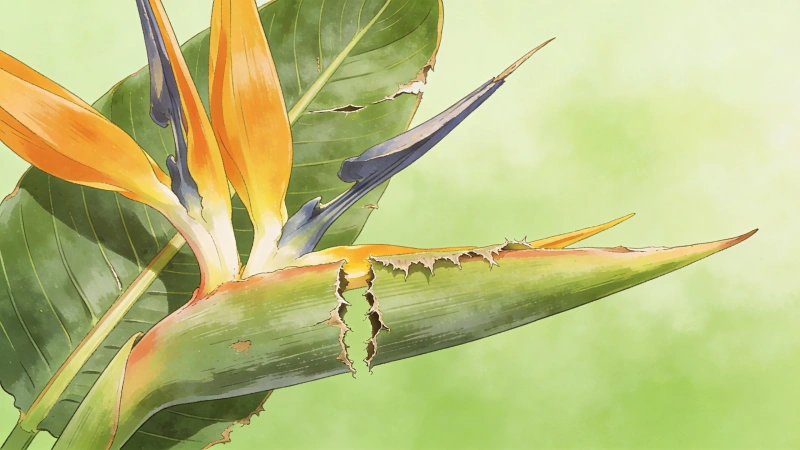
Keep emerging leaves away from narrow walkways, fans, and frequent contact. A torn leaf does not need to be removed unless it is mostly dead, diseased, or interfering with the plant’s placement.
Why Are Bird of Paradise Leaves Curling or Not Unfurling?
Curled leaves can be a response to dry soil, very dry air, or sudden environmental change, but they can also appear when roots are damaged and cannot take up water. Check both the surface and the deeper potting mix before deciding the plant needs a drink. If the soil is moist and the plant still looks dehydrated, inspect drainage and root condition.
A newly emerging leaf may remain rolled for a while before opening. Avoid pulling it apart by hand: forcing the leaf can tear soft tissue. Keep light and moisture consistent, protect it from contact with furniture or fans, and watch whether the next new leaf develops normally.
Why Are Bird of Paradise Leaves Turning Yellow?
One aging lower leaf may yellow naturally. Multiple yellowing leaves appearing together, especially when the pot stays damp, deserve closer inspection. First verify drainage and root health, then evaluate light and fertilizer. Do not automatically add fertilizer to yellow leaves: compromised roots cannot use nutrients efficiently.
When soil is persistently wet and the plant wilts anyway, carefully inspect the root ball. Healthy roots are typically firm; decaying sections may be brown, mushy, and foul-smelling. Remove only clearly dead tissue with sanitized tools, replace spoiled mix, and correct the watering conditions. The full procedure is in our houseplant root rot rescue guide.
Common Bird of Paradise Pests
Inspect leaf undersides and the bases of stalks at least once a month. Scale insects may appear as attached bumps; spider mites can cause fine stippling and webbing. Isolate affected plants and identify the pest before treatment. For mite symptoms and controls, see how to get rid of spider mites on houseplants. When using insecticidal soap or another pesticide, select a product labeled for the pest and plant/site of use, test a small area if directed, and follow all label instructions; homemade dish-detergent mixes can injure foliage.
6. Will a Bird of Paradise Bloom Indoors?
It can, but many houseplants never flower indoors. Flowering depends on species, maturity, strong light, and sustained healthy growth. S. reginae produces the familiar orange-and-blue flowers; S. nicolai produces white-and-blue flowers and is usually grown indoors for its leaves.
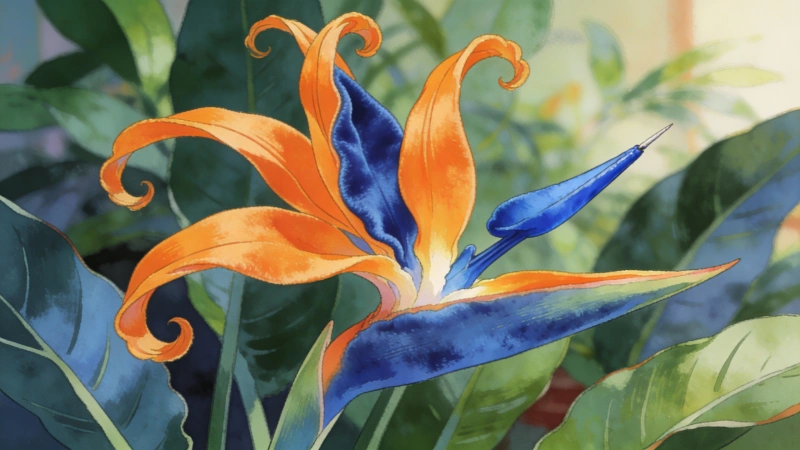
To improve the odds of flowering, prioritize strong light, avoid repeated unnecessary root disturbance, and provide appropriate nutrition in the active growing season. Clemson Cooperative Extension notes that overfertilizing can lead to foliage growth without better flowering. Do not assume that a high-phosphorus “bloom booster” will fix insufficient light, and do not deliberately keep a struggling plant severely root-bound. Clemson reports that seedlings may take several years to flower, so newly divided or juvenile plants need patience.
7. Fertilizer, Cleaning, and Pruning
Feed with a balanced houseplant fertilizer according to its label during active spring and summer growth. Start conservatively, especially after repotting or if the plant receives limited light. Reduce or pause feeding as growth slows in winter; do not fertilize a severely stressed plant in an attempt to force recovery.
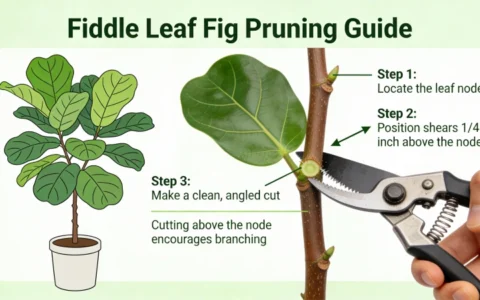
Remove completely dead leaves by cutting the leaf stalk cleanly near the base without damaging nearby shoots. Clean dust from large leaves with a soft, damp cloth and check for scale. Do not cut healthy leaves merely because their blades have split.
8. Bird of Paradise Care by Season
| Season | What to monitor | Best action |
|---|---|---|
| Spring | New leaf production and increasing water use | Increase soil checks; repot or divide only if needed; resume modest feeding. |
| Summer | Fast drying, strong sun, and pests | Check moisture more often; acclimate carefully before moving outdoors. |
| Fall | Lower daylight and slower growth | Reduce watering frequency based on actual soil drying; prepare to bring outdoor pots inside. |
| Winter | Cool drafts, dry heated air, wet potting mix | Prioritize bright light, warmth, ventilation, and careful moisture checks. |
Do not use a seasonal chart as a watering schedule: a plant under strong supplemental light may consume water faster than one in a dim room in the same month.
9. How to Propagate Bird of Paradise by Division
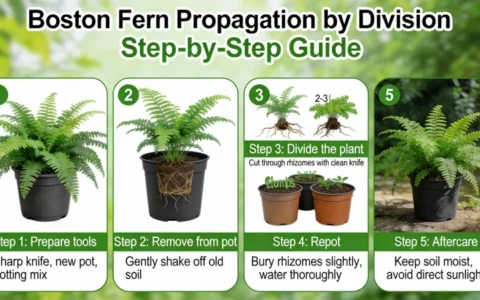
Division is generally more practical than seed propagation for established potted plants. The clump must be large enough to separate without sacrificing most of its roots.
- Work in spring or early summer when the plant is actively growing.
- Remove the plant carefully, examine the rhizomes, and identify separate fans or shoots with attached healthy roots.
- Use a clean sharp knife only if the sections cannot be gently pulled apart.
- Pot each viable division at its former soil depth in a stable, well-draining container.
- Water to settle the mix, allow runoff to drain, and initially protect divisions from harsh direct sun while the roots recover.
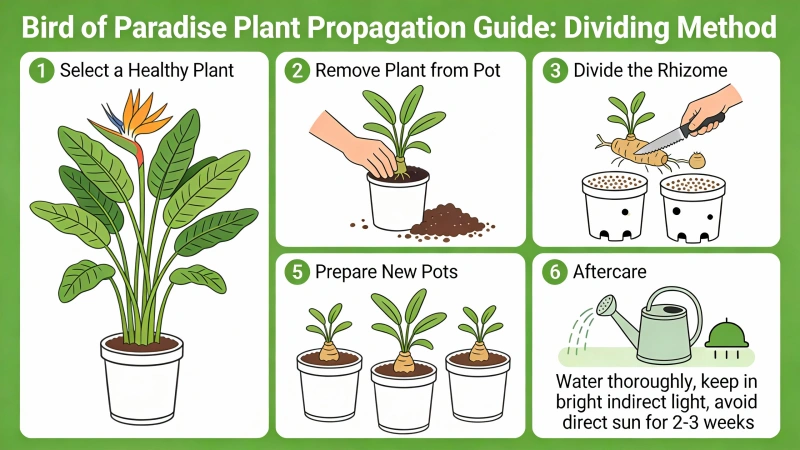
Expect an adjustment period after division and avoid promising immediate flowers. Clemson Cooperative Extension describes divisions recovering in bright indirect light before returning to stronger light.
10. A 7-Day Bird of Paradise Watering and Problem Tracker
For the next seven days, record what the soil actually feels like before watering. This simple log helps distinguish rapid summer drying from a pot that stays wet too long. You can print the table, save it to notes, or copy the headings into a spreadsheet.
| Day / date | Top soil: dry / damp / wet | Deeper soil check | Watered? | Leaves / changes |
|---|---|---|---|---|
| Day 1 | ________ | ________ | ________ | ________ |
| Day 2 | ________ | ________ | ________ | ________ |
| Day 3 | ________ | ________ | ________ | ________ |
| Day 4 | ________ | ________ | ________ | ________ |
| Day 5 | ________ | ________ | ________ | ________ |
| Day 6 | ________ | ________ | ________ | ________ |
| Day 7 | ________ | ________ | ________ | ________ |
How to interpret your notes: if the mix is still wet several days after watering, review pot size, light, and drainage. If it dries very rapidly and roots have crowded the pot, consider repotting in the growing season. If the soil is appropriate but leaves continue to decline, check for pests, salt buildup, or root damage rather than adding water automatically.
Frequently Asked Questions
Can bird of paradise grow in low light?
It may survive for a time in lower light, but expect slower growth, fewer new leaves, and little chance of flowering. A very dim room is not a good long-term placement.
Should I cut off brown bird of paradise leaves?
Remove a leaf if it is mostly dead or badly damaged. Small crispy margins can be trimmed for appearance, but first address the cause; cutting the leaf does not repair the root or watering problem.
How can I tell if my bird of paradise is overwatered or underwatered?
Check the root-zone moisture. Dry soil plus a light pot points toward underwatering; prolonged wet soil with yellowing, drooping, or mushy roots points toward poor drainage or possible root rot. Drooping alone is not enough to decide.
Why is my bird of paradise not growing new leaves?
Low light, cooler seasonal conditions, recent repotting, or crowded roots may be responsible. Compare the light and growth over several weeks before changing multiple care factors.
Is bird of paradise toxic to cats and dogs?
Yes. The ASPCA lists Strelitzia reginae (bird of paradise flower) as toxic to cats, dogs, and horses, with possible nausea, vomiting, and drowsiness; it notes that fruit and seeds are of particular concern. Keep the plant out of reach and contact a veterinarian if ingestion is suspected. Do not confuse Strelitzia with the unrelated, more toxic Caesalpinia gilliesii, which also uses the common name “bird of paradise.”
Can I grow bird of paradise outdoors in summer?
Yes, in suitable weather. Wait until nights are reliably warm, introduce the plant gradually to sun and wind, monitor it more closely for drying and pests, and move it inside before temperatures approach damaging lows.
Will split leaves grow back together?
No. A split leaf stays split, but it can remain healthy and useful to the plant. Focus on protecting new leaves rather than trying to repair old ones.
Sources and Further Reading
The plant-care recommendations above are informed by university extension guidance and species-specific safety information. Indoor results vary with location, cultivar, light, and container conditions.
- Clemson Cooperative Extension — Bird of Paradise (indoor light, watering, humidity, flowering, propagation).
- University of Florida IFAS — Bird of Paradise (species differences, drainage, pests, leaf tearing).
- University of Maryland Extension — Watering Indoor Plants (soluble salts, softened water, indoor watering).
- ASPCA — Bird of Paradise Flower (Strelitzia reginae) (pet toxicity).
Bottom line: successful bird of paradise care is not about one magic watering interval. Give the plant bright light, verify moisture before watering, maintain drainage, and use the pattern of new growth to judge whether changes are working. Leaf splits are often cosmetic; widespread yellowing, persistent wet soil, and active pests deserve investigation.
If you are caring for other tropical houseplants, explore the site’s plant care guide collection for related species and troubleshooting advice.
Editorial Note: This article was written and edited by Spring Mei. AI tools may be used to assist with research and organizing information. The final content is reviewed before publication, and important factual claims are checked against reliable sources where appropriate. Personal experience is distinguished from general guidance, and methods are described as personally tested only when they have actually been tested.
Please indicate the source when reposting:https://gardeningtoolsgarden.com/how-to-care-for-a-bird-of-paradise-plant/
Author: Spring Mei