
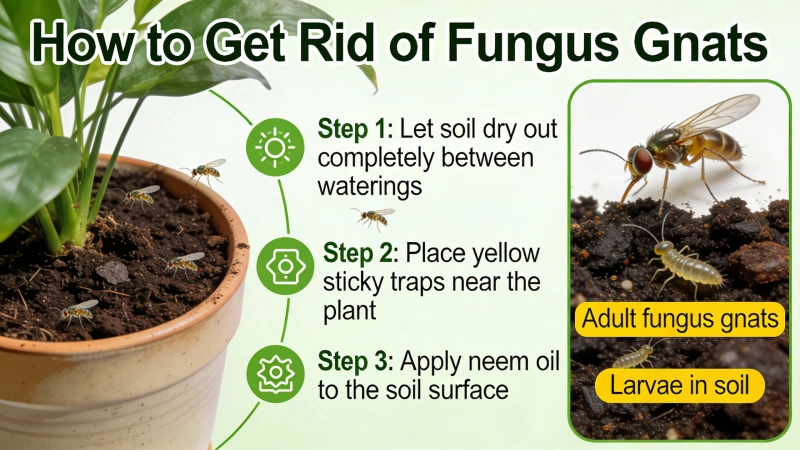

I’ll never forget the moment I realized those tiny flies buzzing around my face weren’t fruit flies — they were coming from my beloved houseplants.
If you’ve tried apple cider vinegar traps, letting the soil dry out, or spraying neem oil with zero results, I feel your frustration. I spent three weeks trying every Pinterest remedy before finally figuring out what actually works.
The secret? You can’t just kill the adults. You need to attack both the flying gnats AND the larvae hiding in the soil at the same time.
In this guide, I’ll share the exact 2-step method that eliminated my fungus gnat infestation in 6 weeks — plus the common mistakes that kept me stuck in an endless cycle.
Quick Answer: To get rid of fungus gnats, you need a two-step approach:
- Kill the larvae — Water your plants with Mosquito Bits “tea” (BTI bacteria) weekly
- Trap the adults — Place yellow sticky traps near the soil surface
This combo breaks the breeding cycle. Expect full elimination in 4-6 weeks with consistent treatment. Below, I’ll walk you through exactly how I did it.
What Are Fungus Gnats? (And Why They Love Your Plants)
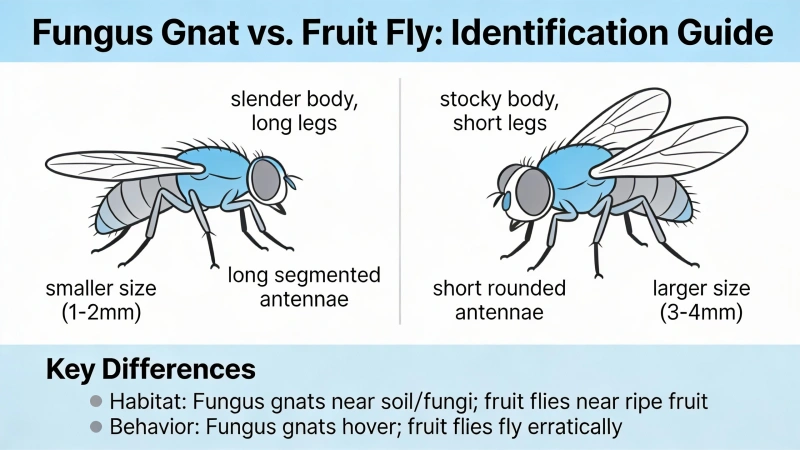
Fungus gnats are those annoying little flies that hover around your houseplants. They’re about 3-4mm long, grayish-black, and look like tiny mosquitoes with long legs.
Here’s the thing that makes them SO annoying: they’re attracted to the carbon dioxide you breathe out. That’s why they fly right in your face!
According to the University of Minnesota Extension, a single female can lay up to 200-300 eggs in moist soil. Those eggs hatch into larvae that live in the top 2 inches of soil, feeding on fungi, organic matter — and sometimes your plant’s roots.
The lifecycle: Egg → Larvae → Pupa → Adult. The whole thing takes just 17-21 days in warm conditions. That’s why they multiply so fast!
5 Signs You Have a Fungus Gnat Problem
Not sure if you’re dealing with fungus gnats? Here’s what to look for:
- Tiny flies hovering around your plants — especially after watering
- Flies that seem attracted to your face — they love CO2
- Slow plant growth or yellowing leaves — larvae may be eating roots
- White, translucent larvae in the soil — look for them in the top inch
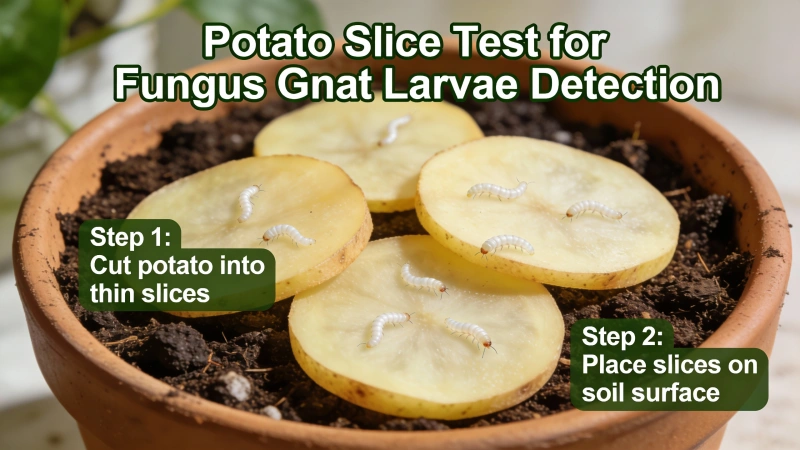
- The potato test: Bury a potato slice in the soil for a few hours, then check for larvae crawling on it
If your plant’s growth has slowed or leaves are turning yellow, fungus gnat larvae might be damaging the roots. Check out my guide on why your plant is turning yellow to rule out other causes.
Why Apple Cider Vinegar and Other “Hacks” Don’t Work
Before I share what actually works, let me save you some time and frustration. I tried ALL of these methods. None of them eliminated my infestation.
| Method | Why It Doesn’t Work |
|---|---|
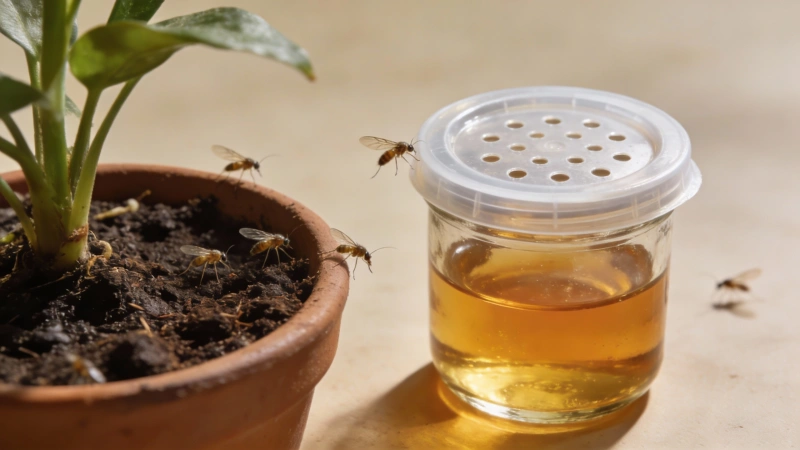
| Apple cider vinegar traps | Works for fruit flies, not fungus gnats — they’re not attracted to it |
| Yellow sticky traps alone | Only catches adults; larvae keep breeding in the soil |
| Letting soil dry out | Helps but doesn’t eliminate them — they come back when you water again |
| Neem oil spray | Messy, smelly, and inconsistent results |
| Pebbles on soil surface | Gaps are too big — gnats can still get through to lay eggs |
The key insight: Most remedies only target one stage of the lifecycle. To actually eliminate fungus gnats, you need to attack BOTH the larvae in the soil AND the flying adults at the same time.
My houseplants all have fungus gnats. Is there any point trying to save them?
by inhouseplants
The 2-Step Method That Finally Eliminated My Fungus Gnats
After weeks of failed attempts, I found this method on a gardening forum — and it changed everything. The secret is simple:
“Attack both the larvae AND the adults at the same time. Miss one, and you’re stuck in an endless cycle.”
Step 1: Kill the Larvae with Mosquito Bits (BTI)
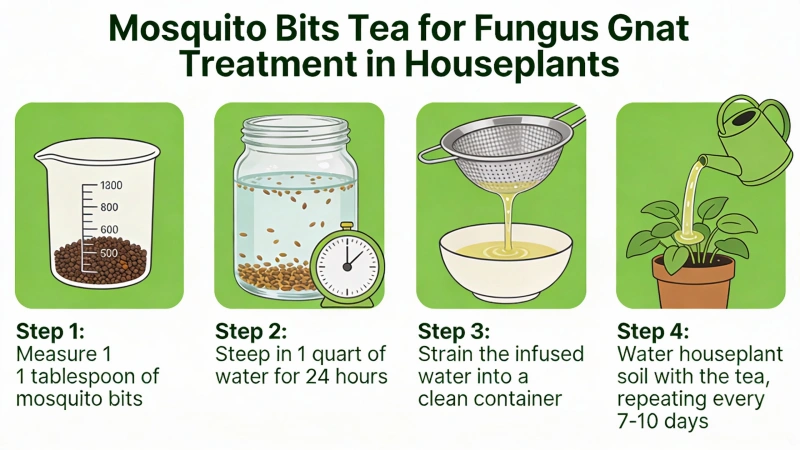
Mosquito Bits contain a naturally occurring bacteria called BTI (Bacillus thuringiensis israelensis). According to Cornell Cooperative Extension, BTI is deadly to mosquito and fungus gnat larvae but completely harmless to humans, pets, plants, and beneficial insects.
How to make “Mosquito Bits Tea”:
- Add 4 tablespoons of Mosquito Bits to 1 gallon of warm water
- Let it soak for 30 minutes (the BTI releases into the water)
- Strain out the bits (or use a mesh bag for easier cleanup)
- Use this “tea” to water your plants as you normally would
- Repeat every time you water for 4-6 weeks
Alternative option: You can also use a hydrogen peroxide solution (1 part 3% hydrogen peroxide to 4 parts water). It kills larvae on contact, but it also kills beneficial soil bacteria. I prefer BTI because it’s more targeted.
Step 2: Trap the Adults with Yellow Sticky Traps
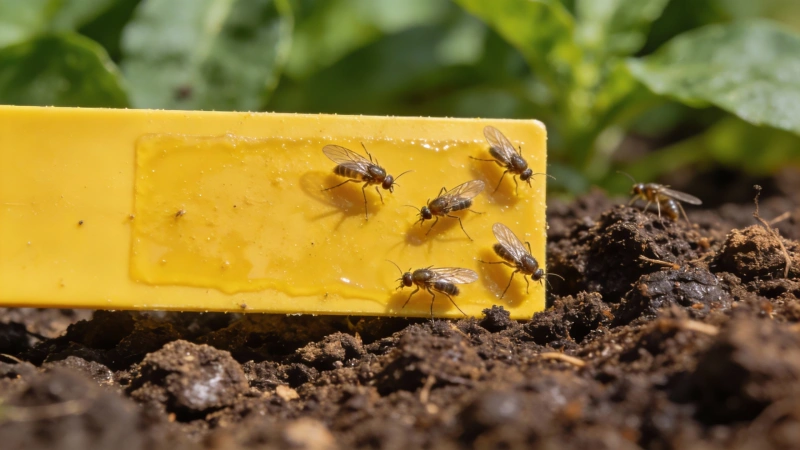
While the BTI works on the larvae underground, yellow sticky traps catch the flying adults before they can lay more eggs.
Pro tip: I peel off only ONE side of the sticky trap and lay it flat on the soil surface, sticky side up. This catches more gnats than hanging them in the air.
Check your traps every few days. Fewer gnats stuck = your treatment is working!
Step 3 (Optional): Add a Physical Barrier
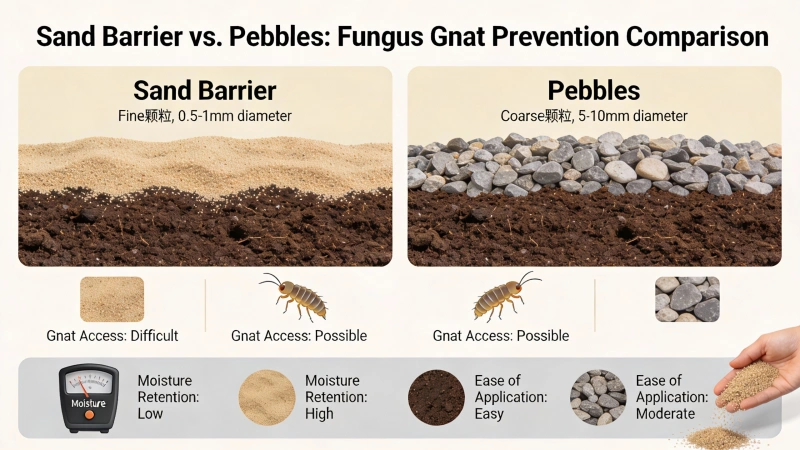
For extra protection, add a 1/4-inch layer of sand on top of your soil. This prevents adult gnats from reaching the soil to lay eggs.
Important: Use sand, NOT pebbles or decorative rocks. Pebbles leave gaps that gnats can easily slip through.
My 6-Week Journey to a Gnat-Free Home
🌿 Where It Started
It was March when I first noticed tiny flies around my Peace Lily and Pothos. At first, I assumed they were fruit flies. Then I realized — they were coming from the soil. And they were everywhere.
❌ The Mistakes I Made
Week 1: Set up apple cider vinegar traps. Caught exactly zero gnats.
Week 2: Covered soil with decorative pebbles. The gnats didn’t care.
Week 3: Sprayed neem oil everywhere. My apartment smelled terrible, and the gnats kept coming.
💡 The Turning Point
I found a gardening forum where someone explained the “two-pronged attack” — you have to kill larvae AND adults simultaneously. That’s when I ordered Mosquito Bits and yellow sticky traps.
✅ What Finally Worked
I started watering all 15 of my plants with Mosquito Bits tea and placed sticky traps in every pot. I also switched to bottom watering to keep the soil surface drier.
📊 The Results
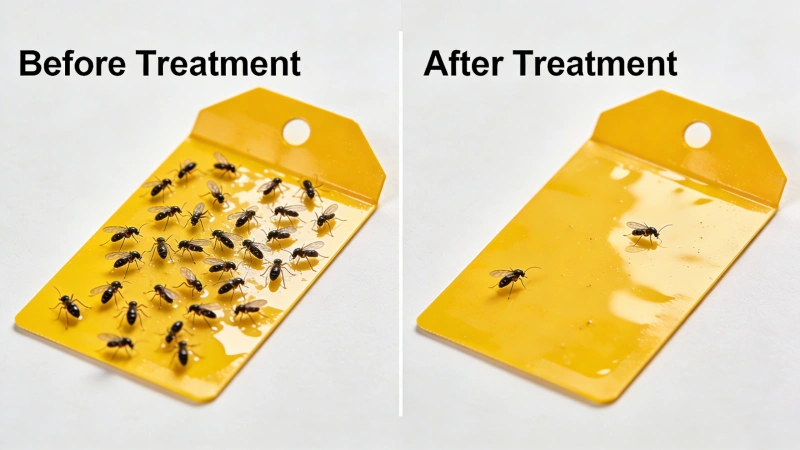
- Week 1: Sticky traps caught 50+ gnats (it looked worse before it got better!)
- Week 3: Down to fewer than 10 gnats per trap
- Week 6: Just 1-2 stragglers
- Week 8: Completely gnat-free
Total cost: About $25 (Mosquito Bits + sticky traps). Totally worth it.
How Long Does It Take to Get Rid of Fungus Gnats?
Here’s what to expect if you follow the 2-step method consistently:
| Timeline | What to Expect |
|---|---|
| Week 1 | Sticky traps start catching adults. May look worse (that’s normal!) |
| Week 2-3 | Noticeably fewer new adults appearing |
| Week 4 | Only a few stragglers left |
| Week 6-8 | Full elimination (continue treatment 2 more weeks to be safe) |
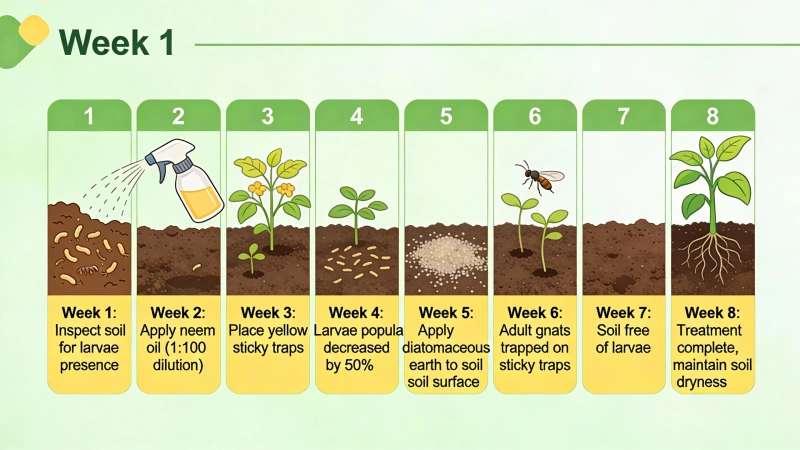
Important: Don’t stop treatment early just because you don’t see gnats anymore. Eggs and larvae may still be hiding in the soil. Keep treating for at least 2 weeks after you think they’re gone.
How to Prevent Fungus Gnats from Coming Back
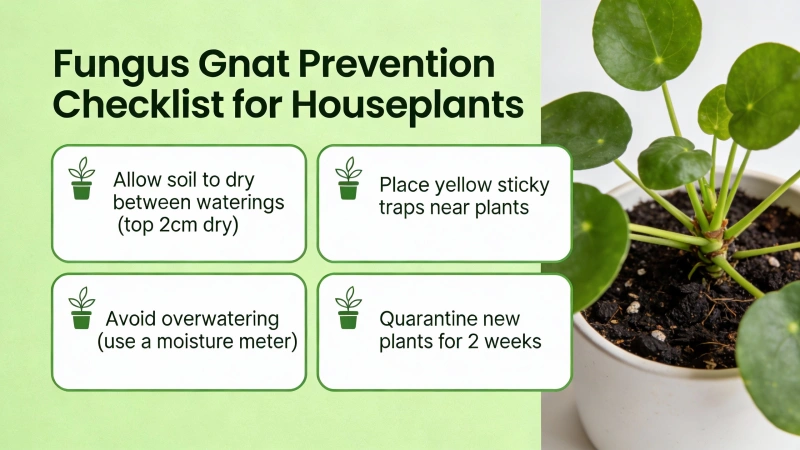
Once you’ve eliminated the infestation, here’s how to keep them from returning:
- Quarantine new plants for 2-4 weeks — Most infestations come from new plants you bring home
- Let the top inch of soil dry between waterings — Fungus gnats love consistently moist soil
- Try bottom watering — Keeps the soil surface drier where gnats lay eggs
- Don’t use outdoor-stored soil — It may already be contaminated with eggs
- Avoid watering plants outdoors — You might bring gnats back inside with you
Some humidity-loving plants are more prone to fungus gnats because they need moister soil. If you have a Boston Fern, check out my boston fern care guide for tips on balancing moisture without inviting gnats.
Plants like Prayer Plants also prefer consistent moisture. My prayer plant care guide covers watering techniques that keep both the plant and you happy.
What If I Have Sensitive Plants?
Good news: BTI is safe for ALL plants, including sensitive ones. It only targets the larvae, not your plant’s roots or beneficial soil organisms.
If you choose to use hydrogen peroxide instead, just know it can kill beneficial bacteria in the soil. Follow up with a balanced fertilizer to replenish what’s lost.
Low-light plants like English Ivy can actually tolerate drier conditions, which naturally discourages fungus gnats. See my english ivy care guide for more tips on keeping them happy.
Frequently Asked Questions
Are fungus gnats harmful to humans?
No, they don’t bite and aren’t dangerous. They’re just incredibly annoying — especially since they’re attracted to the CO2 you breathe out and love flying in your face.
Will fungus gnats kill my plants?
Adult gnats won’t, but larvae feed on roots and can stunt growth or even kill seedlings and young plants. Established plants can usually handle a mild infestation.
Can I use hydrogen peroxide instead of Mosquito Bits?
Yes! Mix 1 part 3% hydrogen peroxide with 4 parts water. It kills larvae on contact but also kills beneficial soil bacteria, so use it sparingly and follow up with fertilizer.
Do I need to treat ALL my plants?
Yes! Even if you only see gnats around one plant, larvae are likely in other pots too. Treat everything to break the cycle completely.
Can fungus gnats survive winter?
Yes. Indoor conditions are perfect for them year-round. Don’t assume cold weather outside will solve your problem inside.
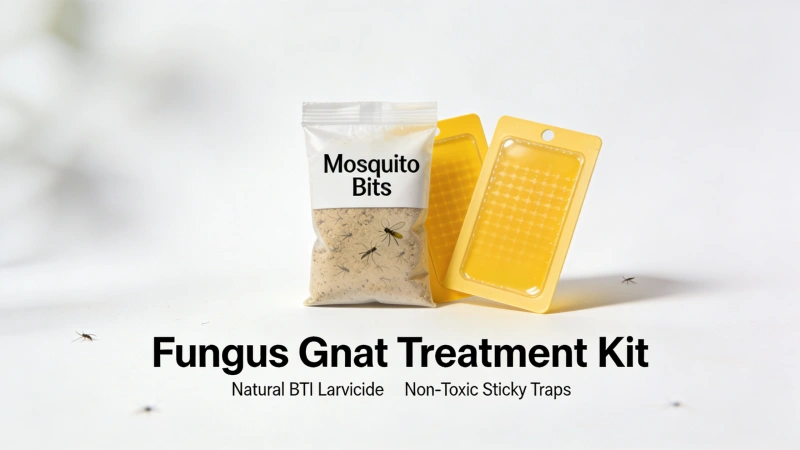
What You’ll Need
Essential (both required for the 2-step method):
- Mosquito Bits or Mosquito Dunks (~$15)
- Yellow sticky traps (~$10)
Optional but helpful:
- Horticultural sand for soil topping (~$5)
- 3% hydrogen peroxide (~$3)
- Soil moisture meter (~$10)
Total investment: Under $30 for a complete solution.
Helpful Video Guide
Want to see the Mosquito Bits method in action? This video demonstrates the entire process:
Note: Replace with actual relevant YouTube video embed code about fungus gnat treatment
Final Thoughts
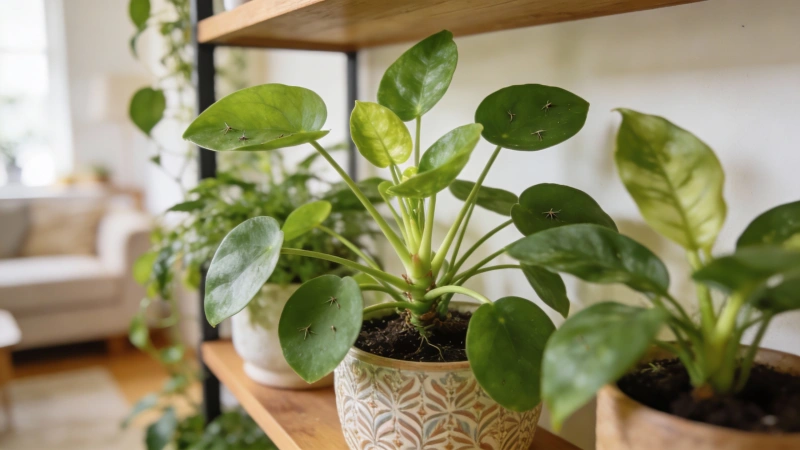
The secret to getting rid of fungus gnats isn’t any single product — it’s attacking both larvae AND adults at the same time.
Here’s your action plan:
- Get Mosquito Bits and yellow sticky traps
- Start the 2-step treatment today
- Stay consistent for 6-8 weeks
- Enjoy your gnat-free home!
I know it’s frustrating when nothing seems to work. Trust me, I’ve been there. But this method works — I’m proof. Start today, stay patient, and you’ll be gnat-free before you know it. 🌿
This article was created by a professional team. AI tools were used during the research and writing process to enhance efficiency and quality. All information has undergone manual verification and editing to ensure accuracy and practicality. We are committed to providing readers with objective and valuable content.
Publisher::meiruth558@gmail.com,Please indicate the source when reposting:https://gardeningtoolsgarden.com/how-to-get-rid-of-fungus-gnats-in-plants/
