
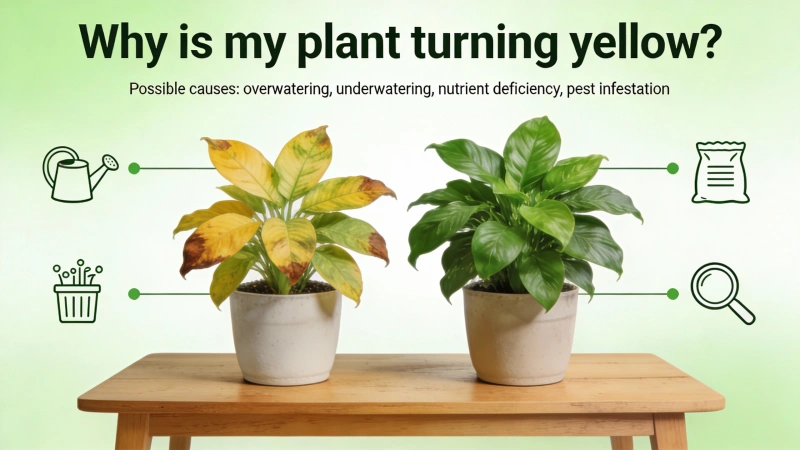

I still remember the panic I felt when my beautiful Golden Pothos started turning yellow three years ago. After killing 5 plants in my first few months as a plant parent, I was convinced I had a “black thumb.”
Sound familiar? If you’re staring at your once-gorgeous plant wondering why the leaves are suddenly yellow, you’re not alone. This is one of the most common problems every plant owner faces — and the good news is, it’s usually fixable.
Fast forward to today: I now care for over 20 thriving houseplants with an 18-month streak of zero plant deaths. The secret? Learning to read what yellow leaves are actually telling you.
In this guide, I’ll share everything I’ve learned about diagnosing and fixing yellow leaves. You’ll discover the 7 most common causes, how to quickly identify your specific problem, and step-by-step solutions that actually work.
Let’s save your plant.
Quick Answer: The most common reason your plant is turning yellow is improper watering — either too much or too little. Other causes include insufficient light, nutrient deficiency, temperature stress, root problems, or pests.
First step: Check your soil moisture. If it’s soggy, you’re overwatering. If it’s bone dry, you’re underwatering. Below, I’ll walk you through exactly how to diagnose and fix each cause.
I’m not the only one who’s struggled with this. Here’s what other plant parents on Reddit have experienced:
Comment
byu/Fine-Attorney3981 from discussion
inhouseplants
How to Tell What’s Causing Your Yellow Leaves (30-Second Diagnosis)
Before diving into solutions, let’s figure out what’s actually going on. In my experience, you can narrow down the cause in about 30 seconds using this quick diagnosis table.
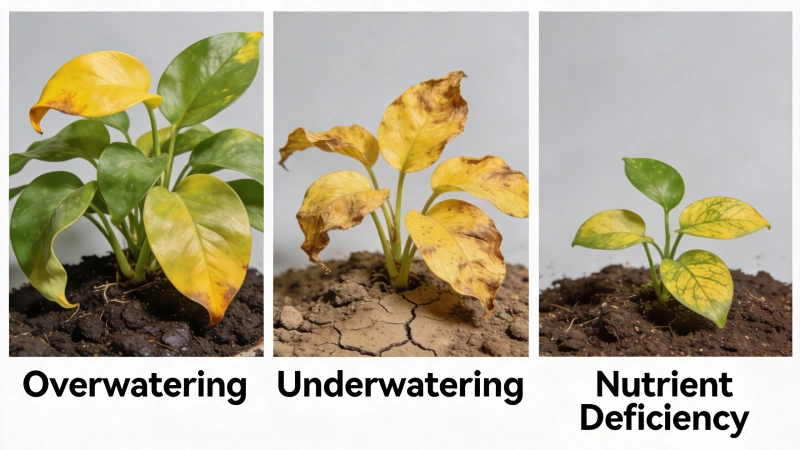
| Symptom | Likely Cause | Quick Check |
|---|---|---|
| Yellow + mushy leaves, wet soil | Overwatering | Check soil moisture & roots |
| Yellow + crispy leaves, dry soil | Underwatering | Water thoroughly, observe recovery |
| Older (lower) leaves yellow first | Nitrogen deficiency | Check fertilizing schedule |
| New (top) leaves yellow first | Iron deficiency | Check soil pH |
| Overall pale yellow color | Insufficient light | Assess plant location |
| Yellow + spots or deformed leaves | Pests or disease | Inspect leaf undersides |
Now let’s dive deeper into each cause and exactly how to fix it.
7 Reasons Your Plant Leaves Are Turning Yellow (And How to Fix Each One)
1. Overwatering — The #1 Plant Killer
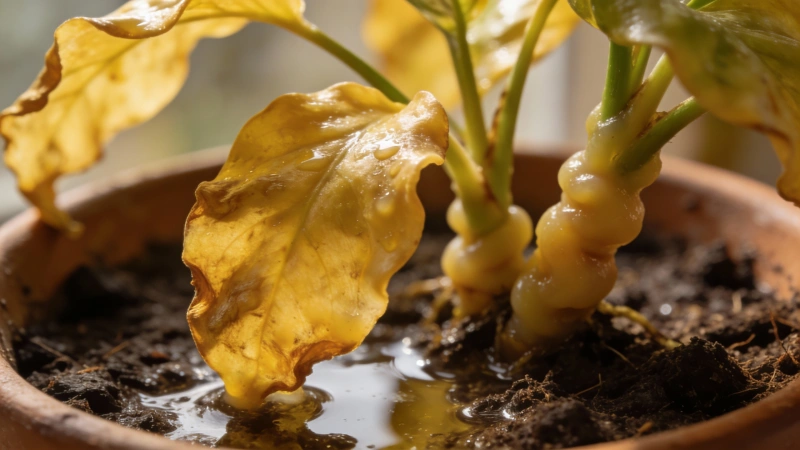
If I had to bet, overwatering is probably why your plant is turning yellow. According to Penn State Extension, it’s the single most common cause of houseplant death.
Here’s what happens: when roots sit in waterlogged soil, they can’t get oxygen. They essentially suffocate, stop functioning, and can’t deliver water or nutrients to the leaves. Ironically, the plant shows symptoms of thirst — yellowing and wilting — even though there’s too much water.
Signs of overwatering:
- Leaves turn bright yellow and feel soft or limp
- Soil feels wet or soggy
- You might see fungus gnats flying around
- Possible musty smell from the soil
How to fix it:
- Stop watering immediately and let the soil dry out completely
- Use the finger test: Stick your finger 2 inches into the soil. Only water when it feels dry
- Check your pot: Make sure it has drainage holes
- Severe cases: Remove the plant, trim any brown/mushy roots, and repot in fresh, dry soil
Some humidity-loving plants are particularly tricky — they need moisture but hate soggy roots. If you’re struggling with this balance, check out my boston fern care guide for tips on getting it right.
🌿 My Experience: Learning the Hard Way
I learned this lesson with my first Peace Lily. I watered it every Sunday like clockwork, thinking I was being a responsible plant parent.
Within a month, the lower leaves turned bright yellow and felt mushy. When I finally built up the courage to check the roots, they were brown and smelled terrible — classic root rot.
I had to cut away about 60% of the roots and repot in fresh soil. It took 6 weeks of careful attention, but she recovered beautifully.
The lesson: Now I never water on a schedule. I always check the soil first, not the calendar.
2. Underwatering — The Opposite Problem
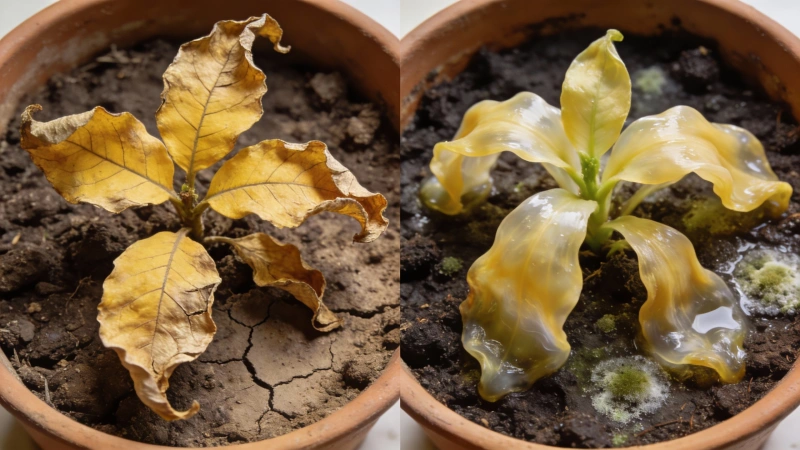
Yes, underwatering causes yellow leaves too. Plants can be frustrating that way!
The key difference? Underwatered yellow leaves turn crispy and brown within a few days. Overwatered leaves stay soft and mushy.
Signs of underwatering:
- Leaves turn yellow, then crispy and brown at the edges
- Soil is completely dry, may be pulling away from pot edges
- Leaves curl inward
- Plant droops but perks up quickly after watering
How to fix it:
- Water thoroughly until it drains from the bottom
- If soil is compacted, poke holes with a chopstick to help water penetrate
- Consider bottom watering for severely dry soil
- Set a reminder to check your plants more frequently
3. Light Issues — Too Much or Too Little
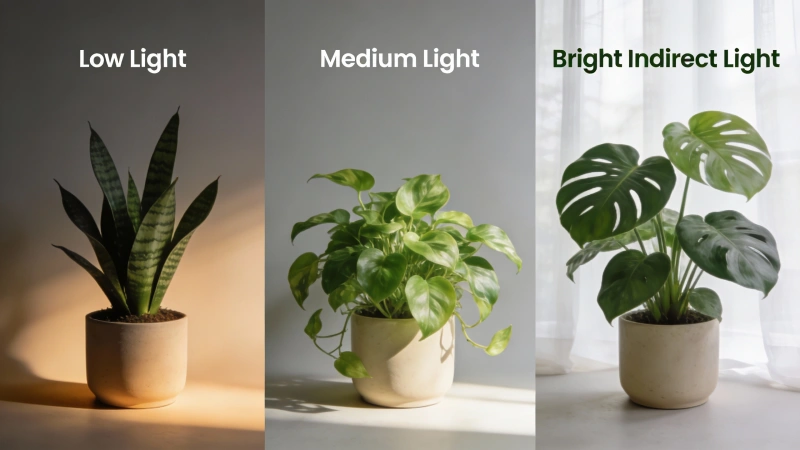
Light problems are sneaky. Your plant might look okay for weeks before showing yellow leaves.
Too little light:
- Overall pale yellow-green color
- Leggy, stretched growth toward light source
- Slow growth or no new leaves
Too much direct light:
- Scorched brown patches
- Faded, bleached-looking leaves
- Crispy leaf edges
How to fix it:
First, understand what your specific plant needs. High-light plants like the Bird of Paradise will quickly show yellow leaves if placed in a dim corner. If you have one, check out my bird of paradise plant care guide for specific light requirements.
On the other hand, if your space doesn’t get much natural light, consider low-light tolerant plants. English ivy care is straightforward and it thrives in shadier spots.
Most tropical houseplants do best with bright, indirect light — near a window but not in direct sun.
4. Nutrient Deficiency — Your Plant Is Hungry
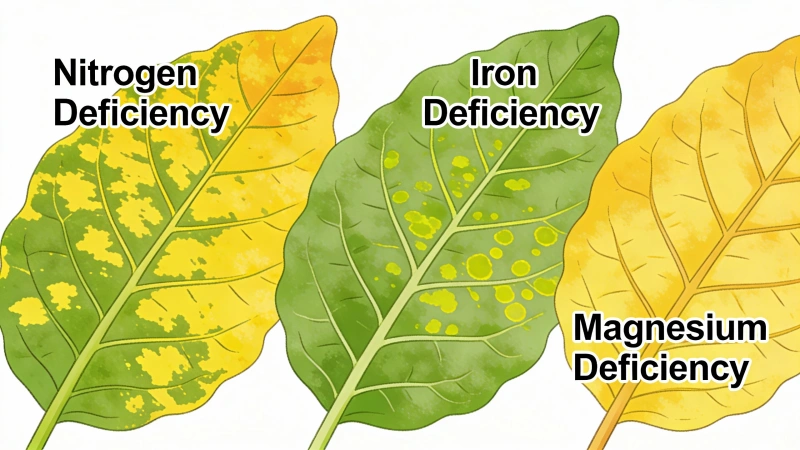
If your watering and light are on point, your plant might simply be hungry. According to University of Missouri Extension, the pattern of yellowing can tell you exactly what nutrient is missing.
| Deficiency | Which Leaves First? | Yellowing Pattern |
|---|---|---|
| Nitrogen | Older (lower) leaves | Entire leaf turns uniformly yellow |
| Iron | New (top) leaves | Yellow between veins, veins stay green |
| Magnesium | Older leaves | Yellow patches from center outward |
| Potassium | Older leaves | Leaf edges turn yellow, then brown |
How to fix it:
- Use a balanced liquid fertilizer (like 10-10-10) during the growing season
- Feed monthly in spring and summer, reduce or stop in winter
- Don’t over-fertilize — this can burn roots and make things worse
5. Temperature Stress — Too Hot or Too Cold
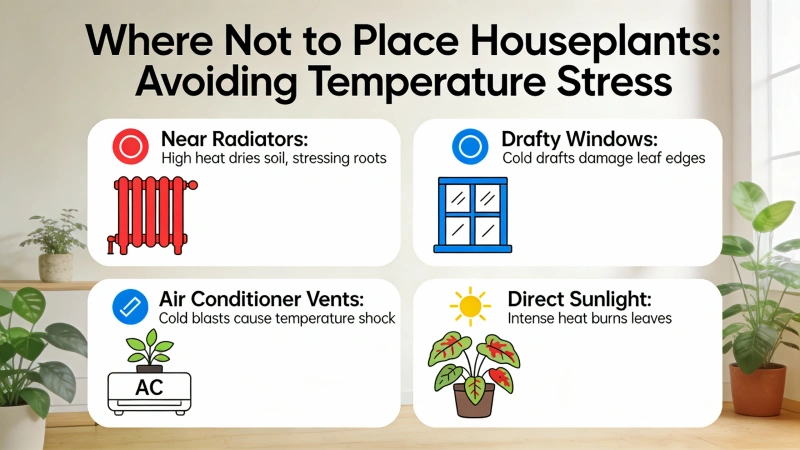
Most tropical houseplants prefer temperatures between 65-85°F (18-29°C). But here’s what I’ve learned: sudden temperature changes are worse than consistently cool temps.
Problem areas to avoid:
- Near air conditioning vents
- Next to heating radiators
- By drafty windows in winter
- Near frequently opened doors
Some plants are especially sensitive to temperature fluctuations. Prayer plant care requires extra attention to temperature — they’ll protest with yellow leaves if exposed to cold drafts.
How to fix it: Simply move your plant away from temperature extremes. Recovery usually takes 2-3 weeks once conditions improve.
6. Root Problems — Root Rot & Being Pot-Bound
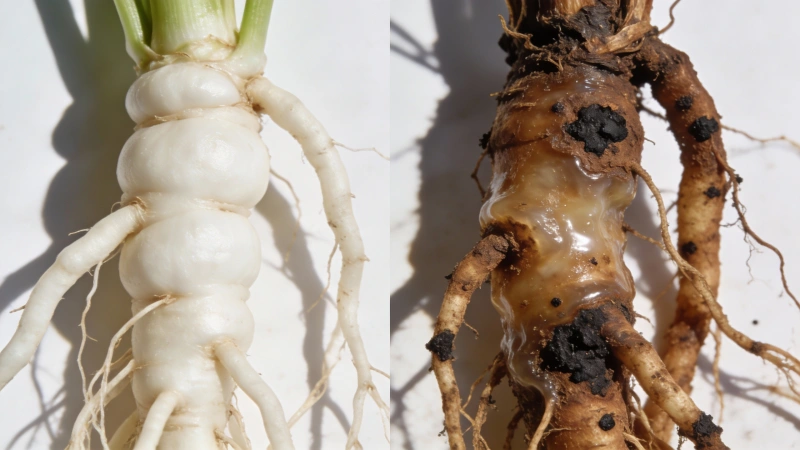
Sometimes the problem is underground where you can’t see it.
Root rot (usually from overwatering):
- Roots turn brown or black
- Mushy texture, may smell bad
- Fix: Trim affected roots, repot in fresh soil
Pot-bound (roots outgrown the pot):
- Roots circling the bottom or poking out of drainage holes
- Water runs straight through without absorbing
- Plant dries out very quickly
- Fix: Repot into a container 1-2 inches larger
According to the Royal Horticultural Society, catching root rot early dramatically improves survival chances.
7. Pests and Diseases
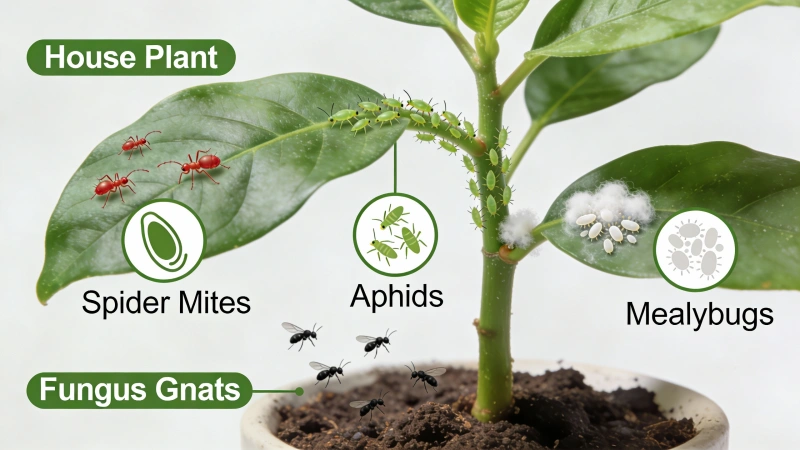
If you’ve ruled out water, light, and nutrients, it’s time to play detective.
Signs of pest problems:
- Yellow leaves with spots or unusual patterns
- Sticky residue on leaves (honeydew)
- Fine webbing (spider mites)
- White cottony masses (mealybugs)
- Tiny flying insects (fungus gnats)
How to fix it:
- Isolate the affected plant immediately
- Spray leaves with water to knock off pests
- Treat with insecticidal soap or neem oil
- Repeat treatment every 5-7 days for 2-3 weeks
How to Save Your Plant with Yellow Leaves (Step-by-Step)
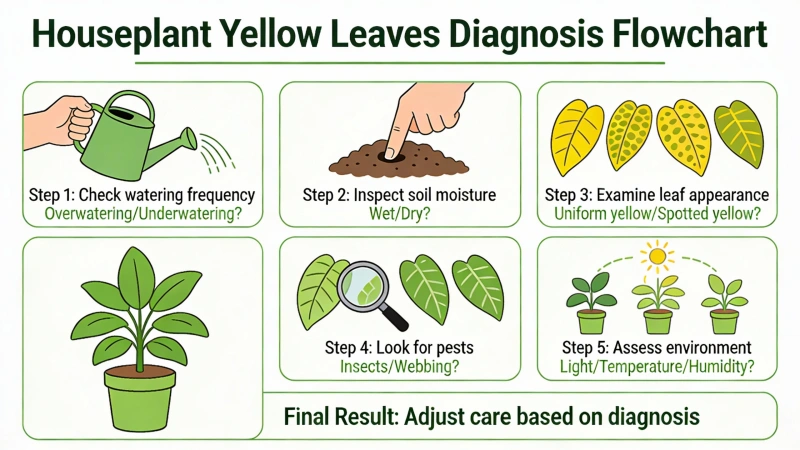
Feeling overwhelmed? Here’s my exact process for diagnosing any yellow leaf problem:
- Step 1: Check soil moisture. Stick your finger 2 inches deep. Wet or dry?
- Step 2: Examine the leaves. Are they soft/mushy or crispy/dry?
- Step 3: Check the roots. Gently slide the plant out and look for rot.
- Step 4: Assess the light. Is your plant getting appropriate light for its species?
- Step 5: Look for pests. Check leaf undersides carefully.
- Step 6: Consider timing. When did you last fertilize? Any recent changes?
- Step 7: Take action based on what you find.
- Step 8: Be patient. Recovery takes 2-4 weeks. Don’t overcompensate!
How to Prevent Yellow Leaves in the Future
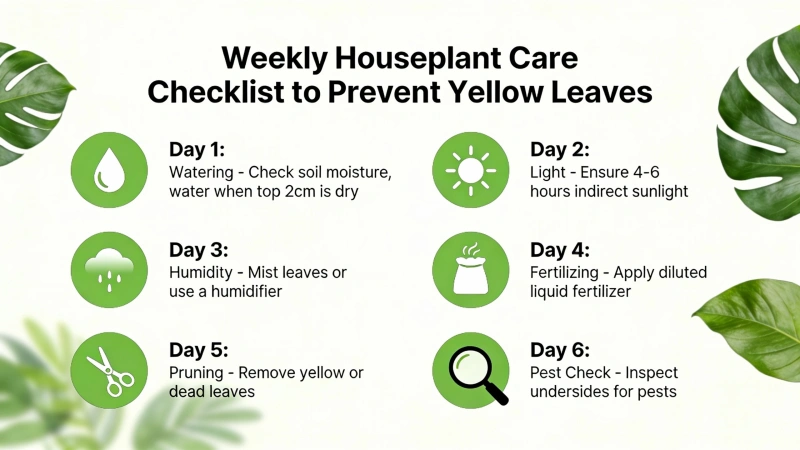
Once you’ve fixed the immediate problem, here’s how to keep leaves green going forward:
- Weekly check-ins: Take 5 minutes each week to observe your plants
- Know your plant: Research each plant’s specific needs
- Seasonal adjustments: Water less in winter, more in summer
- Right pot, right soil: Always use pots with drainage and appropriate soil mix
- Don’t panic: A few yellow leaves on older growth is completely normal
Need some encouragement? Here’s a success story from the Reddit community that shows recovery is absolutely possible:
My plant seems to be slowly dying, how can I save it? (first-time plant owner)
byu/SunnyJapan inhouseplants
Frequently Asked Questions
Can yellow leaves turn green again?
No, unfortunately. Once a leaf has turned yellow, the chlorophyll is gone and it won’t recover. However, fixing the underlying issue will stop more leaves from yellowing, and your plant will grow new healthy green leaves.
Should I cut off yellow leaves?
Yes, I recommend removing them. Yellow leaves won’t recover, and removing them allows the plant to focus energy on new growth. Use clean scissors and cut at the base of the leaf stem.
How often should I water my houseplants?
There’s no universal schedule — it depends on the plant, pot size, humidity, and season. Instead of following a calendar, always check soil moisture first. Most houseplants prefer to dry out slightly between waterings.
Is it normal for plants to have some yellow leaves?
Yes! Occasional yellowing of older, lower leaves is a normal part of plant aging. This is different from widespread yellowing, which signals a problem that needs attention.
Helpful Video Guide
Want to see these diagnosis techniques in action? This video walks through the process of identifying and fixing yellow leaves:
Final Thoughts
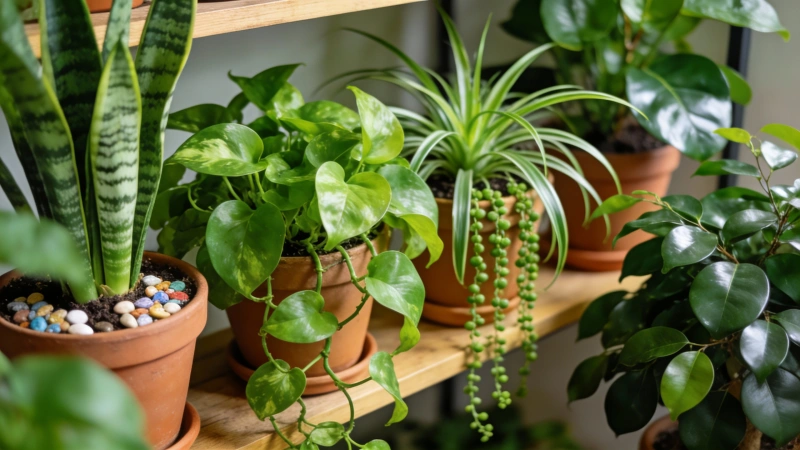
Yellow leaves aren’t a death sentence — they’re your plant’s way of communicating. Now that you know how to decode the message, you have the power to fix the problem.
Remember: Start with the soil. Check moisture first, because 9 times out of 10, that’s where the answer lies.
Your plant is counting on you. Go check on it right now — and good luck! 🌿
This article was created by a professional team. AI tools were used during the research and writing process to enhance efficiency and quality. All information has undergone manual verification and editing to ensure accuracy and practicality. We are committed to providing readers with objective and valuable content.
Publisher::meiruth558@gmail.com,Please indicate the source when reposting:https://gardeningtoolsgarden.com/why-is-my-plant-turning-yellow/
