
In this guide, I’ll share everything I’ve learned about caring for a Bird of Paradise indoors—including the #1 mistake that was holding my plant back. If you’re looking for something easier, How to Care for a Snake Plant is nearly impossible to kill and thrives in any lighting. But if you’re ready for a rewarding tropical challenge, keep reading.

Quick Answer: How to Care for a Bird of Paradise Plant
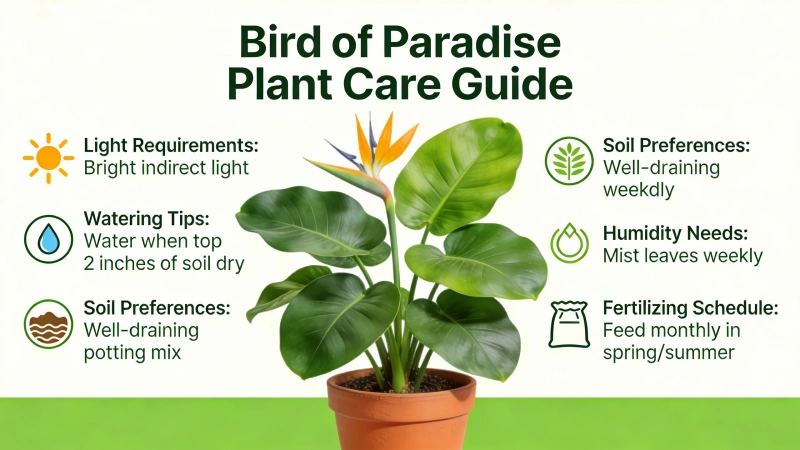
Here’s what Bird of Paradise plants need to thrive indoors:
- Light: At least 6 hours of direct sunlight daily (south or west-facing window)
- Water: When soil is 50% dry; use filtered water to prevent brown edges
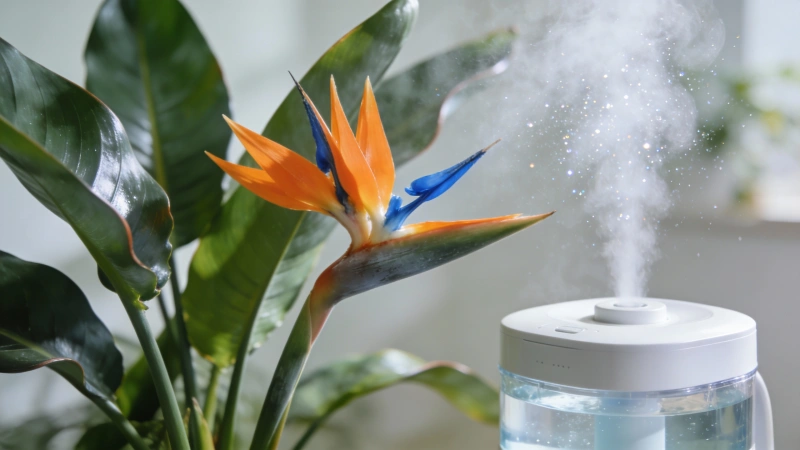
- Humidity: 50-70% — mist regularly or use a humidifier
- Temperature: 65-85°F (18-30°C); avoid cold drafts
- Blooming: Rare indoors; requires 4-5 years maturity + intense light
- Pet warning: Toxic to cats and dogs ⚠️
What Is a Bird of Paradise Plant?
The Bird of Paradise is a stunning tropical plant native to South Africa. It gets its name from those incredible flowers that look like exotic birds in flight—though as I mentioned, you probably won’t see them indoors.
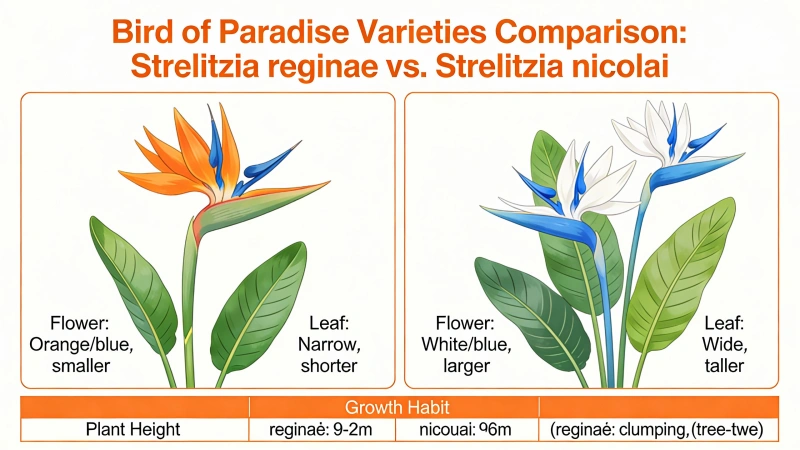
There are two species commonly grown as houseplants:
- Strelitzia reginae — The “classic” Bird of Paradise with orange and blue flowers. Grows 3-5 feet indoors.
- Strelitzia nicolai — The “Giant White” variety. Can reach 6-8 feet indoors (up to 30 feet outdoors!).
What makes these plants so popular isn’t just the flowers—it’s those big, paddle-shaped leaves that instantly make any room feel like a tropical resort. They’re the ultimate “statement plant.”
⚠️ Pet Safety Warning: According to the ASPCA, Bird of Paradise plants are toxic to cats and dogs. If ingested, they can cause gastrointestinal upset. Keep this plant out of reach of curious pets.
Light Requirements — This Is the Most Important Thing!
If you only remember one thing from this entire article, let it be this: Bird of Paradise plants are light-hungry.
I cannot stress this enough. Light is the #1 factor that determines whether your Bird of Paradise thrives or just survives. In their native South Africa, these plants grow in full sun. Indoors, we need to get as close to that as possible.
How Much Light Does a Bird of Paradise Need?
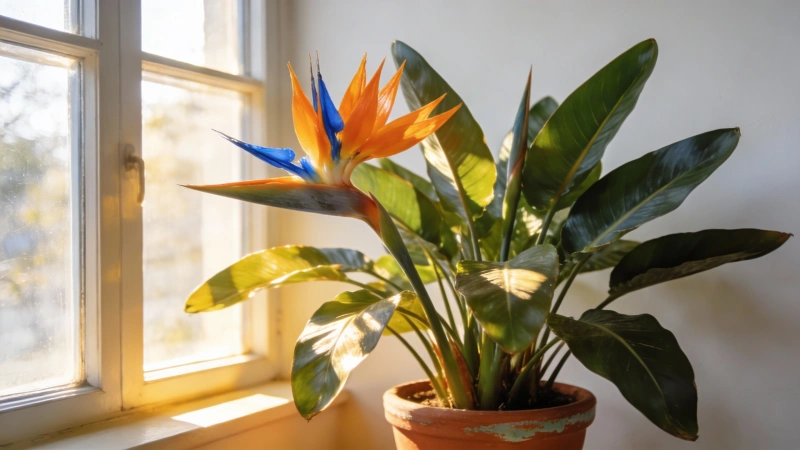
At least 6 hours of direct sunlight or very bright indirect light daily. More is better.
Best Placement
| Window Direction | Rating | Notes |
|---|---|---|
| South-facing | ⭐⭐⭐⭐⭐ | Best choice — maximum light all day |
| West-facing | ⭐⭐⭐⭐ | Great option — strong afternoon sun |
| East-facing | ⭐⭐⭐ | Okay — morning sun only, growth may be slower |
| North-facing | ⭐ | Not recommended — insufficient light |
Signs Your Plant Isn’t Getting Enough Light
- Slow or no new growth
- New leaves are smaller than older ones
- Leaves becoming pale or losing their deep green color
- Leggy, stretched-out stems (the plant is reaching for light)
- Will never bloom (blooming requires intense light)
If your home doesn’t have bright windows, consider adding a grow light. I run mine for 3 hours in the morning and 3 hours after sunset during winter, and it makes a noticeable difference.
Unlike Bird of Paradise, some plants actually prefer lower light. If your space is on the darker side, how to care for a prayer plant covers a beautiful alternative that thrives in indirect light.
How to Water Your Bird of Paradise
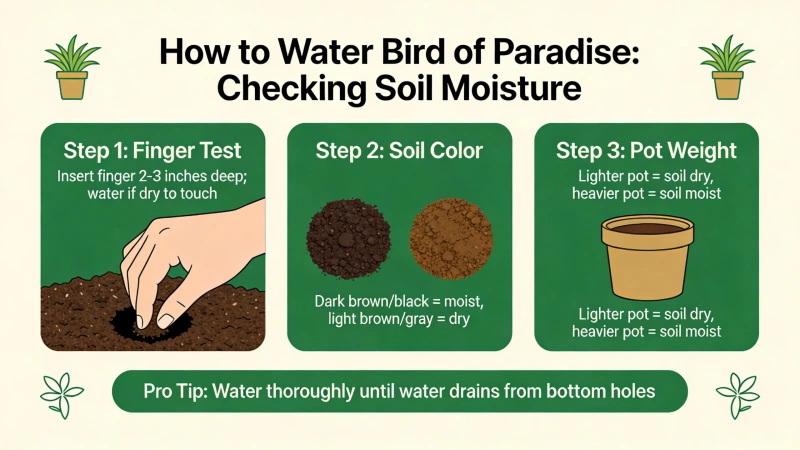
The golden rule is simple: wait until the soil is about 50% dry before watering.
These plants don’t like to sit in wet soil, but they also don’t want to completely dry out. Finding that balance is key.
My Watering Routine
- Check the soil. Stick your finger about 2-3 inches deep. If the top half feels dry, it’s time.
- Water thoroughly. Pour until water drains from the bottom holes.
- Empty the saucer. Never let your plant sit in standing water—this leads to root rot.
Water Quality Matters
Here’s something most guides don’t mention: Bird of Paradise plants are sensitive to minerals and salts in water.
If you’re using hard tap water or softened water, you’ll likely see brown leaf edges over time. This happened to me, and it was frustrating until I figured out the cause.
Solutions:
- Use filtered water or rainwater
- Let tap water sit out for 24 hours before using
- Use distilled water if your tap water is very hard
Water quality issues aren’t unique to Bird of Paradise. If you also grow English ivy, you’ll notice it’s similarly sensitive to what’s in your water.
Seasonal Adjustments
- Spring/Summer: Water when 50% dry (maybe weekly)
- Fall/Winter: Water less frequently (every 10-14 days) — growth slows and the plant needs less
Humidity Management
Bird of Paradise plants prefer humidity levels between 50-70%. Most American homes hover around 30-40%, especially in winter when the heat is running.
Low humidity causes those frustrating brown, crispy leaf edges that make your plant look unhealthy.
How to Increase Humidity
| Method | Effectiveness | My Take |
|---|---|---|
| Humidifier | ⭐⭐⭐⭐⭐ | Most effective, especially in winter |
| Misting leaves | ⭐⭐⭐⭐ | Simple, but needs to be done daily |
| Pebble tray | ⭐⭐⭐ | Helps a bit, easy DIY solution |
| Grouping plants | ⭐⭐⭐ | Creates a humid microclimate |
If you enjoy tropical plants that need higher humidity, how to care for a boston fern is another great option with very similar humidity requirements.
Temperature Requirements
Bird of Paradise plants like it warm—between 65-85°F (18-30°C). These are tropical plants, and they don’t handle cold well at all.
Avoid:
- Cold drafts from windows or doors
- Air conditioning vents (the cold air can damage leaves)
- Heating vents (dries out the air too much)
- Temperatures below 60°F (15°C)
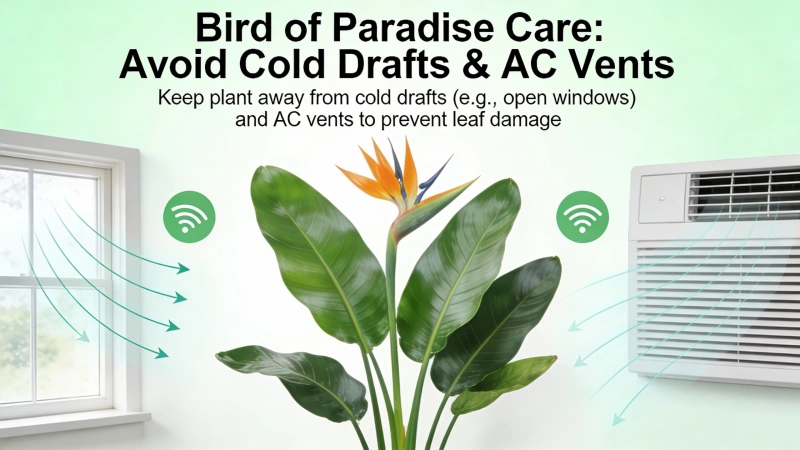
I learned this the hard way when I placed my plant near the front door during winter. Every time the door opened, cold air hit the plant. Within weeks, I noticed brown edges spreading. Moving it to a more protected spot solved the problem.
Leaf Splitting — Don’t Worry, It’s Completely Normal!
If you’ve noticed your Bird of Paradise leaves splitting or tearing, your first instinct might be panic. I know mine was.
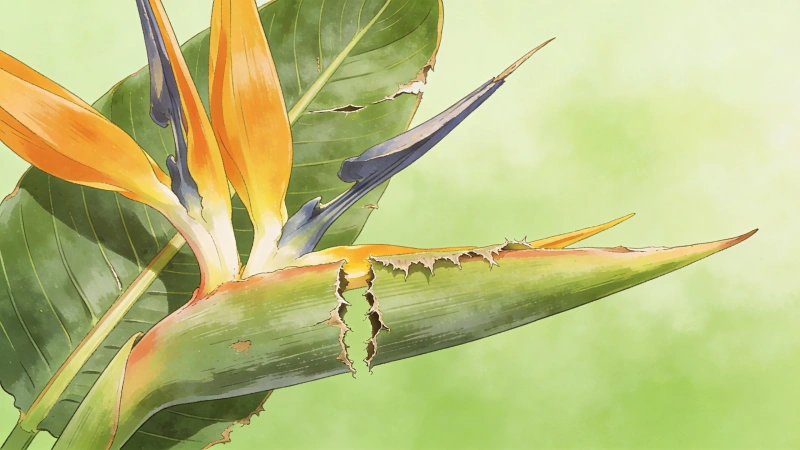
But here’s the truth: leaf splitting is a natural characteristic of Bird of Paradise plants, not a problem.
Why Do the Leaves Split?
In their native South Africa, Bird of Paradise plants grow in areas with strong winds. The splits in the leaves are an evolutionary adaptation—they allow wind to pass through instead of catching the leaf like a sail and snapping it off entirely.
According to The Sill, this splitting is completely normal and happens to all Bird of Paradise plants, both indoors and outdoors.
Indoor Causes of Splitting
- Low humidity (leaves become more brittle)
- Physical contact (brushing against the plant)
- The weight of large, mature leaves
- Air movement from fans or vents
When Should You Actually Worry?
Normal and fine: Clean splits along the natural leaf veins ✓
Needs attention: Leaves turning brown, yellow, or developing spots ⚠️
I spent months stressing about those splits before I learned they were just part of the plant’s character. Now I’ve embraced them as part of its tropical personality.
Bird of paradise—how to prevent leaf rip on an unfurling stalk
byu/hobaq inhouseplants
Will My Bird of Paradise Bloom Indoors?
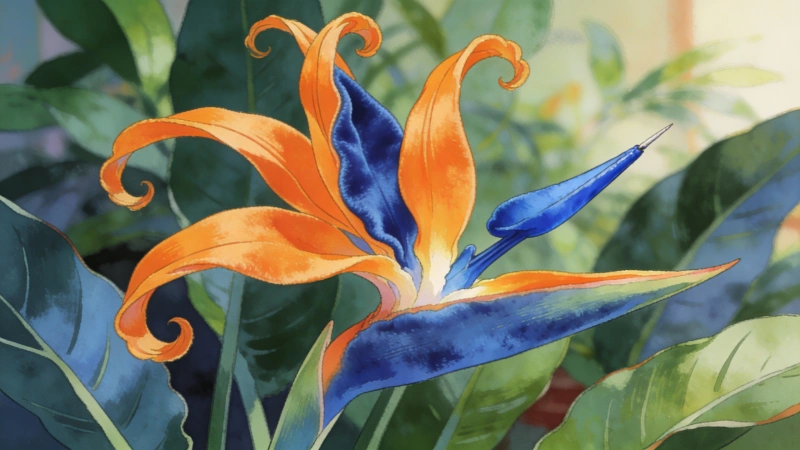
Let me give you the honest answer: probably not.
I know that’s not what you want to hear. But I wish someone had told me this upfront instead of letting me spend months wondering what I was doing wrong.
Why Indoor Blooming Is So Rare
- Age requirement: Plants need to be 4-5 years old before they can bloom at all
- Light intensity: They need way more light than most homes can provide
- Root conditions: They bloom better when root-bound (pot-bound)
- Stress triggers: Seasonal temperature changes help trigger blooming
According to Bloomscape, even under ideal conditions, getting a Bird of Paradise to bloom indoors is unlikely. And if you repot too often, you can prevent blooming for 2-3 years.
How to Maximize Your Chances
If you still want to try, here’s what might help:
- Maximize light. South-facing window plus a grow light if possible.
- Keep it root-bound. Don’t repot frequently—let those roots get crowded.
- Move it outside in summer. Real outdoor sunlight is more intense than any window.
- Be patient. Wait at least 4-5 years.
- Slight stress can help. Some growers report that letting the plant dry out slightly can trigger blooming.
Geography Matters
I’ve noticed something interesting in plant communities: people on the West Coast (especially California) report indoor blooms more often than those on the East Coast. The intense sunlight and milder climate there make a big difference.
If you’re in the Northeast like me, indoor blooming is probably not going to happen. And that’s okay—the stunning foliage is reward enough.
A sad, sad story. TLDR: don’t ever repot your bird of paradise 😢😫
byu/pass_the_prosciutto inhouseplants
Seasonal Care Calendar
Bird of Paradise care changes throughout the year. Here’s the schedule I follow:
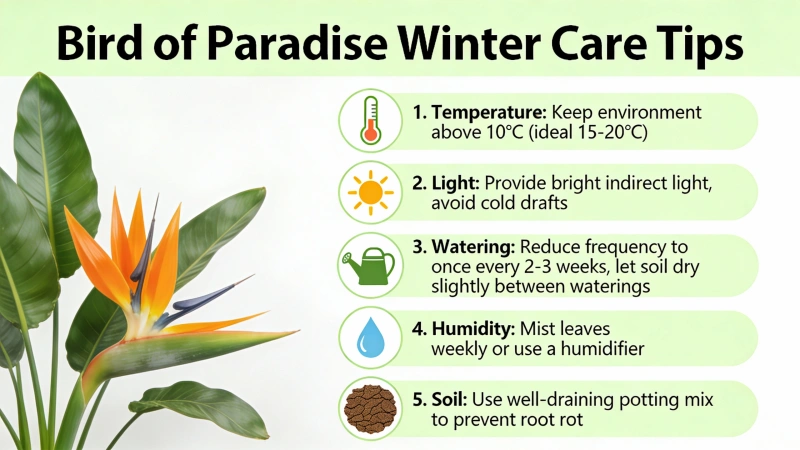
| Season | Watering | Fertilizing | Special Notes |
|---|---|---|---|
| 🌱 Spring | When 50% dry | Monthly (balanced fertilizer) | Growth resumes; best time to repot if needed |
| ☀️ Summer | Every 5-7 days | Every 2 weeks | Can move outdoors; watch for sunburn initially |
| 🍂 Fall | Every 7-10 days | Monthly, then stop | Prepare for winter; stop repotting |
| ❄️ Winter | Every 10-14 days | None | ⚠️ Watch humidity; keep away from cold drafts |
Repotting Tips
- Repot every 2-3 years, or when roots grow out of drainage holes
- Spring is the best time
- Bird of Paradise actually likes being slightly root-bound
- If you want blooms, keep it pot-bound longer
My 2-Year Bird of Paradise Journey: From Struggling to Thriving
Let me share exactly what happened with my Bird of Paradise—the mistakes I made and how I fixed them.
Starting Point (October 2022)
I spotted a beautiful 3-foot tall Bird of Paradise at Costco. The huge paddle-shaped leaves looked incredible, and I imagined those famous orange flowers appearing in my living room.
I brought it home and placed it in the corner of my living room. It looked great there—or so I thought.
What Went Wrong (First 6 Months)
Month 1: The leaf edges started turning brown. I assumed it was adjusting to its new environment.
Month 2: Almost no new growth. The plant looked exactly the same as when I bought it.
Month 3: Some leaves started splitting. I panicked, thinking the plant was dying.
Month 6: No flowers anywhere in sight. I was frustrated and confused.
What I Was Doing Wrong
- Placement: That “perfect” corner was actually 8 feet from the nearest window — nowhere near enough light
- Water quality: I was using hard tap water, which caused the brown edges
- Overwatering: I watered on a schedule instead of checking the soil
- Unrealistic expectations: I was waiting for flowers that were never going to come
The Turning Point
I read an article that described Bird of Paradise as a “light-hungry” plant. That phrase stuck with me. I realized my plant wasn’t in a “low light” spot—it was in a “no light” spot.
What I Changed
- Moved it right next to my south-facing window — 6+ hours of direct sun daily
- Switched to filtered water — the brown edges stopped spreading
- Waited until soil was 50% dry before watering — no more soggy roots
- Accepted the leaf splits — learned this is normal
- Let go of the flower fantasy — appreciated the foliage instead
The Results (2 Years Later)
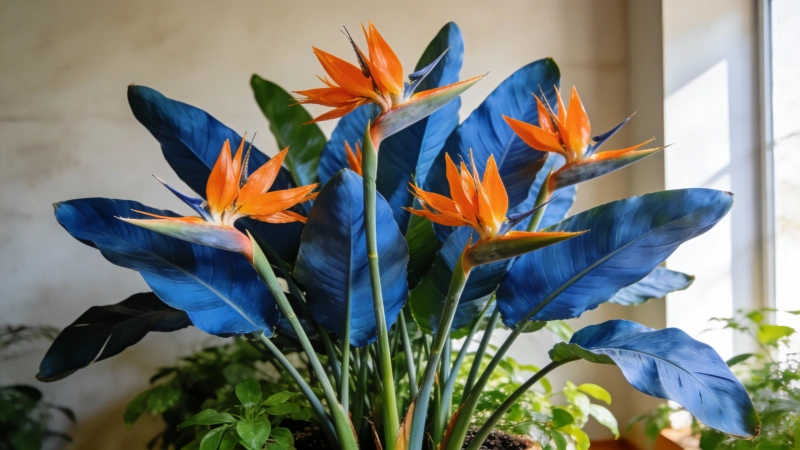
- Height: Grew from 3 feet to over 5 feet
- New leaves: Went from 2 new leaves per year to 6 new leaves per year
- Brown edges: Almost completely gone
- Leaf splits: Still there, but I don’t stress about them anymore
- Flowers: Still none—and I’ve made peace with that
What I Learned
Light is everything. Without adequate light, nothing else matters.
Water quality matters more than watering schedule. The right water prevents so many problems.
Leaf splitting is a feature, not a bug. It’s just part of the tropical experience.
Indoor blooms are unlikely—but the foliage is stunning enough. Once I stopped chasing flowers, I could actually appreciate what I had.
Common Problems and How to Fix Them
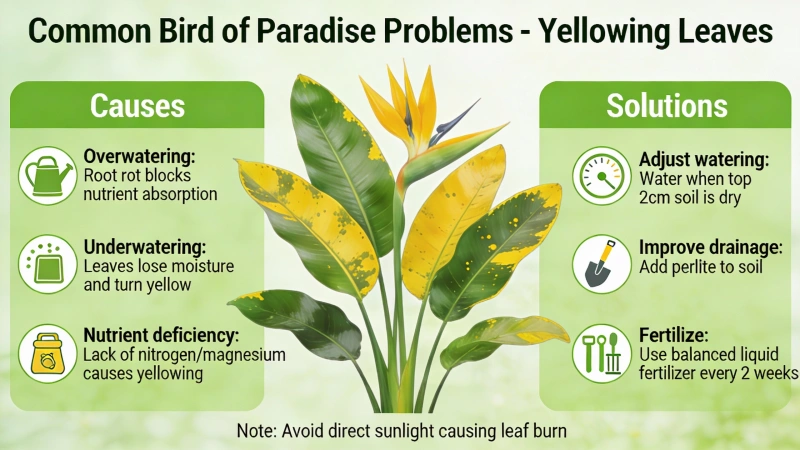
Here’s a quick reference guide for the most common Bird of Paradise issues:
| Symptom | Likely Cause | Solution |
|---|---|---|
| Brown/crispy leaf edges | Low humidity; hard water; over-fertilizing | Increase humidity; use filtered water; reduce fertilizer |
| Curling leaves | Underwatering; low humidity; severely root-bound | Water thoroughly; increase humidity; check roots |
| Yellow leaves | Overwatering; insufficient light; nutrient deficiency | Reduce watering; increase light; fertilize in spring |
| Leaf splitting | Normal! Natural adaptation | No action needed — this is fine |
| Slow/no growth | Insufficient light; winter dormancy; needs nutrients | Move to brighter spot; fertilize in spring |
| No flowers | Too young; not enough light; repotted too often | Be patient; maximize light; keep root-bound |
| Drooping leaves | Overwatering (root rot); underwatering | Check soil; adjust watering; inspect roots |
Root Rot Emergency
If you suspect root rot (mushy roots, persistent wilting despite wet soil):
- Stop watering immediately
- Remove plant from pot and inspect roots
- Cut away any black or mushy roots with clean scissors
- Repot in fresh, well-draining soil
- Wait until soil is dry before watering again
How to Propagate Bird of Paradise
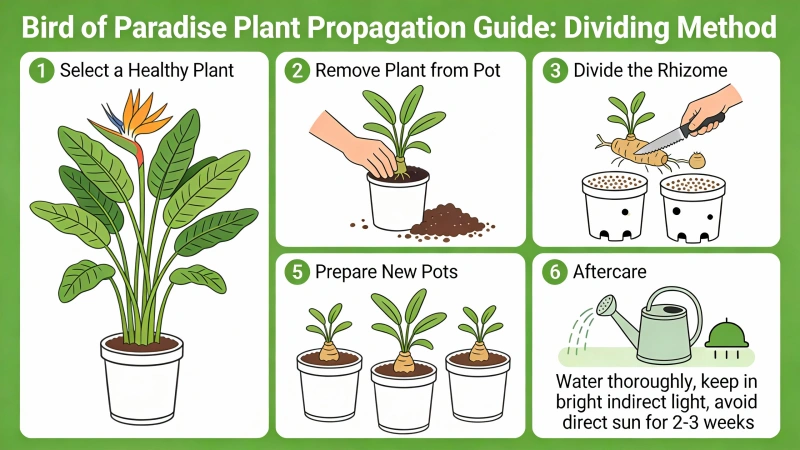
Bird of Paradise can be propagated by division. Growing from seed is possible but takes 10+ years to bloom—so division is the practical choice.
Division Steps
- Choose spring — when the plant is entering its active growth period
- Remove from pot — gently slide the plant out
- Find natural divisions — look for sections that have their own root system
- Separate carefully — use your hands or a clean knife to divide
- Repot each section — use fresh, well-draining soil
- Keep moist for 3 months — until roots are established
- Resume normal care — after roots take hold
Note: Divided plants may not bloom for 1-2 years while they recover and re-establish.
🎥 Watch: Bird of Paradise Care Guide
This video covers essential indoor care tips for Bird of Paradise plants:
Frequently Asked Questions
Is Bird of Paradise toxic to pets?
Yes. According to the ASPCA, Bird of Paradise is toxic to cats, dogs, and horses. If ingested, it can cause nausea, vomiting, and drowsiness. Keep this plant out of reach of curious pets.
Why are my Bird of Paradise leaves splitting?
Leaf splitting is completely normal! It’s an evolutionary adaptation that helps the plant survive strong winds in its native habitat. Indoors, it can happen due to low humidity, physical contact, or simply the weight of large leaves. It’s nothing to worry about.
Can my Bird of Paradise bloom indoors?
It’s possible but very rare. The plant needs to be at least 4-5 years old, receive intense direct light, and remain root-bound. Even then, most indoor plants never bloom. If you’re on the West Coast, your chances are slightly better due to more intense sunlight.
Why are the leaf edges turning brown?
The most common causes are low humidity and hard water. Try increasing humidity with a humidifier or misting, and switch to filtered or distilled water.
How often should I water my Bird of Paradise?
There’s no fixed schedule—check the soil instead. Water when the top 50% of soil is dry. This might be weekly in summer and every 10-14 days in winter.
How much light does a Bird of Paradise need?
At least 6 hours of direct sunlight daily. South-facing or west-facing windows are ideal. Insufficient light is the #1 reason Bird of Paradise plants fail to thrive indoors.
How often should I repot my Bird of Paradise?
Every 2-3 years, or when roots grow out of the drainage holes. However, these plants actually prefer being slightly root-bound, so don’t rush to repot. If you’re hoping for blooms, keeping it pot-bound may help.
Final Thoughts
Bird of Paradise plants have a reputation for being easy, and in many ways they are. But there are a few things most guides don’t tell you:
- They’re light-hungry. Put them in your brightest spot—nothing else matters if light is insufficient.
- Water quality matters. Hard water causes those frustrating brown edges.
- Leaf splits are normal. It’s not dying—it’s just being tropical.
- Indoor blooms are rare. Enjoy the stunning foliage instead.
I went from a struggling 3-foot plant in a dark corner to a thriving 5-foot tropical beauty by a sunny window. The transformation happened once I gave it what it really needed: light, clean water, and realistic expectations.
Your Bird of Paradise can thrive too. Just give it enough sun and be patient.
Happy growing! 🌴🧡
This article was created by a professional team. AI tools were used during the research and writing process to enhance efficiency and quality. All information has undergone manual verification and editing to ensure accuracy and practicality. We are committed to providing readers with objective and valuable content.
Publisher::meiruth558@gmail.com,Please indicate the source when reposting:https://gardeningtoolsgarden.com/how-to-care-for-a-bird-of-paradise-plant/
