
Eighteen months ago, I brought home my first fiddle leaf fig from Home Depot. Three months later, its leaves were covered in brown spots, and the bottom leaves kept dropping one by one. I was convinced it wouldn’t survive the summer.
If you’re reading this, you probably know the feeling. Fiddle leaf figs have a reputation for being drama queens of the plant world. They’re gorgeous—but notoriously difficult to keep alive.
The good news? After nearly killing my first one and learning from my mistakes, I’ve figured out what actually works. My fiddle leaf fig went from struggling to survive to growing over 3 feet taller with 15+ new leaves in just one year.
In this guide, I’ll share the 15 care tips that made all the difference. You’ll learn exactly how to water, where to place it, and how to fix common problems like brown spots and dropping leaves.
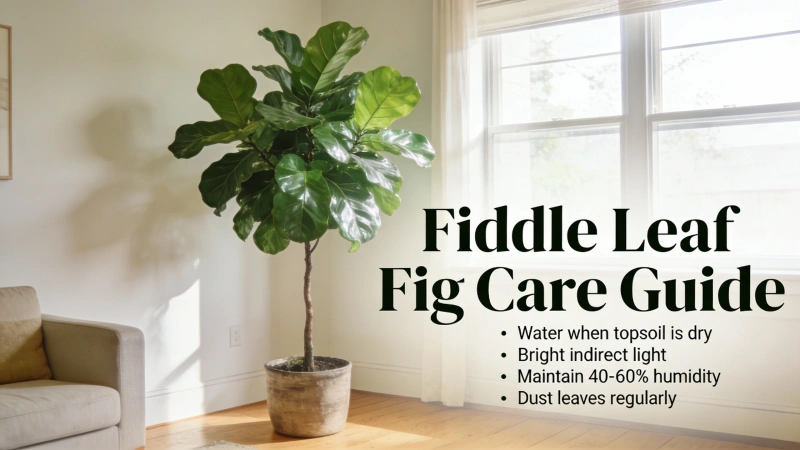

Quick Answer: Fiddle Leaf Fig Care Basics
Here’s what fiddle leaf figs need to thrive: bright indirect light (6-8 hours daily near a south or east-facing window), water only when the top 2-3 inches of soil are dry, well-draining soil, 50-65% humidity, and monthly fertilizing during spring and summer. The #1 rule? It’s better to underwater than overwater—root rot from overwatering is the leading cause of fiddle leaf fig death.
| Care Factor | Ideal Conditions |
|---|---|
| Light | Bright indirect light, 6-8 hours/day |
| Watering | When top 2-3″ of soil is dry |
| Humidity | 50-65% |
| Temperature | 60-75°F (15-24°C) |
| Fertilizer | Monthly in spring/summer |
| Repotting | Every 1-2 years |
Understanding Your Fiddle Leaf Fig
Before diving into care tips, it helps to know where this plant comes from.
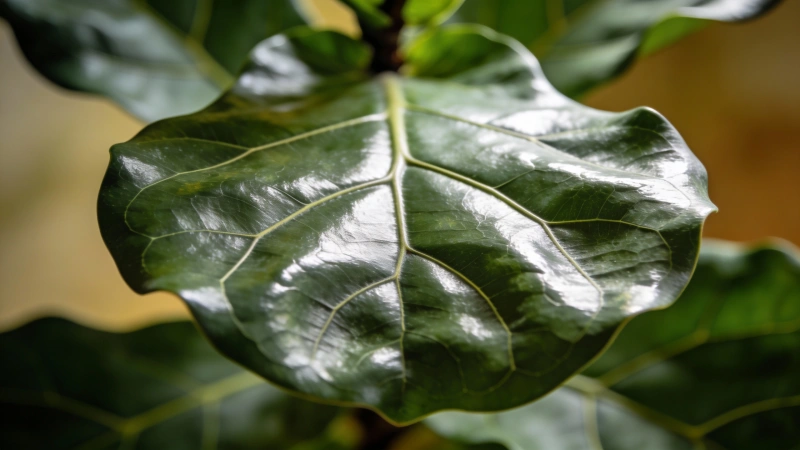
The fiddle leaf fig (Ficus lyrata) is native to the tropical rainforests of Western Africa. Its name comes from the distinctive violin-shaped leaves that can grow up to 18 inches long.
In the wild, these plants can grow up to 50 feet tall. Indoors, they typically reach 6-10 feet—making them one of the most impressive houseplants you can own.
Understanding its tropical origins explains a lot about what it needs: warmth, humidity, and plenty of bright light (but not harsh direct sun, since it grows under the rainforest canopy).
1. Light: The Most Critical Factor
If there’s one thing I want you to remember from this entire article, it’s this: light is everything.
I learned this the hard way. My first fiddle leaf fig sat in a corner of my living room—far from any window because I thought that spot “looked nice.” Within weeks, it started dropping leaves.
According to plant experts at the Royal Horticultural Society, fiddle leaf figs need bright, indirect light for at least 6 hours daily. Here’s what that means in practice:
Best Window Placement
- South-facing window: Ideal. Provides the most consistent bright light.
- East-facing window: Great. Gentle morning sun is perfect.
- West-facing window: Good, but watch for intense afternoon sun.
- North-facing window: Usually not enough light. Avoid if possible.
Signs Your Fiddle Needs More Light
- New leaves are smaller than older ones
- Stems look thin and leggy
- Bottom leaves keep falling off
- Slow or no growth
Pro tip: Rotate your plant a quarter turn each week. Fiddle leaf figs grow toward the light, and without rotation, they’ll become lopsided.
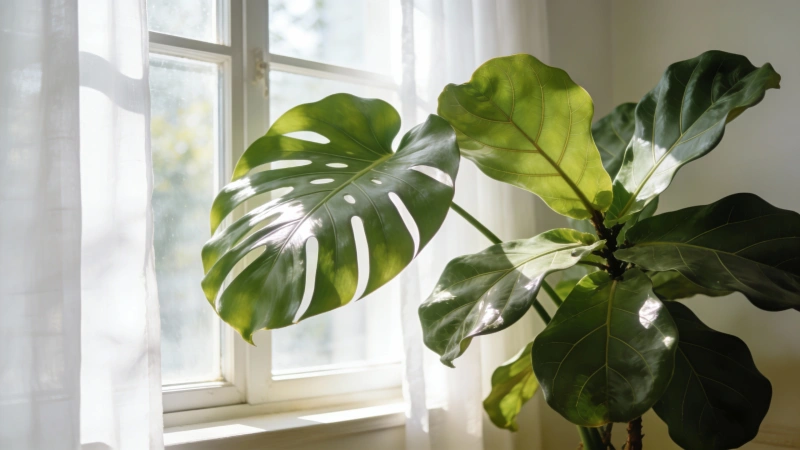
If your space doesn’t get enough natural light, don’t worry—you have options. A good grow light can supplement natural light effectively.
That said, if your home is genuinely too dark for a fiddle leaf fig, you might want to consider a more shade-tolerant plant. I wrote about how to care for a peace lily—they can thrive in low-light conditions where fiddle leaf figs would struggle.
2. Watering: The #1 Killer of Fiddle Leaf Figs
Here’s a hard truth: overwatering kills more fiddle leaf figs than anything else.
When I first got mine, I watered it every Sunday like clockwork. That was a mistake. The soil stayed soggy, and the roots started rotting.
The key is to water based on what your plant needs—not on a fixed schedule.
How to Know When to Water
Method 1: The Finger Test
Stick your finger 2-3 inches into the soil. If it feels dry, water. If it feels moist, wait a few more days.
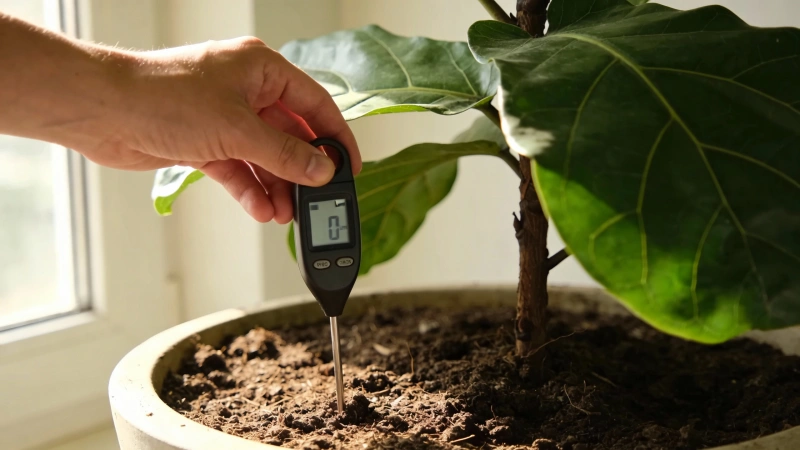
Method 2: Use a Moisture Meter (My Recommendation)
This $10-15 tool takes all the guesswork out of watering. When the meter reads “dry,” it’s time to water. This single purchase transformed my fiddle leaf fig care.
Watering Frequency Guide
| Season | Typical Frequency | Notes |
|---|---|---|
| Spring | Every 7-10 days | Growth begins; needs increase |
| Summer | Every 5-7 days | Peak growth; most water needed |
| Fall | Every 10-12 days | Growth slows down |
| Winter | Every 12-14 days | Dormant period; reduce watering |
Note: These are starting points. Your actual schedule depends on pot size, humidity, and light conditions.
How to Water Properly
- Water thoroughly until it drains from the bottom holes
- Use room-temperature water (cold water shocks the roots)
- Never let the pot sit in standing water
- Empty the saucer after 30 minutes
Bonus tip: If you can collect rainwater, your fiddle leaf fig will love it. I’ve noticed my plant responds better to rainwater than tap water.
3. Soil and Pot Selection
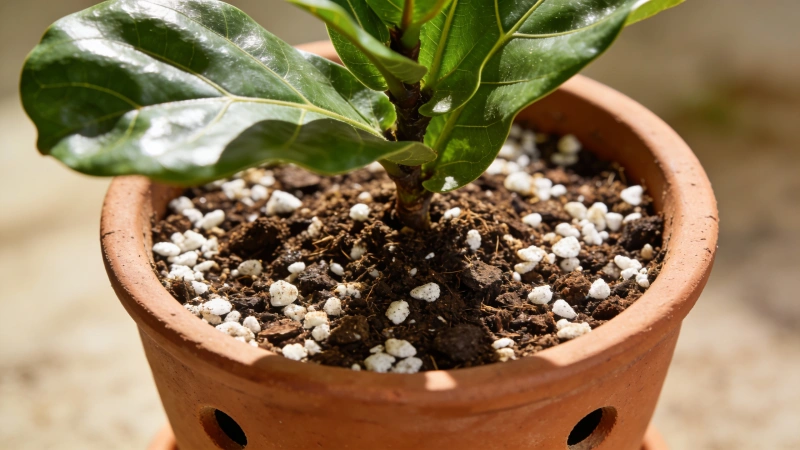
Good drainage is non-negotiable for fiddle leaf figs. Here’s what I use:
Best Soil Mix
My go-to recipe:
- 70% cactus/succulent mix
- 20% perlite
- 10% orchid bark (optional, but improves aeration)
You can also use regular potting soil mixed with 30% perlite. The goal is soil that drains quickly while retaining some moisture.
Pot Requirements
- Drainage holes are mandatory. No exceptions.
- Terracotta pots are better than plastic (they breathe and help prevent overwatering)
- Choose a pot only 1-2 inches larger than the current root ball
4. Humidity and Temperature
Remember, fiddle leaf figs come from tropical rainforests. They love humidity.
Ideal Humidity: 50-65%
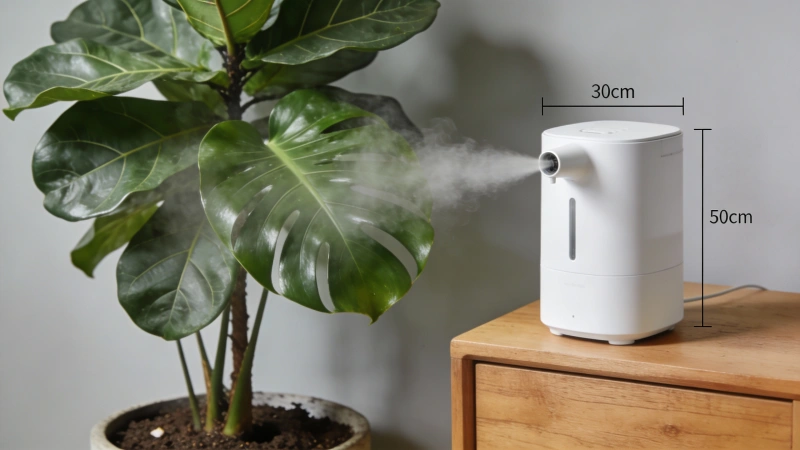
Most homes sit around 30-50% humidity—even lower in winter with heating. Here’s how to boost it:
| Method | Effectiveness | Notes |
|---|---|---|
| Humidifier | ⭐⭐⭐ Best | Place near plant; most reliable |
| Pebble tray | ⭐⭐ Good | Keep water below pot bottom |
| Group plants together | ⭐⭐ Good | Plants create humid microclimate |
| Misting | ⭐ Fair | Can spread disease; not recommended |
I actually keep my fiddle leaf fig grouped with a few other tropical plants, including a spider plant. They help create a more humid microclimate together.
Temperature Requirements
- Ideal range: 60-75°F (15-24°C)
- Minimum: 50°F (10°C)
- Avoid: Cold drafts, heating vents, air conditioning blasts
My fiddle leaf fig sits about 4 feet from a south-facing window—close enough for light, far enough to avoid cold drafts in winter.
5. Fertilizing
Fiddle leaf figs are hungry plants. Those big, beautiful leaves need nutrients to grow.
When to Fertilize
- Spring and summer: Once a month
- Fall and winter: Stop fertilizing (the plant is dormant)
What to Use
Look for a balanced liquid fertilizer with an NPK ratio close to 3-1-2. Many brands make fiddle leaf fig-specific fertilizers, but any quality houseplant fertilizer works.
Important: Dilute to half the recommended strength. I once overfertilized and got brown spots on my leaves—it took months to recover. Less is more.
6. My 18-Month Journey: From Nearly Dead to Thriving
Let me share what really happened with my fiddle leaf fig—including all my mistakes.
The Beginning
In April 2022, I bought a 2-foot tall fiddle leaf fig from Home Depot for about $35. I was so excited to finally have one of these “Instagram-famous” plants.
I placed it in my living room corner—away from windows because I wanted it to be a focal point of the room. I watered it every Sunday without checking the soil. I used regular potting soil. I didn’t fertilize at all.
Looking back, I did almost everything wrong.
The Problems
By July, things got ugly:
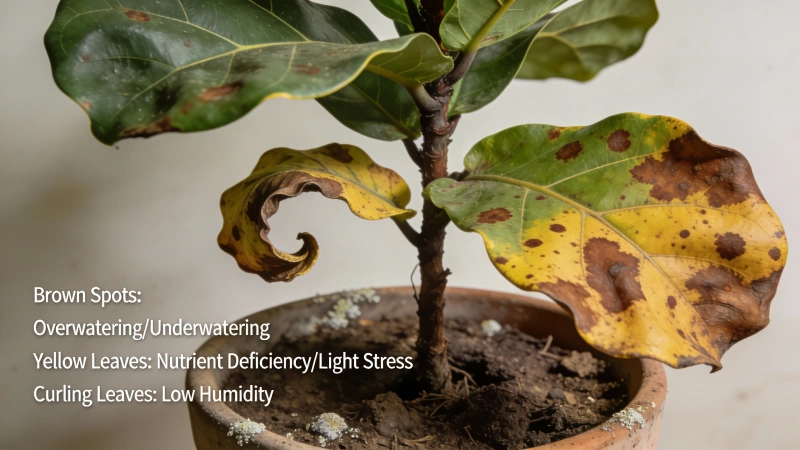
- Brown spots appeared on multiple leaves
- The bottom leaves turned yellow and fell off—five in one month
- New leaves were tiny and some came out curled
- The whole plant looked sad and droopy
I was frustrated. I almost threw it out.
The Turnaround
Instead of giving up, I spent a weekend researching. That’s when I discovered my two biggest mistakes: not enough light, and way too much water.
Here’s exactly what I changed:
- Moved it to a south-facing window (this was the game-changer)
- Bought a moisture meter and only watered when it read “dry”
- Repotted with cactus soil + perlite for better drainage
- Started fertilizing monthly in spring and summer
- Rotated the pot weekly for even light exposure
- Stopped moving it around (fiddle leaf figs hate change)
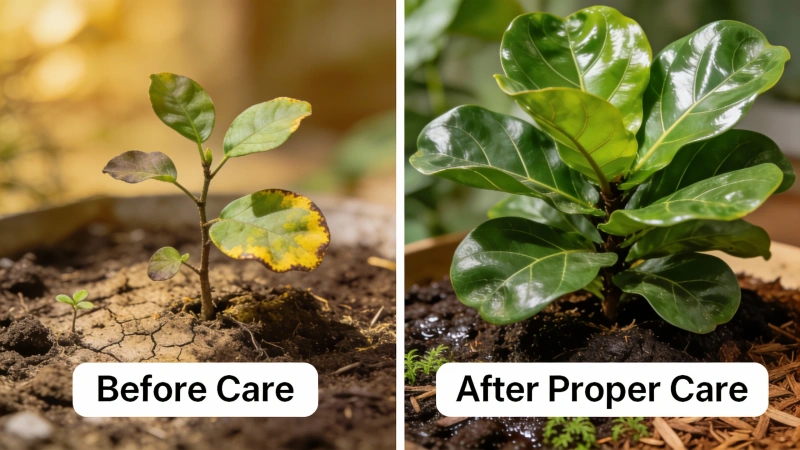
The Results
| Metric | August 2022 | December 2023 |
|---|---|---|
| Height | 2 feet (stalled) | 5+ feet |
| New leaves/year | 2-3 | 15+ |
| Brown spots | Frequent | None |
| Leaf dropping | Monthly | Rare (only old leaves) |
What I Learned
The biggest lesson? Light and watering matter more than anything else. Get those two things right, and your fiddle leaf fig will likely thrive. Get them wrong, and no amount of fertilizer or fancy soil will save it.
7. Common Problems and How to Fix Them
Comment
byu/No_Independence490 from discussion
inhouseplants
Even with perfect care, issues happen. Here’s how to diagnose and fix the most common problems:
| Symptom | Likely Cause | Solution |
|---|---|---|
| Brown spots (center of leaf) | Overwatering / root rot | Reduce watering; check roots; repot if needed |
| Brown, crispy edges | Underwatering / low humidity | Water more; increase humidity |
| Yellow leaves | Overwatering / low light | Adjust watering; move to brighter spot |
| Dropping leaves | Environmental stress / watering issues | Keep environment stable; check watering |
| Curled or torn new leaves | Low humidity | Increase humidity; mist new leaf buds only |
| Small new leaves | Low light / lack of nutrients | More light; fertilize monthly |
| No growth | Low light / dormancy / root-bound | Check light; wait for spring; consider repotting |
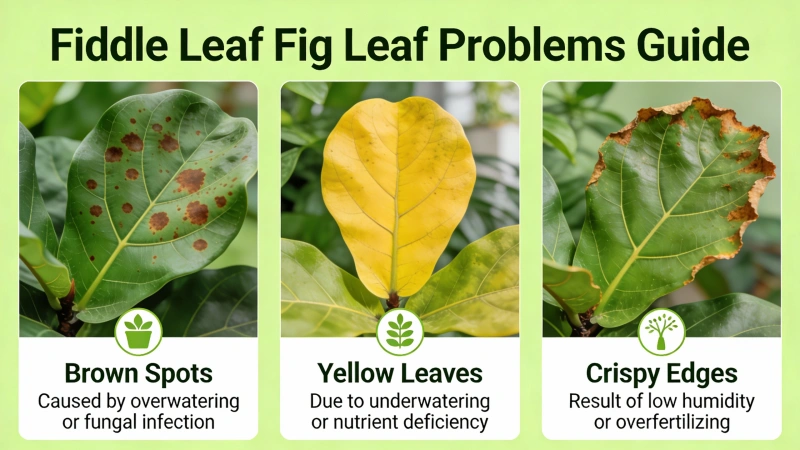
About Root Rot
Root rot is the most serious problem—and often fatal if caught too late. Signs include:
- Leaves turning yellow or brown-black
- Soft, mushy stem at the base
- Bad smell from the soil
If you suspect root rot:
- Remove the plant from its pot immediately
- Cut away any black, mushy roots with clean scissors
- Let roots air dry for a few hours
- Repot in fresh, well-draining soil
- Don’t water for at least a week
8. Pruning and Shaping
Pruning helps your fiddle leaf fig grow fuller and stay manageable.
When to Prune
- Best time: Spring or early summer (active growth period)
- Avoid: Fall and winter
How to Encourage Branching
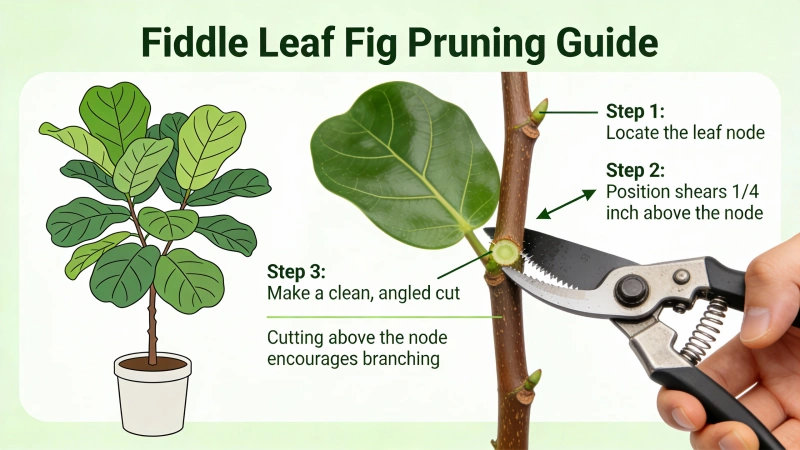
Want your fiddle leaf fig to branch out instead of growing straight up? Here’s what to do:
- Use clean, sharp pruning shears
- Cut just above a leaf node (the spot where a leaf connects to the stem)
- The plant will typically sprout 1-3 new branches below the cut
Don’t throw away those cuttings! You can propagate them. Speaking of which…
9. Propagation
Want more fiddle leaf figs? You can propagate from cuttings.
How to Propagate
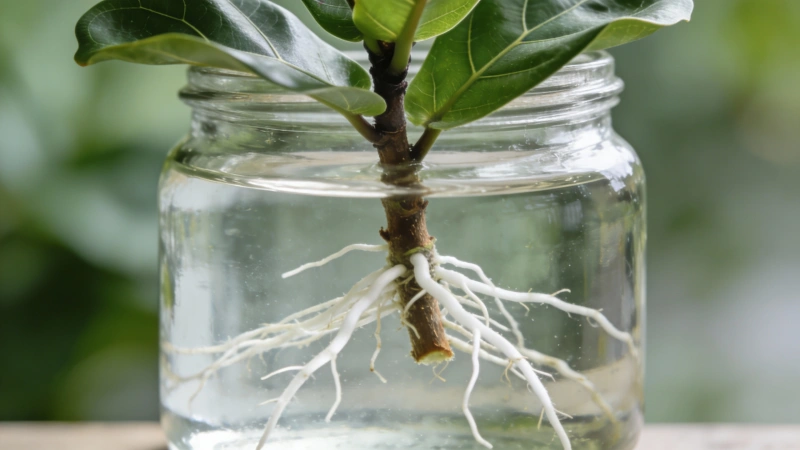
- Take a cutting: Cut a 6-8 inch section with 2-3 leaves
- Remove bottom leaves: Leave only the top 1-2 leaves
- Root in water or soil: Water gives you higher success rates; soil produces stronger roots
- Wait: Rooting takes 4-8 weeks. Be patient.
- Pot it up: Once roots are 2-3 inches long, plant in soil
Success tip: Propagation requires patience. If you’re new to plant propagation, I’d suggest practicing on something easier first. My guide on how to care for a pothos plant covers propagation that’s nearly foolproof—pothos roots in water within days.
10. Repotting Guide
Signs It’s Time to Repot
- Roots growing out of drainage holes
- Water runs straight through without absorbing
- Growth has stalled despite good care
- It’s been 2+ years since last repotting
How to Repot
- Choose a pot 1-2 inches larger (not bigger—too much soil holds too much water)
- Add fresh well-draining soil mix
- Gently remove the plant, being careful with roots
- Place in new pot and fill around with soil
- Water thoroughly and return to its spot
Expect some drama: Your fiddle leaf fig might drop a few leaves after repotting. This is normal—it’s just stressed. It should recover within 2-4 weeks.
11. Common Mistakes to Avoid
Learn from my mistakes (and the mistakes I’ve seen others make):
| Mistake | Why It’s a Problem | What to Do Instead |
|---|---|---|
| Watering on a fixed schedule | Soil dries at different rates | Check soil moisture first |
| Placing in a dark corner | Not enough light | Near a bright window |
| Moving it frequently | Causes stress and leaf drop | Find a spot and stick with it |
| Using pots without drainage | Leads to root rot | Always use drainage holes |
| Repotting immediately after buying | Double stress | Wait 2-4 weeks to acclimate |
| Overwatering yellow leaves | Yellow usually means too much water | Check soil before watering more |
If you’re still building confidence with houseplants, there’s no shame in starting with something more forgiving. Plants like the monstera offer similar tropical vibes but are more tolerant of mistakes.
Frequently Asked Questions
Are fiddle leaf figs toxic to pets?
Yes. According to the ASPCA, fiddle leaf figs are toxic to cats and dogs. If ingested, they can cause oral irritation, excessive drooling, and vomiting. Keep your plant out of reach of curious pets.
Can I put my fiddle leaf fig in the bedroom?
Yes, as long as the bedroom gets enough bright light. Fiddle leaf figs release oxygen and can improve indoor air quality. Just make sure it’s near a window—a dark bedroom won’t work.
How fast do fiddle leaf figs grow?
Under ideal conditions, they can grow 1-2 feet per year. However, with insufficient light or improper care, they may barely grow at all. Light is the biggest factor in growth rate.
Will brown spots on leaves heal?
Unfortunately, no. Once a leaf has brown spots, those spots won’t turn green again. However, you can:
- Trim off brown edges with clean scissors
- Remove severely damaged leaves entirely
- Focus on fixing the underlying problem so new growth is healthy
Can fiddle leaf figs go outside?
In USDA zones 10-12, they can live outdoors year-round. In other climates, you can put them outside during summer (in shade, not direct sun), but bring them in when temperatures drop below 50°F (10°C).
Why is my fiddle leaf fig leaning?
It’s reaching toward the light. Rotate your plant a quarter turn weekly to keep it growing straight.
Helpful Video Guide
Want to see these care tips in action? This video does a great job demonstrating fiddle leaf fig care basics:
Final Thoughts
Caring for a fiddle leaf fig isn’t as hard as its reputation suggests. It really comes down to a few key things:
- Light first—near a south or east-facing window
- Water wisely—when dry, not on a schedule
- Good drainage—always use pots with holes
- Stay consistent—find a spot and don’t move it
My fiddle leaf fig went from struggling to survive to becoming the tallest, most impressive plant in my home. Yours can too.
Give it time, be patient with yourself (and with the plant), and don’t be afraid to make adjustments as you learn what works in your specific space.
You’ve got this. 🌿
This article was created by a professional team. AI tools were used during the research and writing process to enhance efficiency and quality. All information has undergone manual verification and editing to ensure accuracy and practicality. We are committed to providing readers with objective and valuable content.
Publisher::meiruth558@gmail.com,Please indicate the source when reposting:https://gardeningtoolsgarden.com/how-to-care-for-fiddle-leaf-fig/
