Is your pothos turning yellow, growing long bare vines, or refusing to root from cuttings? Before changing everything at once, check three things: the light reaching its leaves, the moisture around its roots, and whether you can see healthy nodes on the stems. Those clues usually tell you more than another generic watering schedule.
This pothos care guide covers the everyday needs of Epipremnum aureum (also called golden pothos or devil’s ivy), plus a practical yellow-leaf diagnosis chart, a decision-based watering routine, and step-by-step water and soil propagation. You will also find ways to make a pothos fuller, identify common pests, and track improvements over a month.
Quick answer: How do you care for pothos? Grow pothos in bright, indirect light for the fullest vines; it tolerates lower light but grows more slowly. Use an airy potting mix and a pot with drainage. Water when the upper portion of the mix has dried and the root zone is no longer staying soggy, then water thoroughly and empty the saucer. Feed lightly during active growth and keep away from cold drafts. Yellow leaves are a symptom, not a diagnosis: check moisture, roots, light and pests before acting.
Pothos Care at a Glance
| Care factor | Practical target | What to check at home |
|---|---|---|
| Light | Bright, filtered or indirect light; tolerates shade | New leaf size, spacing between nodes and variegation |
| Water | Let the potting mix dry somewhat before watering again | Finger or wooden skewer in the mix; pot weight; drainage |
| Soil | Airy, moisture-retentive but freely draining potting mix | Mix does not remain saturated for prolonged periods |
| Temperature | Warm indoor temperatures; avoid cold drafts | Window chills, heating and AC vents |
| Humidity | Typical indoor conditions are tolerated; moderate humidity helps | Dry leaf margins alongside watering and salt buildup |
| Fertilizer | Modest feeding while visibly growing | Weak growth versus salt buildup and leaf-edge burn |
| Propagation | Stem cuttings with at least one healthy node | Node location, root firmness and new growth |
| Pet safety | Keep out of reach of cats and dogs | Chewed leaves or access to trailing vines |
University horticulture guidance from Wisconsin Horticulture Extension and NC State Extension supports filtered light, well-drained growing media, modest feeding, pruning, and propagation from stem cuttings.
Pothos Varieties: Which One Do You Have?
Most plants sold simply as “pothos” are cultivars of Epipremnum aureum. Leaf colors vary substantially, so knowing the cultivar helps you tell normal variegation from actual damage.
| Type | Normal appearance | Care consideration |
|---|---|---|
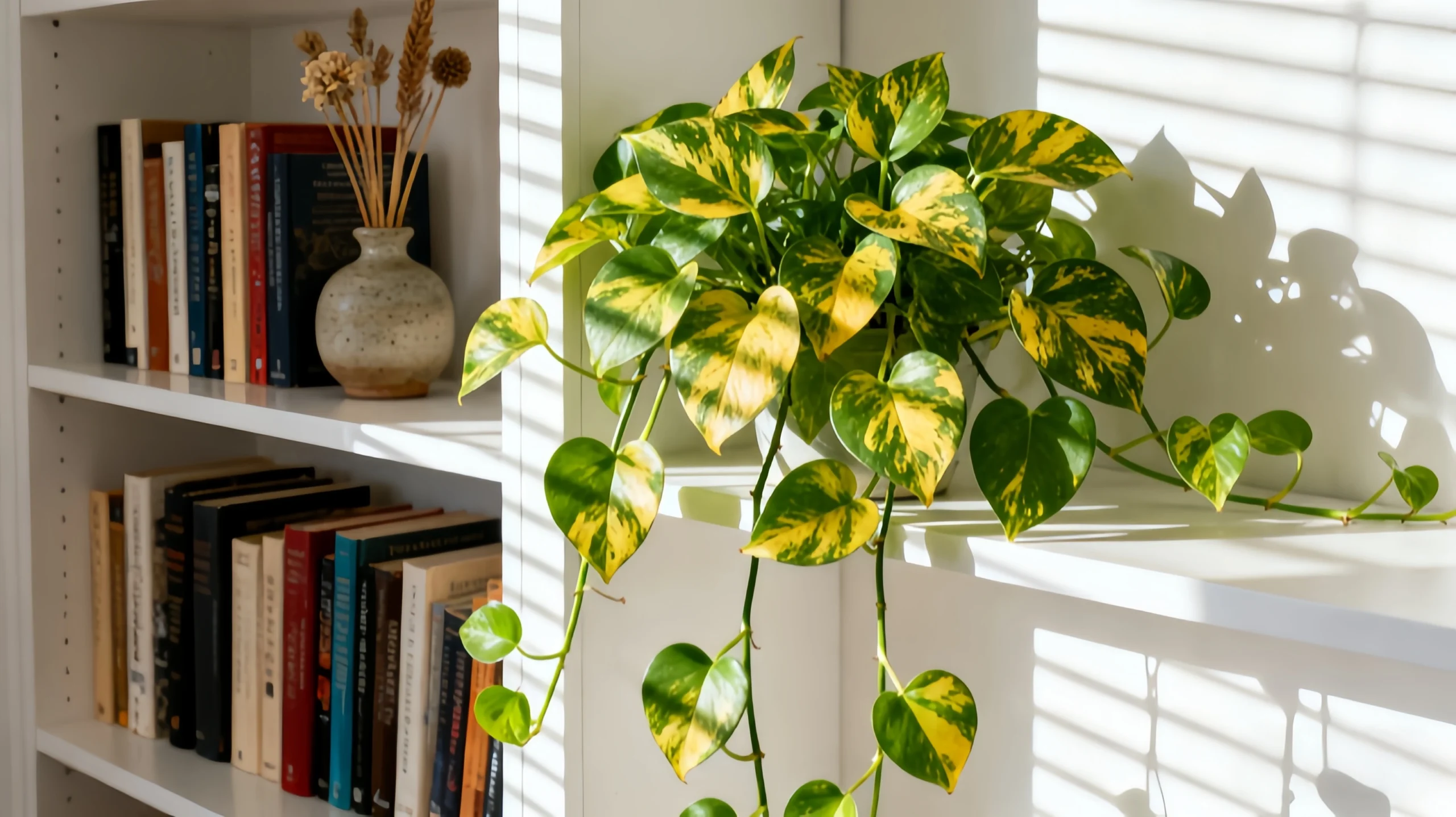
| Golden pothos | Green leaves with golden-yellow markings | Good starting choice; brighter indirect light supports visible markings |
| Jade pothos | Mostly solid green foliage | Often a reasonable choice for lower-light rooms, though not darkness |
| Marble Queen | Strong cream-and-green marbling | More light is generally needed to sustain vigorous growth |
| Neon pothos | Bright yellow-green foliage | Don’t mistake its normal leaf color for yellowing caused by stress |
| Pearls and Jade / N’Joy | Compact leaves with prominent pale variegation | Growth may be slower than vigorous green types |
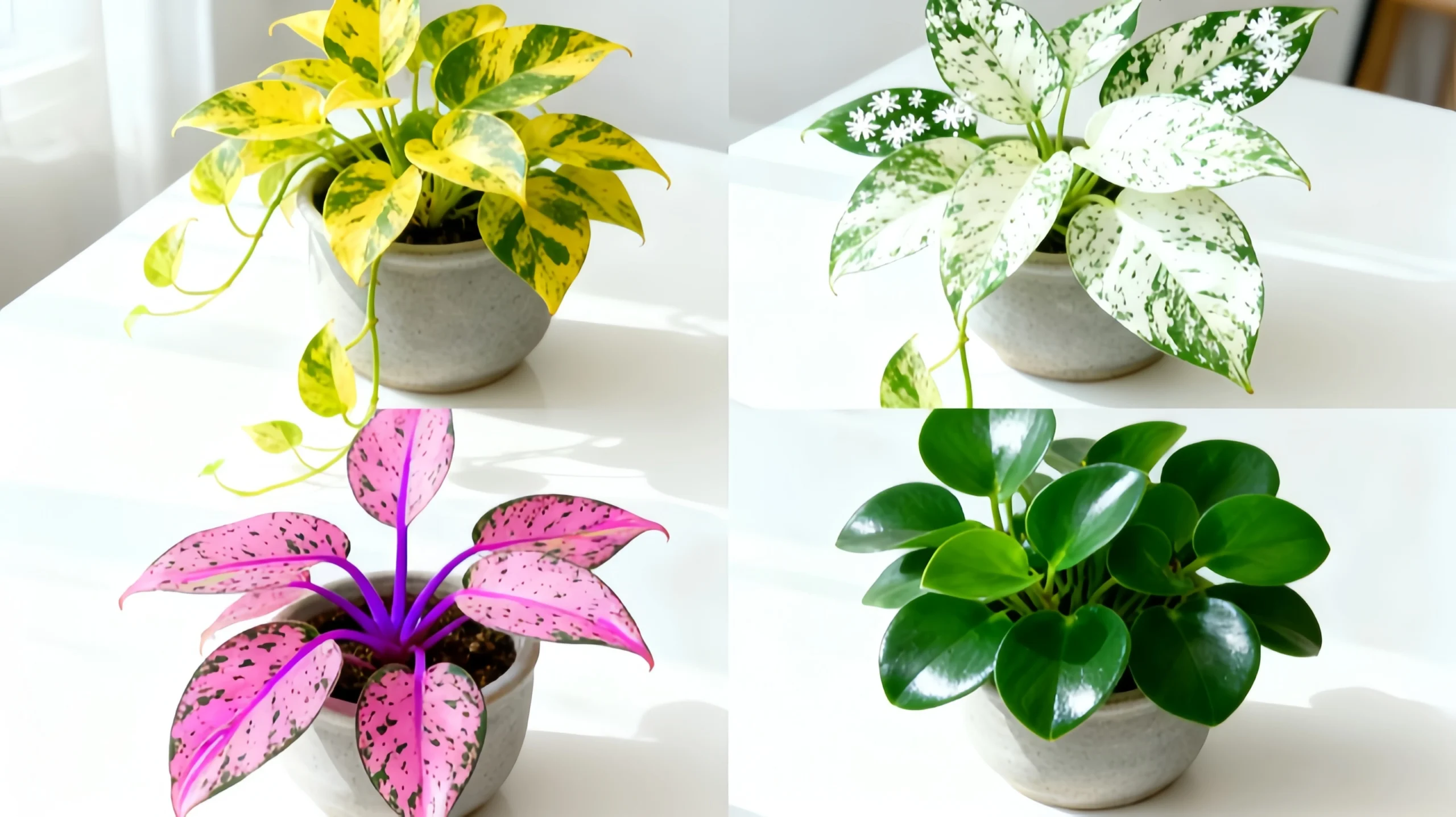
Easy-to-miss naming difference: “Satin pothos” or “silver pothos” is usually Scindapsus pictus, a related but different species, not a cultivar of Epipremnum aureum. Heartleaf philodendron is another look-alike. NC State’s Scindapsus reference explains the distinction; see our Philodendron care guide when comparing similar trailing houseplants.
Pothos Light Requirements: Where Should You Put It?
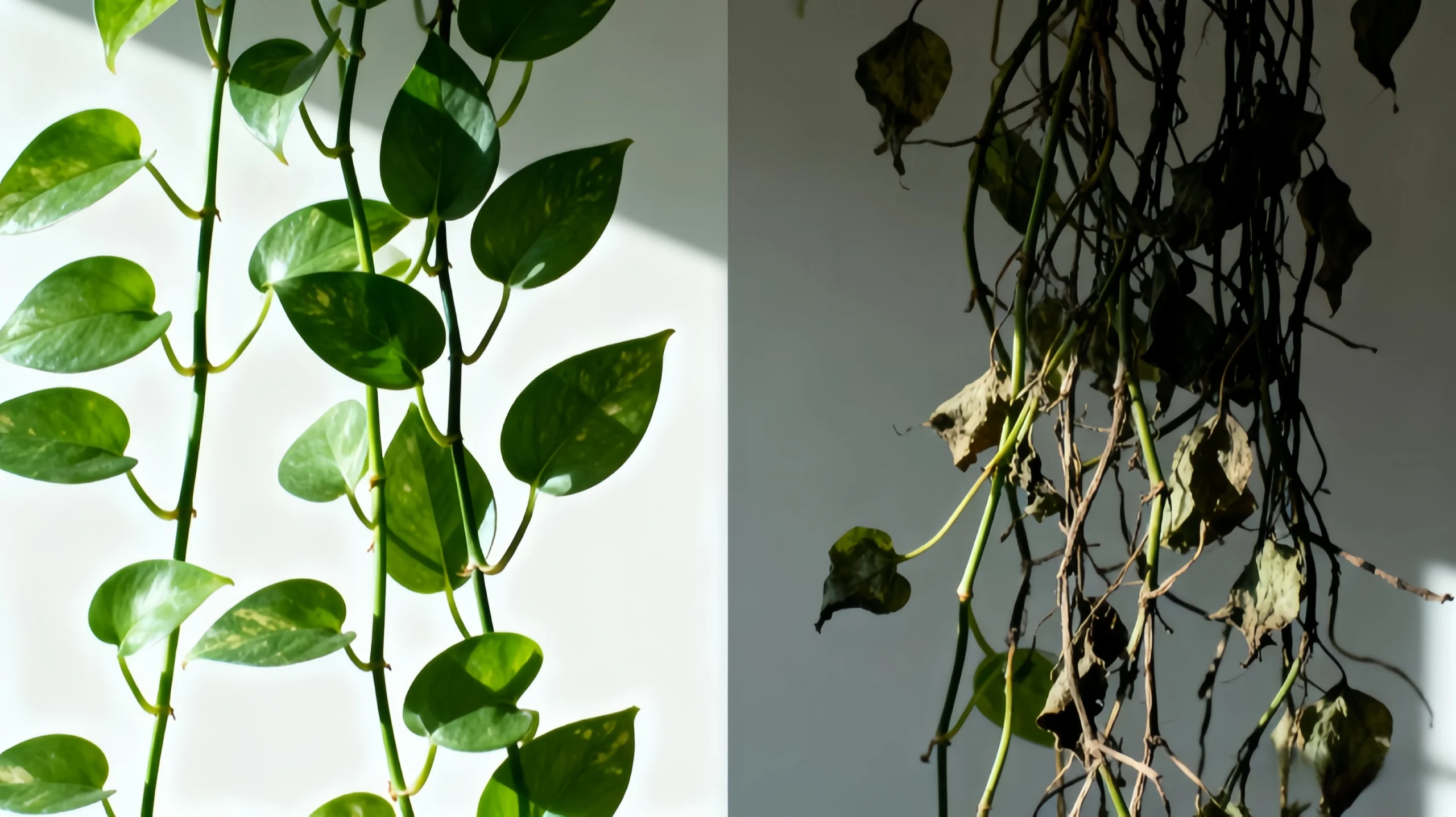
Bright, indirect light is the best starting point for strong growth. Pothos will often survive in much dimmer rooms, but survival and active growth are not the same thing. Variegated plants may produce greener, smaller leaves under weak light.
| Location | Typical result | Practical adjustment |
|---|---|---|
| Close to a bright east-facing window | Often a strong position for filtered morning light | Check for direct sun if foliage begins to bleach or scorch |
| Near a south- or west-facing window | Potentially excellent light, but intense afternoon exposure | Use a sheer curtain or move farther from the glass if leaves scorch |
| Bright room, several feet from a window | Can work, depending on window size and obstacles | Watch whether newer leaves are getting smaller or more widely spaced |
| Dark hallway or windowless corner | Very slow growth, weak stems or declining variegation | Relocate or provide a suitable grow light |
Three clues that your pothos needs more light: new leaves stay small, the spaces between leaves lengthen, and new foliage on a variegated plant becomes noticeably greener. Move the plant gradually and judge new growth over the following weeks, not the appearance of old leaves.
If you need another adaptable indoor plant for a less sunny room, compare the conditions in our snake plant care guide or ZZ plant care guide.
How Often Should You Water Pothos? Use This Decision Check
There is no dependable “water every seven days” rule. A small terracotta pot next to a sunny window can dry much faster than a large plastic pot in a dim room. Instead, check the growing conditions and the moisture in the root zone.
The 60-second watering check
- Check the surface and upper mix. Push a finger or clean wooden skewer roughly 1–2 inches into the pot. If it still feels moist, check again later rather than watering automatically.
- Think about the whole pot. A dry surface with a still-heavy pot may mean the lower root zone remains wet. Compare the pot’s weight with how it feels shortly after a thorough watering.
- Look at the foliage. Soft drooping leaves plus a light, dry pot often suggest water shortage; drooping with consistently wet soil needs a different investigation.
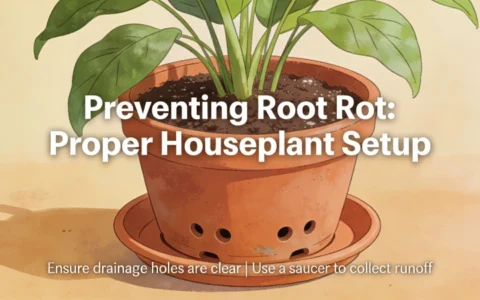
- When water is needed, water thoroughly. Apply water evenly until it runs from the drainage holes. Let it drain and empty the saucer or cachepot.
- Observe the drying pattern. If the mix remains wet for a prolonged time, check light levels, pot size, drainage and root health rather than simply changing the next watering date.
Do not let a struggling pothos remain bone-dry for weeks. It is also a mistake to keep a severely wilted plant wet when the roots are already failing. Yellowing and wilting can occur with both dry soil and damaged, waterlogged roots.
Quick decision table: Water now or wait?
| What you find | Most useful next action |
|---|---|
| Upper soil is dry, pot feels light, leaves are beginning to droop | Water thoroughly and allow the pot to drain |
| Upper soil is dry but the pot still feels heavy and the lower mix is damp | Wait; check again in a few days |
| Soil is damp, multiple leaves are yellow, and the stem base feels soft | Inspect the root system for decay; do not add more water reflexively |
| Water runs immediately down the pot sides and the root ball stays dry | Rewet the mix gradually and evenly; consider whether repotting is needed |
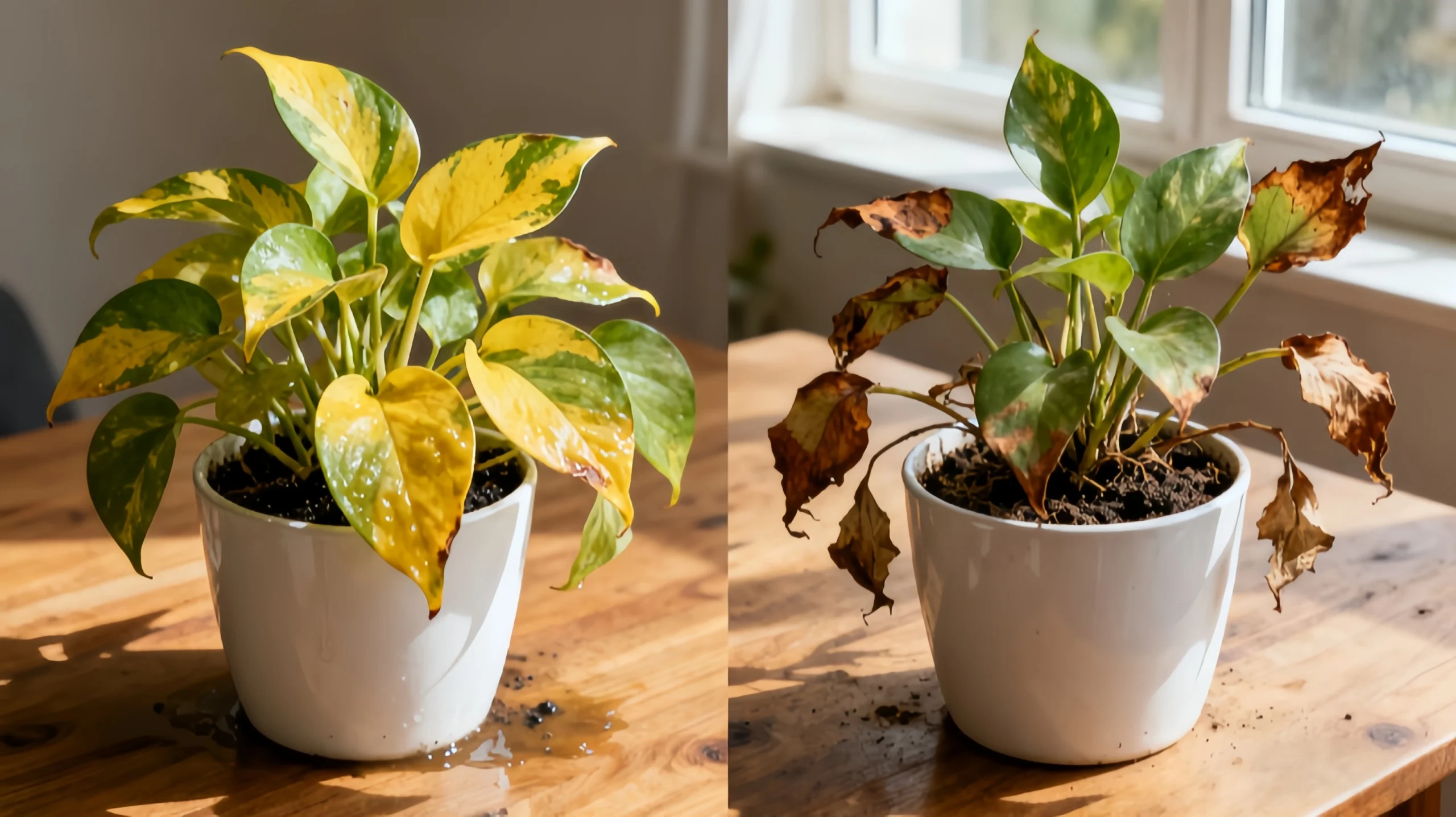
If you suspect rot rather than ordinary thirst, follow the separate root rot treatment steps before changing your watering routine. The root rot resource hub also connects related recovery articles.
Why Are My Pothos Leaves Turning Yellow?
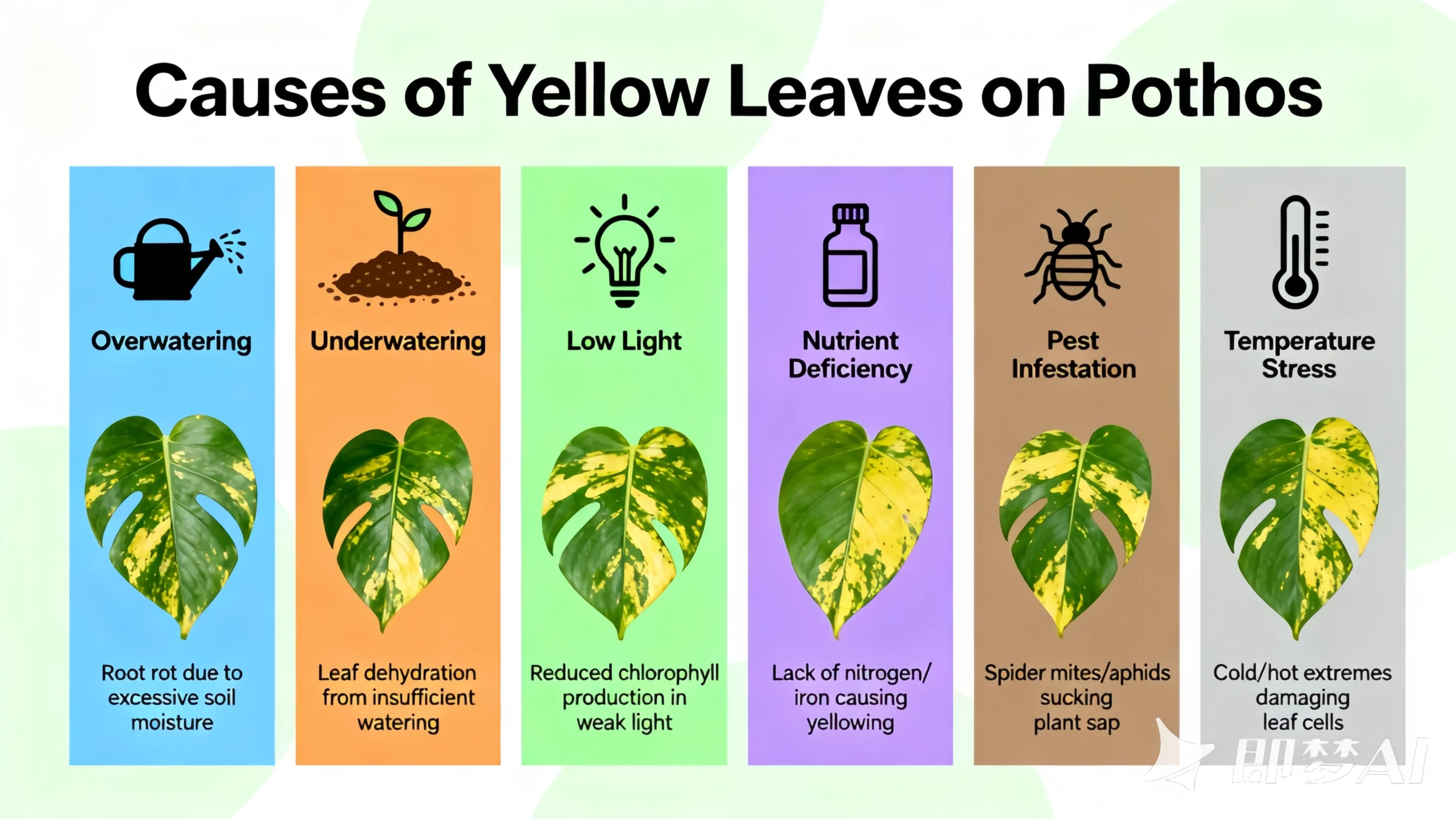
Yellow pothos leaves are not always caused by overwatering. Natural leaf aging, prolonged dryness, reduced light, damaged roots and pest feeding can produce overlapping symptoms. Use the combination of leaf pattern, soil moisture and root condition below.
| Yellowing pattern | Possible explanation | What to check next | First response |
|---|---|---|---|
| A single oldest leaf yellows while the rest look healthy | Natural aging | Any new damage elsewhere? | Remove the aging leaf when ready; monitor |
| Several yellow leaves, heavy damp pot, soft stems or musty mix | Overwatering or root decay | Drainage, pot weight, firm versus mushy roots | Inspect roots; improve conditions instead of watering more |
| Yellowing and limp leaves, very light pot and dry root zone | Prolonged underwatering | Does the mix accept water evenly? | Rehydrate carefully and recheck after watering |
| Older leaves drop, internodes lengthen, new leaves stay small | Low light or prolonged low growth | Distance from window; new leaf spacing | Move gradually to brighter filtered light |
| Scattered fine pale speckles or webbing | Spider mites or another pest | Undersides of leaves and moving mites | Confirm the pest before treating |
| Bleached or brown patches on sun-facing leaves | Possible sun scorch | Exposure to strong direct sun | Filter or reduce intense direct light |
What to do when leaves are yellow and the soil stays wet
First check drainage and whether the pot has been standing in water. If the plant continues to wilt in wet mix, gently examine the root ball. Firm roots may be healthy even when tan or brown; soft, collapsing roots and sloughing tissue are more concerning than color alone. If root decay is present, use fresh, appropriately aerated mix and follow the diagnosis in our houseplant root rot guide. Do not automatically apply hydrogen peroxide or leave roots exposed to air for a full day.
Will yellow pothos leaves turn green again?
A leaf that has fully yellowed generally will not regain its former healthy appearance. Instead of watching that leaf, monitor whether new leaves stay healthy after you address the underlying cause. If the rest of the plant is declining too, follow the broader yellow-leaf troubleshooting guide for possible non-pothos-specific causes.
Best Soil, Pots, Fertilizer and Repotting for Pothos
Choose the mix by how it behaves, not just its recipe
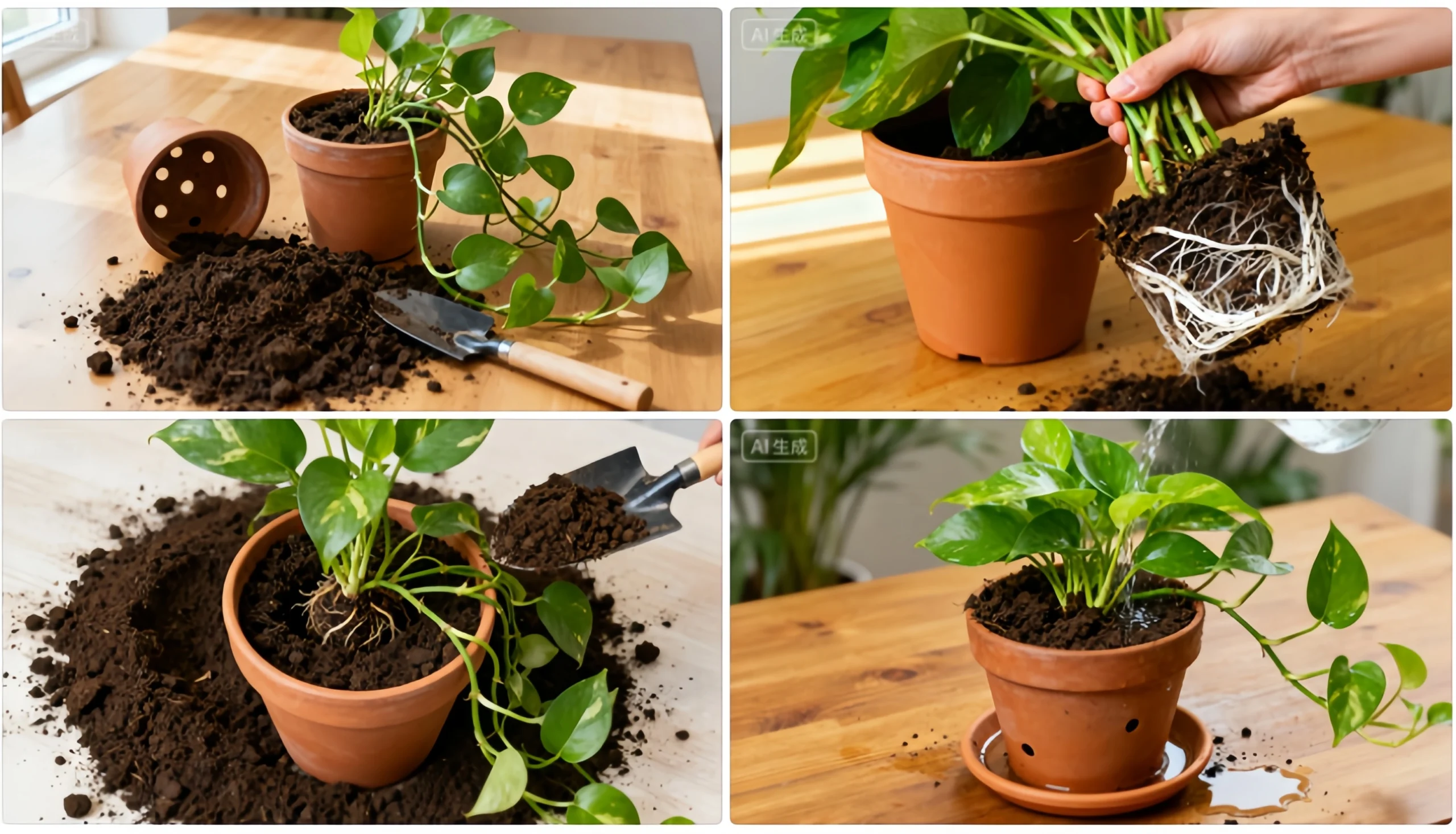
A standard quality indoor potting mix with some coarse perlite or similar material often works well. The goal is a mix that holds useful moisture while allowing excess water and air to move through the root zone. There is no single mandatory ratio for every home: humidity, light, plant size and container material all influence the result.
Repot when there is evidence you need to: a tightly crowded root ball, reduced water absorption, very rapid drying, degraded potting mix or unstable growth. Move to a slightly larger pot only when the roots justify it; oversized containers can remain wet much longer than expected.
How much fertilizer does pothos need?
Pothos is not a heavy feeder. During active growth, use a balanced houseplant fertilizer conservatively, following the product label. A frequent, high-dose feeding schedule is not needed for an ordinary indoor plant; university extension sources often suggest feeding only every other month during the active season. If growth slows in winter because light levels are lower, reduce or pause fertilizer accordingly.
White crust on the potting mix, burnt edges and a recent increase in fertilizer use may indicate excess soluble salts. Check the product directions and water quality rather than automatically increasing feed. If the mix has accumulated salts, repotting in fresh mix may be preferable to repeatedly soaking an unhealthy root system.
How to Propagate Pothos in Water or Soil
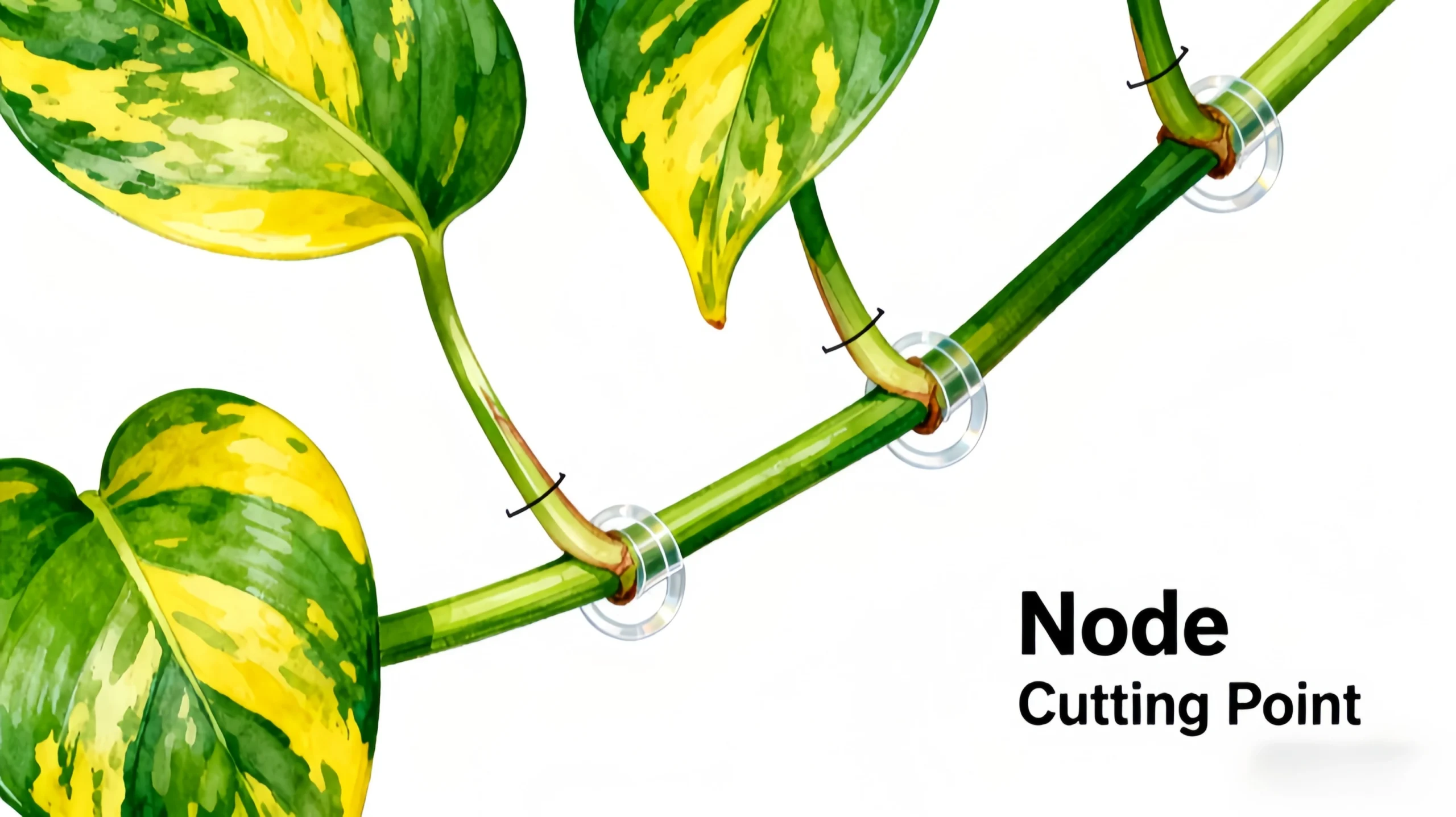
A pothos vine roots from its nodes, the points where leaves and aerial roots emerge. This makes stem cuttings a practical way to renew an aging vine or share plants. The leaf alone is not a reliable substitute for a cutting with a viable node and stem tissue.
Method 1: Water propagation, step by step
- Choose healthy growth. Take a firm section of vine with at least one node and one healthy leaf. Avoid a cutting with widespread rot or obvious pest damage.
- Cut with clean tools. Make a cut just below a node, leaving enough stem to handle without crushing it.
- Remove submerged leaves. Keep leaves above the waterline to reduce decay.
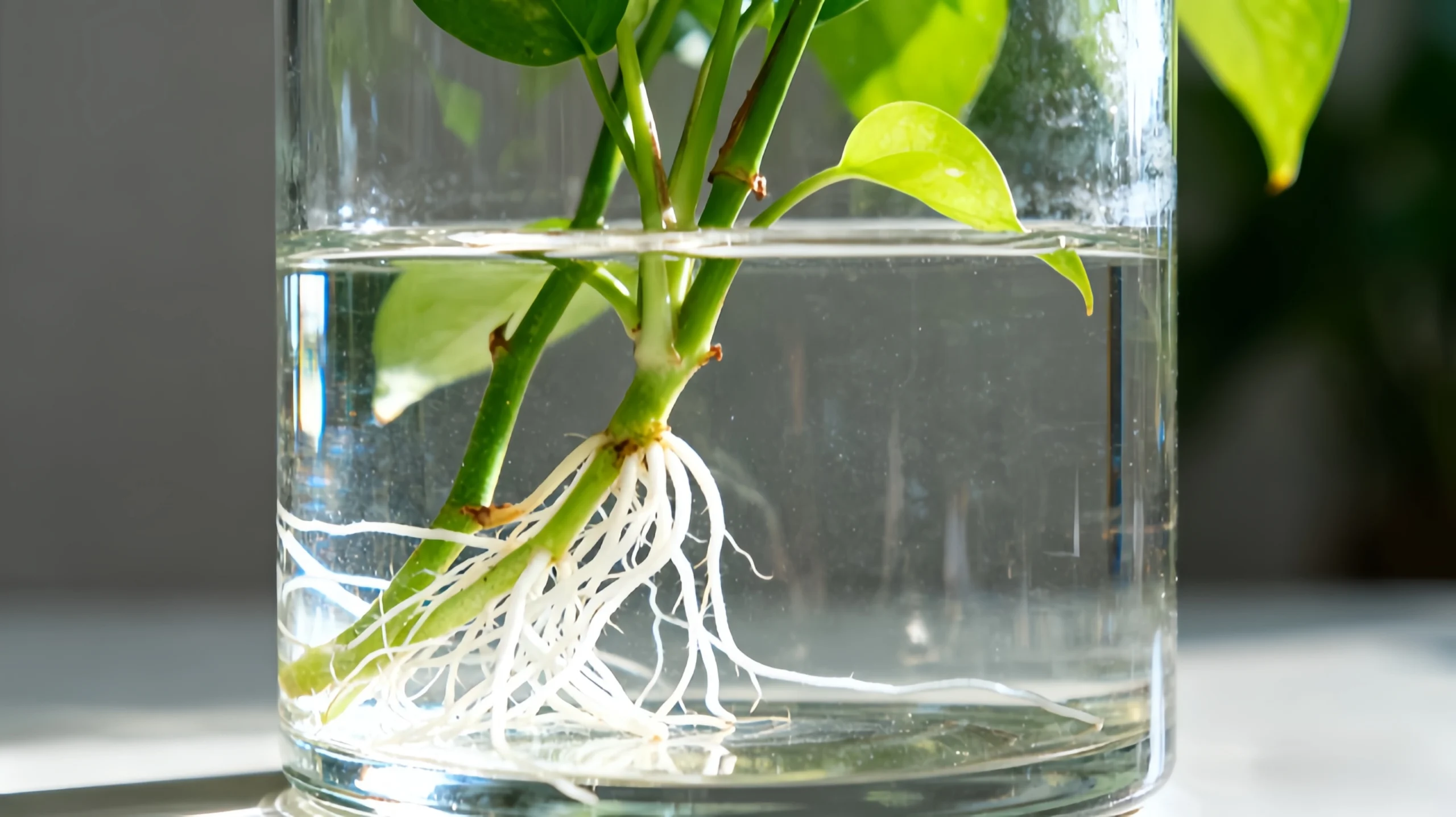
- Submerge one or more nodes. Place the cutting in a clean glass of room-temperature water in bright indirect light.
- Maintain clean water. Refresh it when cloudy or depleted, keeping the node submerged. Check for mushy tissue.
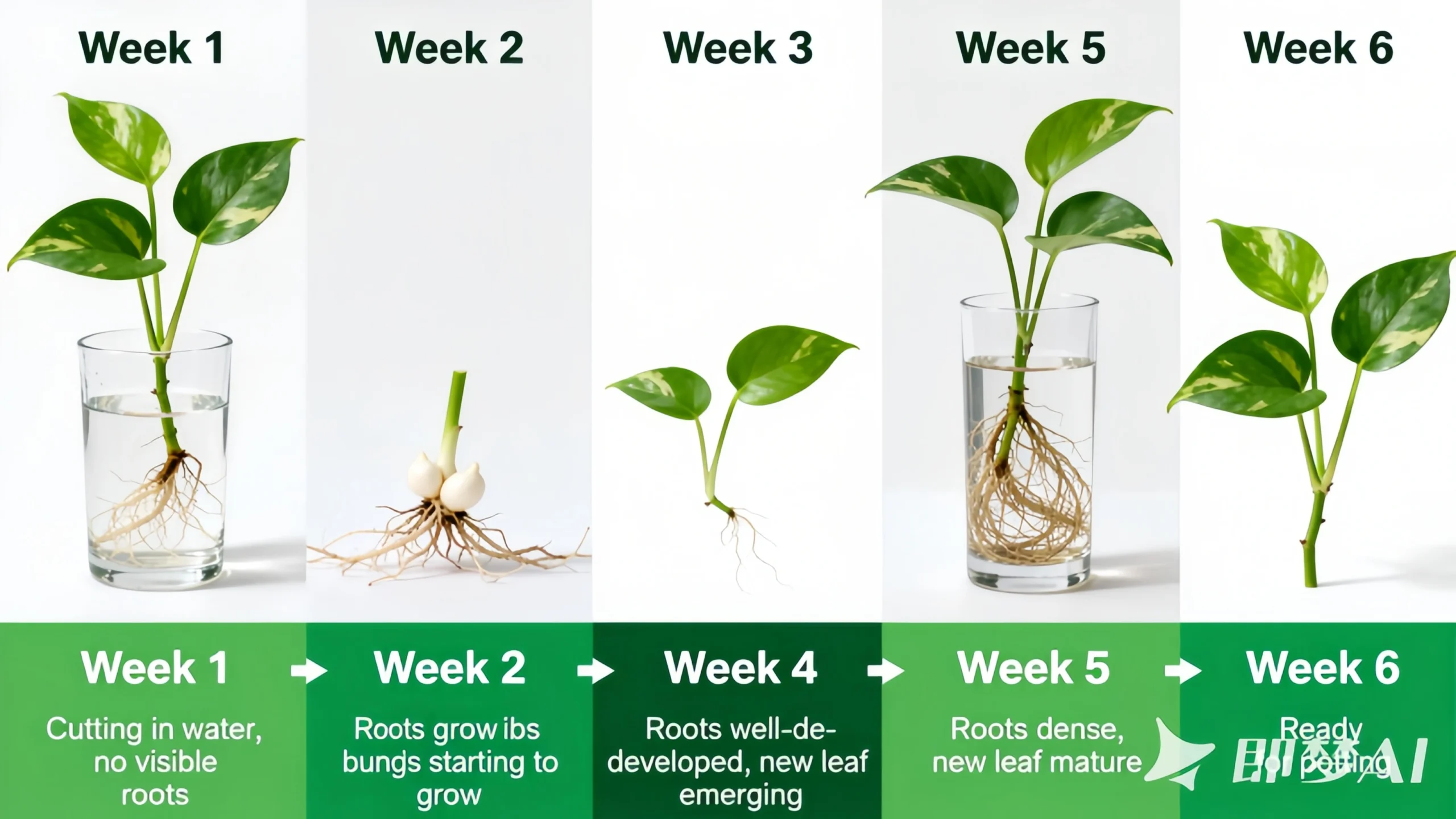
- Watch for firm roots. Rooting may take a few weeks or longer depending on temperature and light; do not assume every cutting follows the same calendar.
- Transfer when roots are established. Plant into an appropriately sized container with fresh, well-drained potting mix and water it in. Keep the mix lightly and evenly moist during the initial transition without leaving it saturated.
Method 2: Root cuttings directly in potting mix
Insert a node into a small pot of fresh, lightly moist, well-aerated mix, keeping any leaves above the surface. Place in bright indirect light. Maintain some moisture while rooting, but avoid a sealed, persistently wet container. A gentle tug is not a reliable test if it risks damaging tender new roots; look for stable new growth and better anchoring over time.
| Method | Best advantage | What can go wrong? |
|---|---|---|
| Water | You can see root growth and check for decay | Waterlogged stem, algae, transition stress when moved to mix |
| Potting mix | No later change from water to substrate | Moisture is harder to judge; buried stem can decay in wet mix |
| Several rooted cuttings in one pot | Creates a fuller-looking plant more quickly | Overcrowding or a pot that stays too wet |
Why are my pothos cuttings turning brown or not rooting?
| Cutting symptom | What to verify | Better next step |
|---|---|---|
| No roots after a few weeks | Is there a living node? Is it warm and receiving indirect light? | Confirm node position; give it more time if tissue is firm |
| Black, mushy stem below water | Decay from damaged or unhealthy tissue | Discard decaying sections; take a fresh healthy cutting |
| Leaves yellow after planting in soil | Transition stress, dry or waterlogged mix, poor root establishment | Check root condition and adjust the moisture pattern |
| Cutting has leaves but never develops new vine growth | Was a viable node included? | Start again with a node-bearing stem cutting |
University of Wisconsin-Madison Extension notes that pothos commonly roots from cuttings within several weeks under favorable conditions. A published rooting interval is a useful reference, not a measured success rate for your own collection.
How to Make a Pothos Fuller and Grow Larger Leaves
When a pothos becomes a long vine with relatively few leaves, there are two distinct goals: make the pot look fuller, or encourage larger leaves. They are not quite the same project.
For a fuller hanging plant
- Improve light if stems are long and new leaves are small.
- Prune excessively long stems with clean tools; new shoots can emerge at viable nodes, but the number is not guaranteed.
- Root healthy cuttings and plant several together in a suitably sized pot to fill gaps.
- Rotate the container occasionally if one side receives much more light.
For larger leaves on a climbing plant
Pothos grows differently when supported to climb. Mature climbing stems may produce larger leaves than juvenile trailing vines, especially with adequate light and an appropriate support. This does not happen simply by adding more fertilizer. For another climbing aroid with similar support considerations, see the Monstera climbing and care guide.
Pothos Pests, Brown Tips and Other Common Problems
Use the signs below to decide where to investigate before applying any product.
| Sign | Check for | Where to go next |
|---|---|---|
| Fine pale stippling or delicate webbing | Moving spider mites beneath leaves | Isolate, wash and follow a labeled control plan if needed |
| White cotton-like clusters at stems and nodes | Mealybugs | Isolate and confirm pest identity; use appropriate label-compliant controls |
| Hard, scale-like bumps and sticky residue | Scale insects | Look closely along leaf veins and stems |
| Small dark flies near consistently damp mix | Fungus gnats | Check moisture and the potting medium |
| Brown, crispy leaf margins without insects | Dry mix, salts, low humidity, scorch or other stress | Review watering, fertilizer and placement |
| Collapsed stem base and soft roots | Possible root rot | Inspect root health; avoid adding more water without diagnosis |
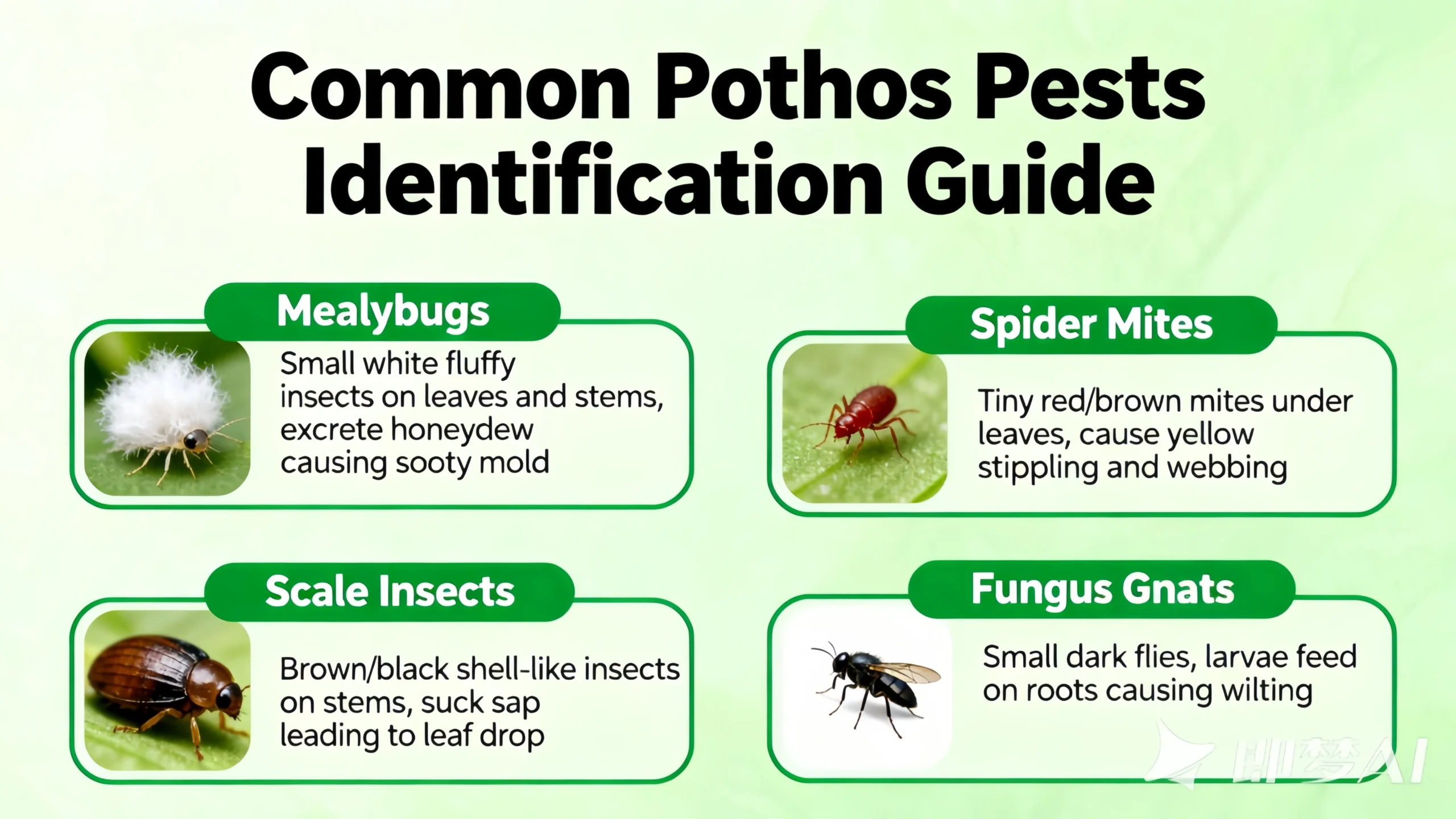
For symptoms such as stippled leaves and mites, use the spider mite identification and treatment guide. If insects are flying around damp potting mix, consult our fungus gnat guide. Avoid household detergent sprays or a fungicide chosen without a confirmed disease and the correct product label.
A Simple 30-Day Pothos Care and Recovery Tracker
Want a more useful result than checking the same yellow leaf every day? Photograph a marked section of the plant once each week, under similar lighting, and record whether new leaves are developing. The table below can be copied into a note or printed with this page.
| Check | Record these observations | What progress looks like |
|---|---|---|
| Day 0 | Current photo; soil condition; pot drainage; number of damaged leaves; node spacing | A baseline that makes later changes comparable |
| Day 7 | Soil drying pattern; any new yellow leaves; visible pests | No new widespread deterioration after care is corrected |
| Day 14 | New leaf development; firmness of stems; rooting status of any cuttings | Healthy new growth or stable condition, depending on season |
| Day 30 | Repeat the first photo; note which change helped and whether moisture problems continue | A clearer decision on whether to maintain or adjust care |
How to use the tracker: Change one major care factor at a time where practical. If you relocate the plant, replace the potting mix, alter fertilizer and change watering all in one afternoon, you will have a harder time identifying which factor mattered. This is a monitoring framework, not a claim that a damaged plant will recover within 30 days.
Seasonal Care: What Changes in Winter?
Pothos is an evergreen tropical vine rather than a plant with a strict annual indoor dormancy date. It may grow more slowly when light levels and temperatures fall. Check the potting mix more often than you water, and let actual drying conditions determine the next drink. Feed less when growth is minimal, maintain a warm location, and keep leaves away from cold glass and drafty doors.
Pet Safety and Outdoor Growing
Is pothos toxic to cats and dogs?
Yes. Pothos contains insoluble calcium oxalate crystals that can irritate the mouth and cause drooling, vomiting or difficulty swallowing after chewing. According to the ASPCA’s Golden Pothos listing, it is toxic to dogs and cats. Keep trailing vines securely out of reach. If a pet chews the plant, contact your veterinarian or an animal poison control service promptly.
Should you plant pothos outdoors?
Pothos can grow vigorously outdoors in tropical climates, but that does not make it a responsible landscape choice everywhere. University of Florida IFAS identifies pothos as a high invasion-risk species in Florida and advises keeping it indoors rather than planting it in the landscape. Avoid dumping vine trimmings where they could root and spread.
Pothos Care FAQs
How often should I water pothos?
Water when the root zone has dried sufficiently, not on a fixed weekly schedule. Check upper soil, pot weight, root health and drainage; then water thoroughly and empty standing water.
Why are my pothos leaves turning yellow?
Possible causes include ordinary aging, persistently wet roots, prolonged dryness, insufficient light, pests and excess fertilizer salts. Use the symptom chart above and inspect the potting mix before changing anything.
Can pothos grow in low light?
It tolerates lower light, but growth is often slower, new leaves may be smaller and variegated plants can become greener. Bright indirect light is generally better for vigorous growth.
How do I propagate pothos without rotting the cutting?
Start with a healthy node-bearing stem, remove leaves that would sit underwater, use clean water or fresh aerated potting mix and watch for soft decaying tissue. Do not expect every cutting to root on exactly the same timeline.
Can pothos grow in water permanently?
Pothos can be maintained in water, but long-term water culture requires attention to nutrients, water quality, oxygen and algae. A jar of plain water may be enough to root a cutting but is not a complete long-term nutrient plan.
How can I make my pothos bushy?
Provide enough light, prune long vines when appropriate, and root several healthy stem cuttings to fill the pot. Climbing on a support is another option if your goal is larger leaves rather than a dense hanging basket.
Does a pothos leaf without a node grow into a new plant?
A detached leaf without a viable node and stem tissue generally cannot develop into a complete new pothos vine. Choose a cutting with at least one node.
Final Pothos Care Checklist
- Light: bright, indirect is ideal; look at new leaf spacing to judge success.
- Water: check the root zone and drainage before watering.
- Yellowing: use multiple clues instead of assuming every yellow leaf means root rot.
- Soil: airy and freely draining, in an appropriately sized pot.
- Propagation: a viable node is essential; keep the cutting clean and monitor root firmness.
- Fuller growth: combine good light, selective pruning and rooted cuttings.
- Safety: keep pothos away from pets and avoid outdoor planting where it risks becoming invasive.
For other species and care challenges, explore our indoor plant care guides. If a pothos is severely declining and you need to decide whether it can be recovered or propagated, see how to save a struggling houseplant.
Sources and Further Reading
The references below support general horticultural guidance. The original website’s existing illustrations are retained for continuity; they should not be represented as independently verified experiments or personal before-and-after evidence.
- University of Wisconsin-Madison Extension: Pothos (Epipremnum aureum) — light, watering, common pests, pruning, propagation and cultivars.
- NC State Extension Gardener Plant Toolbox: Pothos — identification, care and toxicity.
- NC State Extension: Satin Pothos (Scindapsus pictus) — look-alike identification.
- ASPCA: Golden Pothos — pet toxicity.
- University of Florida IFAS: Pothos — outdoor invasion risk.
Editorial Note: This article was written and edited by Spring Mei. AI tools may be used to assist with research and organizing information. The final content is reviewed before publication, and important factual claims are checked against reliable sources where appropriate. Personal experience is distinguished from general guidance, and methods are described as personally tested only when they have actually been tested.
Please indicate the source when reposting:https://gardeningtoolsgarden.com/how-to-care-for-pothos-plant/
Author: Spring Mei