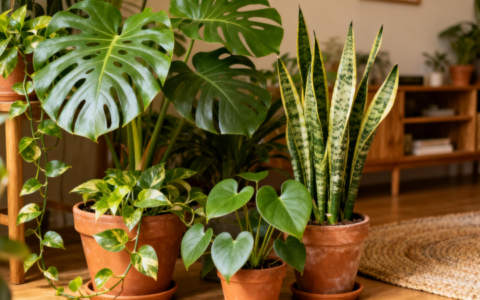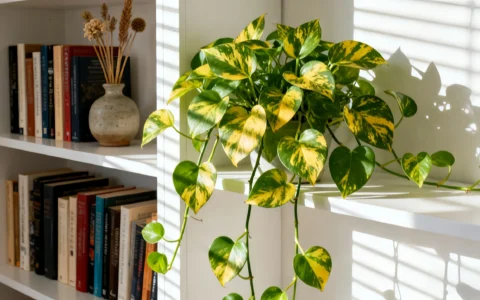
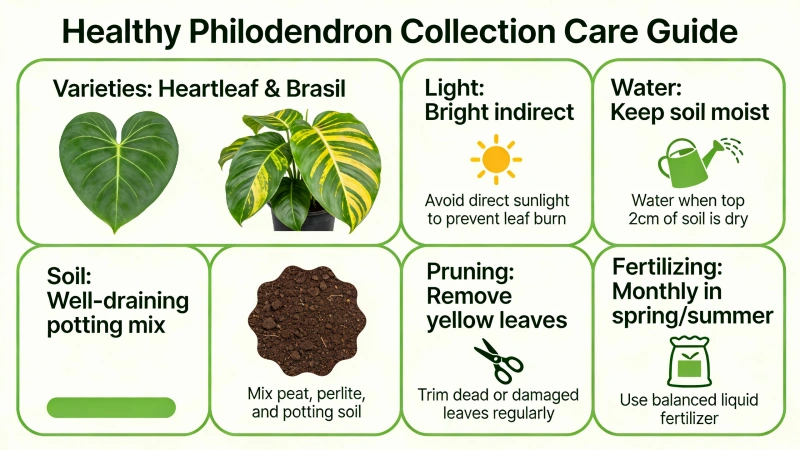
Quick Answer: Philodendron Care BasicsPhilodendrons grow best in bright indirect light and well-draining soil, in a pot with drainage holes. Water when the top 1–2 inches of soil are dry, keep temperatures around 65–85°F (18–29°C), and avoid overwatering. Yellow leaves most often point to excess moisture and poor drainage.
Last updated: May 2026 · Written from 18 months of hands-on experience — from a root-rotted Brasil to a thriving collection of four.
I almost killed my first philodendron within two months. The shop owner had sworn the Brasil I brought home eighteen months ago was “impossible to kill,” but soon the leaves were yellow, the stems were mushy, and the pot had that unmistakable smell of root rot. Two months in, I was frantically Googling “why is my philodendron dying” at 2 AM.
Philodendrons really are among the more forgiving tropical houseplants. They’re far easier to keep than a fiddle leaf fig, and mine recovered once I corrected my mistakes. After turning that dying plant into a collection of four (yes, I propagated it three times), here’s what I learned: the exact watering technique that saved it, how to diagnose the common problems, and a propagation method that has worked for me.
Quick Answer: Philodendron Care Basics
In short: place a philodendron in bright, indirect light, though it tolerates low light. Water only when the top 1–2 inches of soil are completely dry (typically every 7–14 days), and use well-draining soil in a pot with drainage holes. Keep temperatures between 65–85°F, and fertilize monthly during spring and summer only.
The most important rule: when in doubt, don’t water. Overwatering is the #1 killer of philodendrons.
What Is a Philodendron?
The name “philodendron” comes from the Greek philo (love) and dendron (tree), literally “love tree,” and the plants live up to it. They’re native to the tropical rainforests of Central and South America and belong to the Araceae (aroid) family, with hundreds of species that range from compact desktop plants to massive climbers that scale rainforest trees. As Iowa State University Extension notes, they come from the low-light understory of those forests, which helps explain why they do so well in the indirect light of an average home.
Their real strength is adaptability. Unlike many tropicals that demand greenhouse conditions, most philodendrons adjust to ordinary homes, tolerating inconsistent watering, varied light, and the dry air of indoor heating. That’s why I call them “forgiving tropicals”: they leave room to make mistakes and learn. If you want a confidence-builder, they’re among the best plants for beginners.
Popular Philodendron Varieties
With hundreds of species, choosing a first philodendron can be overwhelming. Here are my top recommendations for beginners and collectors alike:
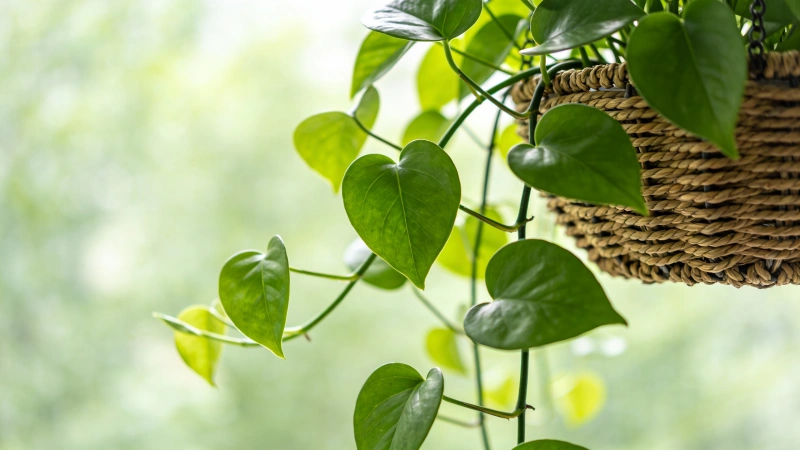
| Variety | Growth Habit | Difficulty | Key Feature | Price Range |
|---|---|---|---|---|
| Heartleaf | Climbing/Trailing | ⭐ Beginner | Classic heart-shaped leaves | $8–15 |
| Brasil | Climbing/Trailing | ⭐ Beginner | Yellow-green variegation | $10–20 |
| Birkin | Self-heading | ⭐⭐ Intermediate | White pinstripes | $20–40 |
| Pink Princess | Climbing | ⭐⭐⭐ Advanced | Pink variegation | $50–150 |
| Prince of Orange | Self-heading | ⭐⭐ Intermediate | Color-changing new leaves | $25–45 |
The table points to one distinction worth knowing. Climbing/trailing types (Heartleaf, Brasil) send out vines and do best with something to climb, while self-heading types (Birkin, Prince of Orange) grow as compact upright rosettes that need no support. My recommendation: if you’re just starting out, choose a Heartleaf or Brasil. They’re affordable, widely available, and forgiving of a learning curve. I started with a Brasil, and 18 months later it’s still my favorite.
Light Requirements
Philodendrons are flexible about light, but they do have preferences. Ideal is bright, indirect light. An east- or west-facing window is perfect, and your plant will grow faster, push larger leaves, and hold its variegation. Acceptable is medium to low light. The plant won’t die, but expect slower growth, smaller leaves, and fading variegation in types like Brasil or Birkin. Avoid direct afternoon sun, whose intense rays scorch leaves into brown, crispy patches. South Dakota State University Extension notes that too much light also turns philodendron leaves yellow. Morning sun is usually fine. For the bigger picture, see our guide to light requirements.
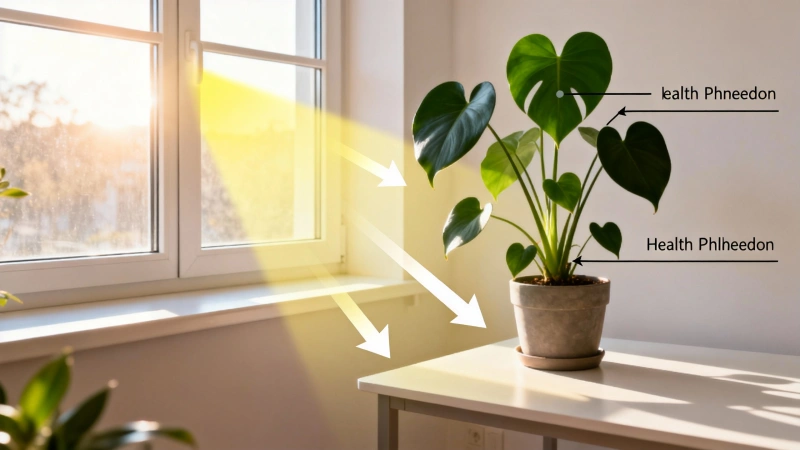
I learned this the hard way. My Brasil spent its first month on a north-facing sill and barely grew; once I moved it to an east-facing spot, it pushed out new leaves every two weeks. If you’re moving a plant into a much brighter spot, do it over a week or two so the leaves can acclimate and don’t scorch.
💡 Pro tipIf your space gets little natural light, lean toward solid-green types, which cope better than variegated ones. You can also browse plants suited to low-light spaces, which handle dim conditions better than most philodendrons.
Watering: The #1 Killer of Philodendrons
If your philodendron is struggling, you’re probably overwatering it. That was my biggest mistake: I watered my Brasil every Sunday like clockwork, thinking I was being a responsible plant parent, and slowly drowned it.
⚠️ Critical warningOverwatering is behind most philodendron deaths. Yellow, mushy leaves and a distinctive rotting smell are the telltale signs. I nearly lost my first philodendron exactly this way.
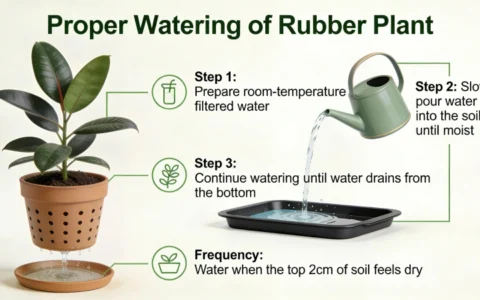
The golden rule is simple: when in doubt, don’t water. Philodendrons tolerate drought far better than excess moisture. A thirsty plant recovers within hours of watering, while a waterlogged one might never recover. Start with the finger test: push a finger 1–2 inches into the soil. If it’s dry, water; if it’s still moist, wait. SDSU Extension gives similar guidance, recommending watering when the top inch is dry. When you do water, soak thoroughly until water runs from the drainage holes, then drain completely, emptying the saucer after 15–20 minutes so the plant never sits in standing water. Our watering schedules guide has the general framework.
Overwatering vs. Underwatering: How to Tell the Difference
| Symptom | Overwatering | Underwatering |
|---|---|---|
| Leaf color | Entire leaf turns yellow, soft | Brown, crispy tips/edges |
| Leaf texture | Soft, mushy, waterlogged | Dry, papery, curling |
| Soil condition | Stays wet for days | Bone dry, pulling from pot edges |
| Root health | Brown, mushy, smells bad | Dry but normal color |
| Recovery | Slow, may need repotting | Quick (within hours of watering) |
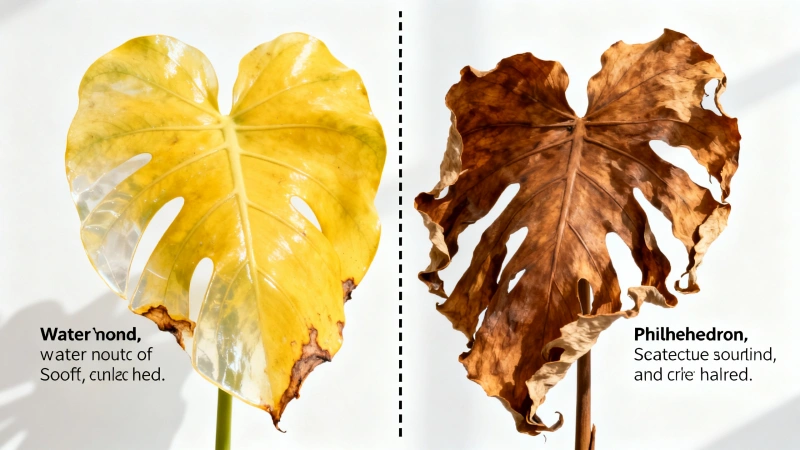
If you’ve been overwatering and the stems are turning soft or starting to smell, root rot may be setting in. My step-by-step guide on how to treat root rot and save a dying plant covers how to trim the damage and repot, the same rescue I used on my own Brasil (more below).
Soil and Pot Selection
The right soil and pot prevent most watering problems before they start. Philodendrons want a mix that holds some moisture but drains quickly, because soggy soil can lead to root rot. My go-to mix is below. You can also buy pre-mixed “aroid soil” at most garden centers, but mixing your own is cheaper and lets you fine-tune the drainage. Our soil & fertilizer guide covers the components.
| Ingredient | Ratio | Purpose |
|---|---|---|
| Standard potting soil | 60% | Provides nutrients, retains moisture |
| Perlite | 30% | Improves drainage, prevents compaction |
| Orchid bark | 10% | Adds aeration, mimics natural conditions |
For the pot, one rule is non-negotiable: drainage holes. A decorative pot with no drainage is how my first Brasil ended up in trouble. Terracotta is the most breathable and dries fastest, which helps if you tend to overwater. Plastic is light and holds moisture longer. Ceramic works fine if it has drainage and you water carefully. Size up only 1–2 inches beyond the root ball, since a pot that’s too big keeps the soil wet too long. Our pots & planters guide has specifics.
Give Climbers Something to Climb
Many care sheets skip this detail. In the wild, most philodendrons are climbers that haul themselves up tree trunks using aerial roots, the small nubs you’ll see along the stems. Give a climbing type (Heartleaf, Brasil, Pink Princess) a moss pole or coir totem and it often rewards you with noticeably larger, more mature leaves, because the aerial roots latch on and the plant treats the support like a tree to ascend. Keep the moss pole lightly moist and tuck the aerial roots toward it. Trailing the plant from a hanging basket is fine too; it just keeps the leaves smaller and more juvenile. Self-heading types like Birkin don’t need support at all.
Temperature and Humidity
If you’re comfortable at home, your philodendron probably is too. The ideal range is 65–85°F (18–29°C), with about 55°F (12°C) as the minimum to stay safe. Keep it away from cold drafts and from AC and heating vents. Philodendrons mind sudden temperature swings more than steadily cool rooms; moving one from a warm room to a cold windowsill overnight can trigger leaf drop.
Philodendrons don’t actually need tropical humidity, which surprised me. The ideal is 50–60%, but they get by fine in typical home humidity (30–40%). I spent months fretting over it before realizing mine was fine untreated. If you do see brown leaf tips with yellow halos, nudge humidity up with a pebble tray (don’t let the pot touch the water), by grouping plants, with a nearby humidifier, or by moving the plant to a bathroom with enough light.
Fertilizing
Philodendrons aren’t heavy feeders, and over-fertilizing causes more problems than under-fertilizing. Feed once a month in spring and summer only (roughly March–September) with a balanced liquid fertilizer such as 10-10-10, diluted to half strength. Stop completely in winter, when the plant is dormant and can’t use the nutrients.
💡 Pro tipLess is more with fertilizer. A slightly underfed plant just grows a little slower, while an overfed one can develop brown leaf tips and salt buildup that damages the roots.
My 18-Month Journey: From Near-Death to Successful Propagation
Here’s how I went from killing my philodendron to growing a small collection, embarrassing mistakes and all.
The Beginning (March 2024)
I bought a 6-inch Brasil for $12, with about 8 vines, each around 6 inches long, and that cheerful yellow-and-green variegation. “Perfect starter plant,” the shop owner said. “Water once a week and it’ll be fine.” So I did, every Sunday, in a gorgeous HomeGoods ceramic pot with no drainage hole, because it looked amazing on my bookshelf.
The Crisis (June 2024)
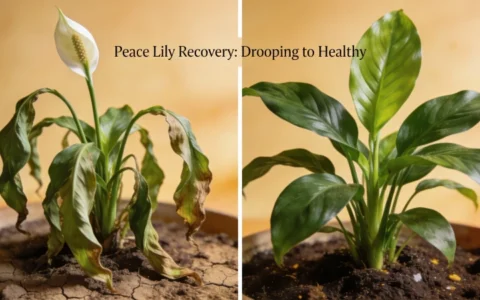
Two months in, disaster struck: four leaves turned yellow within two weeks. They weren’t crispy brown but soft, mushy yellow. I panicked and did exactly the wrong thing, watering more because I was sure the plant was thirsty. The yellowing accelerated, the soil smelled musty, and I was watching my plant die in slow motion.
The Investigation & Recovery
At 2 AM in the plant forums, thread after thread described my exact situation, and the diagnosis was unanimous: overwatering. I pulled the plant out of that drainage-less pot and found the bottom sitting in a pool of water, the roots brown, slimy, and swamp-smelling. Here’s the rescue I ran: I stopped watering immediately; removed all rotted roots (I lost about 40% of the root system); repotted into terracotta with drainage holes; mixed fresh soil (60% potting mix, 30% perlite, 10% orchid bark); switched to the finger test instead of a schedule; and waited 10 days before the first post-rescue watering.
The Results
The first month was nerve-wracking. There was no new growth, and I checked daily, convinced it would die. By August, though, tiny new leaves appeared, and by September I felt confident enough to propagate: 3 of 4 cuttings rooted.
| Metric | Crisis (June 2024) | Now (Dec 2024) |
|---|---|---|
| Number of vines | 8 (struggling) | 12 (thriving) |
| Average vine length | 6 inches | 18 inches |
| New leaves per month | 0 | 2–3 |
| Propagation success | Never tried | 3/4 (75%) |
| Total plants owned | 1 (dying) | 4 (all healthy) |
The biggest lesson? Trust the finger test, not the calendar. My plant never needed weekly watering. It needed water when the soil was actually dry, and that single change made all the difference.
Common Problems and How to Fix Them
Philodendrons tend to show you when something’s wrong. Here’s how to read the signals:
| Symptom | Likely Cause | Solution |
|---|---|---|
| Entire leaves turning yellow | Overwatering (most common) | Stop watering, check roots for rot, improve drainage |
| Brown, crispy leaf tips | Underwatering or low humidity | Water more often, raise humidity |
| Leaves curling inward | Underwatering or temperature stress | Check soil moisture, move away from drafts |
| Brown patches on leaves | Sunburn | Move to indirect light, away from direct sun |
| Leggy, sparse growth | Insufficient light | Move to a brighter location |
| Variegation fading | Too little light | Increase light (variegated types need more) |
| Sticky residue on leaves | Pests (scale, mealybugs) | Treat with neem oil or insecticidal soap |
| Roots brown and mushy | Root rot | Remove damaged roots, repot in fresh soil, reduce watering |
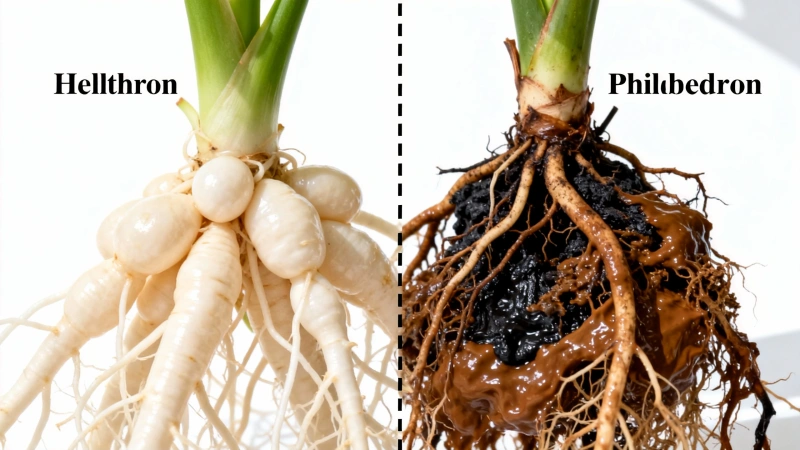
For yellowing specifically, our yellow-leaves guide works through every cause, and persistent pests are covered in the pests & diseases guide.
How to Save a Plant with Root Rot
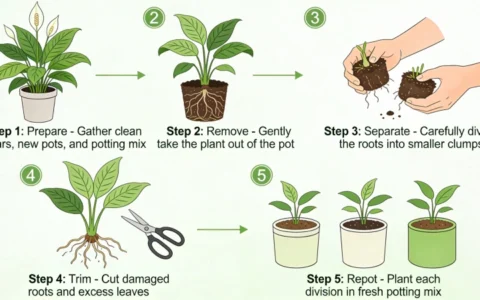
If you’ve caught root rot early, there’s hope. Here’s the rescue I used: stop watering and take the plant out of its pot; rinse the roots under lukewarm water; cut away all brown, mushy roots with sterilized scissors; let the roots air-dry for 30 minutes; repot in fresh, well-draining soil; wait 7–10 days before watering again; and water less often from then on. (A repotting guide walks through the potting-up steps.)
Pruning and Shaping
Pruning philodendrons is straightforward, and it encourages bushier, healthier growth. Prune in spring and summer, the active season, cutting just above a leaf node (the bump where a leaf attaches to the stem) with clean, sharp scissors. I wipe mine with rubbing alcohol before each cut. Focus on yellow or damaged leaves (remove the whole leaf at the base), leggy vines you want to shorten, and overgrown sections you’d like to make branch.
💡 Pro tipDon’t toss healthy cuttings: any stem section with a node can become a new plant. The technique mirrors pruning a fiddle leaf fig. Cut above a node and you encourage branching below the cut.
How to Propagate Philodendron
Propagation intimidated me at first, but it’s one of the easiest things you can do with a philodendron. Here’s the method that gave me a 75% success rate on my first try (our propagation methods guide covers the broader how-to).
The Key: Understanding Nodes
A node is the small bump on the stem where leaves emerge, and it’s also where new roots grow. The critical rule: without a node, a cutting cannot root. A leaf on its own will never become a plant.
Water Propagation (Easiest Method)
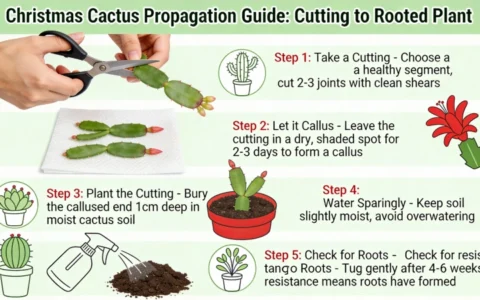
- Select a healthy stem with at least one node and 1–2 leaves
- Cut ¼ inch below the node with clean scissors
- Remove lower leaves that would sit in water
- Place in clean water with the node fully submerged
- Position in bright, indirect light
- Change the water every 3–5 days
- Wait 2–4 weeks for roots to develop
- Transplant to soil once roots are 1–2 inches long
| Factor | Water Propagation | Soil Propagation |
|---|---|---|
| Difficulty | ⭐ Easy | ⭐⭐ Moderate |
| Rooting time | 2–4 weeks | 3–4 weeks |
| Advantage | You can see roots develop | No transplant shock |
| Disadvantage | Needs adjustment moving to soil | Can’t monitor root growth |
| Best for | Beginners | Experienced growers |
I recommend water propagation for beginners. Watching the roots develop is satisfying, and it tells you exactly when the cutting is ready for soil.
💡 Pro tipPhilodendron propagation works much like ZZ plant propagation in that both use cuttings, but philodendrons typically root far faster, in weeks rather than months.
Watch: Philodendron Propagation in Action
This video walks through the propagation process step by step:
Philodendron vs. Pothos: How to Tell Them Apart
Philodendrons and pothos are easy to confuse, and I spent my first three months sure my philodendron was a pothos. They look alike (green, heart-ish leaves on trailing vines), but they’re different plants.
| Feature | Philodendron | Pothos |
|---|---|---|
| Leaf shape | Distinct heart shape, symmetric | More asymmetric, spade-like |
| Leaf texture | Thin, smooth, soft | Thick, waxy, bumpy |
| Leaf stem (petiole) | Rounded | Indented (like celery) |
| New leaf growth | Emerges from a cataphyll (papery sheath) | Unfurls directly from existing leaf |
| Aerial roots | Thin, multiple per node | Thick, one per node |
| New leaf color | Often pinkish or brownish | Lighter green |
The easiest tell is the cataphyll, a thin papery sheath that wraps each new philodendron leaf as it emerges, then dries to brown and drops off on its own. Don’t pull it off; let it fall naturally. Pothos have no such sheath, and their new leaves simply unfurl from the previous one. If yours turns out to be a pothos after all, our pothos care guide covers its very similar, equally forgiving needs.
Pet Safety Warning
⚠️ ImportantAll philodendron varieties are toxic to cats, dogs, and horses. If you have pets, this plant needs careful placement.
According to the ASPCA, philodendrons contain insoluble calcium oxalate crystals that cause immediate pain and irritation when chewed. Iowa State University Extension gives the same warning, noting that the plant is toxic to humans and animals alike and can cause pain and swelling of the lips, mouth, tongue, and throat. Symptoms in pets include oral irritation and intense burning, excessive drooling, swelling of the lips, tongue, and throat, difficulty swallowing, and vomiting. Most pets stop after one bite because the pain is immediate, so poisoning is rarely fatal, but it’s decidedly unpleasant.
To keep pets safe, use high shelves or hanging baskets, try citrus peels nearby (cats dislike the smell), offer cat grass as an alternative to chew, or choose a pet-safe plant if your pet is persistent.
💡 NoteRubber plants are also toxic to pets. For a genuinely pet-safe alternative, consider the Chinese Money Plant (Pilea), which the ASPCA lists as safe for cats and dogs.
Frequently Asked Questions
How often should I water my philodendron?
There’s no universal answer, since it depends on pot size, soil, light, and humidity. The only reliable method is the finger test: water when the top 1–2 inches of soil are dry. For most people that works out to every 7–14 days in spring and summer and every 10–21 days in fall and winter.
Why are my philodendron leaves turning yellow?
In most cases, yellow leaves point to overwatering. Check whether the soil stays wet too long, make sure the pot has drainage holes, and inspect the roots for rot. Other possibilities include insufficient light (especially for bottom leaves), natural aging, or nutrient deficiency.
Can philodendron grow in low light?
Yes, philodendrons survive in low light, but they won’t thrive. Expect slower growth, smaller leaves, and possible loss of variegation in types like Brasil or Birkin. For low-light spaces, stick with solid-green varieties like the heartleaf philodendron.
Is philodendron toxic to cats and dogs?
Yes, all philodendron varieties are toxic to pets. They contain calcium oxalate crystals that cause oral irritation, drooling, swelling, and vomiting if chewed. Keep plants out of reach, and contact your vet right away if you suspect ingestion.
How do I propagate philodendron?
The easiest method is water propagation. Cut a stem section with at least one node, place it in water with the node submerged, change the water every 3–5 days, and transplant to soil once the roots are 1–2 inches long. It usually takes 2–4 weeks.
What’s the difference between philodendron and pothos?
The easiest way to tell them apart is the leaves: philodendron leaves are thinner, smoother, and more symmetrically heart-shaped, while pothos leaves are thicker, waxier, and more asymmetric. Philodendrons also produce a papery sheath (cataphyll) around new leaves; pothos don’t.
Key Takeaways
18 months in, here’s what matters most:
- Drainage is non-negotiable: use a pot with holes and a fast-draining mix.
- When in doubt, don’t water: go by the finger test, not the calendar. Overwatering is the #1 killer.
- Bright indirect light: best growth and color; deep shade brings leggy, fading leaves.
- Give climbers a moss pole: aerial roots plus support often means bigger, more mature leaves.
- Propagate at a node: water-root a cutting in 2–4 weeks; no node, no roots.
- Mind pets: every philodendron is toxic to cats and dogs.
Eighteen months ago I was sure I’d killed my first philodendron. Today I have four thriving plants: the original and three I propagated from it. That’s why I call them “forgiving tropicals.” They’ll give you second chances, even after a two-month overwatering streak like mine. Pick up a Heartleaf or Brasil, trust the finger test, and hold off on the extra watering. 🌿
Editorial Note: This article was written and edited by Spring Mei. AI tools may be used to assist with research and organizing information. The final content is reviewed before publication, and important factual claims are checked against reliable sources where appropriate. Personal experience is distinguished from general guidance, and methods are described as personally tested only when they have actually been tested.
Please indicate the source when reposting:https://gardeningtoolsgarden.com/how-to-care-for-philodendron/
Author: Spring Mei