
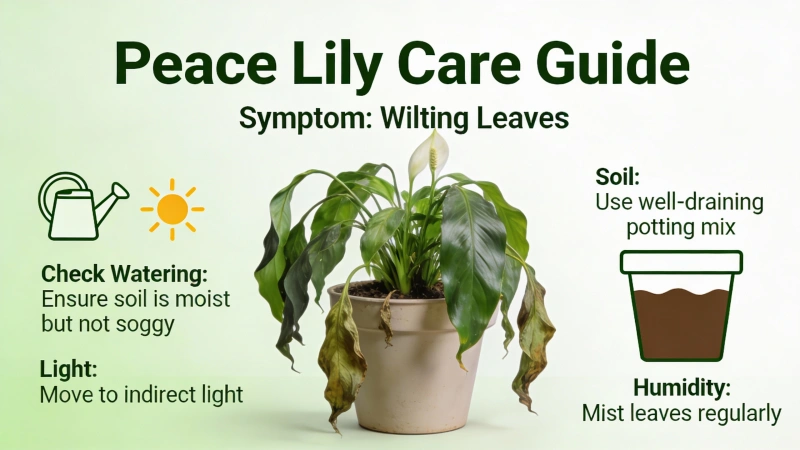

I walked into my living room one morning and found my beautiful peace lily completely collapsed. Every single leaf was hanging over the pot edge like wet noodles. I was convinced the plant was dying.
That was three years ago. Today, that same peace lily sits proudly by my window, thriving and blooming regularly. What changed? I learned to understand what my plant was trying to tell me.
Here’s the thing about peace lilies: they’re total drama queens. They droop dramatically at the slightest inconvenience—but they also bounce back just as quickly once you fix the problem.
If you’re staring at a sad, wilting peace lily right now, take a deep breath. In this guide, I’ll walk you through the 7 most common reasons your peace lily is drooping and exactly how to fix each one. Plus, I’ll share my own mistakes (and there were plenty) so you can avoid them.
Quick Answer
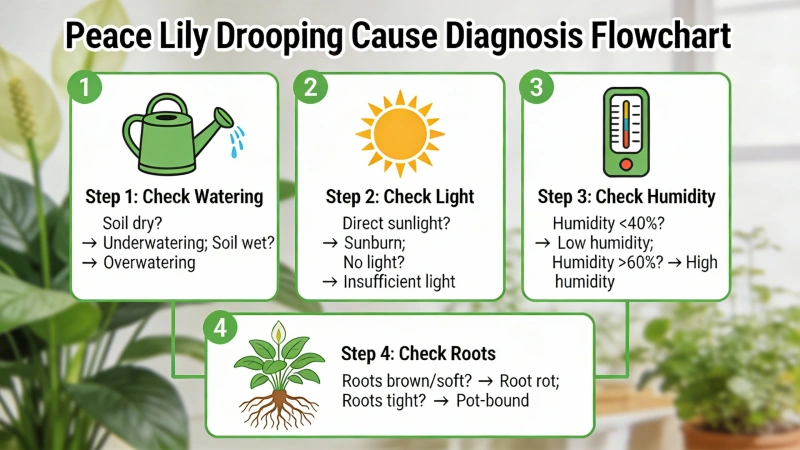
Peace lilies droop most often because of watering issues—either too little or too much water. Here’s how to diagnose it quickly:
- Soil is dry + pot feels light? → Underwatering. Water thoroughly and your plant should perk up within hours.
- Soil is wet + pot feels heavy? → Overwatering or root rot. Stop watering and check the roots.
- Recently moved or repotted? → Transplant shock. Give it 1-2 weeks to adjust.
Other common causes include too much direct sunlight, low humidity, temperature stress, or being rootbound. Keep reading for detailed fixes.
Quick Diagnosis: What’s Wrong With Your Peace Lily?
Before diving into the details, use this simple checklist to narrow down the problem:
| Symptom | Likely Cause | Quick Fix |
|---|---|---|
| All leaves drooping, soil dry | Underwatering | Water thoroughly |
| Leaves drooping, soil wet | Overwatering / Root rot | Stop watering, check roots |
| Drooping + yellow leaves | Overwatering | Let soil dry, improve drainage |
| Drooping + brown leaf tips | Low humidity or underwatering | Increase humidity |
| Drooping after repotting | Transplant shock | Wait 1-2 weeks |
| Drooping near sunny window | Too much direct light | Move to indirect light |
Now let’s dig into each cause and how to fix it.
1. Your Peace Lily Is Thirsty (The Most Common Cause)
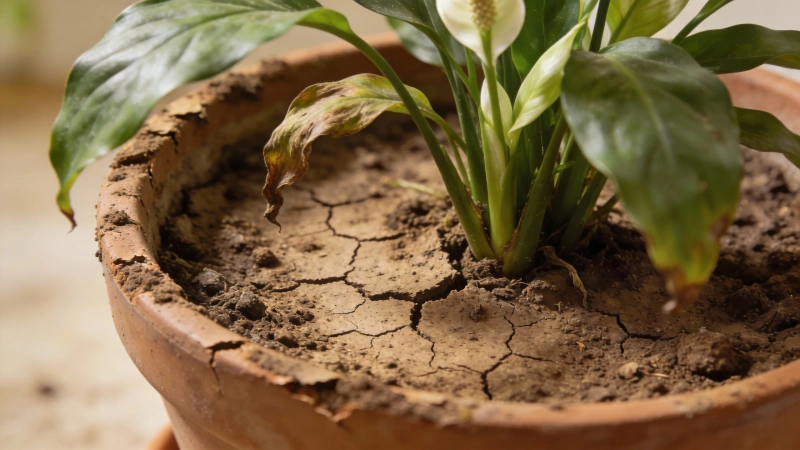
This is by far the most common reason I see peace lilies droop. And honestly? It’s also the easiest to fix.
When I first got my peace lily, I thought I was being a responsible plant parent by not overwatering. I’d water it maybe once every two weeks. Big mistake. Peace lilies are tropical plants that love consistently moist soil.
How to Tell If It’s Underwatering
- The soil feels dry when you stick your finger 1-2 inches deep
- The pot feels unusually light when you lift it
- All the leaves are drooping at once (not just a few)
- The leaves may have crispy brown edges
The Fix
Water your plant thoroughly until water drains from the bottom. Here’s my tip: if the soil has gotten bone dry, it might have become hydrophobic (meaning water runs straight through without being absorbed). In that case, I place the pot in a basin of water for 15-30 minutes to let the soil soak up moisture from the bottom.
Recovery time: A few hours to 24 hours. Seriously—it’s that fast. I’ve watched my completely collapsed peace lily stand back up within 6 hours of watering.
The “Drama Queen Method”
Here’s something I learned from experience: peace lilies actually tell you when they need water. They’ll start to droop just slightly before they’re critically dry. I now use my peace lily as a watering reminder for all my other plants. When I see those first signs of drooping, I know it’s watering day.
Just don’t wait too long—if you let it get too dry repeatedly, you’ll start seeing permanent brown leaf tips.
2. Too Much Love: Overwatering and Root Rot
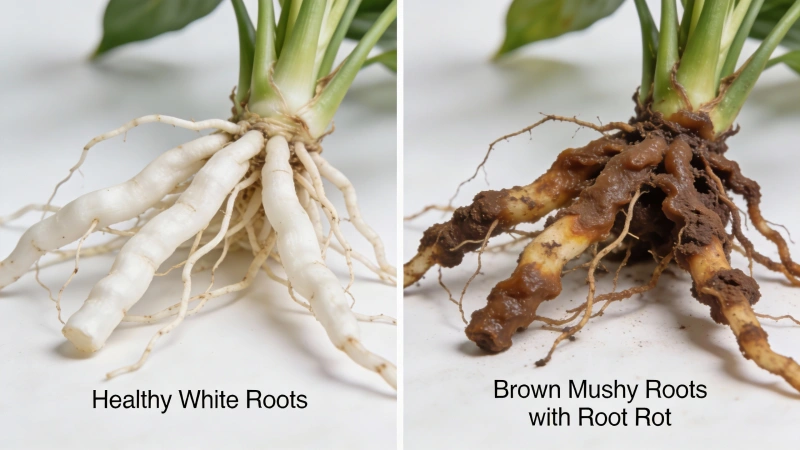
Here’s the tricky part: an overwatered peace lily can look exactly like an underwatered one. Both cause drooping leaves. This is where many plant parents (including past me) make things worse.
After my first drooping scare, I overcorrected. I started watering every few days “just to be safe.” Within weeks, the leaves started turning yellow, and there was a musty smell coming from the soil. I had given my plant root rot.
How to Tell If It’s Overwatering
- Soil feels wet or soggy
- The pot feels heavy
- Leaves are drooping AND turning yellow
- There’s a musty or rotten smell
- The base of stems feels mushy
If you notice your peace lily’s leaves are turning yellow along with drooping, this is a key warning sign. I wrote a complete guide on Why Is My Plant Turning Yellow that covers all the possible causes.
The Fix
For mild overwatering: Simply stop watering and let the top 1-2 inches of soil dry out completely before watering again. Make sure your pot has drainage holes and empty the saucer after watering.
For root rot: This needs more aggressive action:
- Remove the plant from its pot
- Gently shake off the old soil
- Examine the roots—healthy roots are white or tan, rotted roots are black and mushy
- Cut away all the damaged roots with clean scissors
- Repot in fresh, well-draining soil
- Water lightly and place in bright, indirect light
According to Penn State Extension, root rot is one of the leading causes of houseplant death, but catching it early gives your plant a good chance of recovery.
Recovery time: 1-3 weeks, depending on how severe the rot was.
Why is my peace lily droopy? I watered it yesterday
byu/lcrazy162 inplantclinic
3. Light Problems: Too Much Sun or Too Little
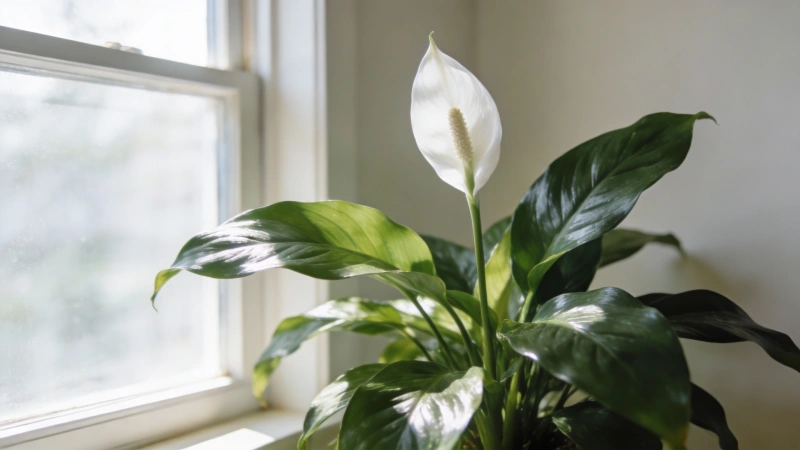
Peace lilies naturally grow on the forest floor in tropical regions, where they’re shaded by the tree canopy above. This means they’re adapted to bright, indirect light—not direct sun.
Signs of Too Much Light
- Drooping during the hottest part of the day
- Leaves look bleached or have brown, scorched patches
- Soil dries out very quickly
Signs of Too Little Light
- Overall weak, leggy growth
- No flowers for months
- Leaves are dark green but the plant looks limp
The Fix
I keep my peace lily about 3 feet away from a north-facing window, and it’s thriving. Here are good placement options:
- Near a north or east-facing window
- A few feet back from a south or west-facing window
- In a bright room but away from direct sun rays
- Behind a sheer curtain that filters the light
If your peace lily has been scorched by sun, move it to a shadier spot. The damaged leaves won’t recover, but the plant will produce healthy new growth.
4. Temperature Swings and Low Humidity
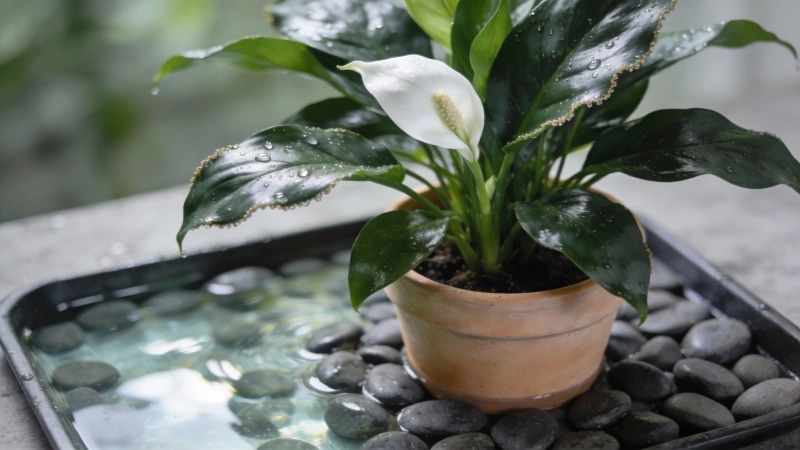
Your peace lily is a tropical plant that likes things warm, stable, and humid. Sudden temperature changes or dry air can cause it to droop even if watering is perfect.
Ideal Conditions
According to the Royal Horticultural Society, peace lilies prefer:
- Temperature: 65-85°F (18-30°C)
- Minimum temperature: Never below 55°F (12°C)
- Humidity: 50% or higher
Common Temperature Problems
I learned this the hard way: my peace lily was right next to an AC vent. Every time the air conditioning kicked on, my plant got blasted with cold air. It stayed perpetually droopy until I figured out the problem.
Watch out for:
- Air conditioning or heating vents
- Drafty windows or doors
- Cold windowsills in winter
- Hot spots near radiators
How to Increase Humidity
Like other tropical plants such as the Bird of Paradise, peace lilies appreciate higher humidity levels. Here’s what works for me:
- Pebble tray: Fill a tray with pebbles, add water to just below the top of the pebbles, and set your plant pot on top
- Humidifier: Run one nearby, especially in winter when heating dries out the air
- Group plants together: They create a more humid microclimate
- Bathroom placement: If it gets enough light, the natural humidity is great for peace lilies
Skip the misting: I used to mist my peace lily daily, but honestly, it raises humidity for about 10 seconds. It’s not worth the effort and can even encourage fungal problems.
5. Rootbound Plants and Transplant Shock
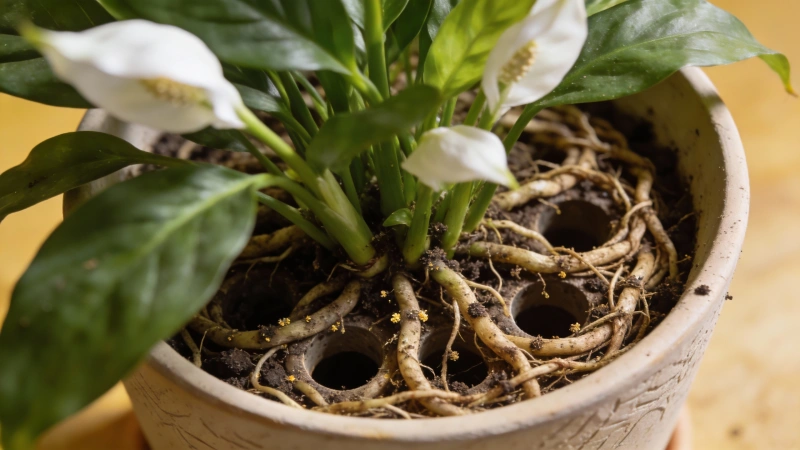
If your peace lily has been in the same pot for years, it might have outgrown its home. When roots fill up all the available space, they can’t absorb water efficiently—leading to drooping even when you water regularly.
Signs Your Plant Is Rootbound
- Roots growing out of drainage holes
- Roots visible on the soil surface
- Water runs straight through and out the bottom
- The plant needs watering much more frequently than before
- Growth has slowed down significantly
How to Repot Correctly
Here’s what I’ve learned about repotting peace lilies:
- Only go one pot size larger (e.g., 6-inch to 8-inch). A pot that’s too big holds too much moisture and can lead to root rot.
- Water thoroughly the day before repotting. This reduces stress and makes the root ball easier to work with.
- Gently loosen the root ball. If roots are tightly wound, carefully tease them apart.
- Use well-draining soil. I mix regular potting soil with perlite (about 70/30) for better drainage.
- Don’t fertilize right away. Wait 2-4 weeks to let the plant settle in.
Transplant Shock Is Normal
Don’t panic if your peace lily droops after repotting. This is completely normal. The plant needs time to recover from the disturbance and establish its roots in the new soil.
Recovery time: A few days to 2 weeks. Keep the soil consistently moist (not wet) and provide bright, indirect light during recovery.
Comment
byu/Impressive_Low_9182 from discussion
inGardeningAustralia
My Repotting Disaster (And What I Learned)
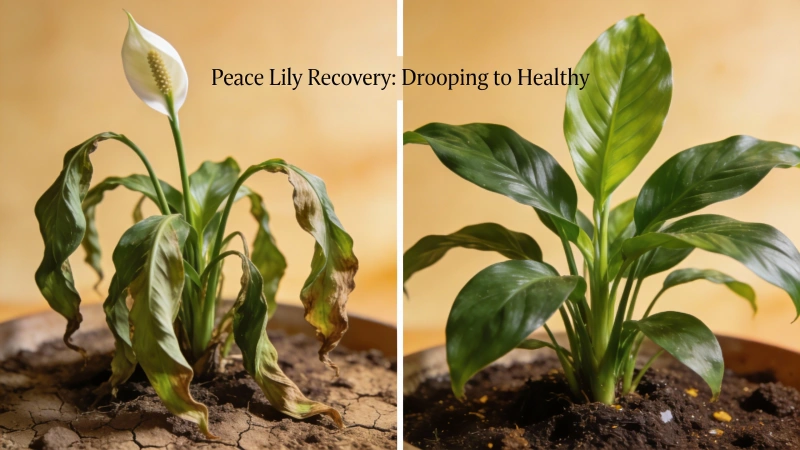
The Starting Point
About 18 months into owning my peace lily, I noticed it was drooping more frequently and needed water every few days. The roots were poking out of the drainage holes. Time for a bigger pot, I thought.
My Mistakes
I made not one but TWO classic beginner mistakes:
- I chose a pot way too big. I went from a 6-inch pot to a 10-inch pot, thinking I’d save myself from repotting again soon.
- I didn’t loosen the root ball. I just plopped the tightly wound roots into the new pot and filled in around them.
The Result
My peace lily drooped for THREE WEEKS straight. The extra soil held too much moisture (because the compact root ball couldn’t absorb it efficiently), and the plant was seriously stressed.
How I Fixed It
After researching what went wrong, I re-repotted into an 8-inch pot (just one size up). This time, I gently loosened the outer roots, used a perlite-amended soil mix, and watered more carefully.
Within a week, the plant started to perk up. By week three, it looked better than ever.
Lesson Learned
Bigger isn’t better when it comes to pots. And those extra 5 minutes spent loosening the root ball? Totally worth it. Now I always follow these rules, and I haven’t had a repotting disaster since.
6. Pest Problems
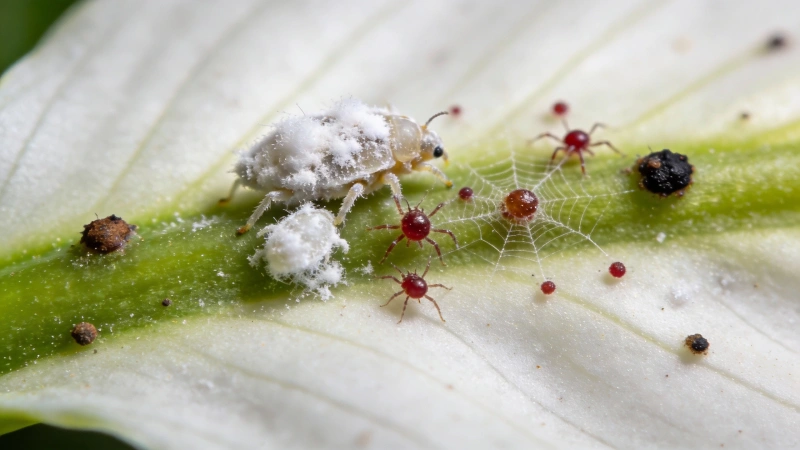
Peace lilies are relatively pest-resistant compared to many houseplants, but they’re not immune. A severe pest infestation can stress your plant enough to cause drooping.
Common Peace Lily Pests
- Mealybugs: Look like small cotton balls in leaf joints
- Spider mites: Cause tiny dots on leaves and fine webbing
- Scale: Brown, waxy bumps on stems and leaves
- Fungus gnats: Tiny flies that hover around wet soil
The Fix
For mealybugs and scale, I dip a cotton swab in rubbing alcohol and wipe them off directly. For spider mites, I spray the whole plant with a neem oil solution (1 teaspoon neem oil + 1 quart water + a drop of dish soap).
Fungus gnats are a sign your soil is staying too wet. If you’re seeing these little flies buzzing around, check out my guide on How to Get Rid of Fungus Gnats in Plants for effective solutions.
Important: Always isolate any plant you suspect has pests. These critters spread fast to neighboring plants.
7. Other Sneaky Causes You Might Have Missed
If you’ve ruled out all the above, here are a few less common causes worth considering:
Water Quality
Peace lilies can be sensitive to chemicals in tap water, especially chlorine and fluoride. If you notice brown leaf tips along with occasional drooping, water quality might be the culprit.
Solutions:
- Let tap water sit out for 24 hours before using (allows chlorine to dissipate)
- Use filtered water
- Collect rainwater
- Use distilled water
Over-Fertilizing
Too much fertilizer can burn roots and cause drooping with brown leaf edges. I fertilize my peace lily only during the growing season (spring and summer) with a half-strength liquid fertilizer once a month. In winter, I don’t fertilize at all.
If you suspect fertilizer burn, flush the soil with plenty of water to wash out excess salts.
Adjustment Period
Did you just bring your peace lily home from the store? Or move it to a new spot? Plants need time to adjust to environmental changes. A week or two of drooping after a move is normal.
The Gas Leak Story
Here’s something wild I read about: a woman noticed ALL her houseplants were drooping and looking sick, despite perfect care. Turns out, there was a gas leak in her house, and her plants detected it before she did. After the furnace was repaired, all the plants recovered. Plants are amazing!
How Long Until My Peace Lily Recovers?
One of the most common questions I get is “how long should I wait?” Here’s a realistic timeline based on my experience:
| Problem | Expected Recovery Time | Notes |
|---|---|---|
| Underwatering | A few hours – 24 hours | Fastest recovery |
| Mild overwatering | A few days – 1 week | Let soil dry between waterings |
| Root rot | 2–3 weeks | Depends on severity; may need repotting |
| Transplant shock | A few days – 2 weeks | Completely normal after repotting |
| Light/temperature adjustment | A few days – 1 week | After moving to better conditions |
| Pest treatment | 1–2 weeks | After pests are eliminated |
Pro tip: Yellow leaves won’t turn green again. Once your plant starts recovering, trim off any yellow or brown leaves at the base to help the plant focus energy on new, healthy growth.
Frequently Asked Questions
How long does it take for a drooping peace lily to recover?
It depends entirely on the cause. If your plant is simply thirsty, it can perk up within just a few hours of watering—I’ve seen it happen in as little as 6 hours. For transplant shock, expect a few days to two weeks. Root rot recovery takes longer, usually 2-3 weeks, and requires removing the damaged roots and repotting in fresh soil.
Should I cut off drooping peace lily leaves?
If the leaves are just drooping but still green, don’t cut them—they’ll likely stand back up once you fix the underlying problem. Only trim leaves that have turned completely yellow or brown, as these won’t recover. Cut them at the base with clean scissors to help your plant redirect its energy to healthy growth.
Why is my peace lily drooping even though the soil is wet?
This is actually a red flag for overwatering or root rot. When roots are damaged, they can’t absorb water properly, so the plant wilts even though the soil is saturated. Stop watering immediately, check the roots for black, mushy sections, and consider repotting in fresh, well-draining soil if root rot is present.
Can a severely wilted peace lily be saved?
In most cases, yes! Peace lilies are incredibly resilient. I’ve seen plants that looked completely dead bounce back with proper care. The key is identifying and addressing the root cause quickly. For plants in truly critical condition, check out my complete guide on How to Save a Dying Plant for emergency revival techniques.
Helpful Video Guide
If you’re more of a visual learner, this video does a great job demonstrating how to diagnose and fix a drooping peace lily:
Video: Peace lily care and revival tips
Prevention Tips: Keep Your Peace Lily Happy
Once you’ve revived your peace lily, here’s how to keep it thriving:
My Weekly Care Routine
- Monday: Check soil moisture with my finger. Water only if the top inch is dry.
- Quick leaf inspection: Look for pests or yellowing leaves.
- Monthly: Wipe leaves with a damp cloth to remove dust and help the plant breathe.
Golden Rules for Peace Lily Care
- Learn your plant’s rhythm. Every home is different. Pay attention to how quickly your soil dries out.
- Trust the droop. A slight droop is your plant saying “I’m getting thirsty”—not “I’m dying.”
- Don’t overreact. Most problems are caused by doing too much, not too little.
- Be patient. Plants recover on their own timeline, not ours.
Final Thoughts
If you’re staring at a drooping peace lily right now, I hope this guide has given you confidence that your plant is probably going to be just fine.
Peace lilies are drama queens, but they’re also incredibly forgiving. They droop dramatically to get your attention, then bounce back just as quickly once you give them what they need.
The biggest lesson I’ve learned? Don’t panic, don’t overwater, and learn to read the signals your plant is giving you. Once you crack that code, peace lilies become one of the easiest houseplants to care for.
Three years ago, I almost threw away my first peace lily. Today, it’s one of my favorite plants in my collection—and it’s bloomed more times than I can count.
You’ve got this. And so does your peace lily.
Have you saved a drooping peace lily? I’d love to hear your experience! Share your story in the comments below.
This article was created by a professional team. AI tools were used during the research and writing process to enhance efficiency and quality. All information has undergone manual verification and editing to ensure accuracy and practicality. We are committed to providing readers with objective and valuable content.
Publisher::meiruth558@gmail.com,Please indicate the source when reposting:https://gardeningtoolsgarden.com/why-is-my-peace-lily-drooping/
