

I’ve been growing houseplants for about three years now, and snake plants are by far my favorites. They’re supposed to be nearly impossible to kill, right?
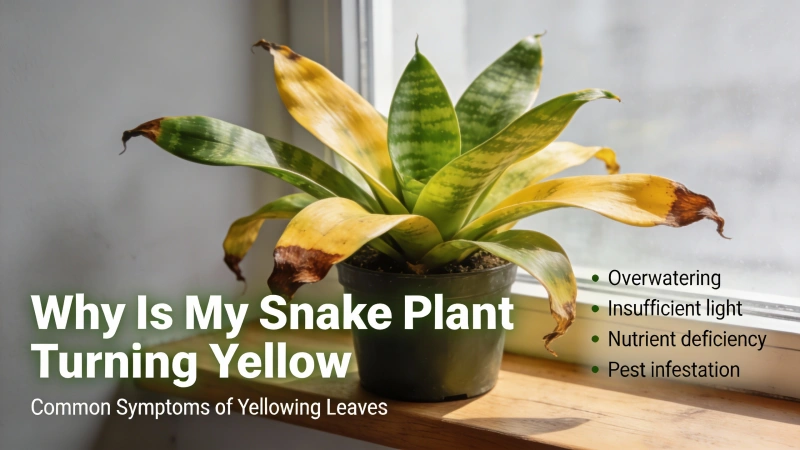
That’s what I thought too—until I noticed the leaves on my prized Sansevieria Laurentii turning yellow last winter. That sinking feeling when your “unkillable” plant starts looking sick? I know it well.
Here’s the good news: yellow leaves on a snake plant are almost always fixable. The trick is figuring out why it’s happening. In most cases, you’re dealing with one of just a few common issues—and the number one culprit might surprise you.
In this guide, I’ll walk you through the 9 most common reasons for snake plant yellowing, how to diagnose your specific problem, and exactly what to do about it. I’ll also share my own rescue story (spoiler: I almost killed my plant by loving it too much).
🌿 Quick Answer
The most common reason snake plant leaves turn yellow is overwatering. Snake plants are drought-tolerant succulents that prefer to dry out completely between waterings. When soil stays too wet, the roots suffocate and rot, causing leaves to turn yellow and mushy at the base.
Other common causes include: poor drainage, too much direct sunlight, insufficient light, root rot, temperature stress, and natural aging of older leaves.
The fix? Let the soil dry out completely, check for root rot, and switch to a well-draining soil mix. Below, I’ll explain each cause in detail and show you exactly how to save your plant.
Understanding Snake Plants: Why They’re So Easy to Overwater
Before we dive into the causes, it helps to understand what makes snake plants tick.
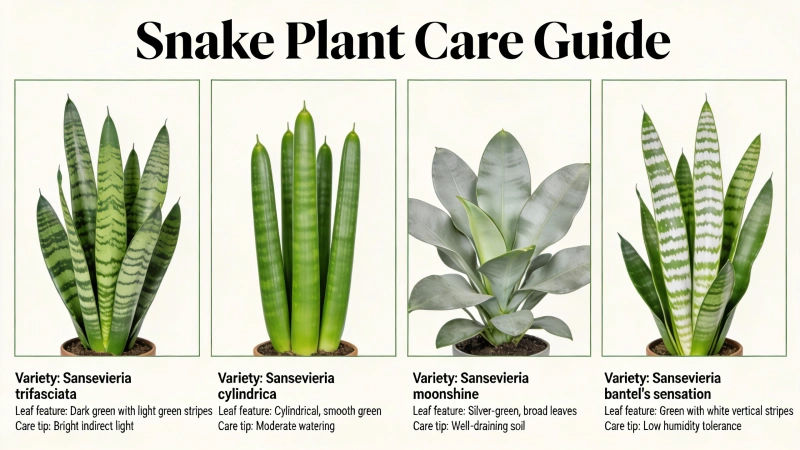
Snake plants (Dracaena trifasciata, formerly Sansevieria) are native to the tropical regions of West Africa. According to Wikipedia, they’ve evolved to survive in dry, rocky soils with infrequent rainfall.
This means they store water in their thick, sword-like leaves—much like a succulent. And just like succulents, they absolutely hate sitting in wet soil.
Here’s the irony: snake plants are often killed by too much care, not too little. We see a beautiful plant and want to nurture it. We water it on a schedule. We make sure it never dries out.
And that’s exactly what kills them.
9 Reasons Your Snake Plant Leaves Are Turning Yellow
Let’s go through each cause, from most common to least. I’ll help you identify which one is affecting your plant and what to do about it.
Cause #1: Overwatering (The #1 Killer)
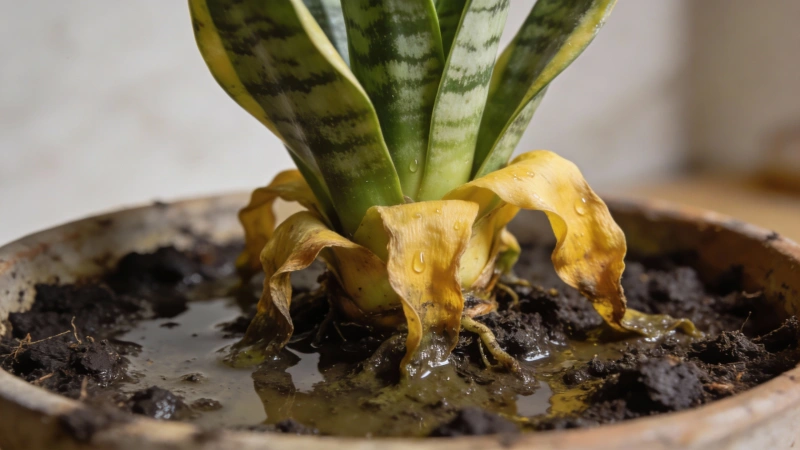
If your snake plant’s leaves are turning yellow, this is the first thing to check. Overwatering is responsible for the vast majority of snake plant problems.
Signs of overwatering:
- Lower leaves turning yellow and soft (not crispy)
- Mushy, blackening base of leaves
- Soil that stays wet for days
- A musty or sour smell from the soil
- Plant feels wobbly or unstable in the pot
According to Iowa State University Extension, snake plants can go weeks—sometimes even months—without water. Their roots are designed for drought, not constant moisture.
I see this mistake all the time: people water their snake plant every Sunday like clockwork. But your plant doesn’t care about your schedule. It cares about whether the soil is dry.
Comment
byu/FingerNamedNamed from discussion
inplantclinic
How to fix it:
- Stop watering immediately
- Let the soil dry out completely (this may take 1-2 weeks)
- Check for root rot (more on this below)
- Switch to “dry then water” method: only water when soil is dry 2-3 inches deep
Cause #2: Underwatering
Yes, this is less common—but it’s still possible to underwater a snake plant. If you’ve completely forgotten about your plant for months, it will eventually protest.
Signs of underwatering:
- Yellow leaves that are dry and crispy (not soft)
- Wrinkled, shriveled leaves
- Soil that’s bone-dry and pulling away from the pot edges
- Very lightweight pot
The key difference: Overwatered leaves are soft and mushy. Underwatered leaves are dry and crispy.
How to fix it: Give your plant a thorough watering, letting water drain from the bottom. It should recover within 1-2 weeks.
Cause #3: Too Much Direct Sunlight
Snake plants can tolerate a wide range of light conditions, but intense direct sunlight—especially through a south-facing window in summer—can scorch their leaves.
Signs of sun damage:
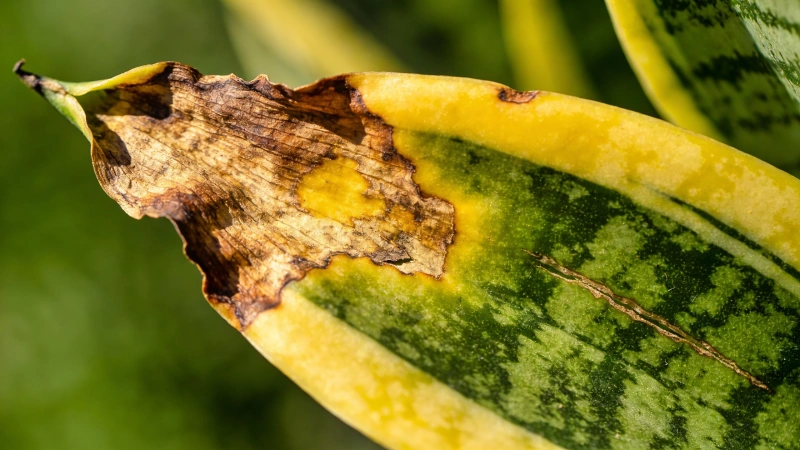
- Yellowing or bleaching on the window-facing side of the plant
- Brown, crispy edges on leaves
- Faded color and lost variegation
How to fix it: Move your plant back from the window or use a sheer curtain to filter the light. Snake plants do best in bright, indirect light.
Cause #4: Not Enough Light
Here’s a common misconception: snake plants are often called “low light” plants. But low light doesn’t mean NO light.
A snake plant tucked into a dark hallway or windowless bathroom will eventually suffer. Without adequate light for photosynthesis, the leaves will turn pale and yellow over time.
Signs of insufficient light:
- Overall pale or washed-out appearance
- Lost variegation (leaves becoming solid green)
- Slow or no new growth
- Leggy, stretched-out leaves reaching toward light
How to fix it: Move your plant to a brighter spot with indirect sunlight. If natural light isn’t available, a grow light can help.
Light issues don’t just affect snake plants. If you have other houseplants struggling, you might want to check out my guide on Why Is My Peace Lily Drooping for more troubleshooting tips on indoor plant care.
Cause #5: Poor Drainage and Wrong Soil
Even if you’re not overwatering, the wrong soil or pot can cause the same problems. Regular potting soil retains too much moisture for snake plants.
Signs of drainage problems:
- Soil stays wet for more than a week after watering
- Water pools on the surface instead of draining
- No drainage hole in the pot (big red flag!)
- Heavy, dense soil
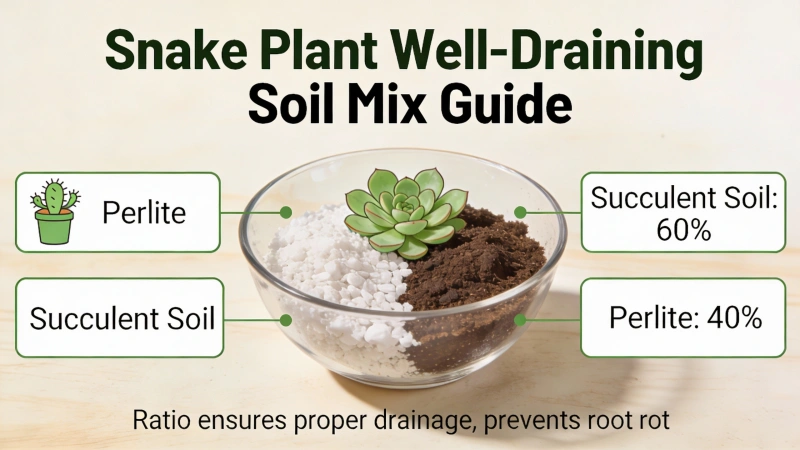
The ideal soil mix:
- 50% cactus/succulent potting mix
- 50% perlite or coarse sand
- Or: regular potting soil + lots of perlite + some sand
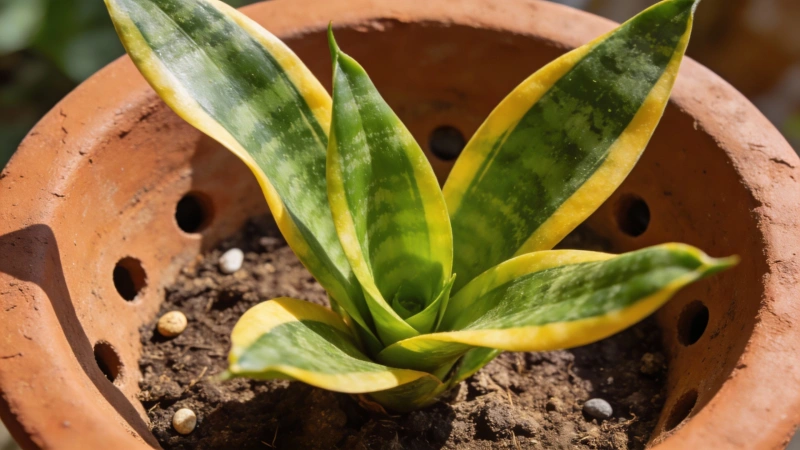
And always—ALWAYS—use a pot with drainage holes. I prefer terracotta pots because they’re porous and help the soil dry faster.
💬 Soil Tips from Reddit Plant Parents
Switching to the right soil can completely transform a struggling snake plant. As one Redditor put it:
“I repotted into a plastic cachepot ‘to match the décor.’ Within weeks, rotten roots set in. Dug it up, swapped in fresh soil with perlite, and my snake plant bounced back like nothing happened. Wrong soil is like keeping a fish out of water.”
The consensus: gritty, well-draining soil isn’t optional for snake plants—it’s essential.
Cause #6: Root Rot
Root rot is the final stage of overwatering. Once it sets in, it can spread quickly and kill your plant if you don’t act fast.
Signs of root rot:
- Leaves turning yellow AND mushy at the base
- Black, soft, smelly stems
- Plant easily pulls out of soil
- Foul smell coming from the pot
- Roots that are black, mushy, or fall apart when touched
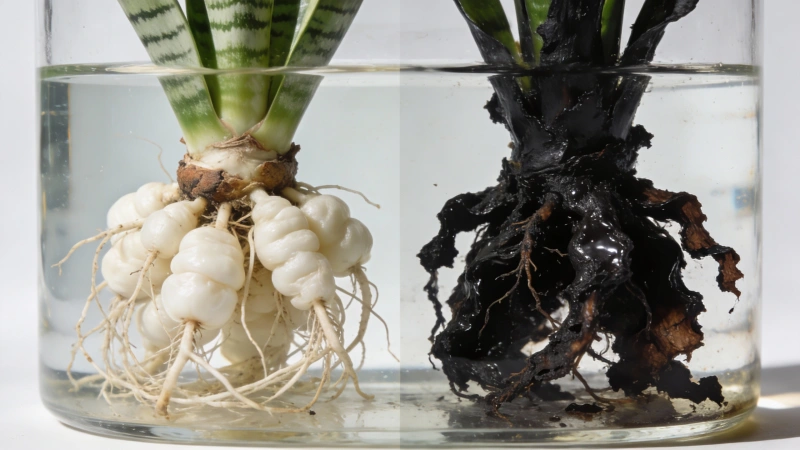
How to fix root rot:
- Remove the plant from its pot
- Shake off all old soil
- Cut away ALL black/mushy roots with clean scissors
- Let the plant air dry for 24 hours
- Repot in fresh, well-draining soil
- Wait 1-2 weeks before watering
If your plant is severely damaged, you might need more intensive rescue techniques. I’ve written a detailed guide on How to Save a Dying Plant that covers step-by-step recovery methods.
Cause #7: Temperature Stress
Snake plants prefer stable temperatures between 60-85°F (15-29°C). Sudden temperature changes can shock them and cause yellowing.
Common temperature problems:
- Placed near a drafty window in winter
- Close to a heating vent or radiator
- Near an air conditioning unit
- By a frequently opened door
According to Mississippi State University Extension, temperatures below 55°F (13°C) can damage snake plant foliage and cause permanent yellowing.
How to fix it: Move your plant to a location with stable temperatures, away from heating/cooling vents and drafty windows.
Cause #8: Nutrient Issues
Snake plants aren’t heavy feeders, but they do need occasional fertilizing. Years without any nutrients can cause pale, yellowing leaves.
On the flip side, over-fertilizing can burn the roots and cause similar symptoms.
How to feed properly:
- Fertilize only during growing season (spring/summer)
- Use a balanced liquid fertilizer diluted to half strength
- Apply every 2-3 months maximum
- Never fertilize in fall/winter when the plant is dormant
Cause #9: Natural Aging
Here’s some good news: if only the oldest leaves at the bottom of your plant are turning yellow, it might just be natural aging.
Plants don’t keep their leaves forever. It takes energy to maintain foliage, and sometimes a plant decides to drop older leaves to focus on new growth.
Signs it’s just natural aging:
- Only 1-2 of the oldest, outermost leaves are affected
- New growth looks healthy
- The rest of the plant is thriving
- No other symptoms (soft base, smell, etc.)
What to do: Simply remove the yellow leaves with clean scissors. No other action needed.
Quick Diagnosis Checklist
Not sure which cause is affecting your plant? Use this table to narrow it down:
| Symptom | Likely Cause | Quick Check | Urgency |
|---|---|---|---|
| Yellow + soft/mushy at base | Overwatering / Root rot | Check soil moisture & roots | 🔴 High |
| Yellow + dry/crispy | Underwatering | Is soil bone-dry? | 🟡 Medium |
| Yellow on window-side only | Sunburn | Direct sunlight exposure? | 🟡 Medium |
| Pale overall + lost variegation | Insufficient light | How much light does it get? | 🟡 Medium |
| Only old bottom leaves yellow | Natural aging | Is new growth healthy? | 🟢 Low |
| Black base + bad smell | Severe root rot | Inspect roots immediately | 🔴 High |
My Snake Plant Rescue Story: From Near Death to Thriving
The Setup
I’m a houseplant enthusiast with about three years of experience. Last winter, my favorite Sansevieria Laurentii—a beautiful variegated snake plant I’d had for over a year—started showing signs of trouble.
The Problem
At first, it was subtle. Just two or three bottom leaves turning yellow. I figured it was normal aging and didn’t think much of it.
But over the next few weeks, the yellowing spread. More leaves turned soft and mushy at the base. Some were starting to blacken. And then I noticed it—a faint, musty smell coming from the soil.
My Mistake
Here’s where I messed up: I assumed the plant was thirsty. So I watered it MORE. Classic rookie mistake.
Within another week, the situation was dire. The plant looked limp. Several leaves had collapsed completely.
The Diagnosis and Rescue
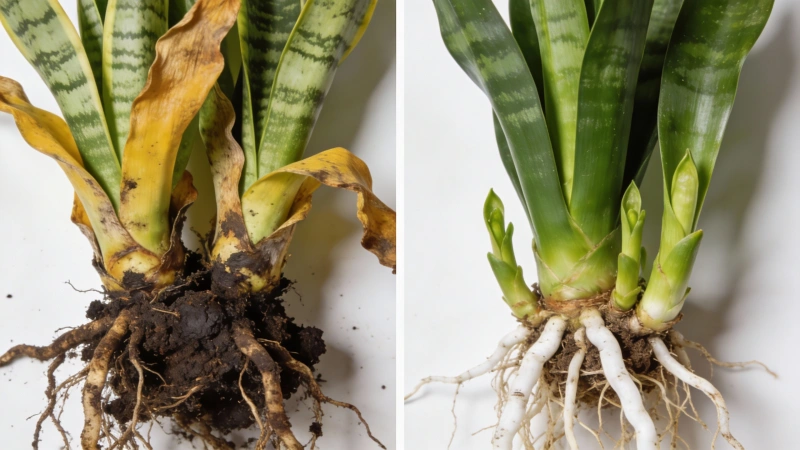
I finally pulled the plant out of its pot—and my heart sank. About a third of the roots were black, slimy, and falling apart. Root rot had set in.
Here’s exactly what I did to save it:
- Cut off ALL the rotten roots with sterilized scissors (I lost about 30-40% of the root system)
- Removed all the yellowed and damaged leaves
- Let the plant air dry for 24 hours to prevent further rot
- Repotted in a 50/50 mix of cactus soil and perlite
- Switched to a terracotta pot with drainage holes
- Waited a full two weeks before the first watering
The Result
Six weeks later, my snake plant was stable. Eight weeks in, I spotted a new leaf emerging from the center. I ended up losing 4-5 severely damaged leaves, but the plant survived.
It’s now been over a year since the rescue. The plant has put out several new leaves and looks healthier than ever.
What I Learned
Snake plants really do die from too much love, not neglect. Now I use the “finger test” before every watering—I stick my finger 2-3 inches into the soil, and only water if it’s completely dry. In winter, I water maybe once a month, sometimes less.
Should You Cut Off Yellow Snake Plant Leaves?
Short answer: yes, but timing matters.
When to cut:
- The leaf is completely yellow or brown
- The base is soft, mushy, or black
- It’s affecting the plant’s appearance
When NOT to cut:
- The leaf is only slightly pale—it might recover
- You haven’t fixed the underlying problem yet
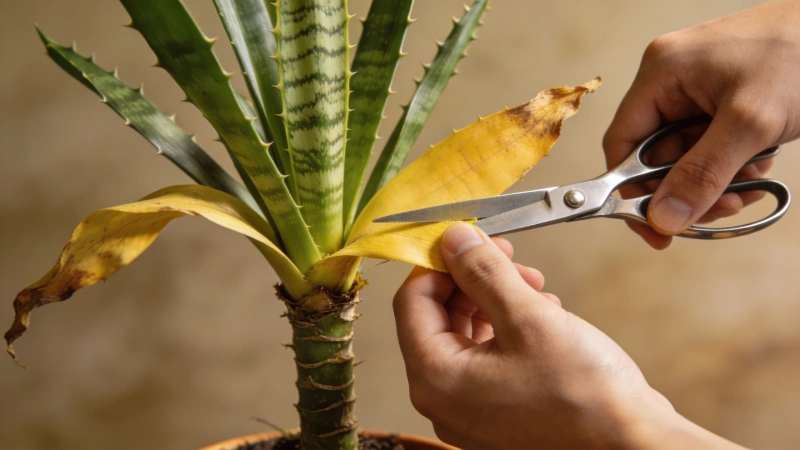
How to prune correctly:
- Use clean, sharp scissors or pruning shears
- Cut the leaf at the base, as close to the soil as possible
- Don’t tear or rip—clean cuts heal faster
- Wipe your tools between cuts if dealing with rot
How to Prevent Snake Plant Leaves From Turning Yellow
Once you’ve fixed the immediate problem, here’s how to keep your snake plant healthy long-term:
1. Master the Watering
I can’t stress this enough: throw out any watering schedule. Instead, check the soil every time.
| Season | Watering Frequency | How to Check |
|---|---|---|
| Spring/Summer | Every 2-3 weeks | Top 2-3 inches completely dry |
| Fall | Every 3-4 weeks | Soil about 50% dry |
| Winter | Once a month or less | Completely dry throughout |
My method: Before watering, I stick my finger 2-3 inches into the soil. If it feels dry at that depth, I water. If there’s any moisture at all, I wait.
2. Choose the Right Pot and Soil
- Pot: Must have drainage holes. Terracotta is ideal.
- Soil: Cactus/succulent mix + perlite (50/50)
- Size: Snake plants actually like being slightly root-bound
3. Check Regularly
Spend 30 seconds each week looking at your plant. Early yellowing is much easier to fix than full-blown root rot.
And here’s something many people don’t realize: soggy soil attracts pests. If you notice tiny flies buzzing around your plant, that’s a sign of overwatering too. Check out my guide on How to Get Rid of Fungus Gnats in Plants if you’re dealing with that issue.
Frequently Asked Questions
Can yellow snake plant leaves turn green again?
Unfortunately, once a leaf has turned completely yellow, it won’t recover. The chlorophyll is gone. However, if you catch yellowing early and fix the underlying issue, partially affected leaves may stabilize. Your best bet is to remove fully yellow leaves and focus on keeping the remaining foliage healthy.
How often should I water my snake plant?
There’s no one-size-fits-all schedule—it depends on your environment, pot type, and season. As a general rule, wait until the top 2-3 inches of soil are completely dry. This typically means every 2-3 weeks in summer and once a month (or less) in winter. Always check the soil rather than following a calendar.
Is my snake plant dying if leaves turn yellow?
Not necessarily! Yellow leaves are a warning sign, but snake plants are incredibly resilient. If you catch the problem early and address the cause, your plant can fully recover. Even plants with significant root rot can bounce back if at least half the root system is healthy.
Should I repot my snake plant if leaves are turning yellow?
Only if you suspect root rot or poor drainage. Otherwise, repotting adds stress and won’t help. Check the roots first—if they’re healthy and the soil drains well, focus on adjusting your watering habits instead. Snake plants actually prefer being slightly rootbound.
Can pests cause yellowing on snake plants?
Yes, though it’s less common. Pests like spider mites and mealybugs can drain nutrients from leaves, causing yellowing and stippling. Check the undersides of leaves for tiny bugs or webbing. If you spot pests, learn How to Get Rid of Spider Mites and treat promptly.
Helpful Video Guide
If you prefer visual learning, this video does a great job explaining snake plant care and troubleshooting: 地方
Final Thoughts
Yellow leaves on a snake plant can feel alarming, but in most cases, it’s a fixable problem. Remember:
-
- The #1 cause is overwatering – let the soil dry out completely
- Check for root rot if leaves are soft and mushy
- Use well-draining soil and pots with drainage holes
- Bright, indirect light is ideal
- When in doubt, underwater rather than overwater
I thought my snake plant was a goner when I found those rotted roots last winter. Six weeks of patient care later, it was putting out new growth. These plants are tougher than they look.
If you catch the problem early and take action, your snake plant can absolutely recover. Just remember: when it comes to snake plants, less is more.
Is your snake plant struggling?
I’d love to help! Drop a comment below with your symptoms, and I’ll do my best to help you diagnose the problem. And if you’ve successfully rescued a snake plant, share your story—it might help someone else!
This article was created by a professional team. AI tools were used during the research and writing process to enhance efficiency and quality. All information has undergone manual verification and editing to ensure accuracy and practicality. We are committed to providing readers with objective and valuable content.
Publisher::meiruth558@gmail.com,Please indicate the source when reposting:https://gardeningtoolsgarden.com/why-is-my-snake-plant-turning-yellow/
