Last updated: May 2026 · Written from 18 months of hands-on experience growing four Calathea varieties at home
Quick Answer: How to Care for Calathea
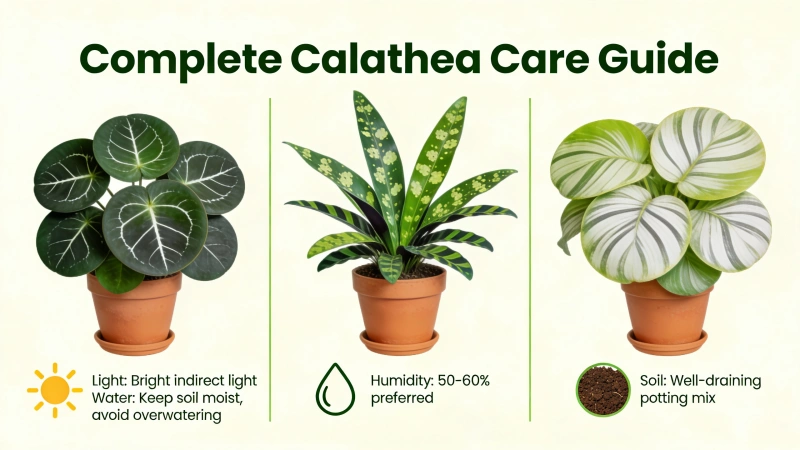
Calathea does best in bright indirect light, humidity above 50%, filtered or distilled water, and consistently moist but well-draining soil, with stable temperatures. Brown leaf edges, curling leaves, and yellowing are usually traced to low humidity, poor water quality, overwatering, or sudden changes in the plant’s surroundings.
I still remember standing in my local plant shop, mesmerized by a Calathea Medallion: dark green leaves with pink brushstroke patterns and purple undersides. I had to have it. “It’s not too difficult,” the shop owner assured me.
Three weeks later, the leaf edges were brown and crispy. A month in, the bottom leaves had turned yellow. By winter, the whole plant was curling up as if it were trying to escape.
If your Calathea’s leaves have gone crispy and brown and you can’t figure out what you’re doing wrong, you’re in good company. These plants have a reputation for being “drama queens,” and they’ve earned it.
After 18 months of trial, error, and eventual success, here’s what I’ve learned: Calathea isn’t actually that hard. It just needs a few things that most care guides gloss over.
This guide covers what took me from one struggling plant to a collection of four Calathea varieties: humidity, which mattered most, plus watering technique, light, and how to diagnose common problems before they kill the plant.
Quick Answer: Calathea Care Basics
Calathea Care at a Glance
| Care Factor | What to Do | Common Mistake |
|---|---|---|
| Humidity | Maintain 50–65% humidity | Relying on misting |
| Watering | When top 1″ of soil is dry | Fixed weekly schedule |
| Water Type | Filtered or distilled water | Using tap water directly |
| Light | Bright, indirect light | Direct sunlight (causes burn) |
| Temperature | 65–85°F, stable conditions | Near heating/AC vents |
Step 1: Humidity — The Most Important Factor
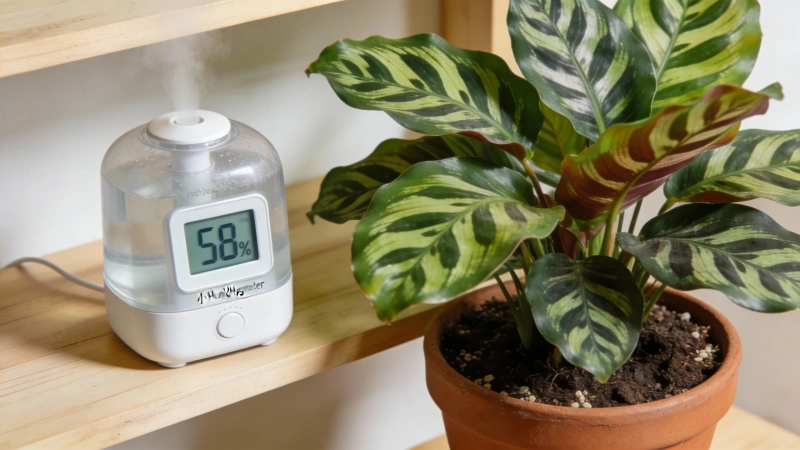
Calathea belongs to the Marantaceae family and grows on the floors of tropical rainforests in South America, where humidity routinely sits well above 70%. The average American home runs about 30–40% humidity, and as low as 20% in winter with the heat on. That gap is why so many Calatheas struggle indoors.
My Humidity Wake-Up Call
When my Calathea’s leaves got crispy edges, I assumed it needed more water. It didn’t. I bought a cheap hygrometer (humidity meter) and found my living room sitting at 28% humidity.
Target humidity: 50–65%. Some varieties, such as Orbifolia, prefer even higher.
How to Actually Increase Humidity
What works:
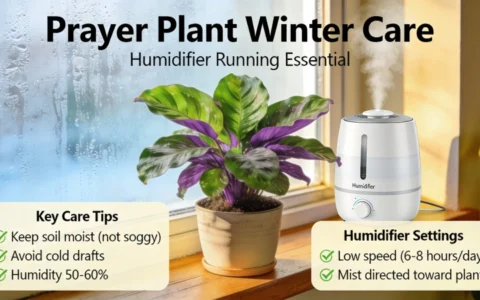
- Humidifier — the most effective option by far. A small tabletop humidifier near your plants makes a big difference.
- Pebble tray — fill a tray with pebbles and water, and set the pot on top (not touching the water). As the water evaporates, it raises humidity locally.
- Group your plants — plants release moisture through transpiration, so clustering them creates a more humid microclimate.
- Bathroom or kitchen placement — these rooms are naturally more humid from showers and cooking.
What doesn’t work: misting. It’s satisfying, but it only wets the leaves briefly and doesn’t raise the humidity in the room. Save yourself the effort.
If you’re setting up a humidity station for your Calathea, my guide to how to care for a Chinese Money Plant covers another humidity-loving plant that can share the same corner.
Step 2: Watering — Quality Matters More Than Quantity
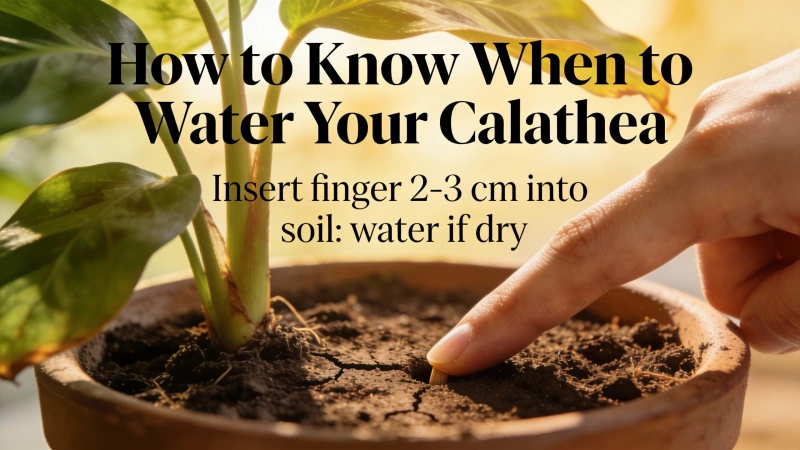
Here’s what nobody told me when I started: the type of water you use matters just as much as how often you water.
Tap water contains chlorine, fluoride, and dissolved minerals. Most houseplants tolerate that. Calathea doesn’t: the chemicals build up in the soil over time and burn the leaf edges, which is why you can water “perfectly” and still end up with brown tips.
This isn’t just plant-forum folklore. Clemson University Cooperative Extension lists plants in the Marantaceae family, which includes Calathea, among those sensitive to fluoride, which accumulates in leaf tissue and causes tip burn. Michigan State University Extension reaches the same conclusion about fluoride in city water and recommends switching sensitive plants to a cleaner water source.
The Water Quality Fix
Best options (in order):
- Distilled water
- Filtered water (Brita or similar)
- Rainwater
- Tap water left out for 24+ hours (some chlorine evaporates, but the fluoride and minerals remain)
I switched from tap to filtered water about six weeks in, and the difference was dramatic: new leaves came in without brown edges for the first time.
When to Water
The rule: water when the top inch of soil feels dry, not on a schedule. Push a finger about an inch into the soil:
- Still moist? Wait a day or two.
- Dry? Water thoroughly until it drains from the bottom.
- Never let your Calathea sit in standing water.
Seasonal Watering Guide
| Season | Frequency | Notes |
|---|---|---|
| Spring | Every 7–10 days | Growth resumes; watch for increased thirst |
| Summer | Every 5–7 days | Higher temps = faster drying |
| Fall | Every 10–14 days | Start reducing frequency |
| Winter | Every 2–3 weeks | Growth slows; easy to overwater |
These are estimates. Check the soil first.
Overwatering is the mistake that turns “fussy” into “fatal.” If the bottom leaves are yellowing and the soil stays soggy, the plant may already be in the early stages of root rot. My guide on how to treat root rot and save a dying plant shows how to check the roots and rescue the plant in time.
Step 3: Light — Bright but Never Direct
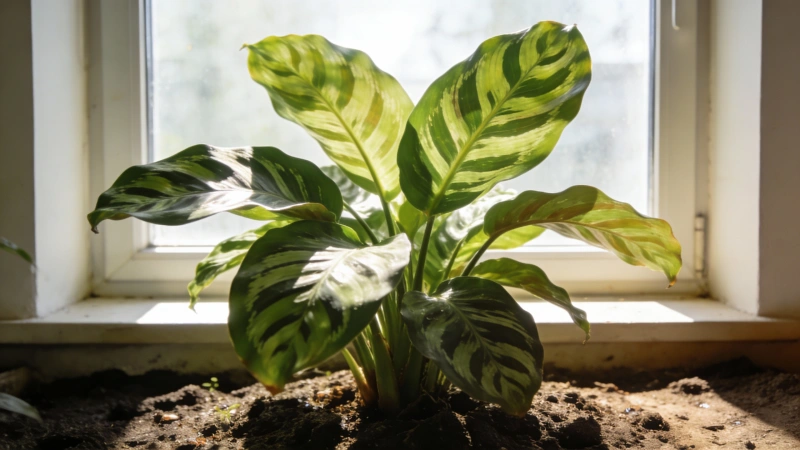
Calathea wants bright light, but no direct sun on its leaves. In nature it grows on the rainforest floor beneath a canopy of taller trees, where the light is filtered and dappled rather than direct.
My Lighting Mistake
When I first got my Calathea, I put it near a south-facing window, figuring more light meant better growth. Within a week, the leaves were curling in the afternoon, and some had bleached, faded patches. I moved it to an east-facing window, about 3 feet back from the glass, and the problem cleared up within days.
Best Light Conditions
- Ideal: east- or north-facing windows, or a few feet back from brighter windows
- Acceptable: west-facing windows with sheer curtains
- Avoid: direct afternoon sun from south or west windows
- Signs of too much light: faded patterns, curling leaves, brown scorch marks
- Signs of too little light: leggy growth, pale leaves, slow growth
Darker-leaved varieties, such as Calathea Dottie, can tolerate lower light than lighter-patterned ones.
Step 4: Temperature and Placement
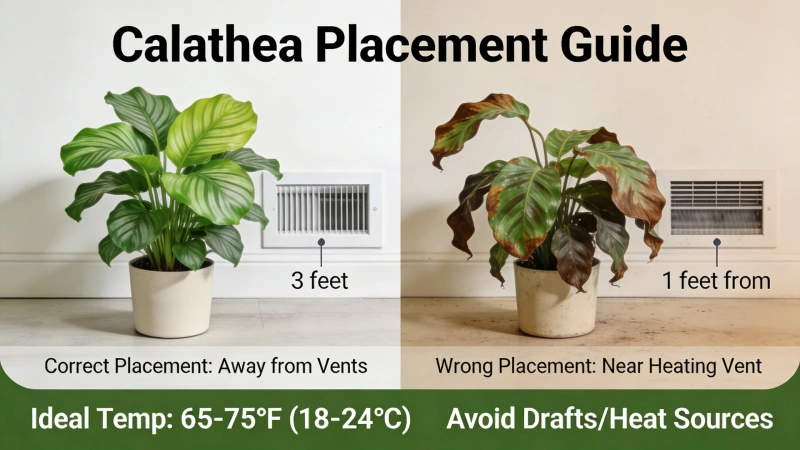
Ideal temperature: 65–85°F (18–30°C).
If your home is comfortable for you, it’s probably fine for your Calathea. The bigger issue is stability, since these plants don’t tolerate sudden changes.
Placement Mistakes to Avoid
- Near heating vents: hot, dry air can damage a Calathea faster than almost anything else. I learned this when my apartment’s heat kicked on in November.
- Near AC units: cold drafts stress the plant and can cause leaf drop.
- Drafty windows or exterior doors: temperature swings can cause curling and browning.
- On top of radiators or heat sources: this can dry the soil unevenly and overheat the roots.
Once your Calathea is happy somewhere, leave it there. It adjusts slowly and doesn’t take well to frequent moves.
Step 5: Soil and Fertilizer
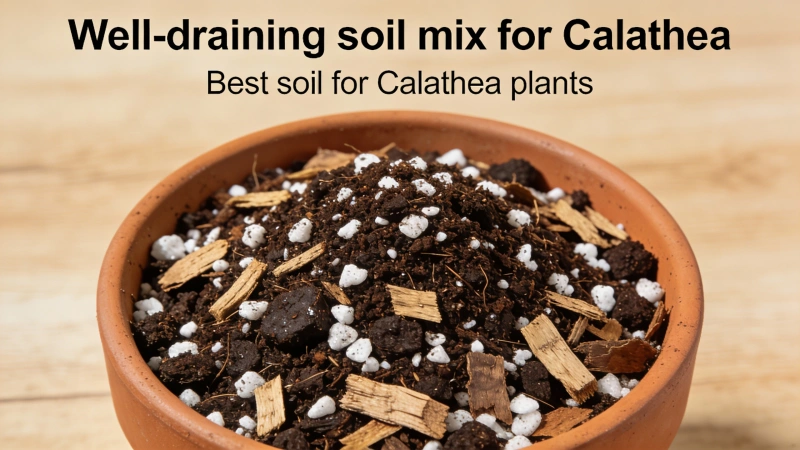
The Right Soil Mix
Calathea needs soil that stays moist but drains well, which is a tricky balance. Standard potting soil often holds too much water, which can lead to root rot.
My formula:
- 50% regular potting mix
- 25% perlite (for drainage and aeration)
- 25% orchid bark (adds structure, prevents compaction)
A pre-made African violet mix has similar drainage properties.
Fertilizing Tips
- When: only during the growing season (spring through early fall)
- Frequency: once a month maximum
- Strength: dilute to 1/4–1/2 the recommended dose
- Type: balanced liquid houseplant fertilizer
- Winter: don’t fertilize at all, since the plant is resting
Warning: over-fertilizing leads to salt buildup in the soil, and that shows up as brown leaf tips. When in doubt, skip the feeding; Calatheas aren’t heavy feeders.
My Real Experience: From Nearly Dead to Thriving
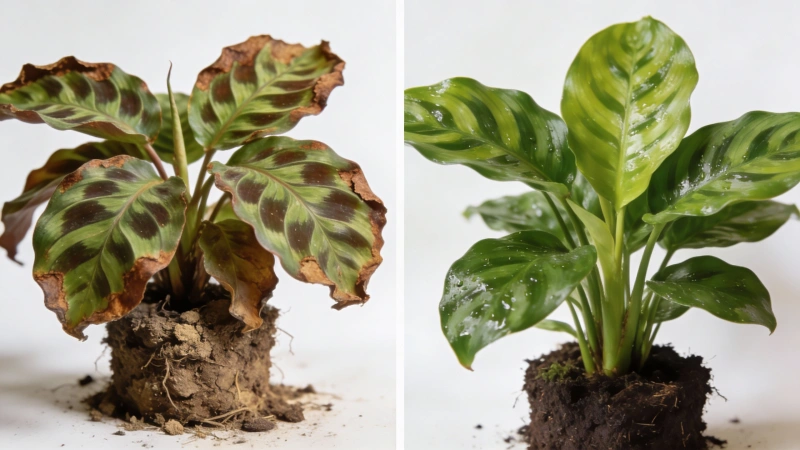
The Starting Point (October 2023)
I bought my first Calathea Medallion at a local plant shop, drawn in by the pink markings and deep purple underside. The shop owner said it wasn’t too difficult. I put it near my south-facing window and watered it once a week with tap water, like my other plants. I was confident.
What Went Wrong
Week 2: brown, crispy edges appeared on several leaves. I assumed it needed more water, so I watered more frequently.
Week 4: the bottom leaves turned yellow and mushy. Now I was confused. Was it too much water or too little?
Week 6: on a whim, I bought a $12 hygrometer. My living room humidity was 28%, and I finally understood the problem.
November (heat kicks on): things got worse. Leaves started curling tightly, and some dropped entirely. I honestly considered giving up on this “drama queen.”
How I Fixed It
Instead of giving up, I started researching: I joined plant forums, read dozens of articles, and experimented. This is what worked:
- Bought a small tabletop humidifier. I kept it running near my plants, aiming for 55–60% humidity.
- Switched to filtered water. I stopped using tap water completely.
- Moved to an east-facing window. That put it away from afternoon sun and heating vents.
- Grouped my plants together. This created a little humidity microclimate.
- Started checking soil moisture. I used the finger test instead of a schedule.
The Results
- Within 1 week: leaves stopped curling
- Within 1 month: first new leaf without brown edges
- Within 6 months: 8 new healthy leaves, plant doubled in size
- 18 months later: I now own 4 different Calathea varieties (Medallion, Rattlesnake, Orbifolia, Ornata), all thriving
What I Learned
Everything changed when I stopped treating Calathea like my other houseplants and started meeting its humidity needs.
Many “dying” houseplants can be saved if you diagnose the problem correctly. I used the same approach when I wrote about how I saved my dying Dracaena, another fluoride-sensitive plant that taught me the value of switching away from tap water.
Troubleshooting: What’s Wrong With My Calathea?
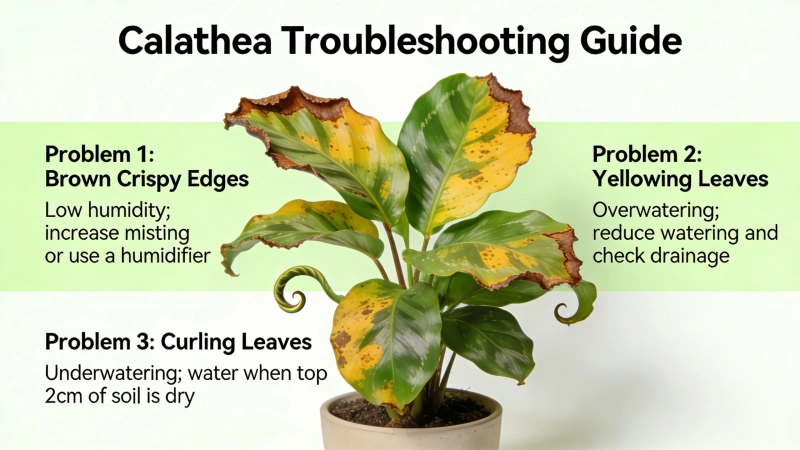
Calathea shows its problems clearly once you know how to read the signs.
| Symptom | Most Likely Cause | Solution |
|---|---|---|
| Brown, crispy leaf edges | Low humidity or tap water minerals | Raise humidity to 50%+; use filtered water |
| Leaves curling inward | Underwatering or low humidity | Water thoroughly; add humidifier |
| Yellow leaves (bottom) | Overwatering / root rot | Let soil dry more; check drainage |
| Faded leaf patterns | Too much direct light | Move to indirect light location |
| Drooping leaves | Underwatering or cold damage | Check soil moisture; move away from cold |
| Fine webbing on leaves | Spider mites | Wash leaves; raise humidity; treat with neem oil |
| New leaves damaged when unfurling | Humidity fluctuations or pests | Stabilize environment; check for hidden pests |
The process is similar for most houseplants: identify the symptom, find the cause, and fix the environment. I walk through the same diagnostic approach in how I saved my dying Aloe Vera.
5 Calathea Care Mistakes I Made (So You Don’t Have To)
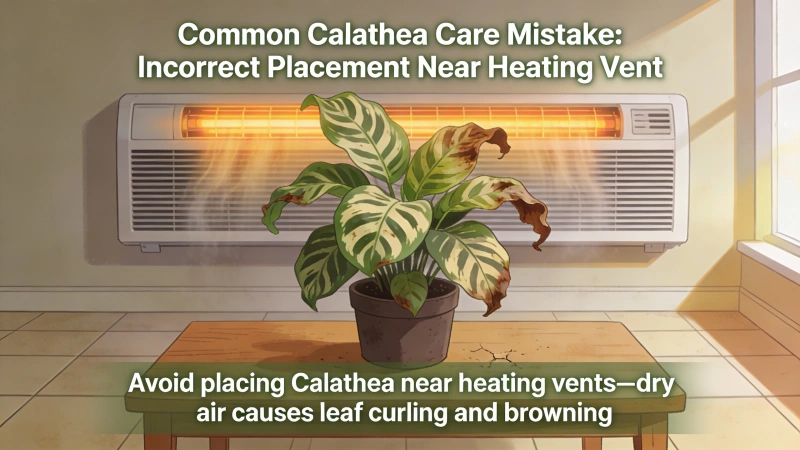
- Thinking misting was enough for humidity. ❌ Spraying leaves daily. ✅ Misting only wets leaves temporarily; use a humidifier to raise the humidity in the room.
- Using tap water without a second thought. ❌ Watering straight from the faucet. ✅ Tap water minerals cause brown tips; use filtered or distilled water.
- Placing it near heating vents in winter. ❌ Wanting to keep my plant “warm.” ✅ Heating vents blast dry air; keep your Calathea far away.
- Watering on a fixed schedule. ❌ “Every Sunday I water my plants.” ✅ Check the actual soil moisture, because needs vary by season and environment.
- Chasing direct sunlight. ❌ Putting it in my brightest south-facing window. ✅ Calathea needs bright indirect light; direct sun burns and fades the leaves.
4 Calathea Varieties Worth Adding to Your Collection
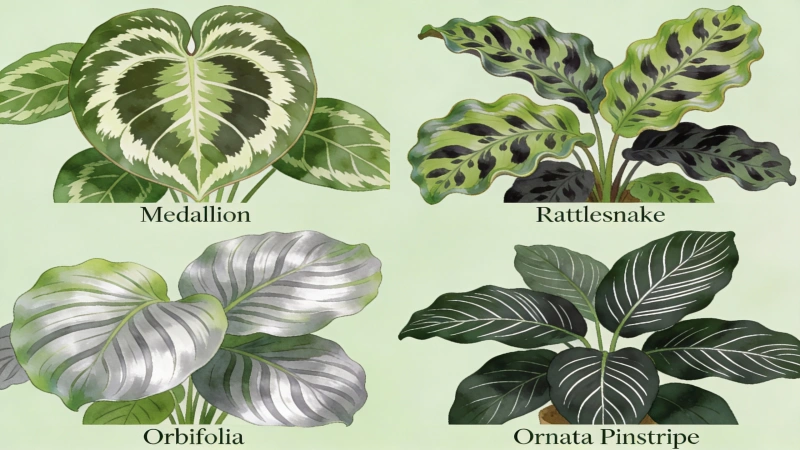
Once the basics are under control, you may want to add to your collection. These are four of my favorites:
1. Calathea Medallion
The classic: round leaves with dark green edges, lighter green patterns, and a signature purple underside. It’s a good choice for beginners, relatively speaking.
2. Calathea Rattlesnake (Lancifolia)
Long, wavy leaves with dark green markings that look like snake skin, plus burgundy undersides. Slightly more forgiving than some varieties.
3. Calathea Orbifolia
Large, round leaves with silvery-green stripes. It needs higher humidity than most (60% or more).
4. Calathea Ornata (Pinstripe)
Dark green leaves with delicate pink or white pinstripes. It can tolerate slightly lower light.
Care tip: all Calathea varieties have essentially the same care requirements. Orbifolia is slightly more demanding on humidity, while darker-leaved varieties like Ornata handle lower light a little better.
Love Calathea? Try These Similar Plants
- Maranta (Prayer Plant): same family and similar care, but generally more forgiving, which makes it a good stepping stone.
- Stromanthe Triostar: pink, white, and green variegation with similar humidity needs.
- Snake Plant: dramatic leaves with much lower maintenance.
The snake plant is about as low-maintenance as houseplants get. My complete snake plant care guide has the details.
Calathea and Pet Safety
Calathea is non-toxic to both cats and dogs.
The ASPCA’s Toxic and Non-Toxic Plants database lists it as safe for pets, which makes it one of the better choices if you have curious cats or dogs that investigate (or nibble) your plants.
Even so, eating any plant material can cause mild stomach upset, so keep it out of reach of pets that chew.
Watch: Calathea Care Visual Guide
This video covers the essentials of Calathea care:
Frequently Asked Questions
How often should I water a Calathea?
There’s no fixed schedule; it depends on your home. Use the finger test and water only when the top inch of soil feels dry. That typically works out to every 7–10 days in summer and every 2–3 weeks in winter, but check first rather than watering on autopilot. Water quality matters just as much as frequency, so use filtered, distilled, or rainwater instead of tap water.
Why are my Calathea leaves turning brown on the edges?
Brown, crispy edges are most often a humidity or water-quality problem. Calathea needs humidity of 50% or more (most homes sit at 30–40%), and minerals from tap water build up in the soil. A humidifier and a switch to filtered or distilled water usually fix it.
Can I use tap water for my Calathea?
It’s not recommended. Tap water contains chlorine, fluoride, and minerals that accumulate in the soil and cause brown leaf tips, and Clemson and Michigan State Extension both note the Marantaceae family’s sensitivity to fluoride. Use filtered water, distilled water, or rainwater. Letting tap water sit out overnight removes some chlorine but not the fluoride.
Is Calathea hard to grow for beginners?
Calathea has a “drama queen” reputation, but it’s really only fussy about two things: humidity and water quality. With a humidifier and filtered water, the rest of its care is fairly straightforward, so it’s manageable for a beginner willing to meet those two needs.
Why is my Calathea curling its leaves?
Curling leaves usually signal underwatering or low humidity, sometimes both. Check the soil: if the top inch is dry, water thoroughly, and raise humidity toward 55–60%. Some daily leaf movement is normal, though. Calathea naturally folds its leaves up at night, which is why it’s sometimes nicknamed the prayer plant.
Is Calathea safe for cats and dogs?
Yes. The ASPCA lists Calathea as non-toxic to both cats and dogs, which makes it one of the safest choices for pet households. As with any plant, nibbling can still cause mild stomach upset, so keep it out of reach of pets that chew.
Start Your Calathea Journey Today
If I could turn a curling, crispy, nearly dead Calathea Medallion into a collection of four, you can too. It comes down to two things most guides gloss over: humidity and water quality.
The essentials:
- Keep humidity above 50%, with a humidifier, not just misting
- Use filtered, distilled, or rainwater, never straight tap water
- Give it bright, indirect light with no direct sun
- Check the soil instead of watering on a schedule
- Keep it away from heating and AC vents
Once your Calathea is settled, the Dracaena and the ZZ plant are low-fuss companions for the same shelf. Both ask far less of you.
Questions about your Calathea? Leave them in the comments and I’ll help you troubleshoot.
Editorial Note: This article was written and edited by Spring Mei. AI tools may be used to assist with research and organizing information. The final content is reviewed before publication, and important factual claims are checked against reliable sources where appropriate. Personal experience is distinguished from general guidance, and methods are described as personally tested only when they have actually been tested.
Please indicate the source when reposting:https://gardeningtoolsgarden.com/how-to-care-for-calathea/
Author: Spring Mei