

I’ve been growing houseplants in my small apartment for about two years now. Last fall, a friend moving across the country handed me a tiny Chinese Money Plant with just five leaves. “It’s impossible to kill,” she said with a smile.
Three weeks later, the leaves were curling inward, the bottom ones turning yellow. I was confused—was I watering too much or too little?
If you’ve ever watched your Pilea’s leaves droop or turn yellow for no obvious reason, you know the frustration. Despite its reputation as an “easy” plant, the Chinese Money Plant (Pilea peperomioides) can be surprisingly tricky if you don’t understand its specific needs.
After 14 months of trial, error, and eventually success, I turned that struggling five-leaf plant into over 20 leaves—and successfully propagated 6 new plants from it. In this guide, I’ll share everything I learned about proper watering, lighting, troubleshooting common problems, and growing your own Pilea family through propagation.
Quick Answer: Chinese Money Plant Care Basics
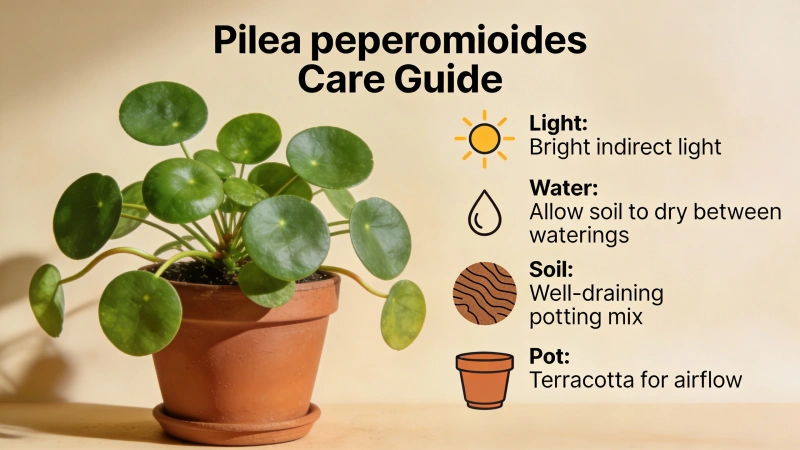
Chinese Money Plant care comes down to five essentials:
- Water: Only when top 2 inches of soil are completely dry (weekly in summer, every 2 weeks in winter)
- Light: Bright, indirect sunlight—avoid direct sun which causes leaf burn
- Soil: Well-draining mix (cactus soil + perlite)
- Temperature: 55-86°F (13-30°C)—normal room temperature is perfect
- Rotate: Turn the pot every 2-3 days for even growth
Below, I’ll share my hands-on experience with each of these care essentials.
Chinese Money Plant Care at a Glance
| Care Factor | What to Do | Common Mistake |
|---|---|---|
| Watering | Wait until top 2″ of soil is dry | Watering on a fixed schedule |
| Light | Bright indirect light | Direct sunlight (causes burn) |
| Soil | Cactus mix + perlite | Regular potting soil |
| Pot | Terracotta with drainage holes | Oversized decorative pots |
| Fertilizer | Monthly in spring/summer (half-strength) | Feeding year-round |
Step 1: Getting the Light Right
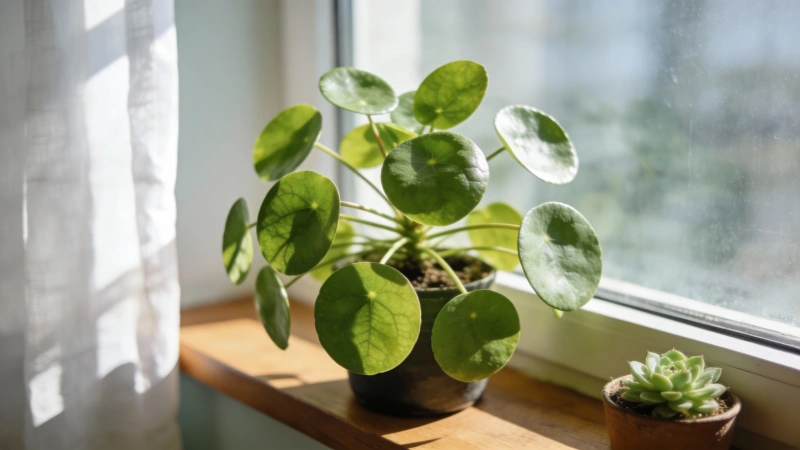
The Chinese Money Plant is native to the Yunnan province in southwestern China, according to Wikipedia. In its natural habitat, it grows in the shade of larger plants—which tells us a lot about its light preferences.
Here’s what I learned the hard way: My first mistake was placing my Pilea near a north-facing window. It barely got any direct light, and the plant looked pale and stretched out within weeks.
Best Light Conditions
- Ideal spot: East or west-facing window, 1-3 feet from the glass
- Avoid: Direct afternoon sun (causes brown scorch marks on leaves)
- Too little light: Causes leggy growth and pale leaves
The Rotation Trick
Chinese Money Plants grow toward the light—fast. If you don’t rotate yours, it’ll start leaning dramatically to one side.
My routine: I turn my Pilea about 90 degrees every 2-3 days. This keeps the growth even and the plant looking balanced. It takes 5 seconds but makes a huge difference.
💡 Pro tip: Dusty leaves can’t absorb light efficiently. I wipe my Pilea’s leaves with a damp cloth every few weeks—clean leaves equal happy plants!
Step 2: Watering—The #1 Make-or-Break Factor

This is the most important section in this entire guide. Overwatering is the number one killer of Chinese Money Plants—and it was my biggest mistake too.
My failure story: When I first got my Pilea, I watered it twice a week like my other houseplants. Within three weeks, the leaves started curling inward and the bottom ones turned yellow and mushy. Classic signs of overwatering.
The Right Way to Water
- Use the finger test: Stick your finger 2 inches into the soil
- Still moist? Wait a few more days
- Completely dry? Time to water
- Water thoroughly: Pour until water flows from drainage holes
- Empty the saucer: Never let your Pilea sit in standing water
Seasonal Watering Schedule
| Season | Frequency | Notes |
|---|---|---|
| Spring | Every 7-10 days | Growth begins—watch for thirsty signs |
| Summer | Every 5-7 days | May need more in extreme heat |
| Fall | Every 10-14 days | Start reducing frequency |
| Winter | Every 2-3 weeks | Dormant period—water sparingly |
The golden rule I follow: When in doubt, don’t water. A slightly thirsty Pilea will bounce back quickly. An overwatered one with root rot? That’s much harder to save.
Step 3: Choosing the Right Soil and Pot
Soil Mix
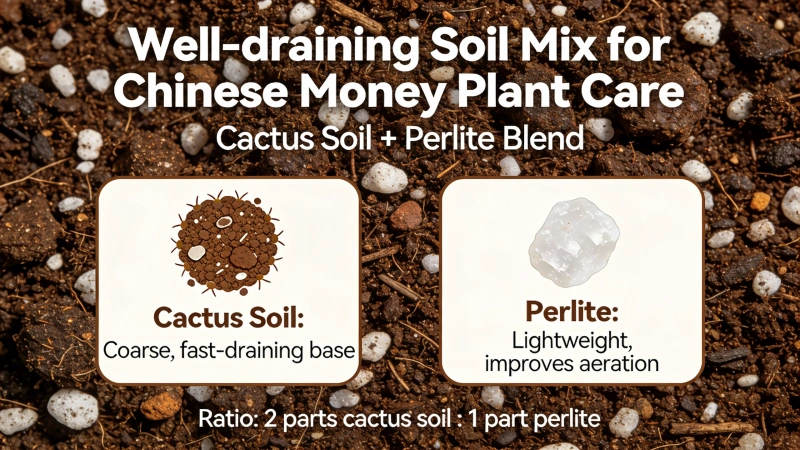
Your Pilea needs soil that drains fast. I use a simple recipe:
- 50% cactus/succulent potting mix
- 50% perlite
Why this matters: Regular potting soil holds moisture too long, creating the perfect conditions for root rot. Adding perlite creates air pockets that help roots breathe and water drain quickly.
Pot Selection
✅ Best choice: Terracotta pot with drainage holes
- Porous material wicks moisture away from roots
- Heavy enough to prevent top-heavy plants from tipping
- Drainage holes are non-negotiable!
❌ Avoid:
- Oversized pots (excess soil stays wet too long)
- Decorative pots without drainage holes
- Plastic pots (retain moisture longer)
Size tip: Choose a pot only 1-2 inches larger than your plant’s root ball. Pileas actually like being slightly root-bound.
Comment
byu/freja0sunshine from discussion
inIndoorGarden
Step 4: Temperature and Environment
Ideal temperature range: 55-86°F (13-30°C)
Good news—if your home is comfortable for you, it’s probably fine for your Pilea too. These plants thrive in typical indoor temperatures.
What to Avoid
- Cold drafts near windows in winter
- Direct airflow from AC vents or heaters
- Temperatures below 50°F (10°C)—this can cause leaf drop
I keep mine away from my apartment’s heating vents. The hot, dry air was causing the leaf edges to brown before I figured that out.
If you’re lucky enough to have an outdoor garden, you might be dealing with other challenges entirely. For yard-related issues like unwanted visitors digging up your lawn, check out my guide on How to Get Rid of Moles.
Step 5: Feeding Your Pilea
Chinese Money Plants aren’t heavy feeders. In fact, too much fertilizer causes more problems than too little.
My Feeding Routine
- When: March through September only (growing season)
- Frequency: Once a month
- Strength: Dilute to half the recommended amount
- What I use: Balanced liquid houseplant fertilizer (20-20-20)
Signs of Over-Fertilizing
- Soft, limp leaves
- Brown leaf edges (fertilizer burn)
- White crusty buildup on soil surface
Important: Never fertilize in fall or winter when the plant is dormant. And skip the feeding if your plant is stressed or recovering from a problem.
My Real Experience: From 5 Leaves to 6 New Plants
The Starting Point (September 2023)
When my friend handed me that little Pilea before her cross-country move, it had just 5 leaves. It looked healthy enough at the time. She was confident I couldn’t mess it up.
I placed it near my north-facing window and watered it twice a week—the same routine I used for my other plants.
What Went Wrong
Within three weeks, things fell apart:
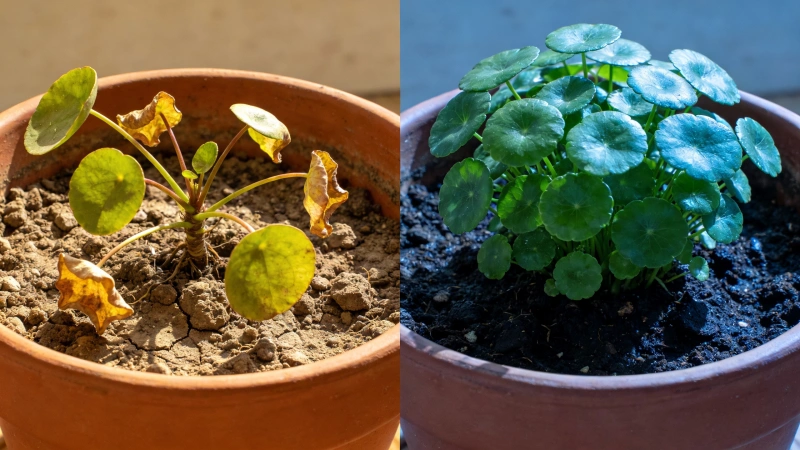
- The leaves started curling inward like little tacos
- Bottom leaves turned yellow and felt mushy
- The whole plant looked droopy and sad
I panicked. Was it too much water? Too little? Not enough light? I honestly had no idea what was killing my “unkillable” plant.
How I Fixed It
After lots of research and some trial and error, I discovered the problems:
- Overwatering: Twice a week was way too much
- Poor light: The north window wasn’t cutting it
- Wrong soil: Regular potting mix stayed wet too long
My recovery plan:
- Moved to an east-facing window (bright, indirect light)
- Repotted in cactus soil + perlite mix
- Switched to terracotta pot with drainage
- Started using the finger test—only watering when dry
The Results (14 Months Later)
- Original 5 leaves grew to 20+ leaves
- The mother plant produced 8 baby plants (pups)
- I successfully separated and grew 6 new plants (75% success rate)
- Gave 3 plants to friends as gifts
What I Learned
The biggest lesson? Pileas are drought-tolerant. They’d rather be a little thirsty than sitting in wet soil. When you’re not sure whether to water, wait another day or two.
This “rescue and revive” approach worked for other struggling plants in my collection too. If you’re trying to save a dying houseplant, the principles are often similar—I used a nearly identical strategy when I wrote about How I Saved My Dying Dracaena.
Troubleshooting: What’s Wrong With My Pilea?
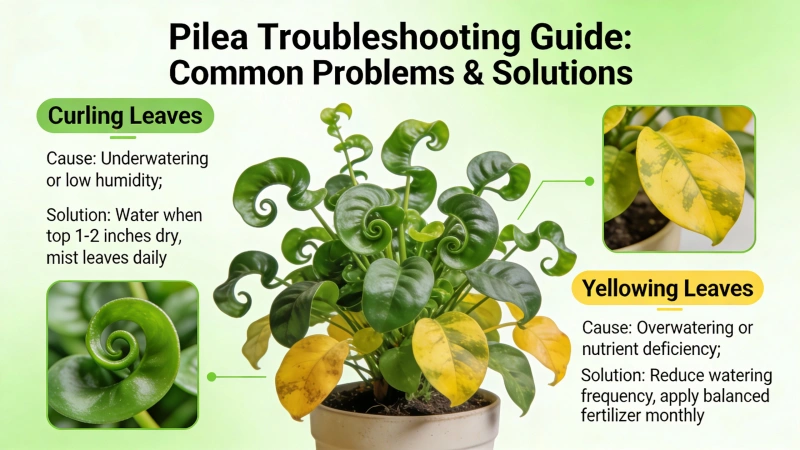
Here’s a quick diagnostic guide based on my experience:
| Symptom | Likely Cause | Fix |
|---|---|---|
| Leaves curling inward | Overwatering / poor drainage | Let soil dry; check roots for rot |
| Leaves curling outward (cupping) | Temperature stress / too much light | Move away from heat/direct sun |
| Yellow, mushy leaves | Overwatering | Stop watering; let soil dry completely |
| Drooping leaves | Underwatering (usually) or root rot | Check soil; water if dry |
| White spots on leaves | Mineral deposits (normal!) | Use filtered water; wipe leaves |
| Brown scorch marks | Sunburn | Move to indirect light |
| Leggy, stretched growth | Not enough light | Move to brighter location |
About Those White Spots
Don’t panic if you see small white crystals on your Pilea’s leaves! These are just mineral deposits released through the leaf pores when water evaporates. They’re completely harmless.
If they bother you, try using filtered water or let tap water sit out overnight before using it. You can also gently wipe the leaves with a damp cloth.
Similar diagnostic approaches work for other common houseplants. When my aloe vera started having issues, I found that the troubleshooting process was nearly identical—check out How I Saved My Dying Aloe Vera for those details.
5 Mistakes I Made (So You Don’t Have To)

- Watering on a schedule
❌ “I water every Saturday”
✅ Only water when the soil is actually dry - Using a pot that’s too big
❌ “Bigger pot = more room to grow”
✅ Pileas prefer being slightly root-bound; oversized pots hold too much moisture - Placing in low light
❌ North-facing window or dark corner
✅ Bright, indirect light from east or west window - Trying to propagate from a single leaf
❌ Cutting a leaf and sticking it in water
✅ Wait for baby plants (pups) and separate those instead—much higher success rate - Forgetting to rotate
❌ Leaving the plant in the same position
✅ Turn 90 degrees every 2-3 days for even, balanced growth
How to Propagate Chinese Money Plant (Free Plants!)
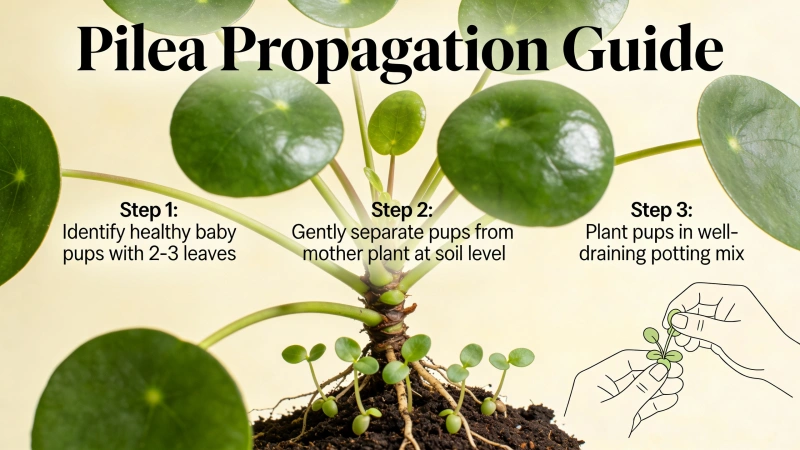
One of my favorite things about Chinese Money Plants? They make babies—lots of them! A healthy, mature Pilea will produce small plantlets called “pups” at its base. These are free plants waiting to happen.
When to Separate Pups
- Pups are at least 2-3 inches tall
- They have 2-3 leaves of their own
- Best time: Spring or summer (active growing season)
Step-by-Step Propagation
- Gently dig around the pup to expose its connection to the mother plant
- Use a clean, sharp knife to cut the connecting root (include some roots with the pup if possible)
- Let the cut end dry for 1-2 days (optional but helps prevent rot)
- Plant in a small pot (2-3 inches) with well-draining soil
- Keep soil lightly moist—not wet—until you see new growth
- Once established, care for it like a mature plant
My Propagation Results
From my mother plant, I separated 8 pups. 6 survived and thrived (75% success rate). The two that didn’t make it were probably separated too early—they were smaller than 2 inches and didn’t have strong root systems yet.
⚠️ Can you propagate from a single leaf? Technically yes, but success rates are very low. Pilea leaves tend to rot before rooting. Stick with pups for reliable results—it’s called the “Friendship Plant” for a reason!
Love Your Pilea? Try These Easy-Care Plants Too
If you enjoy the low-maintenance nature of Chinese Money Plants, you might also love:
Snake Plant (Sansevieria)
- Even more drought-tolerant than Pilea
- Thrives in low light conditions
- Excellent air purifier
I’ve had great success with snake plants too. For a detailed guide on keeping them happy, check out How to Care for a Snake Plant.
Other Easy Options
- ZZ Plant (nearly impossible to kill)
- Pothos (great for beginners)
- Spider Plant (produces babies like Pilea!)
Pet Safety: Great News for Pet Owners!
The Chinese Money Plant is non-toxic to cats and dogs.
According to the ASPCA’s Toxic and Non-Toxic Plants Database, Pilea peperomioides is safe for households with pets. This makes it one of the best choices if you have curious cats or dogs who like to nibble on plants.
That said, I still keep my plants out of reach. Even non-toxic plants can cause mild stomach upset if a pet eats a large amount.
Watch: Chinese Money Plant Care Visual Guide
Sometimes it’s easier to see care techniques in action. This video covers the essentials of Pilea care:电饭煲
Frequently Asked Questions
How often should I water my Chinese Money Plant?
There’s no fixed schedule—it depends on your environment. Use the finger test: water only when the top 2 inches of soil are completely dry. This typically means weekly in summer and every 2-3 weeks in winter, but always check the soil first.
Why are my Pilea leaves curling?
Curling inward usually indicates overwatering or poor drainage—check the roots for rot. Curling outward (cupping) often means temperature stress or too much direct light. Adjust your care routine based on which type of curl you’re seeing.
What are the white spots on my Pilea leaves?
Those white crystalline spots are mineral deposits—completely normal and harmless! They’re released through the leaf pores when water evaporates. Using filtered water can reduce them, or you can simply wipe the leaves with a damp cloth.
Why isn’t my Chinese Money Plant producing babies?
Your plant might not be mature enough yet—Pileas typically need to be a few years old before producing pups. Make sure it’s getting bright indirect light and proper care. With patience and good conditions, babies will eventually appear at the base.
Is Chinese Money Plant toxic to pets?
No! Chinese Money Plant (Pilea peperomioides) is non-toxic to both cats and dogs according to the ASPCA. It’s one of the safest houseplants for pet owners.
Can I propagate Pilea from a single leaf?
While technically possible, leaf propagation has a very low success rate with Pilea. The leaves tend to rot before developing roots. The much better approach is waiting for baby plants (pups) to appear at the base and separating those—this method has a much higher success rate.
Start Your Pilea Journey Today
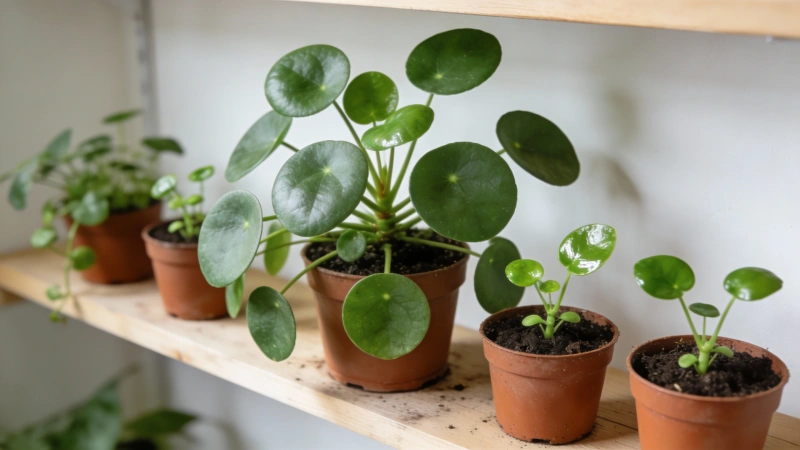
Chinese Money Plant care really comes down to three things: less water than you think, plenty of bright indirect light, and excellent drainage.
My biggest lesson after 14 months? When in doubt, don’t water. This plant evolved to handle drought—it’s much more forgiving of underwatering than overwatering.
From nearly killing my first Pilea to now having a whole collection, this journey taught me that even “easy” plants need you to understand their specific needs. But once you get it right, you’ll be rewarded with beautiful coin-shaped leaves, endless baby plants to share, and maybe even a little good fortune (that’s the legend, anyway!).
Got questions about your Chinese Money Plant? Drop a comment below—I’d love to hear how your Pilea is doing!
Happy growing!
This article was created by a professional team. AI tools were used during the research and writing process to enhance efficiency and quality. All information has undergone manual verification and editing to ensure accuracy and practicality. We are committed to providing readers with objective and valuable content.
Publisher::meiruth558@gmail.com,Please indicate the source when reposting:https://gardeningtoolsgarden.com/how-to-care-for-a-chinese-money-plant/
