
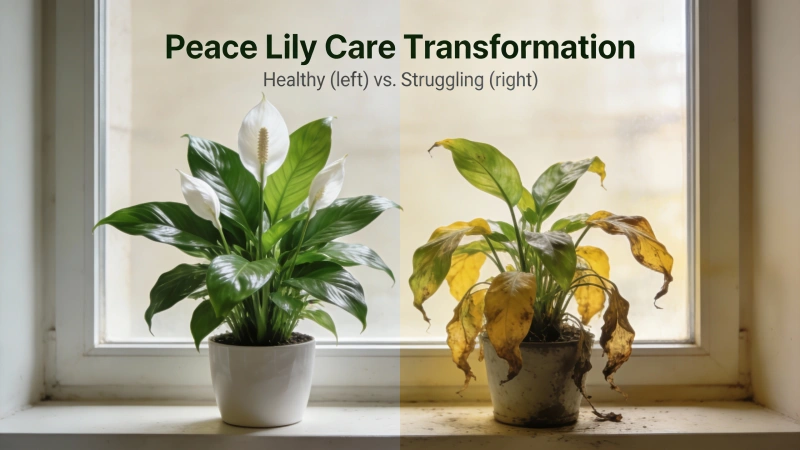

I almost killed my first peace lily.
A friend gave it to me as a housewarming gift in 2022. It was gorgeous — glossy dark green leaves and three perfect white blooms. I thought it would be easy to keep alive. After all, everyone says peace lilies are “beginner-friendly,” right?
Within months, the leaves turned yellow. The tips went brown. And those beautiful flowers? Never came back.
If you’re dealing with a droopy, yellow, or flowerless peace lily right now, I get it. I’ve been there.
After nearly 3 years of trial, error, and a lot of research, I finally figured out what these plants actually need. My peace lily not only recovered — it bloomed naturally for the first time, and I’ve successfully propagated 4 new plants to share with family.
In this guide, I’ll share everything I learned. You’ll discover why your peace lily is struggling, how to fix common problems, and the simple “droop method” that changed everything for me.
By the way, peace lilies belong to the Araceae family — they’re actually related to pothos and philodendrons, not true lilies. Knowing this helped me understand their care needs much better.
Quick Answer: Peace Lily Care at a Glance
TL;DR: Peace lilies thrive with bright indirect light, watering when the top inch of soil is dry (or when leaves slightly droop), temperatures of 65-85°F, and moderate humidity. Use filtered water to avoid brown tips. Fertilize sparingly in spring/summer. Keep away from pets — they’re mildly toxic.
Peace Lily Care Cheat Sheet:
|
Care Factor |
What I Recommend |
|
Light |
Bright, indirect light (east or north window) |
|
Water |
When top 1″ is dry or leaves droop slightly (7-14 days) |
|
Temperature |
65-85°F (18-29°C) — never below 55°F |
|
Humidity |
40%+ (bathroom or kitchen works great) |
|
Fertilizer |
Balanced liquid fertilizer every 6-8 weeks (spring/summer only) |
|
Toxicity |
Mildly toxic to pets and children |
Understanding Your Peace Lily
Before diving into care tips, let me share what I wish I knew from day one.
Peace lilies (Spathiphyllum) aren’t actually lilies at all. They come from tropical rainforests in Central and South America, where they grow on the forest floor under the shade of larger plants.
That elegant white “flower” you love? It’s not technically a flower. According to the Royal Horticultural Society, it’s actually a modified leaf called a spathe, surrounding a spike (spadix) that holds the tiny true flowers.
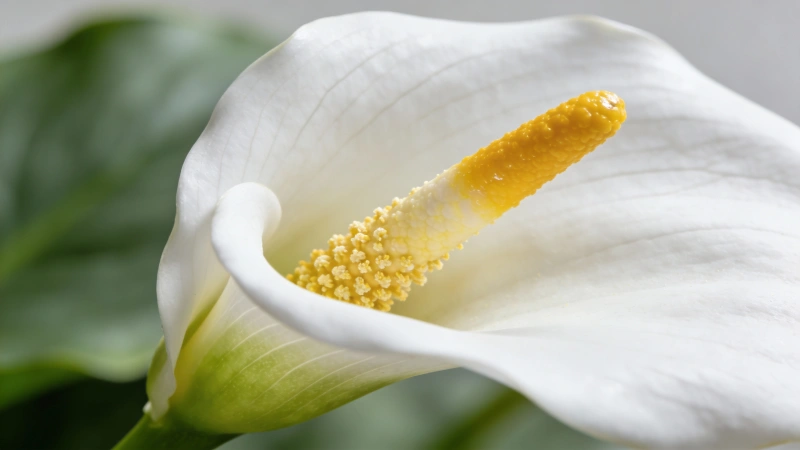
Here’s what surprised me: with proper care, peace lilies can live 20 years or more. Most people give up on them way too soon.
Light Requirements
This is where I made my first big mistake.
I kept reading that peace lilies are “low light plants,” so I tucked mine into a dark corner. Bad idea. “Low light tolerant” doesn’t mean “loves the dark.”
What I found works best:
- Bright, indirect light — Think of the dappled sunlight filtering through a rainforest canopy. That’s what they want.
- East-facing window — Gentle morning sun is perfect. This is where I keep mine now.
- North-facing window — Also works well, especially in summer.
Like monstera and other tropical plants, peace lilies thrive in bright, indirect light — not darkness, and definitely not direct afternoon sun.
⚠️ Warning: Direct afternoon sunlight will scorch the leaves. I learned this the hard way when I moved my plant to a south-facing window. Within days, the leaves had brown, crispy patches.
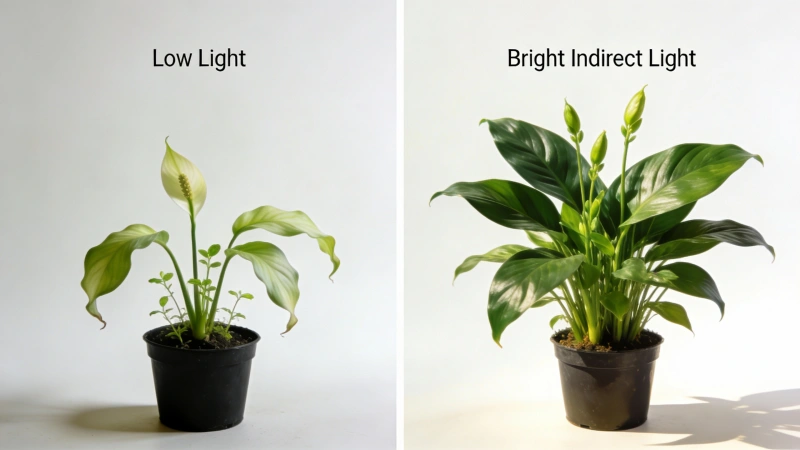
Pro tip: If your peace lily isn’t blooming, insufficient light is usually the reason. Move it closer to a window (but not in direct sun).
Watering: The “Droop Method” That Changed Everything
Here’s the game-changer I discovered on Reddit that completely transformed my peace lily care.
Peace lilies will literally tell you when they need water.
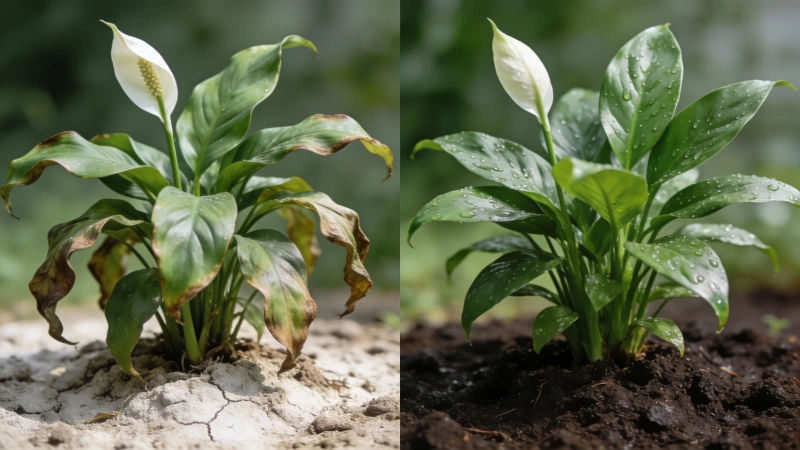
When thirsty, their leaves droop slightly. It’s dramatic, almost theatrical. The first time I saw it, I panicked. But within hours of watering, the plant perked right back up.
My Watering Routine
- Check the soil — Stick your finger about 1 inch deep. Dry? Time to water.
- Water thoroughly — Pour until water runs out the drainage holes.
- Empty the saucer — After 30 minutes, dump any standing water. Peace lilies hate wet feet.
Typically, I water every 7-14 days depending on the season. More often in summer, less in winter.
The Water Quality Issue Nobody Talks About
If your peace lily has brown tips despite good watering habits, check your water quality.
Peace lilies are sensitive to fluoride and chlorine in tap water. According to Clemson University’s Extension, these chemicals can build up in the soil and cause leaf tip burn.
What I do now:
- Use filtered water (a simple Brita works)
- Or let tap water sit out for 24 hours so chlorine can evaporate
- Rainwater is even better if you can collect it
Comment
byu/Deehmona from discussion
inIndoorGarden
Since switching to filtered water, my peace lily’s brown tips have stopped spreading.
Watering Problem Diagnosis:
|
Symptom |
Likely Cause |
Solution |
|
Drooping leaves |
Underwatering (usually) |
Water thoroughly, watch it perk up |
|
Yellow leaves |
Overwatering or underwatering |
Check soil moisture before watering |
|
Brown tips |
Water quality (fluoride/chlorine) |
Switch to filtered water |
|
Mushy black roots |
Root rot (overwatering) |
Repot with fresh soil, trim rotten roots |
Temperature and Humidity
Remember, these are tropical plants. They like it warm and a bit humid.
Ideal temperature: 65-85°F (18-29°C). According to SDSU Extension, temperatures below 55°F can seriously damage or kill your peace lily.
Humidity: Aim for 40% or higher. Brown leaf tips can also signal low humidity, not just water quality issues.
How I boost humidity:
- I keep one peace lily in my bathroom — it loves the steam from showers
- Pebble tray filled with water under the pot
- Grouping plants together (they create their own microclimate)
⚠️ Avoid: Keep your peace lily away from AC vents, heating ducts, and cold drafts from windows. I lost several leaves one winter because my plant was too close to a drafty window.
Soil and Fertilizing
Soil Requirements
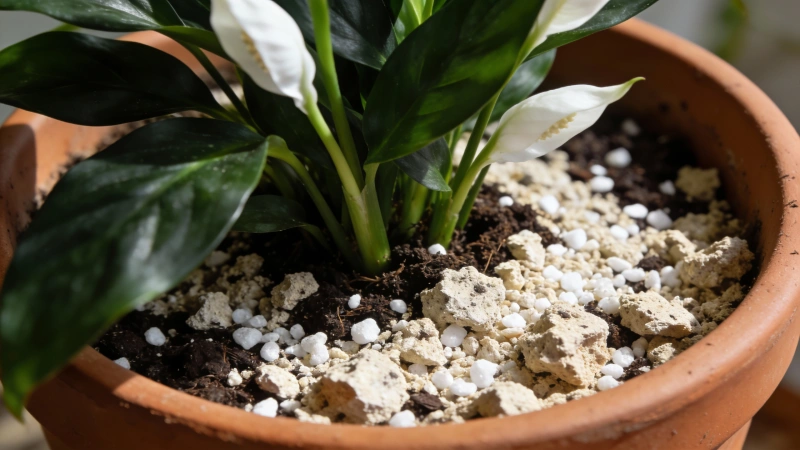
Peace lilies need well-draining soil. Sitting in soggy soil is the fastest way to root rot.
My soil mix:
- Standard indoor potting mix
- Add perlite (about 20-25%) for better drainage and aeration
Fertilizing
Peace lilies aren’t heavy feeders. In fact, over-fertilizing is a common mistake.
What I do:
- Feed every 6-8 weeks during spring and summer
- Use a balanced liquid fertilizer (like 20-20-20), diluted to half strength
- Stop completely in fall and winter
�� Tip: If you see brown leaf tips, hold off on fertilizer. Peace lilies are sensitive to salt buildup from too much fertilizer — which looks exactly like the brown tips from water quality issues. When in doubt, less is more.
Why Your Peace Lily Won’t Bloom (And What to Do)
Here’s something that frustrated me for over a year.
My peace lily came with beautiful white blooms. After they faded, I waited… and waited. Nothing. No new flowers for over 14 months.
Then I learned the truth.
The Secret Nurseries Don’t Tell You
Commercial growers force peace lilies to bloom using gibberellic acid (GA), a plant hormone. According to Gardening Know How, this makes young plants bloom way before they’re naturally ready.
That gorgeous blooming plant you bought? It may have been artificially induced. Your plant isn’t broken — it just needs time to mature.
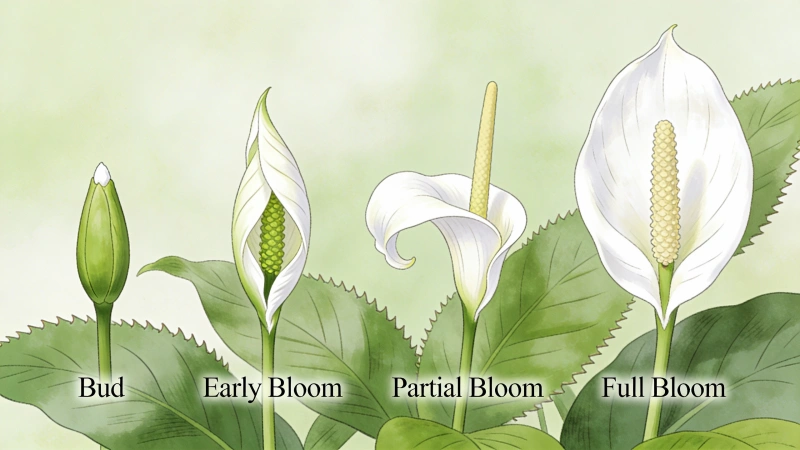
How to Encourage Blooming
Comment
byu/Fit-Quantity-6508 from discussion
inIndoorGarden
What actually worked for me:
- Patience — Peace lilies naturally bloom at 2-3 years of age
- More light — I moved mine closer to an east window
- Cool period — A few weeks at around 54°F (12°C) can trigger blooming
- Consistent care — No stress, proper watering, appropriate fertilizing
After adjusting these factors, my peace lily finally bloomed naturally in its third spring with me. The wait was worth it.
My Journey: From Near-Death to Thriving
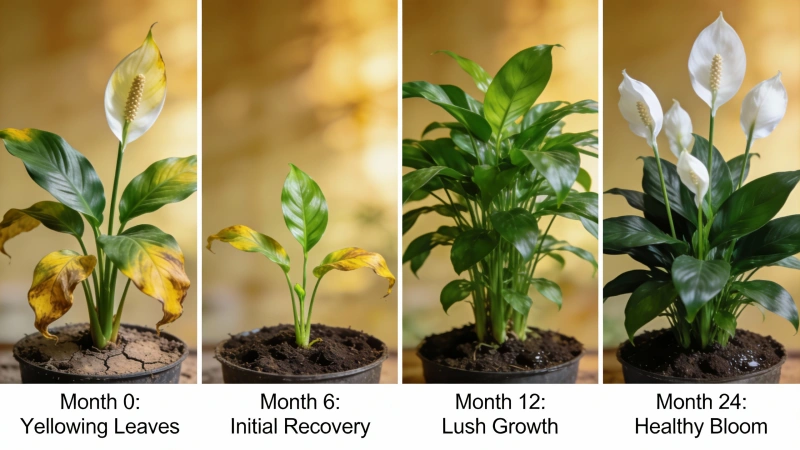
Where I Started
Spring 2022. My friend hands me a stunning peace lily as a housewarming gift. Three perfect white blooms. Glossy leaves. I was so excited.
My approach: Water every Wednesday. Keep it in a dark corner (because “low light,” right?). Use tap water straight from the faucet.
What Went Wrong
Summer 2022: Brown tips started appearing. I assumed it was sunburn and moved it even further from the window.
Fall 2022: Leaves turning yellow. Plant looking sad overall.
Winter 2022: I noticed the roots had black, mushy sections when I finally checked. Root rot.
14+ months without a single flower. I was ready to give up.
The Turnaround
I started researching on Reddit and gardening forums. Everything I learned contradicted what I was doing:
- My dark corner was TOO dark — it needed bright, indirect light
- My tap water was causing the brown tips
- Watering on a schedule (not by need) led to root rot
Changes I made:
- Moved to an east-facing window
- Switched to filtered water
- Started using the “droop method” instead of a schedule
- Repotted with fresh soil after trimming rotten roots
The Results
Spring 2024: My peace lily bloomed naturally for the first time — 3 gorgeous white spathes.
Fall 2024: I successfully divided the plant and propagated 4 new peace lilies for family members.
Now it blooms 2-3 times per year, and the foliage is lush and healthy.
�� What I learned: Peace lilies are incredibly expressive. They TELL you what they need. Once I learned to listen — watching for drooping leaves, checking the soil before watering — everything clicked.
Common Problems and Solutions
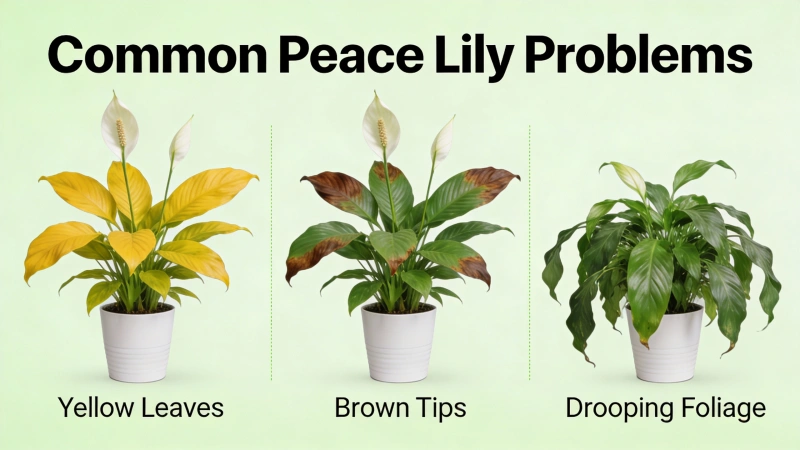
Peace Lily Problem Diagnosis Chart:
|
Problem |
Possible Causes |
What to Do |
|
Drooping leaves |
Thirst (most common), overwatering, root rot |
Check soil — if dry, water thoroughly |
|
Yellow leaves |
Overwatering, underwatering, poor light, old age |
Adjust watering, improve light, remove old leaves |
|
Brown tips |
Tap water chemicals, low humidity, over-fertilizing |
Use filtered water, increase humidity |
|
No flowers |
Insufficient light, immature plant, stress |
More light, patience (2-3 years) |
|
Black/mushy roots |
Root rot from overwatering |
Trim rotten roots, repot in fresh soil |
5 Mistakes I Made (So You Don’t Have To)
- Watering on a schedule — Don’t water every Wednesday. Check the soil and watch for the droop signal instead.
- Keeping it in complete darkness — “Low light tolerant” doesn’t mean “no light.” My plant barely survived in that dark corner.
- Repotting into a huge pot — Peace lilies actually like being slightly root-bound. A too-large pot holds too much water.
- Over-fertilizing — These aren’t heavy feeders. Less is definitely more.
- Using tap water without thinking — The fluoride and chlorine in my tap water caused months of brown tips before I figured it out.
Comment
byu/TroubleOk1113 from discussion
inhouseplants
How to Propagate Peace Lilies
Once your peace lily is thriving, you can easily make more plants to keep or share.
Peace lilies grow from rhizomes (underground stems), similar to snake plants. This makes propagation through division super easy.
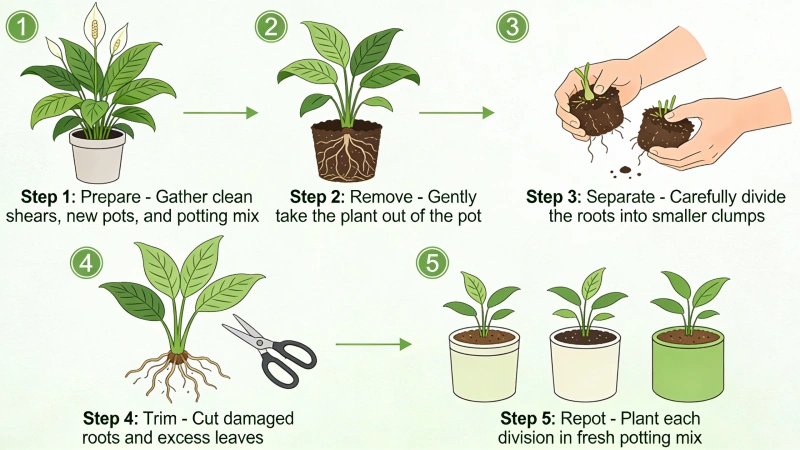
Division Steps
- Water the day before — This softens the soil and reduces root stress
- Gently remove from pot — Tip it sideways and ease out the root ball
- Identify natural divisions — Look for separate clumps with their own roots and leaves
- Separate gently — Tease apart or use a clean knife if needed
- Pot individually — Each division in its own pot with fresh, well-draining soil
- Water and wait — Keep in indirect light. Don’t fertilize for a month
Best time to divide: Spring, when the plant is entering its active growth phase. I do it when I’m repotting anyway — two birds, one stone.
When and How to Repot
Signs your peace lily needs repotting:
- Roots growing out of drainage holes
- Soil dries out very quickly after watering
- Plant looks top-heavy or falls over
- It’s been 1-2 years since the last repot
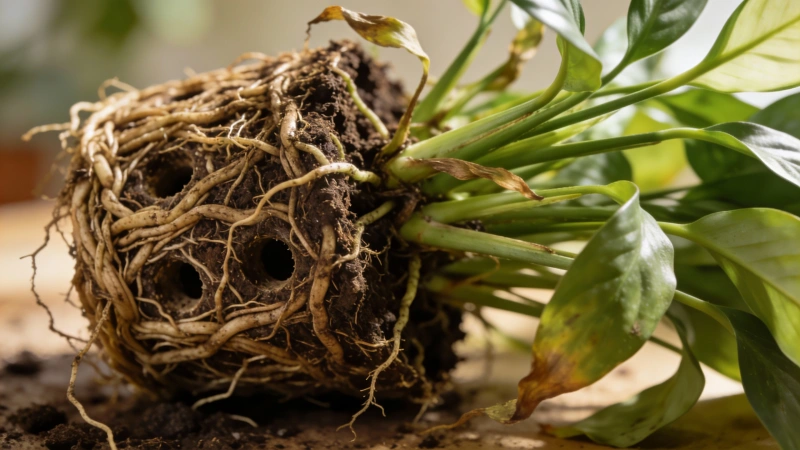
Important: Only go up 1-2 inches in pot diameter. Peace lilies prefer being slightly root-bound. A pot that’s too big holds too much moisture and can lead to root rot.
Always use a pot with drainage holes. This is non-negotiable.
Bonus: Air Purifying Benefits
Here’s a nice perk I didn’t expect.
According to the famous NASA Clean Air Study, peace lilies are among the best houseplants for removing indoor air pollutants. They can filter benzene, formaldehyde, trichloroethylene, xylene, and ammonia from your home.
If you’re interested in air-purifying plants, spider plants are another excellent choice from the same NASA study.
Pet and Child Safety Warning
⚠️ Important: Peace lilies are toxic to cats, dogs, and children if ingested.
According to the ASPCA, peace lilies contain calcium oxalate crystals. If chewed or eaten, they can cause:
- Oral irritation and burning
- Excessive drooling
- Vomiting
- Difficulty swallowing
Keep your peace lily on a high shelf or in a room that pets and small children can’t access. Also wear gloves when pruning — the sap can irritate skin.
Video Guide
Want to see these tips in action? This helpful video covers the basics of peace lily care:
Frequently Asked Questions
How often should I water my peace lily?
Water when the top inch of soil is dry, or when leaves slightly droop. For most homes, this is every 7-14 days. Don’t water on a schedule — check the soil first.
Why are my peace lily leaves turning yellow?
Usually overwatering or underwatering. Check soil moisture before watering. Yellow leaves can also mean insufficient light or that the plant needs repotting.
Why does my peace lily have brown tips?
Most commonly, this is from fluoride and chlorine in tap water. Switch to filtered water or let tap water sit out for 24 hours. Low humidity can also cause brown tips.
How do I get my peace lily to bloom again?
Ensure adequate indirect light, wait for the plant to mature (2-3 years), and provide consistent care. Store-bought blooms are often artificially induced with hormones, so natural blooming takes patience.
Is peace lily toxic to cats and dogs?
Yes. Peace lilies contain calcium oxalate and can cause oral irritation and vomiting if ingested. Keep them out of reach of pets and children.
Can peace lily grow in water only?
Peace lilies can survive in water short-term, but they thrive best in well-draining soil. Long-term water culture requires regular water changes and added nutrients.
How long do peace lilies live?
With proper care, peace lilies can live 20+ years. The average is 3-5 years, but that’s often due to care issues rather than natural lifespan.
When should I repot my peace lily?
When roots grow out of drainage holes, soil dries out very quickly, or it’s been 1-2 years. Go up only 1-2 inches in pot size — they prefer being slightly root-bound.
Final Thoughts
Peace lilies are more forgiving than you might think — once you understand what they actually need.
The three biggest lessons from my journey:
- Light matters — “Low light tolerant” doesn’t mean dark corners
- Water quality matters — Filtered water stopped my brown tip problem
- Listen to your plant — The droop method is your best friend
These plants literally tell you what they need. Once I learned to pay attention, everything changed.
Have questions or want to share your own peace lily experience? Drop a comment below — I’d love to hear from you!
This article was created by a professional team. AI tools were used during the research and writing process to enhance efficiency and quality. All information has undergone manual verification and editing to ensure accuracy and practicality. We are committed to providing readers with objective and valuable content.
Publisher::meiruth558@gmail.com,Please indicate the source when reposting:https://gardeningtoolsgarden.com/how-to-care-for-a-peace-lily/
