If you’re reading this, you probably know that sinking feeling. Fiddle leaf figs have a reputation as temperamental houseplants: striking to look at and quick to sulk. Most of what makes them difficult, though, comes down to two fixable mistakes. After nearly killing my first one, I turned it around. In a single year it grew more than three feet taller and put out 15+ new leaves.
This guide covers the 15 care tips that made the difference: how to water, where to place the plant, and how to fix classic problems like brown spots and dropping leaves before they spiral. If yours is already struggling, my walkthrough on how to save a dying plant is a good companion to what follows.
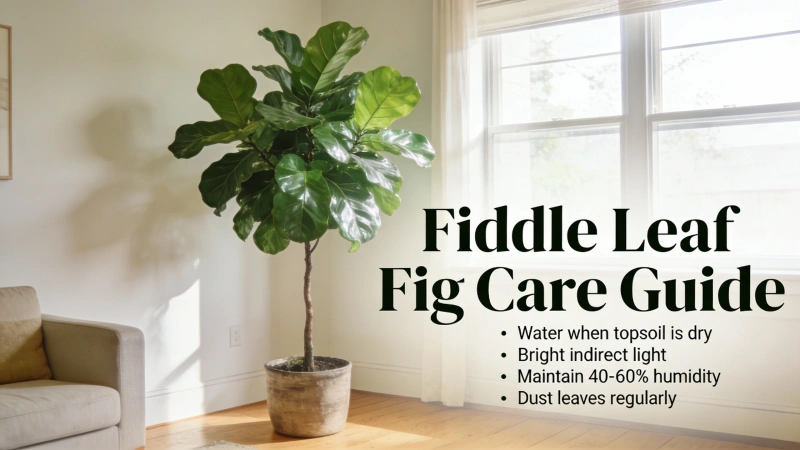
Quick Answer: Fiddle Leaf Fig Care Basics
The table below lists the target conditions for each care factor. Light and watering matter most; the rest is fine-tuning.
| Care Factor | Ideal Conditions |
|---|---|
| Light | Bright indirect light, 6–8 hours/day |
| Watering | When the top 2–3″ of soil is dry |
| Humidity | 50–65% |
| Temperature | 60–75°F (15–24°C) |
| Fertilizer | Monthly in spring/summer |
| Repotting | Every 1–2 years |
Understanding Your Fiddle Leaf Fig
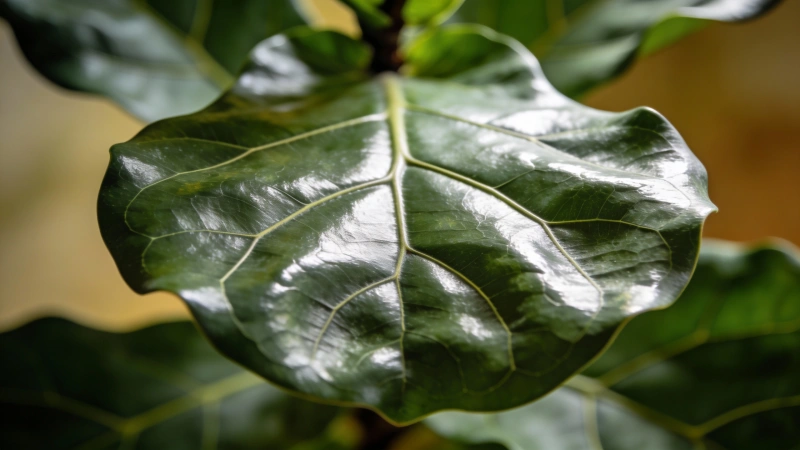
Where the plant comes from explains most of what it asks of you. The fiddle leaf fig (Ficus lyrata, a member of the mulberry/fig family) is native to the tropical rainforests of Western Africa, and it gets its name from violin-shaped leaves that can stretch up to 18 inches long.
In the wild these trees climb to 50 feet; indoors they typically top out at 6–10 feet, which is what makes them such a dramatic statement plant. Think of the rainforest canopy they grow under and the care list follows: warmth, humidity, and plenty of bright but filtered light rather than harsh direct sun, which would scorch a rainforest understory plant.
1. Light: The Most Critical Factor
If you take only one thing from this article, make it this: light is everything.
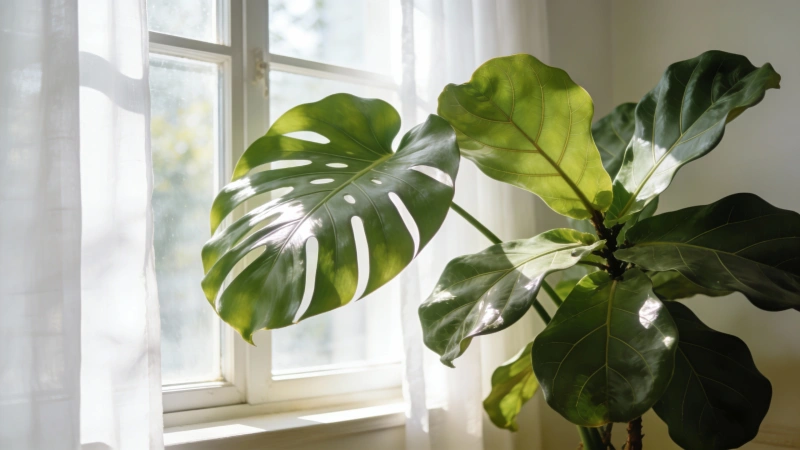
I learned that the hard way. My first fiddle leaf fig sat in a living-room corner, well away from any window, because that’s where it “looked nice.” Within weeks it was shedding leaves. According to the Royal Horticultural Society, fiddle leaf figs need bright, indirect light for at least 6 hours a day. This is not a low-light plant, and a dim corner won’t work no matter how well everything else is done.
Best Window Placement
- South-facing window: ideal — the most consistent bright light.
- East-facing window: great — gentle morning sun is perfect.
- West-facing window: good, but watch for intense afternoon sun.
- North-facing window: usually too dim — avoid if you can.
Both too much and too little light leave marks. Harsh direct summer sun scorches the leaves and dulls their gloss, while too little light produces thin, leggy stems and steady leaf drop. You’re aiming for the bright but filtered middle ground.
Signs Your Fiddle Needs More Light
- New leaves come in smaller than the older ones
- Stems look thin and leggy
- Bottom leaves keep falling off
- Growth is slow or has stopped
Pro tipRotate the plant a quarter turn every week. Fiddle leaf figs grow toward the light, and without rotation they lean and grow lopsided.
If your space doesn’t get enough natural light, a decent grow light can supplement daylight. If a room is genuinely too dark, though, a shade-tolerant plant is the kinder choice. My guide on how to care for a peace lily covers one that does well in the low light where a fiddle leaf fig would slowly decline.
2. Watering: The #1 Killer of Fiddle Leaf Figs
Overwatering kills more fiddle leaf figs than any other mistake. When I first got mine, I watered it every Sunday like clockwork, and that schedule did the damage: the soil never dried out and the roots began to rot. The fix is to water according to what the plant needs, not a fixed day of the week.
How to Know When to Water
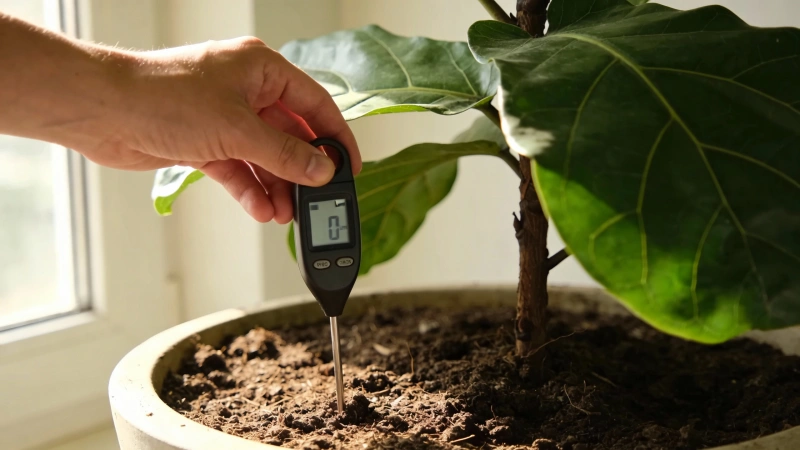
Method 1 — the finger test. Push a finger 2–3 inches into the soil. Dry? Water. Still moist? Give it a few more days.
Method 2 — a moisture meter (my recommendation). This $10–15 tool takes most of the guesswork out: when it reads “dry,” it’s time to water. That single purchase did more for my fiddle leaf fig than anything else I bought.
Tie watering to light, not just the calendarIn a bright spot during active growth, the plant drinks more and the soil dries faster, so I water more often. In lower light or through winter it uses far less, so I ease off. Either way, I let the top of the soil approach dry between waterings.
Watering Frequency Guide
| Season | Typical Frequency | Notes |
|---|---|---|
| Spring | Every 7–10 days | Growth begins; needs increase |
| Summer | Every 5–7 days | Peak growth; most water needed |
| Fall | Every 10–12 days | Growth slows down |
| Winter | Every 12–14 days | Dormant period; reduce watering |
These are starting points only — your real schedule depends on pot size, humidity, and light.
How to Water Properly
- Water thoroughly until it drains from the bottom holes
- Use room-temperature water (cold water shocks the roots)
- Never let the pot sit in standing water
- Empty the saucer after 30 minutes
If you can collect rainwater, use it. Mine has always perked up more on rainwater than on tap water.
3. Soil and Pot Selection
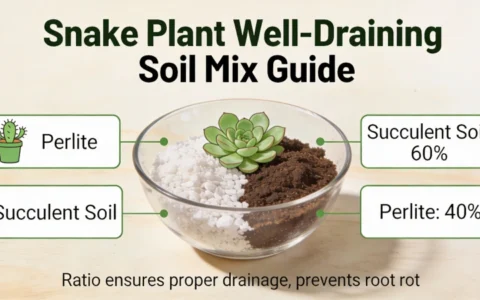
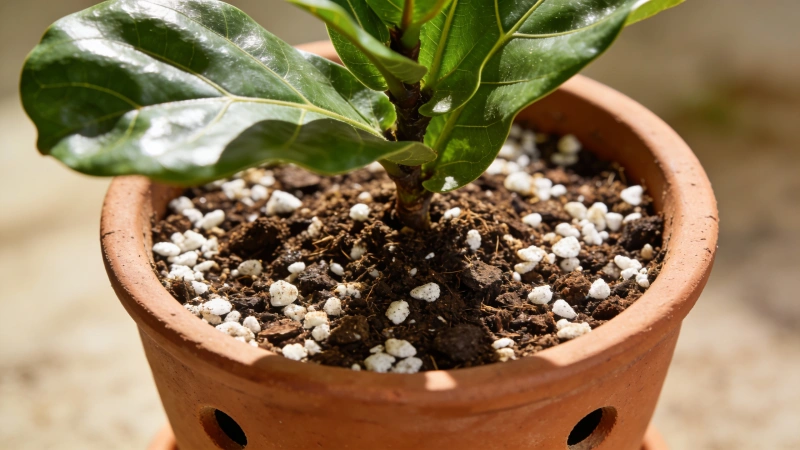
Good drainage is non-negotiable for this plant. My go-to mix is:
- 70% cactus/succulent mix
- 20% perlite
- 10% orchid bark (optional, but it improves aeration)
Regular potting soil cut with 30% perlite also works. If you’d rather mix your own from scratch, a more traditional, budget-friendly blend is equal parts peat, quality garden or potting soil, and coarse river sand, with a little well-rotted compost worked in. Whichever route you take, the goal is fast drainage with just enough moisture retention to keep the roots healthy.
Pot Requirements
- Drainage holes are mandatory. No exceptions.
- Terracotta beats plastic — it breathes and helps guard against overwatering.
- Choose a pot only 1–2 inches larger than the current root ball.
4. Humidity and Temperature
Given its rainforest origins, it’s no surprise that the fiddle leaf fig likes humidity.
Ideal Humidity: 50–65%
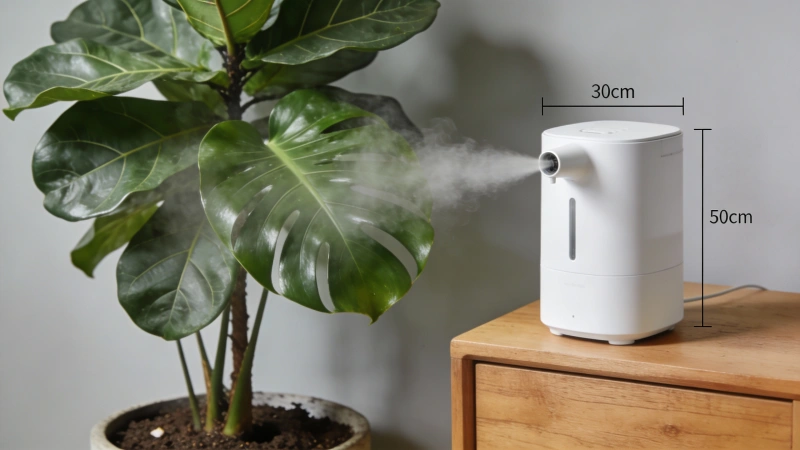
Most homes sit around 30–50% humidity, and lower in winter once the heat comes on. The common fixes compare like this:
| Method | Effectiveness | Notes |
|---|---|---|
| Humidifier | ⭐⭐⭐ Best | Place near the plant; most reliable |
| Pebble tray | ⭐⭐ Good | Keep water below the pot bottom |
| Group plants together | ⭐⭐ Good | Plants create a humid microclimate |
| Misting | ⭐ Fair | Can spread disease; not recommended |
Mine is grouped with a few other tropicals, including a spider plant, and the cluster holds a noticeably more humid pocket of air.
Temperature Requirements
- Comfortable range: 60–75°F (15–24°C)
- Minimum: 50°F (10°C)
- Avoid: cold drafts, heating vents, and AC blasts
The plant puts on its fastest growth in real warmth, roughly 77–95°F (25–35°C), which is why summer brings growth spurts and a chilly room stalls everything. Below 50°F (10°C) it suffers, and cold is a common trigger for leaf drop. Mine sits about four feet from a south-facing window: close enough for the light, far enough to avoid the winter draft off the glass.
5. Fertilizing
Those big leaves are nutrient-hungry, which makes the fiddle leaf fig a heavier feeder than most houseplants. Regular feeding during the growing season shows up in leaf size and growth speed.
When to Fertilize
- Spring and summer: once a month
- Fall and winter: stop entirely — the plant is resting
What to Use
Reach for a liquid fertilizer with an NPK ratio near 3-1-2. Many brands sell fiddle-leaf-fig-specific blends, and a quality houseplant fertilizer is a reasonable alternative.
Less is moreDilute to half the recommended strength. I once overfertilized, and the brown spots took months to grow out. With this plant, restraint pays off.
6. My 18-Month Journey: From Nearly Dead to Thriving
Here’s what happened with my fiddle leaf fig, mistakes included.
The Beginning
In April 2022 I bought a two-foot plant from Home Depot for about $35, excited to finally own one of these Instagram-famous trees. I put it in a living-room corner, away from windows, because I wanted it as the room’s focal point. I watered it every Sunday without checking the soil, used plain potting soil, and skipped fertilizer. In hindsight, I got almost everything wrong.
The Problems
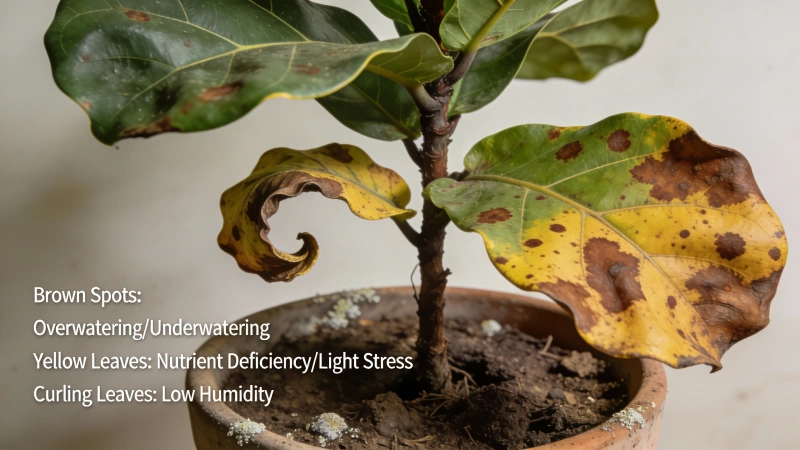
By July it looked bad: brown spots on several leaves, five bottom leaves yellowing and dropping in a single month, new growth coming in tiny and sometimes curled, and the whole plant limp. I was frustrated enough to nearly throw it out.
The Turnaround
Instead, I spent a weekend reading everything I could find, and two mistakes stood out: too little light and far too much water. Here’s what I changed:
- Moved it to a south-facing window — the biggest single improvement
- Bought a moisture meter and watered only when it read “dry”
- Repotted into cactus soil plus perlite for real drainage
- Started fertilizing monthly in spring and summer
- Rotated the pot weekly for even light
- Stopped moving it around — fiddle leaf figs hate change
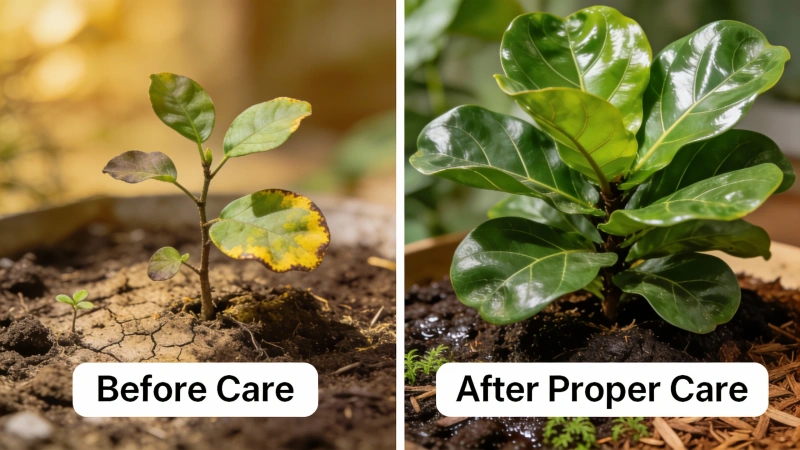
The Results
| Metric | August 2022 | December 2023 |
|---|---|---|
| Height | 2 feet (stalled) | 5+ feet |
| New leaves/year | 2–3 | 15+ |
| Brown spots | Frequent | None |
| Leaf dropping | Monthly | Rare (only old leaves) |
Key Takeaways
If you remember nothing else:
- Light first: bright, indirect, 6–8 hrs/day near a south or east window — never a dark corner.
- Water by need, not schedule: only when the top 2–3″ is dry; underwater beats overwater.
- Drainage is non-negotiable: fast-draining mix, a pot with holes, always.
- Feed lightly: monthly in spring/summer at half strength.
- Stay still: pick a spot, rotate weekly, and otherwise stop moving it.
If light and watering are right, the rest is much easier. If they’re wrong, premium soil and fertilizer won’t save the plant.
7. Common Problems and How to Fix Them
Comment
by u/No_Independence490 from discussion in houseplants
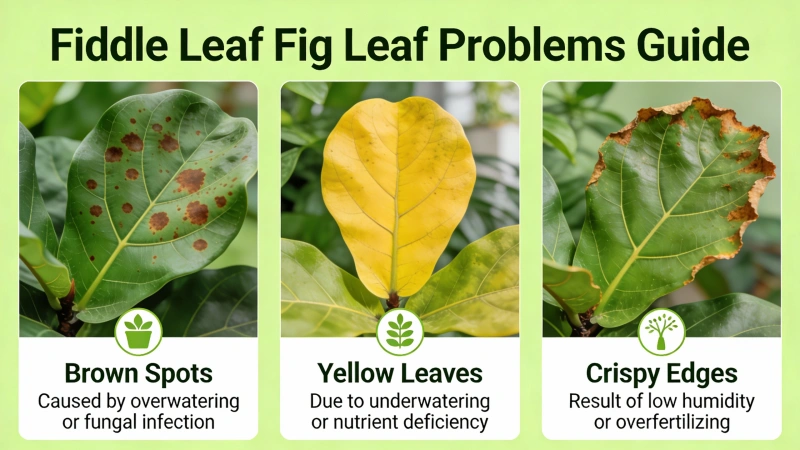
Even with good care, problems crop up. This table matches common symptoms to likely causes and fixes:
| Symptom | Likely Cause | Solution |
|---|---|---|
| Brown spots (center of leaf) | Overwatering / root rot | Reduce watering; check roots; repot if needed |
| Brown, crispy edges | Underwatering / low humidity | Water more; raise humidity |
| Yellow leaves | Overwatering / low light | Adjust watering; move to a brighter spot |
| Dropping leaves | Environmental stress / watering issues / cold | Keep conditions stable; check watering and temperature |
| Curled or torn new leaves | Low humidity | Raise humidity; mist new leaf buds only |
| Small new leaves | Low light / lack of nutrients | More light; fertilize monthly |
| No growth | Low light / dormancy / root-bound | Check light; wait for spring; consider repotting |
About Root Rot
Root rot is the most serious problem and is often fatal once advanced. Signs include leaves turning yellow or brown-black, a soft, mushy stem base, and a bad smell from the soil. If you suspect it:
- Remove the plant from its pot immediately
- Cut away any black, mushy roots with clean scissors
- Let the roots air-dry for a few hours
- Repot in fresh, well-draining soil
- Hold off on watering for at least a week
My full guide to root rot treatment has a more detailed rescue protocol. There is also a disease side to this: the most damaging pathogen fiddle leaf figs face is a phytophthora-type rot (sometimes called blight) that attacks both leaves and stems and can take the whole plant if it spreads. Early action matters. Remove and destroy affected leaves and any fallen debris rather than composting them, improve airflow around the plant, and treat with an appropriate fungicide.
8. Pruning and Shaping
Pruning keeps your fiddle leaf fig fuller and more manageable.
When to Prune
- Best time: spring or early summer, during active growth
- Avoid: fall and winter
How to Encourage Branching
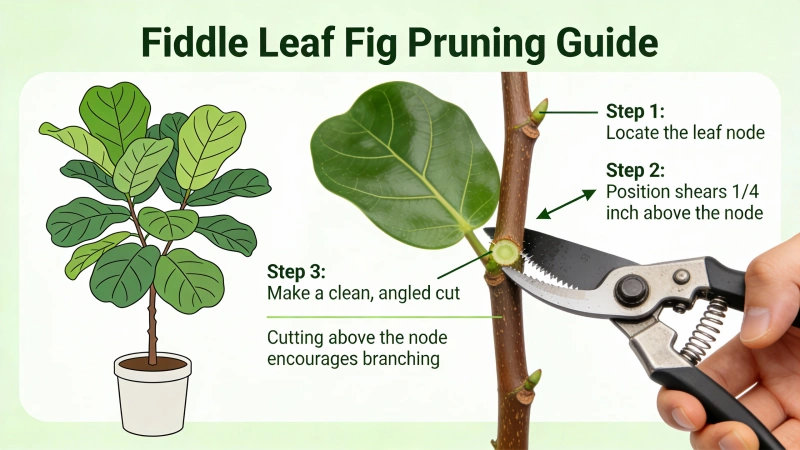
To get branching instead of one tall stem, use clean, sharp shears and cut just above a leaf node, the point where a leaf meets the stem. The plant will usually push out one to three new branches below that cut. Don’t toss the cuttings; they can be rooted, as the next section explains.
9. Propagation
You can grow new fiddle leaf figs from cuttings.
- Take a cutting: snip a 6–8 inch section with 2–3 leaves
- Remove the bottom leaves: keep only the top 1–2
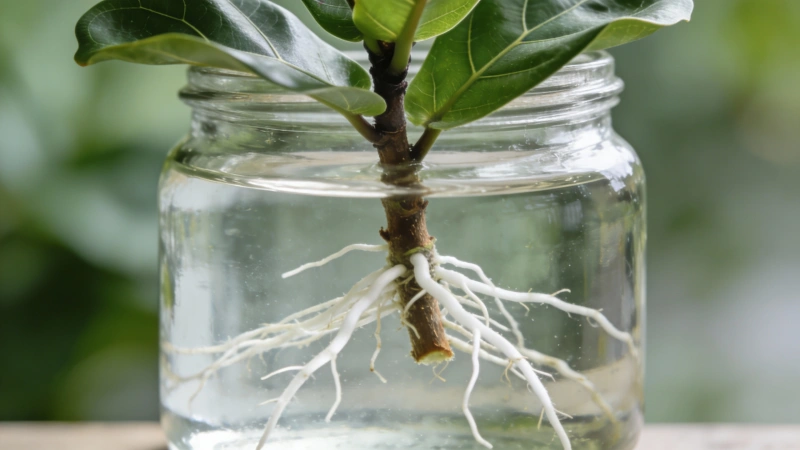
- Root in water or soil: water tends to root faster, soil produces sturdier roots
- Wait: rooting takes 4–8 weeks, so be patient
- Pot it up: once roots reach 2–3 inches, plant in soil
Propagation rewards patience more than skill. If you’re new to it, practice first on something more forgiving; my guide on how to care for a pothos plant covers propagation that roots in water within days.
10. Repotting Guide
Signs It’s Time to Repot
- Roots growing out of the drainage holes
- Water running straight through without absorbing
- Growth stalled despite good care
- It’s been 2+ years since the last repot
How to Repot
- Choose a pot just 1–2 inches larger (bigger isn’t better — excess soil holds excess water)
- Add fresh, well-draining mix
- Gently lift the plant out, taking care with the roots
- Settle it into the new pot and fill around it with soil
- Water thoroughly and return it to its spot
Expect some leaf dropYour fiddle leaf fig may drop a few leaves after repotting. That’s normal stress, not failure, and it should bounce back within 2–4 weeks.
11. Common Mistakes to Avoid
These are the mistakes I made, along with ones I’ve watched others make:
| Mistake | Why It’s a Problem | What to Do Instead |
|---|---|---|
| Watering on a fixed schedule | Soil dries at different rates | Check soil moisture first |
| Placing it in a dark corner | Not enough light | Keep it near a bright window |
| Moving it frequently | Causes stress and leaf drop | Pick a spot and stick with it |
| Pots without drainage | Leads to root rot | Always use drainage holes |
| Repotting right after buying | Double the stress | Wait 2–4 weeks to acclimate |
| Adding water when leaves turn yellow | Yellow leaves often point to too much water | Check the soil before adding more |
If you’re still new to houseplants, starting with something easier is reasonable. A monstera gives a similar tropical look and is more tolerant of mistakes.
Frequently Asked Questions
Are fiddle leaf figs toxic to pets?
Yes. According to the ASPCA, fiddle leaf figs are toxic to cats and dogs. If ingested they can cause oral irritation, heavy drooling, and vomiting, so keep yours out of reach of curious pets.
Can I put my fiddle leaf fig in the bedroom?
Yes, as long as the bedroom gets enough light. The plant releases oxygen and can improve indoor air quality, but it still needs at least 6 hours of bright, indirect light near a window, so a dark bedroom won’t work.
How fast do fiddle leaf figs grow?
Under ideal conditions, 1–2 feet per year, with the strongest growth in summer warmth. In poor light they may barely grow at all; light is the biggest factor in growth rate.
Will brown spots on leaves heal?
No. Brown spots won’t turn green again. You can trim brown edges with clean scissors or remove badly damaged leaves, then fix the underlying cause so new growth comes in healthy.
Can fiddle leaf figs go outside?
In USDA zones 10–12 they can live outdoors year-round. Elsewhere, you can move yours outside for summer (in shade, never direct sun), but bring it back in before temperatures fall below 50°F (10°C).
Why is my fiddle leaf fig leaning?
It’s reaching toward the light. Rotate the plant a quarter turn weekly to keep it growing straight.
Helpful Video Guide
This video walks through the fiddle leaf fig care basics:
Final Thoughts
Fiddle leaf fig care is less daunting than its reputation suggests. Put light first, near a south- or east-facing window; water by need rather than by the calendar; use a pot with drainage holes and a fast-draining mix; and stay consistent once you’ve found the right spot.
Mine went from barely surviving to the tallest, most striking plant in my home. Give yours time, and keep adjusting as you learn what works in your space.
Have a fiddle leaf fig question of your own? Drop it in the comments — I’m always glad to help based on what’s worked (and failed) for me.
Editorial Note: This article was written and edited by Spring Mei. AI tools may be used to assist with research and organizing information. The final content is reviewed before publication, and important factual claims are checked against reliable sources where appropriate. Personal experience is distinguished from general guidance, and methods are described as personally tested only when they have actually been tested.
Please indicate the source when reposting:https://gardeningtoolsgarden.com/how-to-care-for-fiddle-leaf-fig/
Author: Spring Mei