

Quick Answer: How to Care for a Prayer Plant
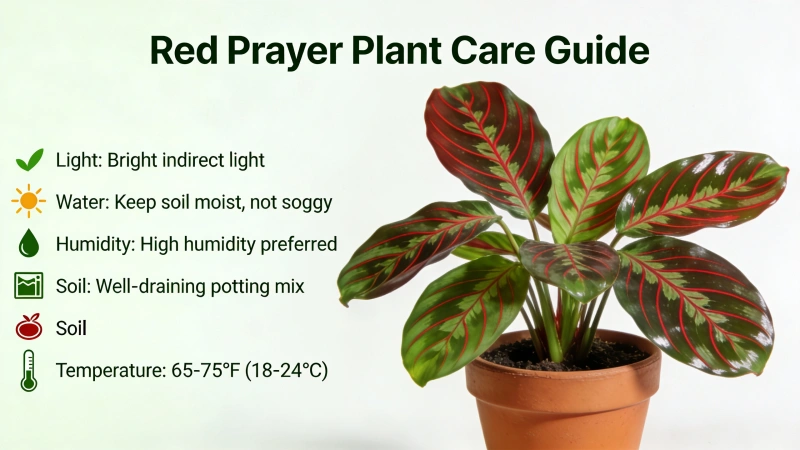
Here’s what Prayer Plants need to thrive:
- Light: Bright, indirect light (avoid direct sun)
- Water: Keep soil moist but not soggy; water when the top inch is dry
- Water quality: Use distilled or filtered water (tap water causes brown tips!)
- Humidity: 50-70% — use a humidifier or pebble tray
- Temperature: 65-80°F (18-27°C)
- Pet safe: Non-toxic to cats and dogs ✓
What Is a Prayer Plant?
Prayer Plants (Maranta leuconeura) are tropical beauties native to the rainforests of Brazil. They get their common name from a fascinating behavior: the leaves fold upward at night, like hands pressed together in prayer.
This movement is called “nyctinasty,” and it’s one of the coolest things about these plants. During the day, the leaves lie flat to absorb light. At night, they rise up. I still find myself checking on mine at different times just to watch them move.
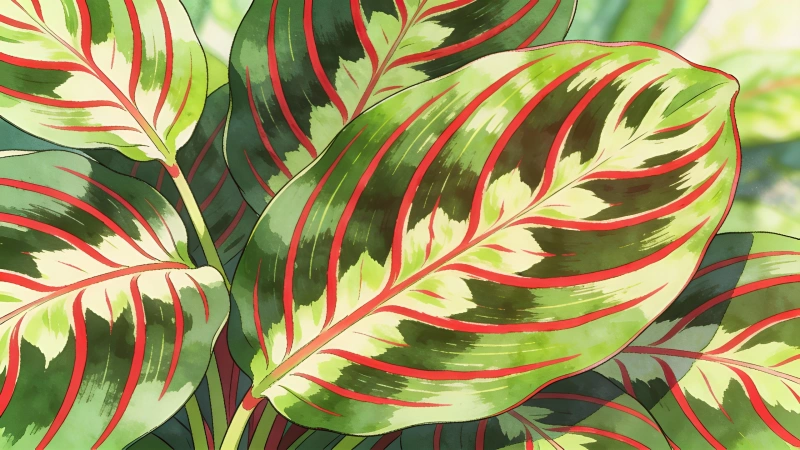
The most popular variety is the Red Prayer Plant, with its dark green leaves marked by light green centers and striking red veins. Other varieties include Lemon Lime (yellow-green markings) and Rabbit’s Foot (brown spots that look like rabbit tracks).
✓ Pet-Friendly: Great news for pet owners! According to the ASPCA, Prayer Plants are non-toxic to cats and dogs. This makes them a safe choice if you have curious furry friends.
Prayer Plants are closely related to Calathea, Stromanthe, and Ctenanthe—all part of the Marantaceae family. They share similar care needs, so if you master Prayer Plant care, you’ll be ready for the whole family.
Light Requirements for Prayer Plants
Prayer Plants are understory plants in the wild, meaning they grow beneath the rainforest canopy. They’re adapted to dappled, filtered light—not direct sunshine.
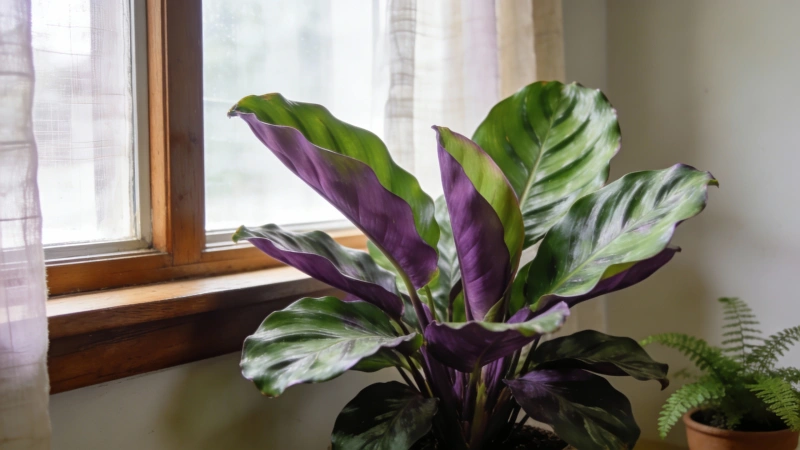
The sweet spot is bright, indirect light. Think of it this way: your Prayer Plant wants to see the sky, but not the sun.
Best locations:
- Near a north-facing window
- A few feet back from an east-facing window
- 6-7 feet from a south-facing window
- Behind a sheer curtain on any bright window
Signs of too much light:
- Faded, washed-out leaf colors
- Brown, scorched edges
- Leaves curling away from the light
Signs of too little light:
- Leaf patterns becoming less distinct
- Slow or leggy growth
- Leaves not folding at night (the plant is stressed)
How to Water Your Prayer Plant
Here’s the golden rule: keep the soil consistently moist, but never soggy.
Prayer Plants don’t like to dry out completely—their tropical roots expect steady moisture. But they also hate sitting in water, which leads to root rot fast.
My watering routine is simple:
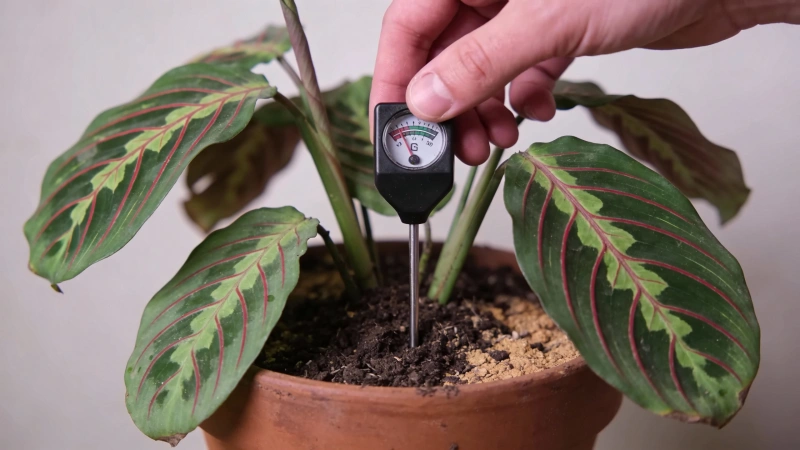
- Check the soil. Stick your finger about an inch deep. If it’s dry, it’s time to water.
- Water thoroughly. Pour until water flows from the drainage holes.
- Drain completely. Never let the pot sit in standing water.
Seasonal adjustments:
- Spring/Summer: Water about once a week (more in hot weather)
- Fall/Winter: Water every 10-14 days as growth slows
The most important thing? A pot with drainage holes is non-negotiable. Without them, you’re almost guaranteed to develop root rot eventually.
Water Quality: The Hidden Prayer Plant Killer
This is the tip that changed everything for me.
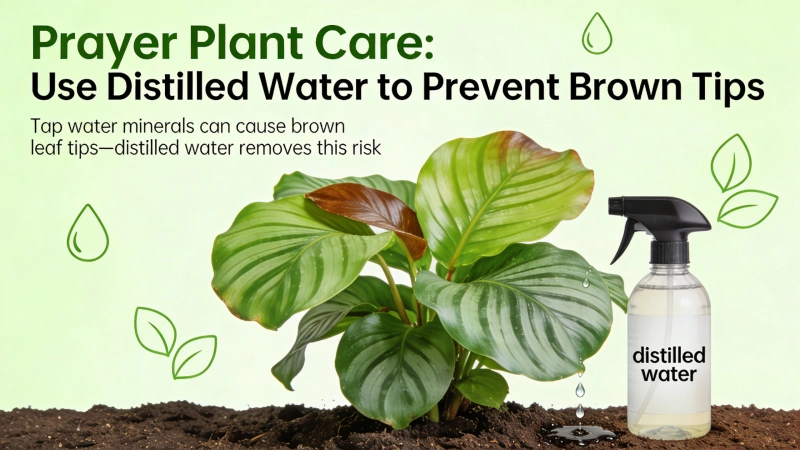
Prayer Plants are extremely sensitive to the chemicals in tap water. Fluoride, chlorine, and hard minerals build up in the soil over time and poison the plant slowly. The result? Those frustrating brown leaf tips that keep getting worse no matter what you do.
I watered my first Prayer Plant with tap water for two months. The brown tips spread steadily, even though I was doing everything else “right.” The moment I switched to distilled water, the new growth came out perfect.
Water Quality Comparison
| Water Type | Rating | Notes |
|---|---|---|
| Rainwater | ⭐⭐⭐⭐⭐ | Best choice — free and natural |
| Distilled water | ⭐⭐⭐⭐⭐ | Easy to find at any grocery store |
| Filtered water (RO) | ⭐⭐⭐⭐ | Great option if you have a filter |
| Tap water (left out 24hrs) | ⭐⭐⭐ | Chlorine evaporates, but fluoride remains |
| Fresh tap water | ⭐ | Not recommended — leads to brown tips |
Prayer Plants aren’t the only ones sensitive to water quality. If you also grow English ivy, you might notice similar issues with tap water.
Humidity: The Key to Happy Prayer Plants
If there’s one thing that makes or breaks Prayer Plant care, it’s humidity.
These plants evolved in the humid rainforests of Brazil, where humidity regularly exceeds 80%. The average American home? About 30-40%—and even lower in winter when the heat is running.
Low humidity causes:
- Brown, crispy leaf tips and edges
- Curling leaves
- Overall stressed, unhappy plant
Target humidity: 50-70% (ideally 60% or higher)
5 Ways to Increase Humidity
| Method | Effectiveness | My Experience |
|---|---|---|
| Humidifier | ⭐⭐⭐⭐⭐ | Best option — set it to 60% and forget it |
| Bathroom placement | ⭐⭐⭐⭐⭐ | Daily shower steam provides natural humidity |
| Pebble tray | ⭐⭐⭐⭐ | Simple DIY — fill tray with pebbles and water |
| Grouping plants | ⭐⭐⭐ | Plants create their own humid microclimate |
| Misting | ⭐⭐ | Temporary relief — evaporates in hours |
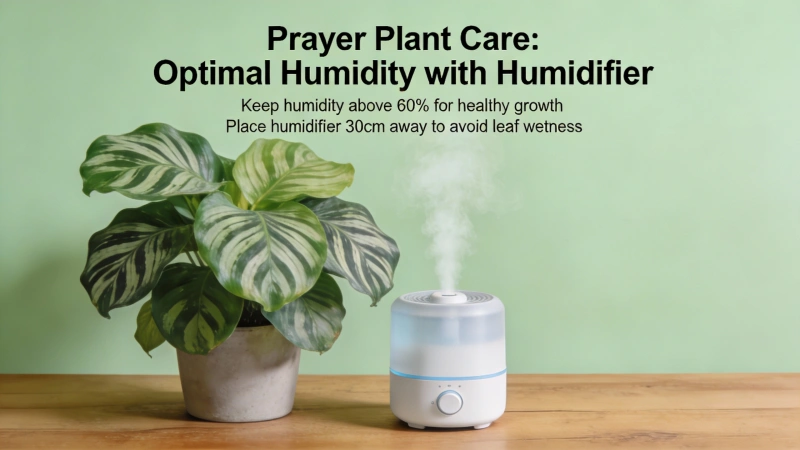
Before I bought a humidifier, I constantly battled brown leaf edges. After setting it to 60%, the new growth finally came out healthy. It was a game-changer.
If you enjoy humidity-loving plants, how to care for a boston fern covers another beautiful option with very similar needs.
Comment
byu/amyspace from discussion
inhouseplants
Temperature Requirements
Prayer Plants prefer temperatures between 65-80°F (18-27°C). Basically, if you’re comfortable, your plant probably is too.
What they don’t tolerate:
- Cold drafts — Keep away from drafty windows and doors
- Temperature swings — Sudden changes stress the plant
- Heating/AC vents — Hot or cold air blasts are harmful
- Temperatures below 55°F (13°C) — Can cause permanent damage

I learned this lesson when I placed mine near the front door. Every time someone opened it in winter, cold air hit the plant. After a few weeks of leaf drop, I moved it to a more protected spot.
Prayer Plant Seasonal Care Calendar
Prayer Plants have different needs throughout the year. Here’s the schedule I follow:
| Season | Watering | Fertilizing | Special Notes |
|---|---|---|---|
| 🌱 Spring | Weekly | Every 2 weeks (half strength) | Growth resumes; ideal time to propagate |
| ☀️ Summer | Every 5-7 days | Every 2 weeks | Peak growing season; watch for pests |
| 🍂 Fall | Every 10 days | Monthly, then stop | Growth slows; prepare for winter |
| ❄️ Winter | Every 10-14 days | None | ⚠️ Hardest season — humidity is critical! |
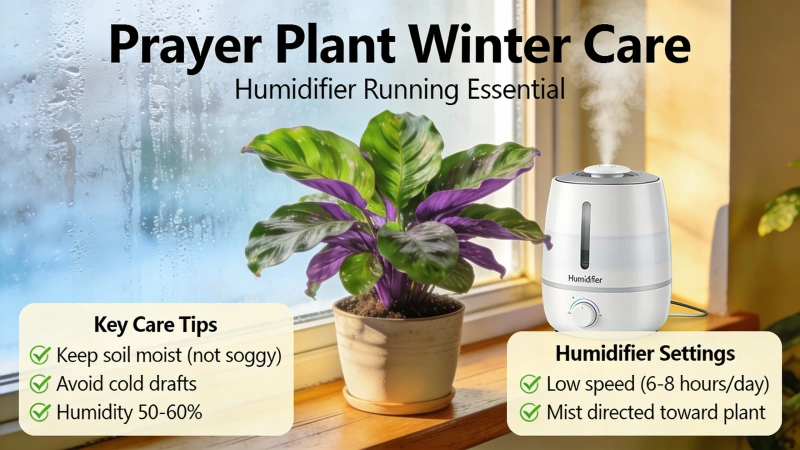
Winter warning: This is when most Prayer Plants struggle. The heat dries out the air dramatically, and the plant’s growth slows way down. Focus on maintaining humidity rather than increasing water.
My 18-Month Prayer Plant Journey: From Near-Death to Thriving
Let me share exactly what happened with my first Prayer Plant—and how I turned things around.
Starting Point (April 2023)
I picked up a beautiful Red Prayer Plant from my local nursery. The red veins against the dark green leaves were stunning. I placed it on my living room bookshelf and watered it every Saturday with tap water.
Simple enough, right?
What Went Wrong
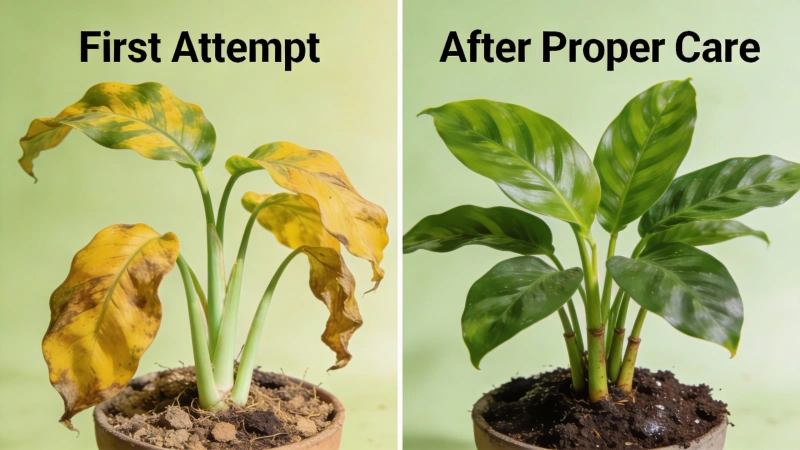
Week 2: Brown tips appeared on several leaves. I figured it was adjusting to its new home.
Month 1: The brown tips spread. Some leaves started curling. I assumed it needed more water, so I watered twice a week.
Month 2: Things got worse. Leaves turned yellow. The curling intensified. I was frustrated and confused.
Month 3: The plant looked terrible. I almost threw it away.
The Turning Point
I found a blog post by a fellow plant enthusiast who described my exact problem. The solution? Switch to distilled water and get a humidifier. I was skeptical, but desperate.
What I Changed
- Switched to distilled water — No more tap water, ever
- Bought a small humidifier — Set to 60%
- Moved it near the bathroom — Extra humidity from showers
- Stopped overwatering — Only when the top inch was dry
The Results
- 3-4 weeks later: New growth emerged—and no brown tips!
- 6 months later: The plant fully recovered and started thriving
- 18 months later: I now have 5 different Prayer Plant varieties
- Bonus: Successfully propagated 2 plants to give to friends
What I Learned
Water quality matters more than watering frequency. I could have watered perfectly, but the tap water was slowly poisoning my plant.
Humidity is the secret ingredient. Most American homes are too dry for these tropical plants, especially in winter.
Prayer Plants aren’t “fussy”—they just have specific needs. Once you understand what they want, they’re surprisingly rewarding.
Common Prayer Plant Problems (And How to Fix Them)
If your Prayer Plant is showing distress, use this quick diagnosis guide:
| Symptom | Likely Cause | Solution |
|---|---|---|
| Brown leaf tips/edges | Tap water chemicals; low humidity | Switch to distilled water; increase humidity |
| Curling leaves | Underwatering; low humidity; temperature stress | Water thoroughly; boost humidity; check location |
| Yellowing leaves | Overwatering; root rot; nutrient deficiency | Reduce watering; check roots; fertilize in spring |
| Leaves not folding at night | Light issues; plant stress | Adjust light levels; address other stressors |
| Fading leaf patterns | Not enough light | Move to brighter indirect light |
| Slow/no growth | Winter dormancy; root bound; needs fertilizer | Wait until spring; check if repotting needed |
| Brown spots on leaves | Fungal infection; water on leaves | Improve air circulation; avoid wetting leaves |
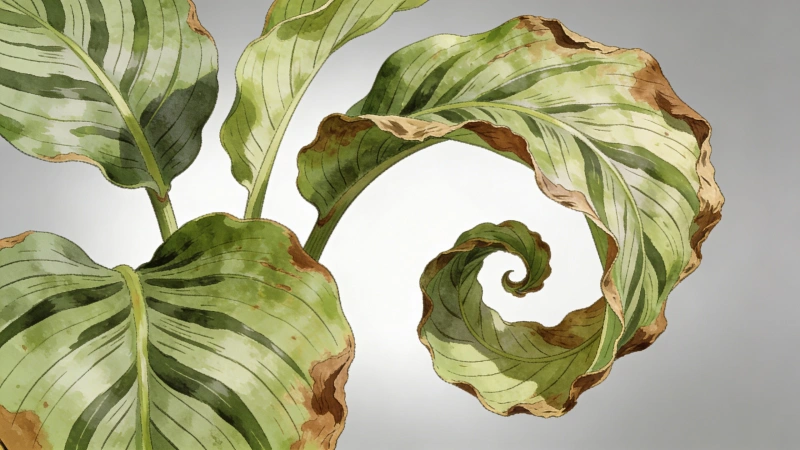
Emergency Treatment for Severely Curled Leaves
If your Prayer Plant’s leaves are badly curled and won’t recover:
- Place the entire pot in a sink or tub of water
- Let it soak for 30-45 minutes
- Allow it to drain completely
- Increase humidity immediately
- If no improvement in 3-4 days, check the roots for rot
How to Propagate Prayer Plants
Good news: Prayer Plants are one of the easiest houseplants to propagate!
The best method is division, which is basically splitting one plant into two (or more). Here’s how I do it:
Step-by-Step Division
- Choose your timing. Spring or early summer is best, when the plant is actively growing.
- Remove from pot. Gently slide the plant out and shake off excess soil.
- Find natural divisions. Look for separate clumps of stems with their own roots.
- Separate carefully. Use your fingers to gently pull the sections apart.
- Repot each section. Use fresh, well-draining potting mix.
- Keep humid. Place in a high-humidity spot and keep soil moist.
- Wait and watch. New growth in 2-3 weeks means success!
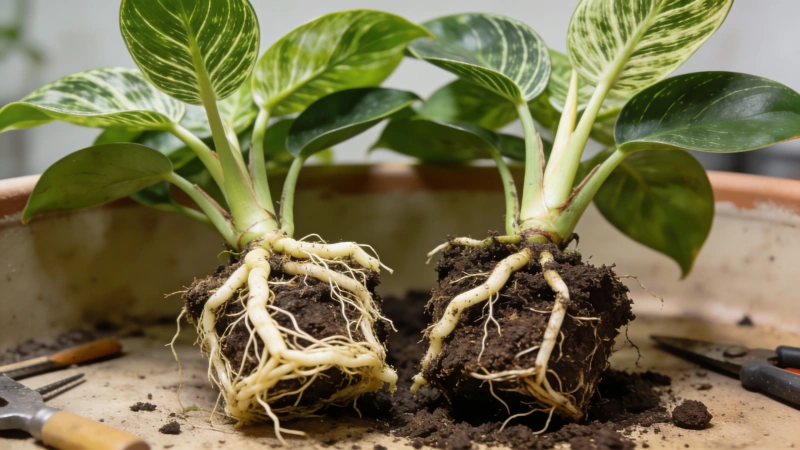
Success rate: Division has nearly 100% success if done correctly. I’ve propagated two plants this way and both thrived.
If you enjoy propagating plants, how to care for a christmas cactus covers another plant that’s incredibly easy to propagate—and makes a beautiful holiday gift.
🎥 Watch: Prayer Plant Care Tips
This video covers essential Prayer Plant care, including the leaf-folding behavior: 收到货
Frequently Asked Questions
Are Prayer Plants toxic to cats and dogs?
No! Prayer Plants are completely non-toxic to pets. According to the ASPCA, Maranta leuconeura is safe for both cats and dogs. This makes them a great choice for pet owners who want beautiful foliage without the worry.
Why do my Prayer Plant’s leaves stay curled during the day?
If the leaves are curled all day (not just at night), your plant is stressed. The most common causes are:
- Soil is too dry — water thoroughly
- Humidity is too low — increase humidity immediately
- Temperature extremes — check for drafts or heat sources
This is a distress signal. Address it quickly!
How much light does a Prayer Plant need?
Prayer Plants prefer bright, indirect light. A north-facing window or a spot several feet from a sunny window works well. Avoid direct sunlight, which scorches the leaves and fades their beautiful patterns.
Can I use tap water for my Prayer Plant?
Technically yes, but I don’t recommend it. Tap water contains fluoride and chlorine that accumulate in the soil and cause brown leaf tips. Use distilled water, filtered water, or rainwater for best results. If you must use tap water, let it sit out for 24 hours first.
Does my Prayer Plant need special care in winter?
Yes! Winter is the hardest season for Prayer Plants. The heated indoor air is extremely dry, which causes major stress. My winter routine:
- Reduce watering to every 10-14 days
- Stop fertilizing completely
- Run a humidifier constantly
- Keep away from heating vents
How often should I repot my Prayer Plant?
Every 1-2 years, or when you see roots growing out of the drainage holes. Prayer Plants actually like being slightly root-bound, so don’t rush to repot. When you do, choose a pot only 1-2 inches larger than the current one.
Final Thoughts
Prayer Plants have a reputation for being difficult, but I’ve learned that’s not quite true. They’re not “fussy”—they just have specific needs that most care guides don’t emphasize enough.
Here’s what really matters:
- Use distilled or filtered water — tap water is the #1 cause of brown tips
- Keep humidity at 50%+ — a humidifier is worth the investment
- Bright, indirect light — no direct sun
- Consistent moisture — moist but never soggy
- Stable temperatures — avoid drafts and heat sources
I went from nearly killing my first Prayer Plant to owning five healthy ones. If I can figure this out, so can you.
Have questions? Drop them in the comments below—I’m happy to help!
Happy growing! 🌿🙏
This article was created by a professional team. AI tools were used during the research and writing process to enhance efficiency and quality. All information has undergone manual verification and editing to ensure accuracy and practicality. We are committed to providing readers with objective and valuable content.
Publisher::meiruth558@gmail.com,Please indicate the source when reposting:https://gardeningtoolsgarden.com/how-to-care-for-a-prayer-plant/
