
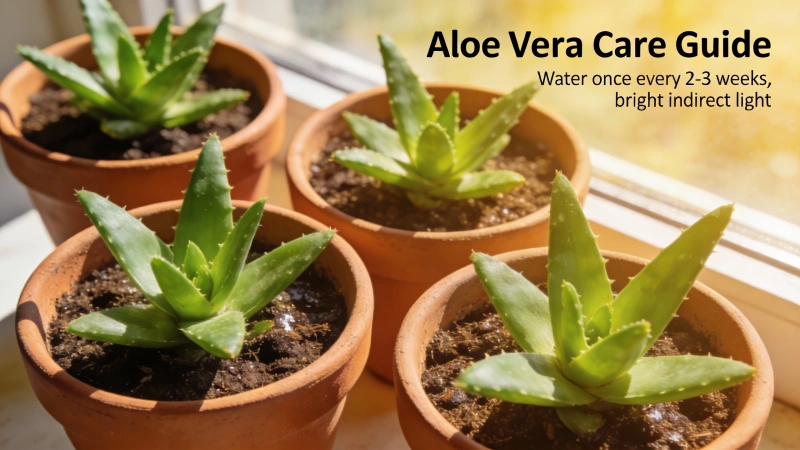

I almost killed my first aloe vera plant.
When my friend handed me that sad, yellowing plant before moving away, she said, “Aloe is impossible to kill. You’ll be fine.” Two weeks later, things got worse. The leaves were softer, droopier, and starting to turn brown at the base.
Sound familiar? If you’ve ever wondered why this so-called “unkillable plant” keeps dying on you, you’re not alone. Overwatering is the number one killer of aloe vera plants—and that was exactly my first mistake.
But here’s the good news: after 18 months of trial, error, and finally success, I turned that dying plant into four thriving aloes. In this guide, I’ll share everything I learned—the right way to water, the perfect light conditions, how to fix common problems, and how to grow your own aloe family through propagation.
Whether you’re a complete beginner or trying to save a struggling plant, these tips actually work. Let’s dive in.
Quick Answer: Aloe Vera Care Basics
In short, aloe vera care comes down to four simple rules:
- Water: Only when soil is completely dry (every 2-3 weeks in summer, every 4-5 weeks in winter)
- Light: Bright, indirect sunlight—avoid sudden exposure to direct sun
- Soil: Fast-draining cactus mix in a pot with drainage holes
- Temperature: 55-80°F (13-27°C)—normal room temperature is perfect
Below, I’ll share my personal experience and detailed tips for each of these areas.
Aloe Vera Care at a Glance
| Care Factor | What to Do | Common Mistake |
|---|---|---|
| Watering | Wait until soil is bone dry | Watering on a fixed schedule |
| Light | Bright indirect light | Moving directly into full sun |
| Soil | Cactus mix + perlite | Regular potting soil |
| Pot | Terracotta with drainage holes | Decorative pots without holes |
| Fertilizer | Once in spring (half-strength) | Monthly feeding |
Step 1: Find the Right Light (It’s Trickier Than You Think)
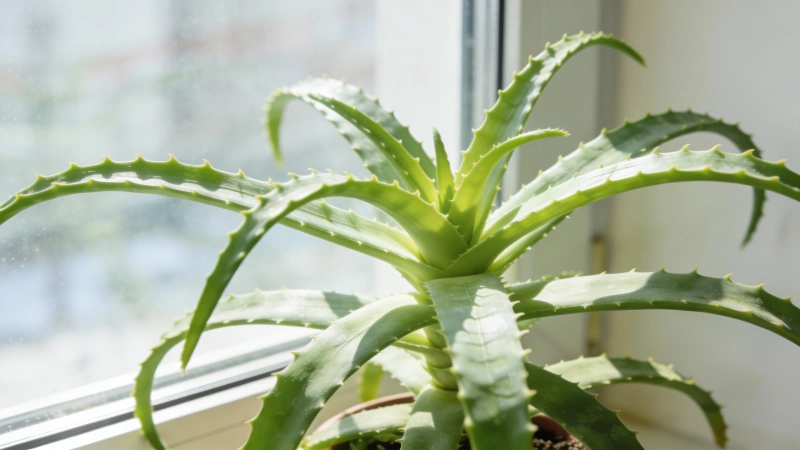
Aloe vera loves bright light—but “bright” doesn’t mean “blazing sun.”
Here’s what I learned the hard way: I once moved a store-bought aloe straight onto my California patio in mid-summer. Within three days, the leaves had brown, crispy sunburn spots. The plant needed 7-10 days to gradually adjust to stronger light.
Best Light Conditions
- Indoors: South or west-facing window, 1-2 feet back from the glass
- Avoid: North-facing windows (too dim) and direct midday sun
- Moving outdoors: Increase sun exposure gradually over 2-3 days at a time
How to Tell If Light Is Wrong
- Too little light: Pale leaves, stretching toward light source, thin leggy growth
- Too much light: Red-brown color, dry crispy patches, bleached spots
According to the Royal Horticultural Society, aloe vera performs best in bright light but benefits from protection against intense afternoon sun, especially in summer.
Step 2: Master the Art of Watering (This Is Where Most People Fail)
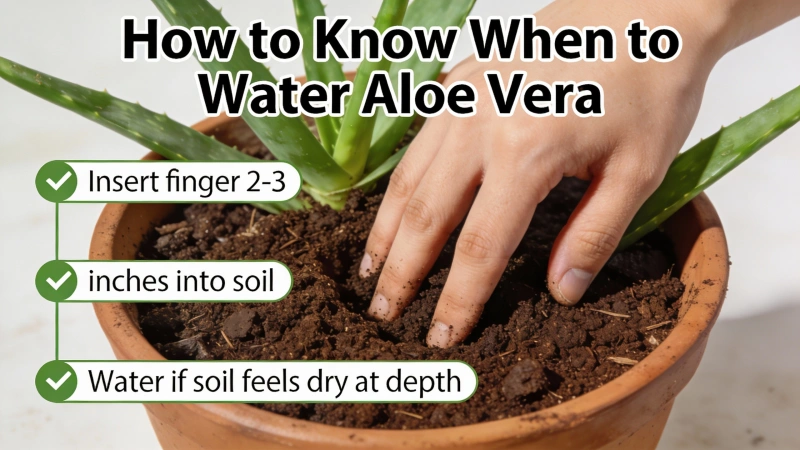
This is the most important step. About 90% of aloe problems trace back to watering.
My failure story: At first, I watered every Saturday like clockwork. “Regular watering is good for plants,” I thought. Within a month, the leaves got soft and mushy, and the bottom ones turned yellow. When I finally unpotted the plant, the roots were brown and slimy—classic root rot.
The Right Way to Water
- Test first: Stick your finger 2 inches into the soil
- Still moist? Wait a few more days
- Completely dry? Time to water
- Water deeply: Pour until water flows from drainage holes, then dump the saucer
- Adjust seasonally:
- Spring/Summer (growing season): Every 2-3 weeks
- Fall/Winter (dormant period): Every 4-5 weeks
Seasonal Watering Schedule
| Season | Frequency | Notes |
|---|---|---|
| Spring | Every 2-3 weeks | Growth begins—gradually increase |
| Summer | Every 2 weeks | May need more in extreme heat |
| Fall | Every 3-4 weeks | Start reducing frequency |
| Winter | Every 4-5 weeks | Dormant—water sparingly |
Pro tip: When in doubt, wait. Aloe can survive drought but dies in soggy soil. I’d rather underwater than overwater any day.
Step 3: Choose the Right Soil and Pot
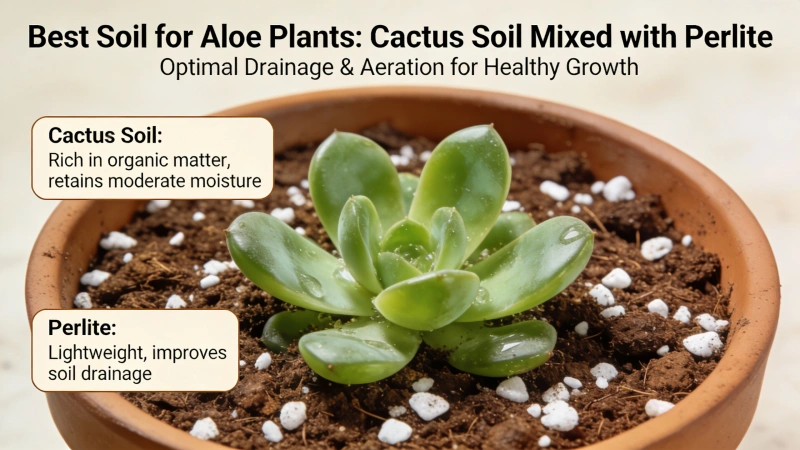
Soil Mix
Aloe needs fast-draining soil. My recipe is simple:
- 50% cactus/succulent potting mix
- 50% perlite or coarse sand
Why drainage matters so much: According to Wikipedia, aloe vera originates from the Arabian Peninsula and thrives in sandy, well-drained soils. Its roots evolved for desert conditions—sitting in water leads to rot.
Pot Selection
✅ Best choice: Terracotta pots with drainage holes
- Porous material helps soil dry faster
- Heavy enough to prevent tipping
- Must have drainage holes—non-negotiable!
❌ Avoid:
- Plastic pots (hold moisture too long)
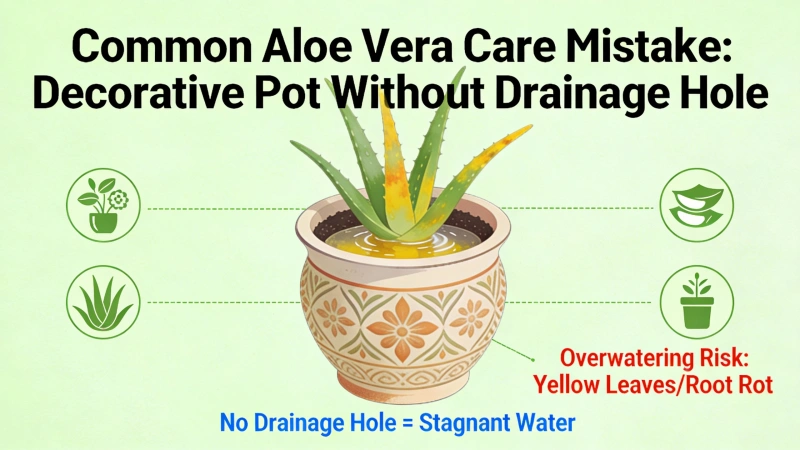
- Decorative pots without holes
- Oversized pots (excess soil stays wet)
My Experiment
I tested this myself: I planted overwatered aloes in both terracotta and plastic pots. The terracotta soil dried about 2 days faster on average, and those plants recovered much better.
💡 Myth busted: Putting rocks at the bottom of the pot does NOT improve drainage. It actually just takes up space roots could use. A proper drainage hole is all you need.
Step 4: Keep Temperature Steady
Ideal range: 55-80°F (13-27°C)
Good news: most homes stay within this range naturally. Your aloe will be comfortable wherever you are.
What to Avoid
- Cold drafts near windows in winter
- Direct airflow from AC or heating vents
- Outdoor temperatures below 50°F (10°C)
If you live in USDA Zone 10 or warmer, you can grow aloe outdoors year-round. For most of us, though, aloe works best as a houseplant.
Speaking of outdoor gardens, if you’re dealing with other yard issues like moles tearing up your lawn, check out How to Get Rid of Moles for some proven solutions.
Comment
byu/wundervalll from discussion
inhouseplants
Step 5: Fertilize Sparingly (Less Is More)
Aloe isn’t a hungry plant. In fact, over-fertilizing causes more problems than under-fertilizing.
My Approach
- When: Once in spring only
- What: Succulent fertilizer diluted to half strength
- How often: 1-2 times per year is plenty
Signs of Over-Fertilizing
- Brown leaf edges
- Root burn
- Distorted growth
Can you skip fertilizer entirely? Yes! Aloe evolved in nutrient-poor desert soil. It can thrive for years without any extra feeding.
My Real Experience: From Dying Plant to Thriving Collection
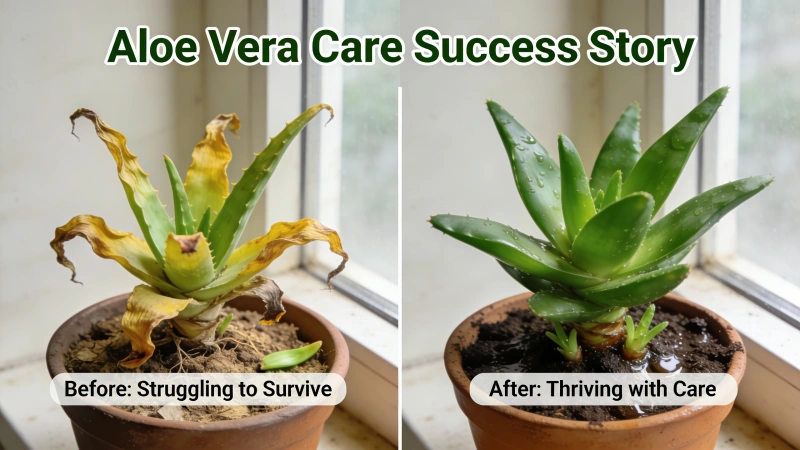
The Starting Point (Spring 2023)
My friend was moving cross-country and handed me her neglected aloe. It looked rough: 5 leaves, 3 of them yellow and mushy, the whole plant leaning sideways in a plastic pot with no drainage hole.
“It’s fine, aloe is indestructible,” she said. I wasn’t so sure.
What I Found Wrong
When I unpotted it, the problems became clear:
- About 30% of the roots were rotted (brown-black and slimy)
- The soil at the bottom was still wet, even though the surface felt dry
- The pot had zero drainage
My Rescue Plan
- Trimmed the damage: Cut away all rotten roots with clean scissors
- Let it dry: Left the bare plant in a shaded spot for 3 days to callus over
- New soil: Mixed cactus soil with 50% perlite
- Better pot: Terracotta with a drainage hole
- Waited to water: Didn’t water for 10 days after repotting
- Better spot: Near a south-facing window, but not in direct sun
The Results
- Week 4: First signs of new healthy growth
- Month 6: Leaf count went from 5 to 9
- Month 12: First baby plants (pups) appeared
- Month 18: Successfully separated and propagated 4 new plants—3 survived (75% success rate)
My Biggest Lesson
Aloe really is drought-tolerant. Now I’d rather let it get a little thirsty than risk overwatering. When I’m unsure if it needs water, I wait a few more days. That simple mindset shift made all the difference.
This experience also helped me save other struggling houseplants later on. If you have a dracaena that’s seen better days, my approach was similar—you can read about it in How I Saved My Dying Dracaena.
Troubleshooting: What’s Wrong With My Aloe?
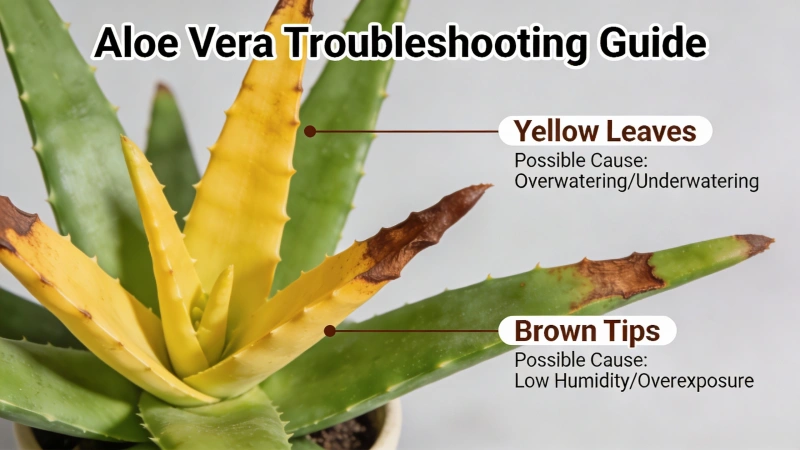
Here’s a quick diagnostic guide based on what I’ve learned:
| Symptom | Likely Cause | Fix |
|---|---|---|
| Soft, yellow leaves | Overwatering | Check roots; repot if needed |
| Brown, crispy tips | Underwatering or heat | Water more; move from heat source |
| Red/brown patches | Sunburn | Move to indirect light |
| Pale, stretching leaves | Not enough light | Move to brighter location |
| Plant tipping over | Root rot or light pot | Check roots; use heavier pot |
| Bottom leaves dying | Normal aging | Remove dead leaves; don’t worry |
5 Mistakes I Made (So You Don’t Have To)
- Watering on a schedule
❌ “I water every Saturday”
✅ Water only when the soil is completely dry - Trying to propagate from a single leaf
❌ Cutting a leaf and sticking it in soil
✅ Wait for baby plants (pups) to form and separate those instead - Moving the plant too suddenly
❌ Indoor plant → Direct outdoor sun overnight
✅ Take 7-10 days to gradually increase light exposure - Adding rocks to the bottom “for drainage”
❌ This is a myth—rocks just take up root space
✅ A good drainage hole is all you need - Keeping the same watering routine in winter
❌ Watering every 2 weeks year-round
✅ Cut frequency in half during dormant months
How to Propagate Aloe Vera (Free Plants!)
The easiest way to get more aloe plants? Let the mother plant do the work.
What Are Pups?
Aloe vera naturally produces baby plants called “pups” or “offsets” at the base. These are genetic clones of the parent plant and have the highest propagation success rate.
When to Separate
- Pups are at least 4-6 inches tall
- Or about 1/5 the size of the mother plant
- Best time: spring or summer
Step-by-Step Propagation
- Gently remove the entire plant from its pot
- Brush away soil to see the root connections
- Find where the pup connects to the mother plant
- Use a clean, sharp knife to cut the connection
- Let the cut end dry for 2-3 days (forms a callus)
- Plant in fresh, well-draining soil
- Wait 7-10 days before first watering
My Results
I separated 4 pups from my mother plant. 3 survived (75% success rate). The one that failed? I watered it too soon—the cut hadn’t healed yet, and it rotted.
⚠️ Can you propagate from a single leaf? Technically yes, but success rates are very low. Aloe leaves contain so much water that they tend to rot before rooting. Stick with pups for reliable results.
Using Aloe Vera Gel: The Bonus Benefits
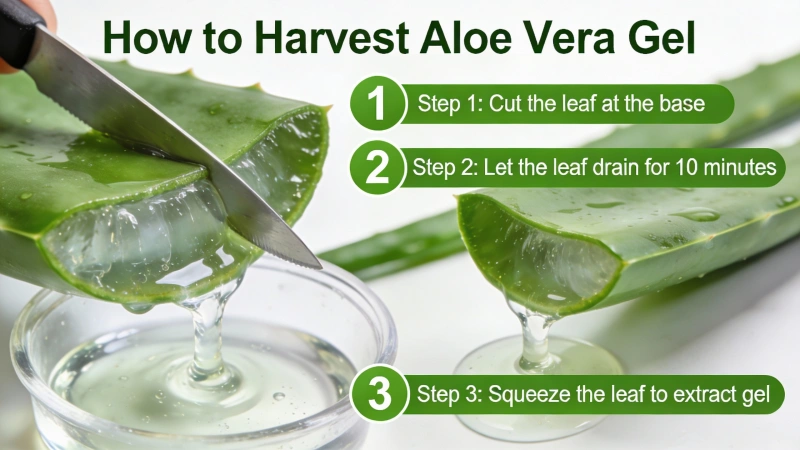
One of the best things about growing aloe? Free skincare!
How to Harvest Gel
- Choose a mature, outer leaf
- Cut close to the base of the plant
- Slice the leaf lengthwise
- Scoop out the clear gel with a spoon
Common Uses
- 🔥 Burns and sunburn: Apply directly for cooling relief
- 💧 Moisturizer: Natural hydration for skin
- 🩹 Minor cuts: Has antibacterial properties
According to the Mayo Clinic, aloe vera gel may help speed healing of first and second-degree burns and reduce skin inflammation.
⚠️ Important Warnings
- Don’t eat the gel—it can cause stomach pain and diarrhea
- Toxic to pets—keep plants where cats and dogs can’t reach them
According to the ASPCA, aloe vera is toxic to cats and dogs and can cause vomiting and diarrhea if ingested.
Love Aloe? Try These Low-Maintenance Plants Too
If you’re drawn to aloe’s easy-care nature, you might also enjoy:
Snake Plant (Sansevieria)
- Even more drought-tolerant than aloe
- Tolerates lower light conditions
- Great air-purifying qualities
I’ve had great success with snake plants too. For a detailed guide, check out How to Care for a Snake Plant.
Other Easy Options
- ZZ Plant
- Dracaena
- Cacti
The common thread? All of these prefer to be underwatered rather than overwatered.
Dealing With Pests
Aloe vera is generally pest-resistant, but problems can happen. Here’s what to watch for:
Common Pests
- Mealybugs (white cottony masses)
- Scale (brown bumps on leaves)
- Spider mites (fine webbing)
Natural Treatments
- Spray leaves with water to knock off pests
- Wipe with a cotton swab dipped in rubbing alcohol
- Apply diluted dish soap spray
Prevention Tips
- Ensure good air circulation
- Don’t let water sit on leaves
- Quarantine new plants for 2 weeks before placing near others
If you’re dealing with other pest issues around your home or garden, you might find our guide on How to Get Rid of Stink Bugs helpful.
Watch: Aloe Vera Care Visual Guide
Sometimes it’s easier to see care techniques in action. This video covers the essentials:
Frequently Asked Questions
How often should I water my aloe vera?
There’s no fixed schedule—it depends on your environment. The rule is simple: wait until the soil is completely dry. Typically this means every 2-3 weeks in spring/summer and every 4-5 weeks in fall/winter. Always check the soil first by sticking your finger 2 inches deep.
Why are my aloe leaves turning brown?
Brown leaves usually mean overwatering or sunburn. If the leaves are soft and mushy, it’s likely too much water—check the roots for rot. If they’re dry and crispy with brown patches, it’s probably sun damage. Move the plant to indirect light and adjust your watering.
Will my aloe vera flower?
Yes, but rarely indoors. Aloe needs intense sunlight and ideal conditions to bloom—yellow or orange tubular flowers on a tall spike. Outdoor plants in warm climates flower more readily. Don’t worry if yours never blooms; it’s still perfectly healthy.
Is aloe vera toxic to cats and dogs?
Yes. According to the ASPCA, aloe vera is toxic to both cats and dogs. If ingested, it can cause vomiting, diarrhea, and other symptoms. Keep your aloe on high shelves or in rooms your pets can’t access.
Why isn’t my aloe producing pups (baby plants)?
Your plant might not be mature enough. Aloe typically needs to be 5-6 years old before producing offsets. Make sure it’s getting enough light and isn’t stressed. With proper care and patience, pups will eventually appear.
Can I grow aloe vera from a single leaf cutting?
Technically possible, but the success rate is very low. Aloe leaves are full of moisture and tend to rot before they root. The far better method is propagating from pups (baby plants that grow at the base). Wait for these to appear and separate them for nearly guaranteed success.
Start Your Aloe Journey Today
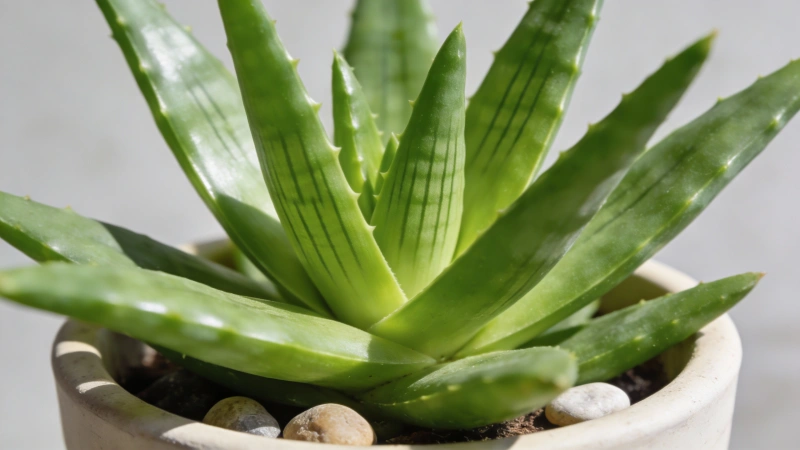
Aloe vera care really comes down to three things: less water, more light, good drainage.
Remember my biggest lesson: aloe is a desert plant. It’s more afraid of too much water than too little. When you’re unsure whether to water, wait a few more days.
From nearly killing my first aloe to now having four thriving plants, this journey taught me that even “easy” plants need you to understand their needs. But once you get it right, aloe is incredibly rewarding—and you’ll have plenty of free gel for sunburns!
Got questions about your aloe or want to share your own experience? Drop a comment below—I’d love to hear how your plant is doing.
Happy growing! 🌿
This article was created by a professional team. AI tools were used during the research and writing process to enhance efficiency and quality. All information has undergone manual verification and editing to ensure accuracy and practicality. We are committed to providing readers with objective and valuable content.
Publisher::meiruth558@gmail.com,Please indicate the source when reposting:https://gardeningtoolsgarden.com/how-to-take-care-of-an-aloe-vera-plant/
