

I killed my first jade plant within three months. Overwatered it, placed it in the wrong spot, used the wrong soil—basically did everything wrong without realizing it.
If you’ve watched your jade plant’s leaves turn yellow, get mushy, and drop off one by one, I know exactly how frustrating that feels. These succulents are supposed to be “easy,” right? That’s what everyone says.
Here’s the thing: jade plants are easy—once you understand what they actually need. The problem is that most care advice is too vague to be helpful. “Water when dry” doesn’t tell you how dry. “Bright light” doesn’t explain where exactly to put it.
After killing that first plant and nearly giving up, I decided to figure out what actually works. Two years later, I’ve gone from one dying jade to five healthy plants, including three I propagated myself.
In this guide, I’ll share the exact lessons I learned—from proper watering technique to diagnosing problems before they kill your plant. No vague advice, just specific tips that actually work.
Quick Answer: Jade Plant Care Basics
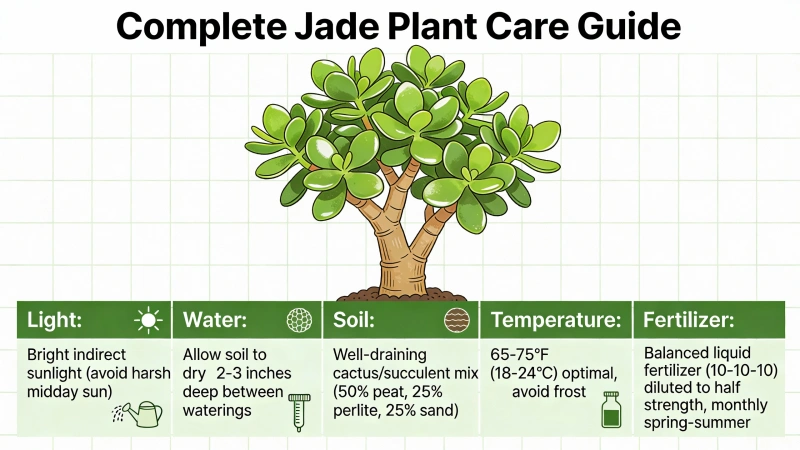
Jade plant care comes down to five essentials:
- Water: Only when the top 1-2 inches of soil are completely dry (every 2-3 weeks)
- Light: 4-6 hours of bright, indirect light daily (south or west window)
- Soil: Well-draining succulent mix—never regular potting soil
- Temperature: 65-75°F, away from drafts and heating vents
- Feeding: Monthly during spring/summer only, skip in winter
Below, I’ll explain exactly how I learned these lessons the hard way—and how you can skip my mistakes.
Jade Plant Care at a Glance
| Care Factor | What to Do | Common Mistake |
|---|---|---|
| Watering | When top 1-2″ of soil is dry | Fixed weekly schedule |
| Light | 4-6 hours bright indirect | Too little light (north window) |
| Soil | Well-draining succulent mix | Regular potting soil |
| Temperature | 65-75°F, stable | Near cold drafts or heat vents |
| Fertilizing | Monthly in growing season | Year-round feeding |
Step 1: Watering—The #1 Rule Everyone Gets Wrong
Let me be direct: overwatering kills more jade plants than anything else. I learned this the hard way when my first plant’s roots turned to mush.
The mistake I made? Watering on a schedule. “Every Sunday I water all my plants” seemed logical. But jade plants don’t care about your calendar—they care about soil moisture.
The Right Way to Water
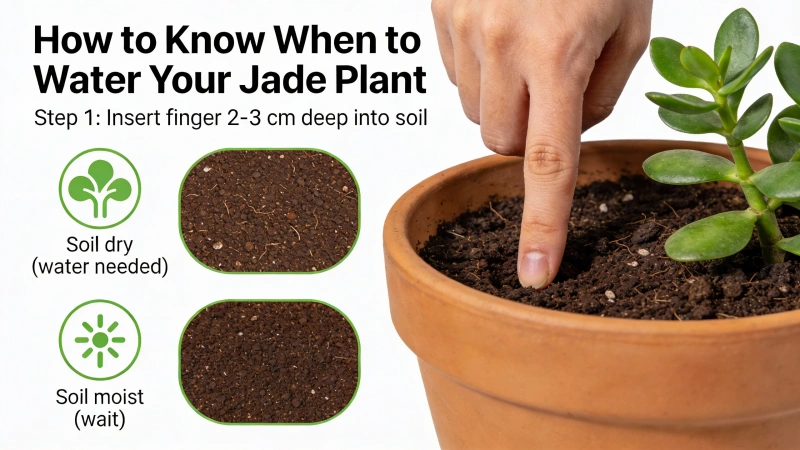
Use the finger test: Stick your finger 1-2 inches into the soil. If it’s dry at that depth, water thoroughly until it drains from the bottom. If there’s any moisture, wait a few more days.
For most homes, this means watering every 2-3 weeks in summer and every 4-6 weeks in winter. But your specific timing depends on your light, humidity, and pot size.
How to Read Your Plant
Jade plants tell you when they need water—you just need to know the signs:
- Slightly soft leaves: Time to water
- Wrinkled, shriveled leaves: You’ve waited too long
- Yellow, mushy leaves: You’re watering too much
Seasonal Watering Guide
| Season | Frequency | What to Watch For |
|---|---|---|
| Spring | Every 2-3 weeks | New growth starting |
| Summer | Every 2 weeks | Faster drying, active growth |
| Fall | Every 3-4 weeks | Slow down as growth slows |
| Winter | Every 4-6 weeks | Plant is dormant—go easy! |
💡 Pro tip: When in doubt, wait. Jade plants recover much better from underwatering than overwatering. A thirsty jade bounces back in days; a rotted one is usually toast.
Step 2: Light Requirements—Finding the Sweet Spot
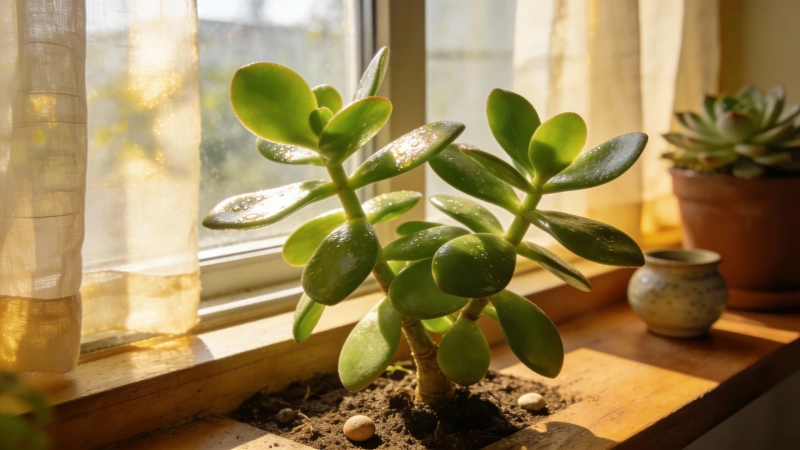
According to Wikipedia, jade plants (Crassula ovata) are native to South Africa, where they grow in rocky, sun-drenched landscapes. Indoors, they need at least 4-6 hours of bright light daily to thrive.
My first jade was near a north-facing window. It survived, but it didn’t thrive. The stems stretched out, leaves were spaced far apart, and the whole plant looked leggy and weak.
When I moved it to a south-facing window, everything changed within a few weeks. The new growth was compact and healthy.
Best Light Conditions
- Ideal: South or west-facing window with bright, indirect light
- Acceptable: East-facing window (gets morning sun)
- Avoid: North windows or dark corners
Signs Your Jade Needs More Light
- Long, stretched stems (etiolation)
- Wide spacing between leaves
- Pale, faded leaf color
- Leaning toward the light source
Good news sign: If your jade’s leaf edges turn slightly red, that means it’s getting plenty of light! This “stress coloring” is completely normal and actually indicates a happy plant.
Step 3: Soil That Actually Drains
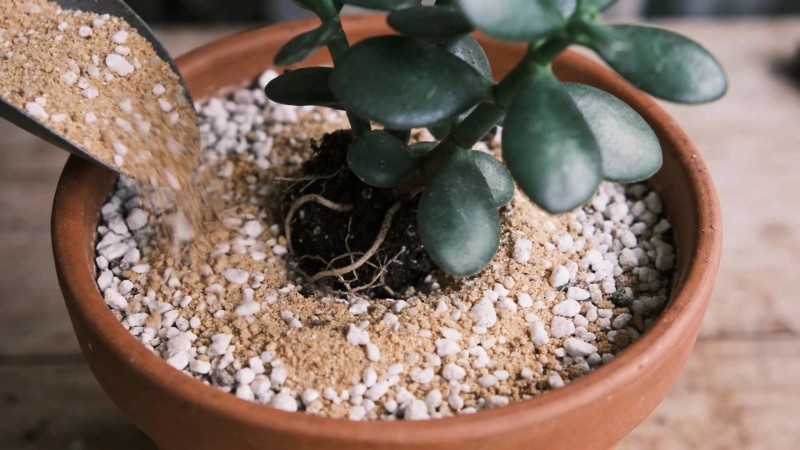
Never use regular potting soil for jade plants. It holds too much moisture and will rot the roots—even if you water correctly.
I learned this when I repotted my jade into leftover potting mix I had around. Within a month, the roots were mushy despite careful watering. The soil just stayed wet for way too long.
Best Soil Options
Easiest option: Buy a pre-made cactus/succulent mix at any garden center.
DIY option: Mix your own with this ratio:
- 50% regular potting soil
- 25% perlite
- 25% coarse sand or small gravel
Container Requirements
Drainage holes are non-negotiable. No matter how careful you are, a pot without drainage will eventually lead to root rot.
Terra cotta pots are great for jade plants because they’re porous and help the soil dry out faster. Plastic or ceramic works too—just make sure there are holes in the bottom.
Step 4: Temperature and Placement
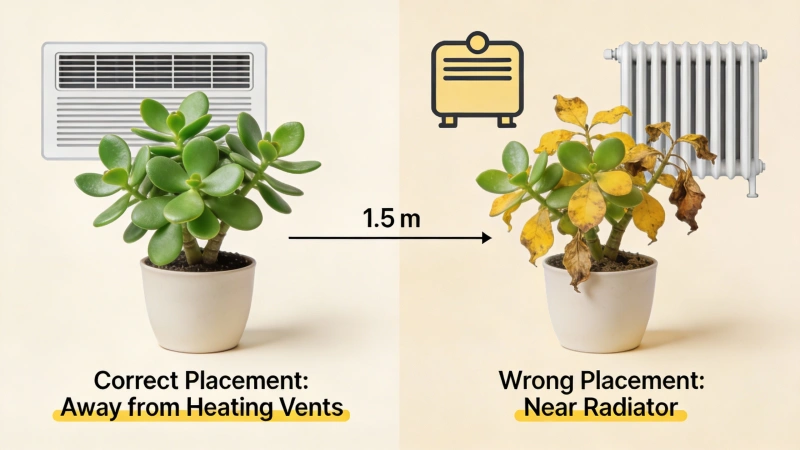
Ideal temperature: 65-75°F (18-24°C) during the day, slightly cooler at night.
The good news? If your home is comfortable for you, it’s probably fine for your jade. The bad news? Jade plants hate sudden temperature changes and drafts.
Placement Mistakes to Avoid
- Near heating vents: The hot, dry air will stress your plant fast
- By air conditioning units: Cold blasts cause leaf drop
- Near drafty windows: Temperature fluctuations are the enemy
- Outside in frost: Temperatures below 50°F can damage jade plants; frost will kill them
Once you find a good spot, leave it there. Jade plants don’t like being moved around. They take time to adjust to new environments.
Comment
byu/Prestigious-Bat9928 from discussion
inIndoorGarden
Step 5: Fertilizing—Less Is More
Here’s something that surprised me: jade plants don’t need much fertilizer. In fact, overfeeding is more common than underfeeding.
My Fertilizing Routine
- When: Only during the growing season (spring through early fall)
- Frequency: Once a month maximum
- Strength: Dilute to half the recommended dose
- Type: Balanced liquid fertilizer or succulent-specific formula
- Winter: Don’t fertilize at all—the plant is dormant
Signs of over-fertilizing: Brown leaf tips, white salt deposits on soil surface, or stunted growth. If you see these, flush the soil with plain water and skip feeding for a few months.
Step 6: Propagation—Free Plants Forever
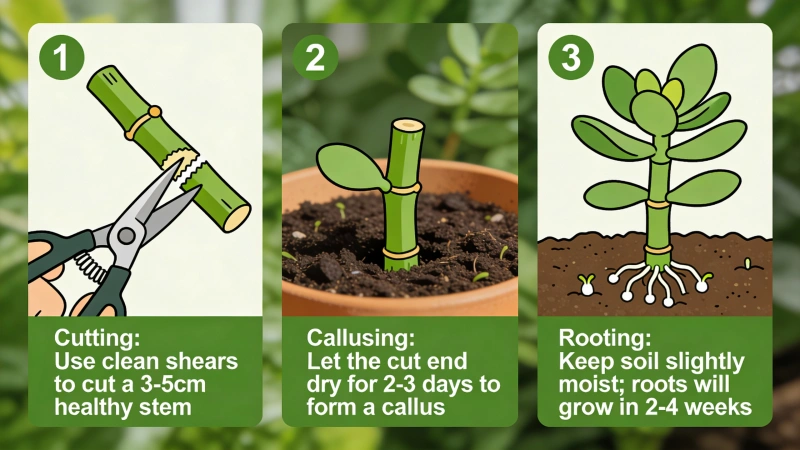
One of the best things about jade plants? They’re ridiculously easy to propagate. I’ve grown three new plants from my original—all for free.
Stem Cutting Method (My Favorite)
- Cut a healthy stem that’s 3-4 inches long
- Remove the bottom leaves to expose 1-2 inches of stem
- Let it dry for 3-5 days until the cut end forms a callus (this prevents rot)
- Plant in dry succulent soil about 1 inch deep
- Wait before watering—give it a week, then water lightly
- Be patient—roots typically form in 2-4 weeks
Leaf Propagation Method
You can also propagate from individual leaves, though it takes longer:
- Gently twist a healthy leaf from the stem (get the whole base)
- Let it dry for 2-3 days
- Place on top of moist soil (don’t bury it)
- Mist occasionally and wait—roots and tiny plants will eventually form at the base
Best timing: Spring and summer, when the plant is actively growing.
If you want more tips on propagating succulents, I cover similar techniques in my guide on How I Saved My Dying Aloe Vera—aloe and jade have a lot in common when it comes to propagation.
My Real Experience: From Killing to Thriving
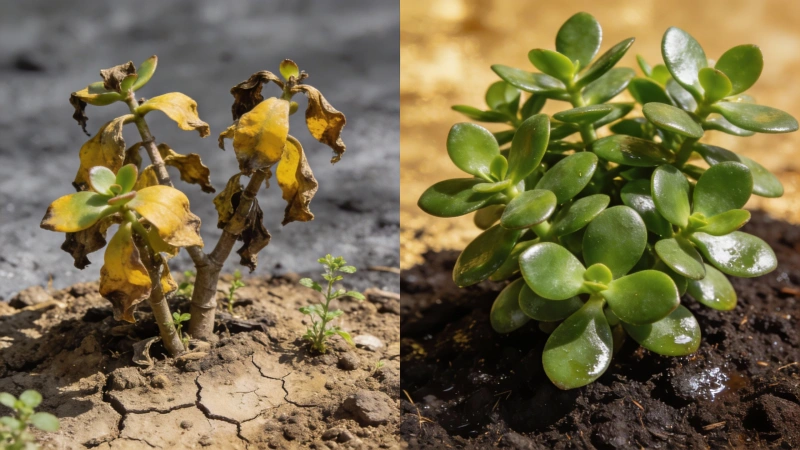
The Starting Point: October 2022
I picked up a small jade plant at IKEA. It looked healthy—glossy leaves, compact shape. I was confident I could keep it alive. After all, succulents are supposed to be beginner-friendly, right?
I placed it near my north-facing window (not enough light, as I’d later learn) and watered it every Sunday along with my other houseplants.
The Problems Started
Month 1: Leaves started turning yellow and feeling soft. I assumed it needed more water, so I watered even more frequently. Big mistake.
Month 2: Bottom leaves were dropping off. The soil was always damp. I was confused—wasn’t I taking good care of it?
Month 3: I finally pulled the plant out of its pot to check the roots. They were dark brown, mushy, and smelled bad. Root rot. The plant was dying, and I’d caused it.
I almost threw it away. But I decided to try one last rescue attempt.
How I Saved It
- Cut off all the rotten roots—only kept the healthy white parts
- Let the root ball dry for 24 hours to prevent further rot
- Repotted in succulent-specific soil in a terra cotta pot with drainage
- Moved it to a south-facing window for better light
- Stopped watering on a schedule—started using the finger test instead
- Took a few stem cuttings as “insurance” in case the main plant didn’t make it
The Results
- 3 months later: New leaves appeared. All three cuttings rooted successfully.
- 1 year later: The original plant had fully recovered. I now had 4 jade plants total.
- 2 years later: I have 5 healthy jades. The largest is about 18 inches tall and still growing.
What I Learned
Jade plants need “benign neglect.” Less watering, more light, and soil that drains fast. Once I stopped trying so hard, everything clicked.
This rescue experience was similar to what I describe in How I Saved My Dying Dracaena—same diagnostic process, same lesson about adjusting care instead of giving up.
Troubleshooting: What’s Wrong With My Jade Plant?
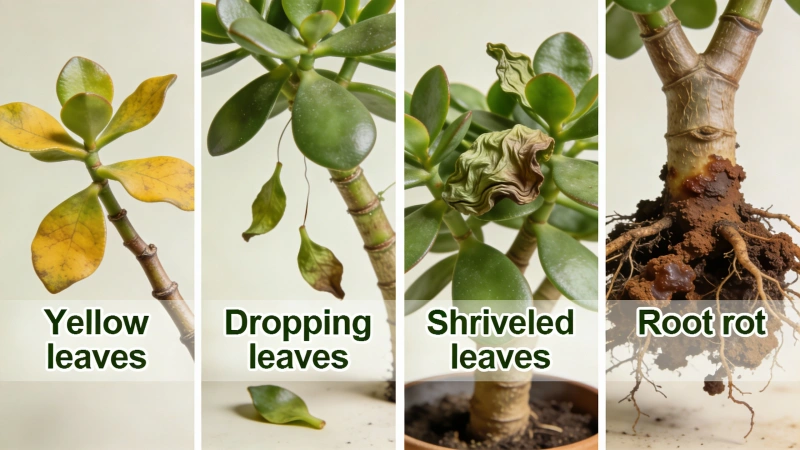
Jade plants are actually great communicators—their leaves tell you exactly what’s wrong. Here’s how to diagnose the most common issues:
| Symptom | Most Likely Cause | Solution |
|---|---|---|
| Yellow, mushy leaves | Overwatering | Stop watering immediately; check roots for rot |
| Wrinkled, shriveled leaves | Underwatering | Water thoroughly; leaves should plump up in days |
| Leaves dropping | Overwatering or sudden stress | Check soil moisture; avoid moving plant |
| Leggy, stretched growth | Not enough light | Move to brighter location gradually |
| Black leaves or stems | Severe root rot | Remove plant, trim rot, repot in fresh soil |
| Soft, flexible leaves | Needs water | Water when leaves feel slightly soft |
| Red leaf edges | Good light exposure (normal!) | No action needed—this is a healthy sign! |
This diagnostic approach works for most succulents. If you want more troubleshooting tips, I use a similar method in How I Saved My Dying Aloe Vera.
5 Jade Plant Mistakes I Made (So You Don’t Have To)
- Watering on a schedule
❌ “Every Sunday I water all my plants”
✅ Check soil moisture first—let the plant tell you when it’s thirsty - Using regular potting soil
❌ Standard potting mix holds way too much water
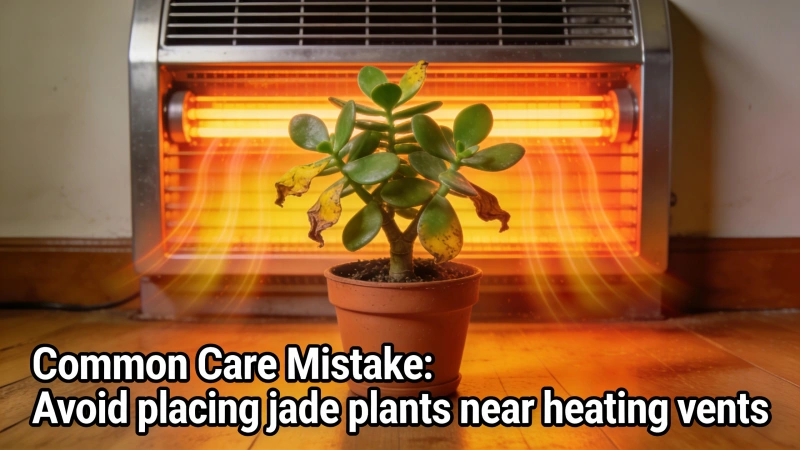
✅ Use succulent/cactus mix or add perlite and sand for drainage - Placing near heating vents
❌ Trying to keep the plant “warm” in winter
✅ Keep away from all vents—the dry, blasting air is stressful - Thinking succulents don’t need water
❌ Letting it go completely dry for weeks
✅ They need less water, not no water—watch for soft leaves - Repotting too often
❌ Moving to a bigger pot every year
✅ Jade plants actually like being slightly root-bound; repot every 2-4 years
⚠️ Important: Jade Plants Are Toxic to Pets
If you have cats, dogs, or other pets, this is important:
According to the ASPCA’s Toxic Plant Database, jade plants are toxic to cats, dogs, and horses. If ingested, they can cause:
- Vomiting
- Depression/lethargy
- Incoordination
- In rare cases, slowed heart rate
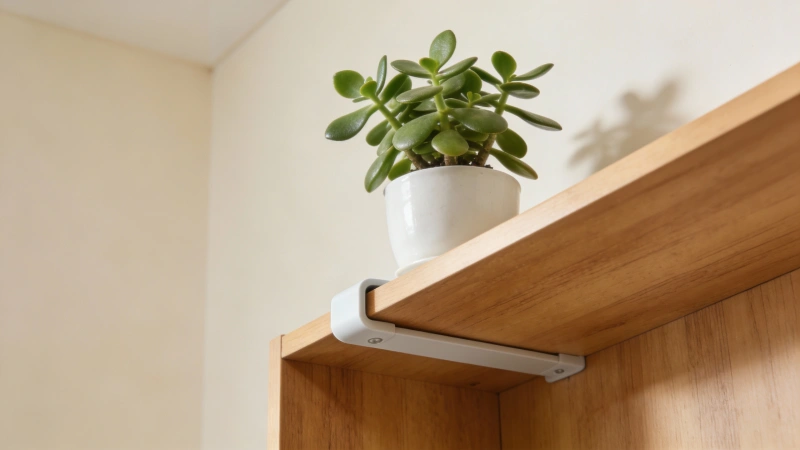
What to do: Keep your jade plant on a high shelf, hanging planter, or in a room your pets can’t access. If you suspect your pet has eaten any part of a jade plant, contact your vet immediately.
Pet-safe alternatives: If you have a particularly curious pet, consider switching to non-toxic succulents like Haworthia or Echeveria.
Popular Jade Plant Varieties
While all jade plants have similar care needs, there are some fun varieties to explore:
- Crassula ovata (Classic Jade): The standard with oval, glossy green leaves
- Gollum Jade: Tubular, finger-like leaves—very unique!
- Hummel’s Sunset: Gold and red-tipped leaves, especially colorful in bright light
- Variegated Jade: Cream and green striped leaves
All varieties have essentially the same care requirements, so feel free to collect a few!
Love Jade Plants? Try These Similar Options
If you enjoy the low-maintenance style of jade plants, here are some other plants you might like:
- Aloe Vera: Another easy succulent with similar water and light needs
- Snake Plant: Even more forgiving—great for low light situations
- Haworthia: Small succulent that’s also pet-safe
If you want something a bit different, check out my guide on how to care for Chinese money plant. It’s also sometimes called a “money plant,” but it’s a tropical species with different care needs—rounder leaves and a preference for more water.
For a real challenge, you could try how to care for calathea—these humidity-loving tropicals have stunning patterned leaves, but they’re definitely more demanding than jade!
Watch: Jade Plant Care Visual Guide
Sometimes it helps to see proper care techniques in action. This video covers the basics well:日本
Frequently Asked Questions
How often should I water my jade plant?
There’s no fixed schedule—it depends on your specific environment. Use the finger test: water only when the top 1-2 inches of soil are completely dry. This typically means every 2-3 weeks in summer and every 4-6 weeks in winter. Watch the leaves too: when they feel slightly less firm than usual, it’s time to water.
Why are my jade plant leaves falling off?
Leaf drop is usually caused by overwatering (the most common reason), underwatering, sudden temperature changes, or stress from moving the plant. Check your soil moisture first—if it’s wet and leaves are dropping, you’re overwatering. If it’s bone dry, you’ve waited too long to water.
Can jade plants survive in low light?
They can survive, but they won’t thrive. Jade plants need 4-6 hours of bright, indirect light daily. In low light, they become leggy, stretched out, and weak. For best results, place near a south or west-facing window. If you only have north-facing windows, consider a grow light.
How do I propagate a jade plant?
Cut a 3-4 inch stem, remove the lower leaves, and let it dry for 3-5 days until the cut end forms a callus. Then plant it about 1 inch deep in dry succulent soil. Wait a week before watering lightly. You can also propagate from individual leaves placed on top of soil. Spring and summer are the best times to propagate.
Is jade plant toxic to cats and dogs?
Yes, jade plants are toxic to cats, dogs, and horses according to the ASPCA. Symptoms of ingestion include vomiting, lethargy, and incoordination. Keep your jade plant out of reach of pets on high shelves or in rooms they can’t access. If you suspect your pet has eaten jade, contact your veterinarian immediately.
Why are my jade plant’s leaf edges turning red?
Red leaf edges are actually a sign of a happy, healthy plant! This “stress coloring” happens when your jade gets plenty of bright light—it’s completely normal and desirable. However, if the entire leaf turns red or looks burned, or if the plant shows other signs of stress, it might be getting too much direct sun.
Start Growing Your Jade Plant Today

Let me leave you with the three things that made the biggest difference in my jade plant journey:
- Water less than you think. Wait for the soil to dry, then wait a bit more.
- Light matters more than you’d expect. South or west windows are your friends.
- Good drainage is non-negotiable. Succulent soil + pots with holes = happy roots.
Jade plants have a reputation for being easy—and they really are, once you understand what they need. The key is remembering they’re built for drought, not constant moisture.
My favorite thing about jade plants? With proper care, they can live for 50 years or more. That little plant from IKEA could become a family heirloom.
Got questions about your jade plant? Drop a comment below—I’d love to help!
Happy growing! 🌱
This article was created by a professional team. AI tools were used during the research and writing process to enhance efficiency and quality. All information has undergone manual verification and editing to ensure accuracy and practicality. We are committed to providing readers with objective and valuable content.
Publisher::meiruth558@gmail.com,Please indicate the source when reposting:https://gardeningtoolsgarden.com/how-to-care-for-a-jade-plant/
