
I’ve owned a fiddle leaf fig, a weeping fig, and a rubber plant. Guess which one is still thriving after three years?
If you guessed the rubber plant, you’re right. And honestly, it wasn’t even close.
The rubber plant (Ficus elastica) has earned its reputation as the “easier Ficus”—and after nearly killing mine in the first year, I can tell you exactly why that reputation is deserved, and what mistakes to avoid along the way.
If you’ve brought home a rubber plant and you’re wondering why the leaves are turning yellow, why it’s dropping leaves, or how often you should actually water it, you’re in the right place. I made all those mistakes so you don’t have to.
In this guide, I’ll share everything I’ve learned about rubber plant care—from the basics to troubleshooting, plus my own journey from near-disaster to successful propagation.

Quick Answer: Rubber Plant Care Basics
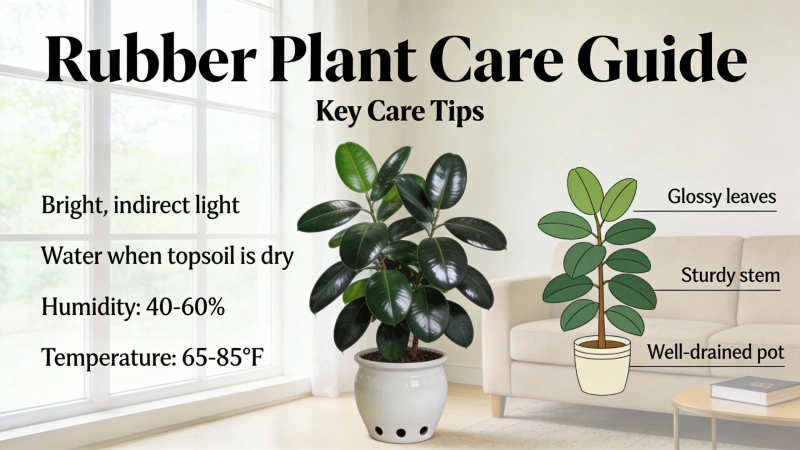
Here’s what rubber plants need to thrive: bright, indirect light, water when the top 1-2 inches of soil are dry (typically every 7-10 days), well-draining soil, and regular leaf cleaning. The #1 rule? Rubber plants hate wet feet. Overwatering causes yellow leaves and root rot—the most common killer of these otherwise easy-care plants.
| Care Factor | Ideal Conditions |
|---|---|
| Light | Bright, indirect (tolerates medium light) |
| Water | When top 1-2″ of soil is dry |
| Soil | Well-draining potting mix |
| Humidity | Average household (40-60%) |
| Temperature | 60-80°F (15-27°C) |
| Fertilizer | Monthly in spring/summer |
| Toxicity | Mildly toxic to cats & dogs |
What Is a Rubber Plant?
The rubber plant (Ficus elastica) is a tropical tree native to Southeast Asia, from the eastern Himalayas through Malaysia and Indonesia. It gets its common name from the milky white sap (latex) that oozes from cuts in its leaves and stems—this sap was historically used to make rubber.
Indoors, rubber plants are prized for their large, glossy leaves and relatively easy care compared to their fussier cousins like the fiddle leaf fig.
Popular Varieties
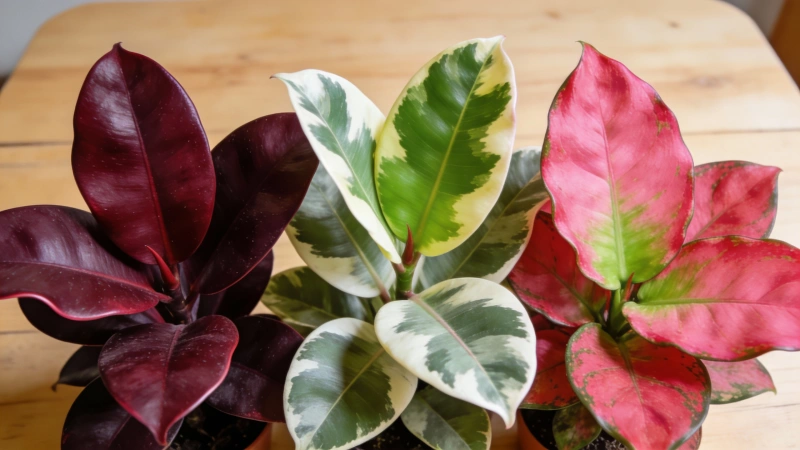
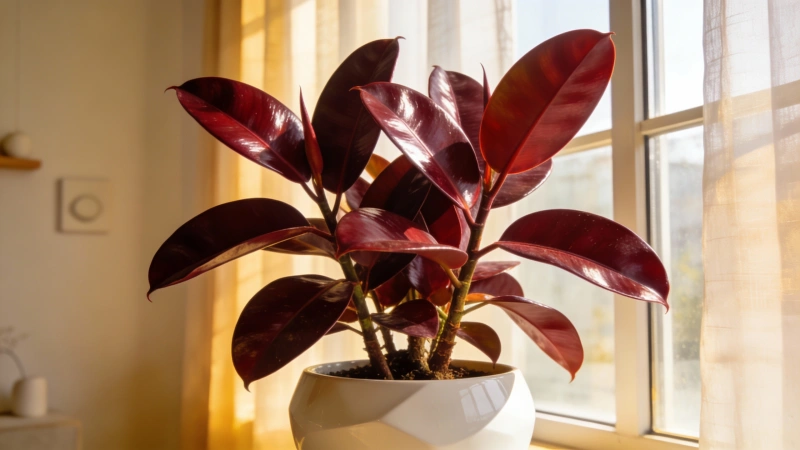
- Burgundy – Deep purple-red leaves (my personal favorite)
- Tineke – Green and creamy white variegation
- Ruby – Pink, red, and green variegation
- Robusta – Classic dark green with larger leaves
1. Light Requirements
One of the reasons I call rubber plants the “easier Ficus” is their flexibility with light. They’re far more forgiving than fiddle leaf figs.
Best Light Conditions
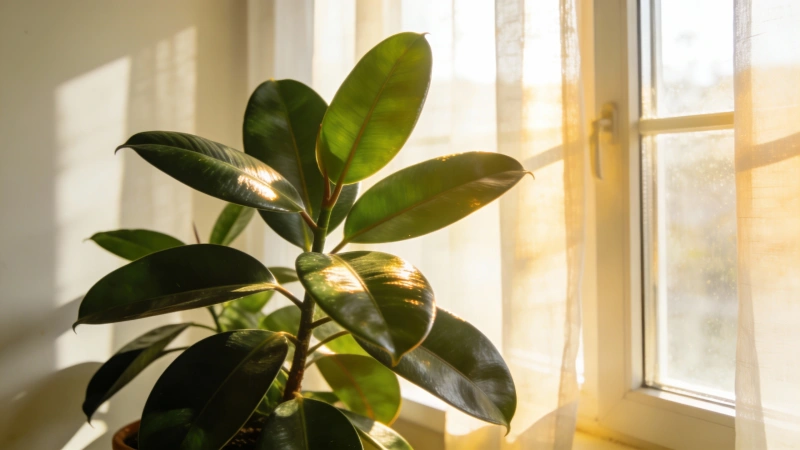
- Ideal: Bright, indirect light (near a south or east-facing window with sheer curtains)
- Acceptable: Medium light (growth will be slower)
- Avoid: Direct afternoon sun (can scorch leaves) and very dark corners
Signs Your Rubber Plant Needs More Light
- Leggy, stretched growth with large gaps between leaves
- New leaves are smaller than older ones
- Variegated varieties lose their color patterns
- Lower leaves start dropping
My rubber plant spent its first four months near a north-facing window. It survived, but it didn’t grow a single new leaf. After I moved it to a south-facing window with sheer curtains, it pushed out three new leaves in the next two months.
If your space is genuinely low-light, a rubber plant might not be the best choice. Check out my guide on how to care for a peace lily—they’re much more tolerant of darker conditions.
2. Watering: The #1 Killer of Rubber Plants
Let me be direct: overwatering kills more rubber plants than anything else.
I learned this the hard way. My first summer with my rubber plant, I watered it twice a week thinking it needed more water in the heat. By September, six leaves had turned yellow and fallen off.
The Golden Rule
“Rubber plants hate wet feet.”
Unlike some tropical plants that love constant moisture, rubber plants prefer to dry out partially between waterings. Their thick, waxy leaves hold water efficiently.
How to Know When to Water
Method 1: The Finger Test
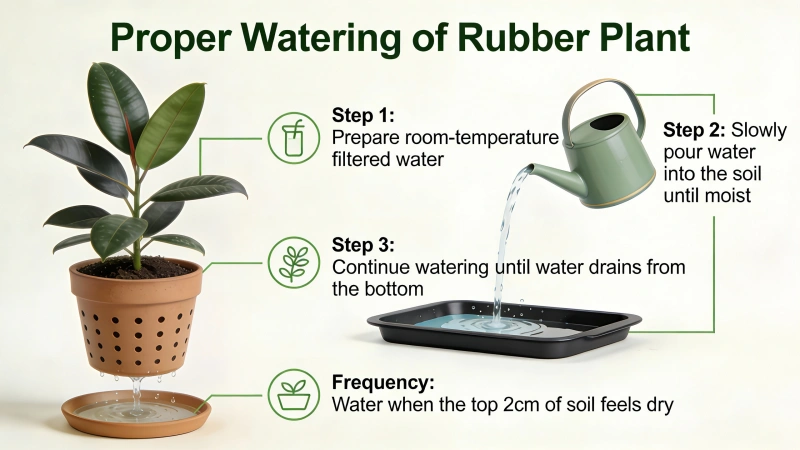
Stick your finger 1-2 inches into the soil. If it feels dry, water. If there’s any moisture, wait a few more days.
Method 2: The Weight Test
Lift the pot. Dry soil is noticeably lighter than wet soil. Once you get the hang of this, you’ll know at a glance.
| Season | Typical Frequency | Notes |
|---|---|---|
| Spring | Every 7-10 days | Growth begins; increase gradually |
| Summer | Every 5-7 days | Most active growth period |
| Fall | Every 10-14 days | Growth slows down |
| Winter | Every 2-3 weeks | Near dormant; water sparingly |
How to Water Properly
-
- Water thoroughly until it drains from the bottom
- Wait 30 minutes, then empty the saucer
- Never let your plant sit in standing water
- Use room-temperature water
💬 What Real Rubber Plant Owners Say About Watering
I’m not the only one who struggled with watering. This discussion from the r/houseplants community shows just how common this confusion is:
Hello fellow plant parents! I just bought this rubber plant from a nursery. Any suggestions about how the soil should be if I keep it indoors, how often should i water it and how much sunlight?
by inhouseplants
As you can see from the comments, the consensus is clear: let the soil dry out between waterings. Most experienced plant owners water their rubber plants every 7-14 days, but always check the soil first rather than following a rigid schedule.
3. Soil and Pot Selection
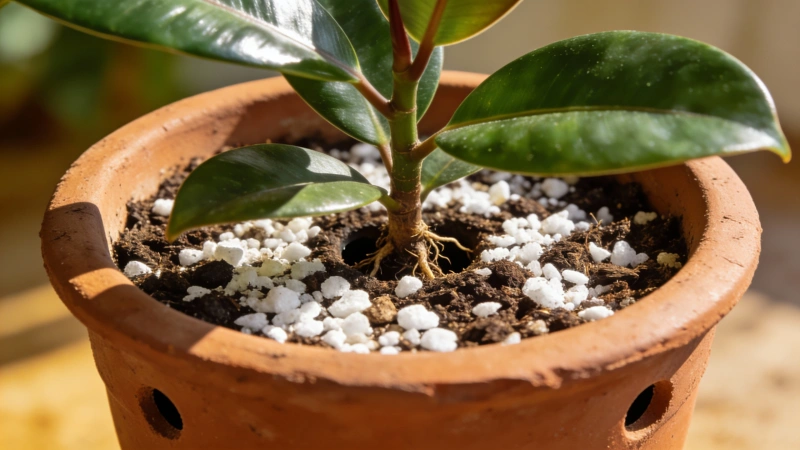
Good drainage is non-negotiable. Here’s what I use:
Best Soil Mix
- 60% indoor potting soil
- 30% perlite
- 10% orchid bark or coarse sand
You can also use a pre-made “well-draining” indoor plant mix and add extra perlite.
Pot Requirements
- ✅ Drainage holes are mandatory—no exceptions
- ✅ Terracotta pots (breathable, helps soil dry faster)
- ✅ Size 1-2 inches larger than the root ball
- ❌ Avoid decorative pots without drainage
- ❌ Avoid oversized pots (soil stays wet too long)
4. Temperature and Humidity
Temperature
- Ideal range: 60-80°F (15-27°C)
- Minimum tolerance: 50°F (10°C)
- Avoid: Cold drafts, heating vents, and AC blasts
Important: Rubber plants hate sudden temperature changes. I once kept mine near the front door to “greet guests.” Every time we opened the door in winter, cold air would hit it. It dropped five leaves in one month. Lesson learned—keep it away from drafty areas.
Humidity
Good news: rubber plants aren’t humidity divas. Average household humidity (40-60%) works fine. You don’t need a humidifier, though occasional misting won’t hurt.
5. Fertilizing and Leaf Care
Fertilizing Schedule
- Spring and Summer: Once a month
- Fall and Winter: Don’t fertilize
Use a balanced liquid fertilizer (like 10-10-10) diluted to half strength. Less is more—over-fertilizing can burn the roots.
Leaf Care: The Secret to Glossy Leaves
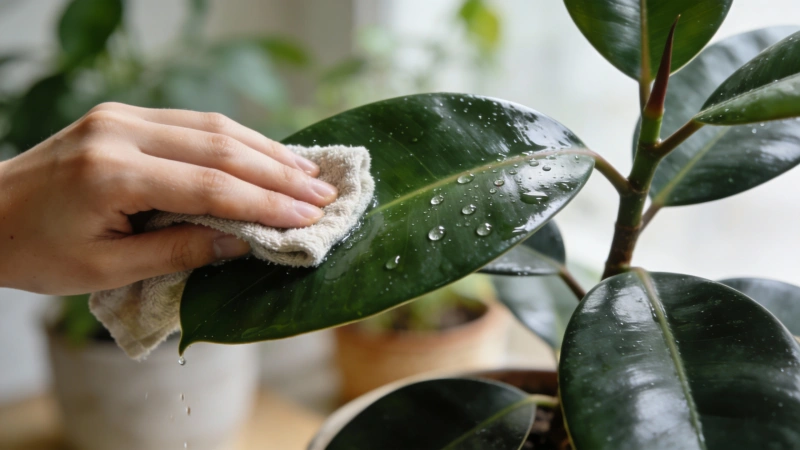
Rubber plant leaves are dust magnets. That thick, waxy surface looks gorgeous when clean but dull when dusty. More importantly, dust blocks light and clogs the pores plants use to breathe.
How to clean:
- Use a damp, soft cloth
- Wipe both the top and bottom of each leaf
- Do this every 2 weeks
- Optional: Add a drop of milk to the water for extra shine
My 3-Year Journey: From Near-Death to Successful Propagation
Let me share exactly what happened with my rubber plant—including all my mistakes.
The Beginning (April 2022)
I bought a Burgundy rubber plant from a local nursery for about $25. It was about 2 feet tall with 8 gorgeous deep purple-red leaves. The employee said, “These are super easy—just water it and you’re good.”
I put it in a decorative ceramic pot (no drainage hole, because it looked nice) near a north-facing window. I watered it every few days because the summer heat made me think it was thirsty.
The Disaster (Late Summer 2022)
Four months later, things fell apart:
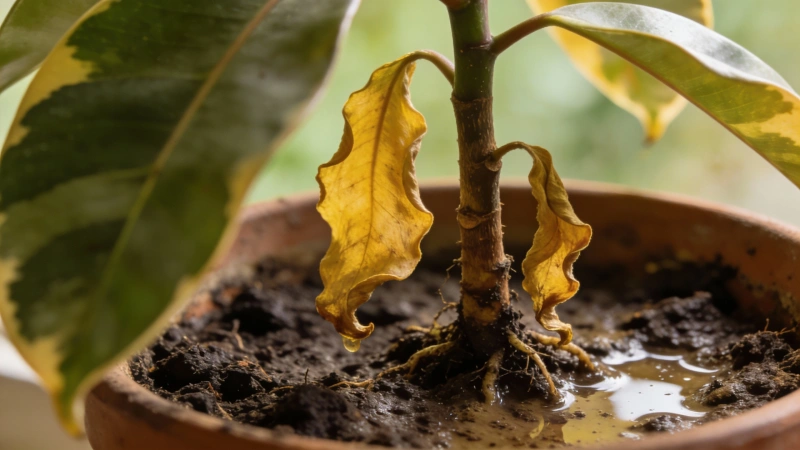
- Six leaves turned yellow, one by one
- They drooped, then dropped off completely
- The plant looked “leggy”—just a bare stem with a few leaves at the top
- One stem base felt soft and mushy
My reaction? I watered it more. I thought it was thirsty.
That was exactly wrong.
The Turning Point
I finally did some real research and discovered I was drowning my plant. Here’s what I changed:
- Stopped watering immediately and let the soil dry out completely
- Unpotted the plant and checked the roots—some were brown and mushy (root rot confirmed)
- Cut away all rotted roots with clean scissors
- Repotted into a terracotta pot with drainage holes and fresh, well-draining soil
- Moved it to a south-facing window with sheer curtains
- Started watering only when the top 1-2 inches of soil were dry
- Began cleaning the leaves every two weeks
The Results
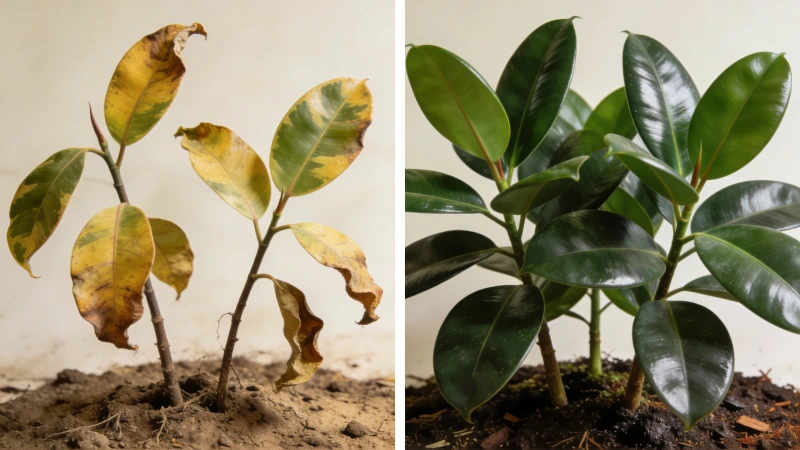
| Metric | August 2022 | December 2024 |
|---|---|---|
| Height | ~2 feet | ~5 feet |
| Leaf count | 2 remaining | 20+ healthy leaves |
| New growth/year | 0 | 15+ new leaves |
| Overall appearance | Leggy, bare stem | Full and bushy |
| Propagation | N/A | 2 successful babies! |
What I Learned
Rubber plants are “easy” because they tolerate neglect—not because they tolerate overcare. The less I fussed over my plant, the better it did.
Common Problems and How to Fix Them
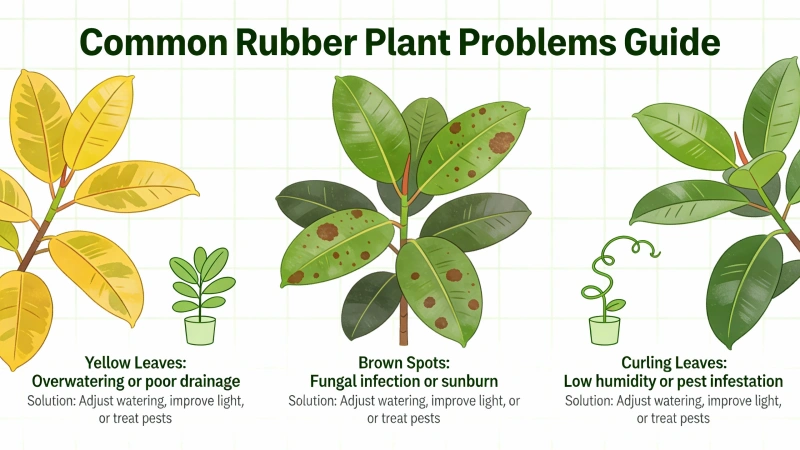
Here’s a quick reference guide for diagnosing rubber plant issues:
| Problem | Likely Cause | Solution |
|---|---|---|
| Yellow leaves | Overwatering | Let soil dry completely; check for root rot |
| Dropping leaves | Temperature shock or overwatering | Move away from drafts; adjust watering |
| Curling leaves | Under or overwatering | Check soil moisture; adjust accordingly |
| Brown spots | Sunburn or root rot | Move from direct sun; check roots |
| Leggy growth | Insufficient light | Move to brighter location |
| Pale leaves | Too much direct sun or too little light | Find the right balance |
| Sticky leaves | Pest infestation (scale, mealybugs) | Wipe with diluted neem oil |
About Root Rot
Root rot is the most serious problem rubber plants face—and it’s almost always caused by overwatering.
Signs:
- Stem base feels soft or mushy
- Foul smell from the soil
- Yellow leaves that keep appearing despite letting soil dry
Treatment:
- Remove plant from pot immediately
- Cut away all brown, mushy roots with clean scissors
- Let roots air dry for 24 hours
- Repot in fresh, dry soil with good drainage
- Don’t water for at least a week
💬 Real Troubleshooting: How the Community Diagnoses Problems
Figuring out what’s wrong with your rubber plant can be tricky. This thread from r/plantclinic shows how experienced plant owners help each other diagnose issues:
I’ve had this rubber plant for 4 months now, but it has not grown a single leaf. What am I doing wrong?
byu/Pain_for_Breakfast inplantclinic
Notice how multiple commenters often identify the same issue—it reinforces what we discussed above about overwatering being the most common culprit for rubber plant problems.
Pruning and Shaping
Rubber plants can get tall—up to 10 feet indoors. Pruning helps control height and encourages bushier growth.
When to Prune
- When the plant gets too tall for your space
- When it’s getting leggy with bare lower stems
- Spring is the best time (start of growing season)
How to Prune for Bushier Growth
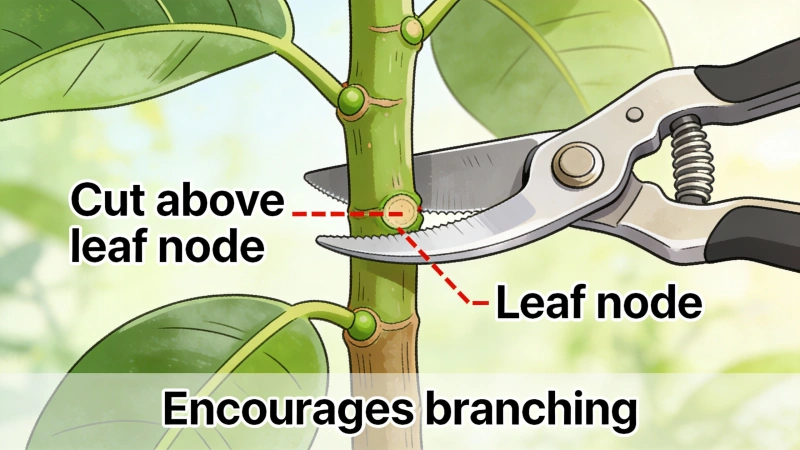
- Cut just above a leaf node (about 1/4 inch above)
- The plant will branch out below the cut—often producing 2 new stems
- Use clean, sharp pruning shears
Handling the Milky Sap
Warning: When you cut a rubber plant, it releases a milky white latex sap. This sap:
- Can irritate skin (especially if you have latex allergies)
- Can damage furniture and floors if it drips
- Is mildly toxic if ingested
Always wear gloves when pruning. Wipe the cut with a damp cloth to stop the sap flow, and wash your hands thoroughly afterward.
If you’re interested in Ficus pruning techniques, my guide on how to care for fiddle leaf fig goes into more detail on shaping and branching—though be warned, fiddle leaf figs are much pickier!
Propagation: Make More Plants for Free
One of the best things about rubber plants is how easy they are to propagate. I’ve successfully grown two new plants from cuttings.
Method 1: Water Propagation (Easiest)
- Take a cutting: Cut a 6-inch section of healthy stem, just below a leaf node
- Remove lower leaves: Keep only 2-3 leaves at the top
- Place in water: Submerge the cut end in a jar of clean water
- Change water weekly: Keep it fresh to prevent rot
- Wait for roots: This takes 4-6 weeks
- Transplant: Once roots are 2-3 inches long, plant in soil
Method 2: Soil Propagation
- Take a cutting as described above
- Let the cut end dry for an hour (to prevent rot)
- Dip in rooting hormone (optional but helpful)
- Plant in moist, well-draining soil
- Cover with a plastic bag to maintain humidity
- Place in bright, indirect light
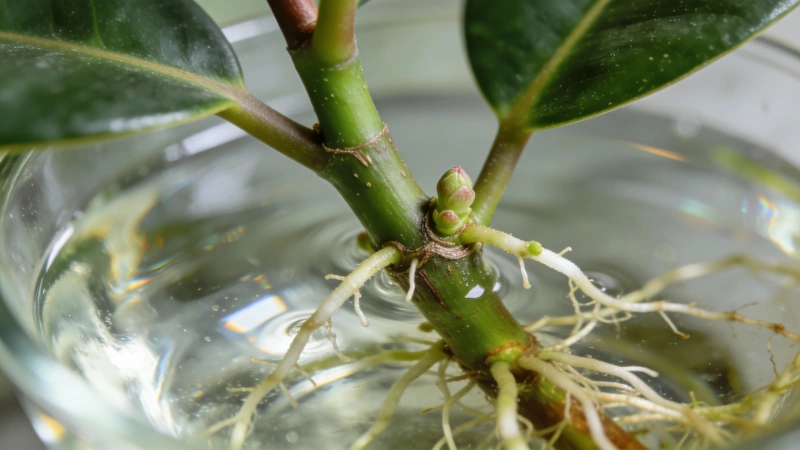
My water propagation took about 5 weeks to show roots. A couple of leaves yellowed and dropped during the process—don’t panic if this happens. It’s normal.
If you enjoy propagation, check out my guide on how to care for ZZ plant. ZZ plants propagate differently (and much more slowly), but it’s a fun project if you have patience.
Is Rubber Plant Toxic to Pets?
Yes, rubber plants (Ficus elastica) are mildly toxic to cats and dogs.
Important Distinction ⚠️
There’s often confusion between two plants commonly called “rubber plant”:
- Ficus elastica (this article’s subject) – Toxic to pets
- Peperomia obtusifolia (Baby Rubber Plant) – Non-toxic to pets
Make sure you know which one you have!
Why It’s Toxic
According to the ASPCA, Ficus elastica contains ficin (a proteolytic enzyme) and ficusin (a psoralen) that can cause irritation.
Symptoms in Pets
- Drooling
- Vomiting
- Diarrhea
- Loss of appetite
- Skin irritation (from contact with sap)
The good news: rubber plant toxicity is usually mild and rarely life-threatening. But it’s still uncomfortable for your pet.
How to Keep Pets Safe
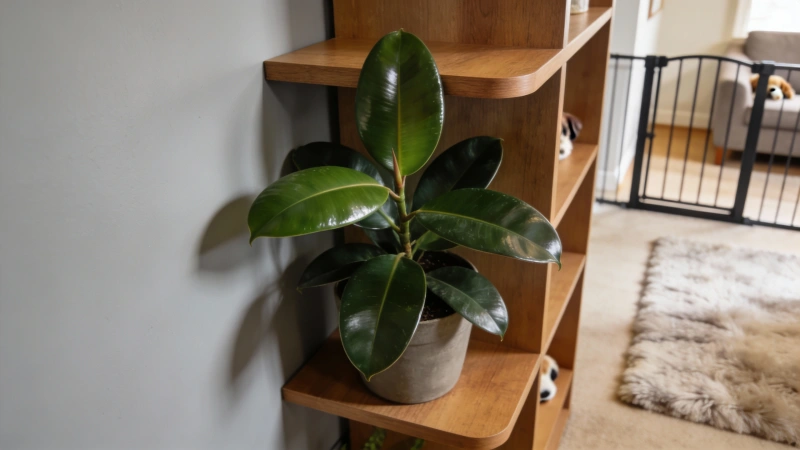
- Place the plant on a high shelf or plant stand
- Use a hanging planter
- Keep it in a room your pet doesn’t access
- If your pet frequently chews plants, consider a different plant
If you have pets and want a completely non-toxic alternative, check out my guide on how to care for a spider plant. Spider plants are 100% safe for cats and dogs.
Rubber Plant vs. Fiddle Leaf Fig
I often get asked which Ficus to start with. Here’s my honest comparison:
| Factor | Rubber Plant | Fiddle Leaf Fig |
|---|---|---|
| Light tolerance | Flexible | Very picky |
| Watering forgiveness | Tolerates some neglect | Hates inconsistency |
| Reaction to moving | Mild stress | Major leaf drop |
| Growth rate | Moderate to fast | Slower |
| Price | Usually cheaper | Often pricier |
| Overall difficulty | Beginner-friendly | Intermediate |
My recommendation: If you’re new to houseplants, start with a rubber plant. Build your confidence, learn the basics, and then graduate to the fiddle leaf fig when you’re ready for a challenge.
Helpful Video Guide
Want to see rubber plant care in action? This video covers the basics nicely:
Frequently Asked Questions
How often should I water my rubber plant?
Every 7-10 days in spring and summer, every 2-3 weeks in fall and winter. But always check the soil first—water only when the top 1-2 inches are dry. The schedule varies based on your home’s conditions.
Why are my rubber plant leaves turning yellow?
Yellow leaves almost always mean overwatering. Stop watering, let the soil dry out completely, and check for root rot. If the stem base feels soft, you may need to repot with fresh soil after removing rotted roots.
Is rubber plant toxic to cats and dogs?
Yes, Ficus elastica is mildly toxic to pets. The sap contains irritants that can cause vomiting, drooling, and diarrhea. Keep it away from curious animals, or choose a pet-safe plant instead.
How big will my rubber plant get indoors?
With good care, rubber plants can reach 6-10 feet tall indoors over several years. You can control height through regular pruning.
How do I make my rubber plant bushy instead of tall?
Prune the top to encourage branching. Cut just above a leaf node, and new growth will emerge below the cut. Regular pruning creates a fuller, bushier plant.
Can rubber plants survive in low light?
They can survive in medium-low light, but growth will be slow and the plant may become leggy. Bright, indirect light produces the best growth and leaf development.
Final Thoughts
After three years with my rubber plant, here’s what I’ve learned:
- Water less — Let soil dry out partially between waterings
- Give it light — Bright, indirect is best
- Ensure drainage — Pots must have holes
- Clean the leaves — It makes a visible difference
- Don’t move it often — They don’t like change
The rubber plant has earned its reputation as the “easier Ficus.” Give it basic care, and it will reward you with those stunning, glossy leaves that make any room feel more alive.
Happy growing! 🌿
This article was created by a professional team. AI tools were used during the research and writing process to enhance efficiency and quality. All information has undergone manual verification and editing to ensure accuracy and practicality. We are committed to providing readers with objective and valuable content.
Publisher::meiruth558@gmail.com,Please indicate the source when reposting:https://gardeningtoolsgarden.com/how-to-care-for-a-rubber-plant/
