
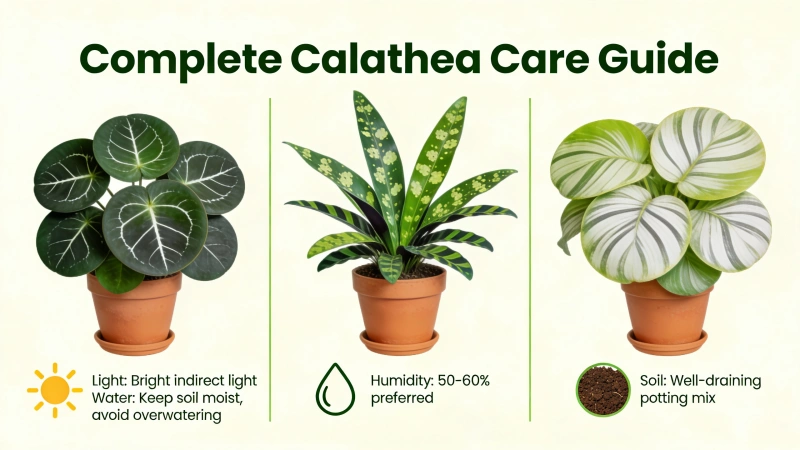

I still remember standing in my local plant shop, completely mesmerized by a Calathea Medallion. Those dark green leaves with their pink brushstroke patterns and purple undersides—I had to have it. “It’s not too difficult,” the shop owner assured me.
Three weeks later, the leaf edges were brown and crispy. A month in, the bottom leaves turned yellow. By winter, the whole plant was curling up like it was trying to escape.
If you’ve ever watched your Calathea’s beautiful leaves turn into a crispy, brown mess and wondered what you’re doing wrong—I get it. These plants have a reputation for being “drama queens,” and honestly? They’ve earned it.
But here’s what I’ve learned after 18 months of trial, error, and eventually success: Calathea isn’t actually that hard. It just needs you to understand a few things that most care guides gloss over.
In this guide, I’ll share everything I learned going from one struggling plant to a thriving collection of four different Calathea varieties. We’ll cover humidity (the real game-changer), proper watering technique, light requirements, and how to diagnose common problems before they kill your plant.
Quick Answer: Calathea Care Basics
Calathea care comes down to five essentials:
- Humidity: Keep it above 50%—use a humidifier, not just misting
- Water: Only when the top inch of soil is dry; use filtered or distilled water
- Light: Bright indirect light only—direct sun burns the leaves
- Temperature: 65-85°F (18-30°C), away from drafts and vents
- Water quality: Avoid tap water—the minerals cause brown tips
Below, I’ll share exactly how I learned these lessons the hard way—and how you can skip my mistakes.
Calathea Care at a Glance
| Care Factor | What to Do | Common Mistake |
|---|---|---|
| Humidity | Maintain 50-65% humidity | Thinking misting is enough |
| Watering | When top 1″ of soil is dry | Fixed weekly schedule |
| Water Type | Filtered or distilled water | Using tap water directly |
| Light | Bright, indirect light | Direct sunlight (causes burn) |
| Temperature | 65-85°F, stable conditions | Near heating/AC vents |
Step 1: Humidity—The #1 Game Changer
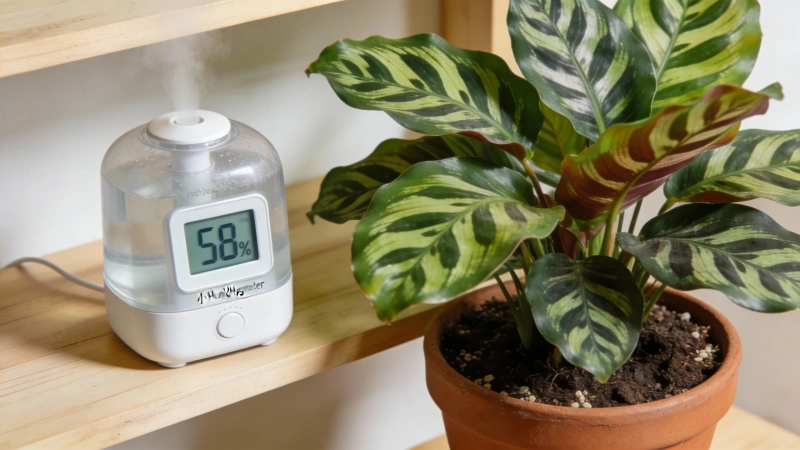
This is the single most important factor in Calathea care. If you take nothing else from this article, remember this: humidity is everything.
According to Wikipedia, Calathea plants are native to tropical rainforests in South America, where humidity levels often exceed 80%. Your average American home? About 30-40% humidity—and as low as 20% in winter with the heat running.
That mismatch is why so many Calatheas struggle indoors.
My Humidity Wake-Up Call
When my Calathea’s leaves started getting crispy edges, I assumed I wasn’t watering enough. Wrong. I bought a cheap hygrometer (humidity meter), and discovered my living room humidity was sitting at 28%.
Target humidity for Calathea: 50-65% (some varieties like Orbifolia prefer even higher)
How to Actually Increase Humidity
What works:
- Humidifier — The most effective solution by far. A small tabletop humidifier near your plants makes a huge difference.
- Pebble tray — Fill a tray with pebbles and water, set your pot on top (not touching the water). As water evaporates, it raises local humidity.
- Group your plants — Plants release moisture through transpiration. Grouping them together creates a more humid microclimate.
- Bathroom or kitchen placement — These rooms naturally have higher humidity from showers and cooking.
What doesn’t work: Misting. I know it’s satisfying to spray your plants, but misting only wets the leaves temporarily—it doesn’t actually raise the ambient humidity. Save yourself the effort.
If you’re setting up a humidity station for your Calathea, you might also want to check out my guide on How to Care for Chinese Money Plant—another humidity-loving beauty that pairs perfectly in the same corner.
💡 Pro tip: Get a digital hygrometer (around $10-15). It’s the single best investment I made for my Calathea. You can’t fix what you can’t measure!
Step 2: Watering—Quality Matters More Than Quantity
Here’s what nobody told me when I started: the type of water you use matters just as much as how often you water.
Tap water contains chlorine, fluoride, and dissolved minerals. For most houseplants, that’s fine. For Calathea? These chemicals build up in the soil over time and burn the leaf edges. That’s why you can water “perfectly” and still end up with brown tips.
The Water Quality Fix
Best options (in order):
- Distilled water
- Filtered water (Brita or similar)
- Rainwater
- Tap water left out 24+ hours (lets chlorine evaporate, but minerals remain)
I switched from tap water to filtered water about six weeks into my Calathea journey. The difference was dramatic—new leaves came in without brown edges for the first time.
When to Water
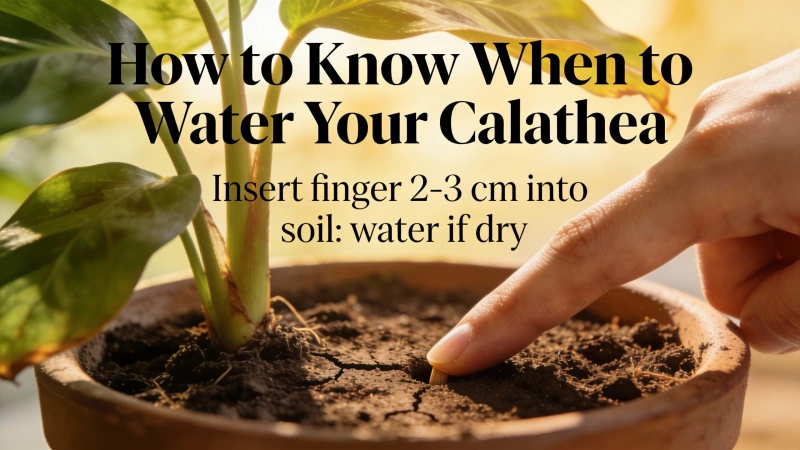
The rule: Water when the top inch of soil feels dry. Not on a schedule—the actual soil moisture.
Stick your finger about an inch into the soil:
- Still moist? Wait a day or two.
- Dry? Water thoroughly until it drains from the bottom.
- Never let your Calathea sit in standing water.
Seasonal Watering Guide
| Season | Frequency | Notes |
|---|---|---|
| Spring | Every 7-10 days | Growth resumes—watch for increased thirst |
| Summer | Every 5-7 days | Higher temps = faster drying |
| Fall | Every 10-14 days | Start reducing frequency |
| Winter | Every 2-3 weeks | Growth slows—easy to overwater |
Remember: These are estimates. Always check the soil first!
Step 3: Light—The Goldilocks Zone
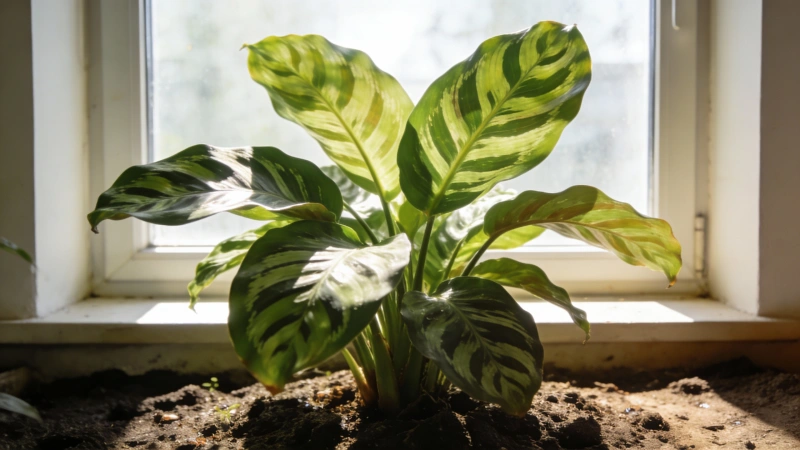
Calathea wants bright light—but absolutely no direct sun touching its leaves. Think of where they grow in nature: on the rainforest floor, under a canopy of taller trees. They get filtered, dappled light, not direct rays.
My Lighting Mistake
When I first got my Calathea, I placed it near a south-facing window, thinking “more light = better growth.” Within a week, the leaves started curling during the afternoon. Some even got bleached, faded patches.
I moved it to an east-facing window, about 3 feet back from the glass. Problem solved within days.
Best Light Conditions
- Ideal: East or north-facing windows, or a few feet back from brighter windows
- Acceptable: West-facing windows with sheer curtains
- Avoid: Direct afternoon sun from south or west windows
- Signs of too much light: Faded patterns, curling leaves, brown scorch marks
- Signs of too little light: Leggy growth, pale leaves, slow growth
Darker-leaved varieties (like Calathea Dottie) can tolerate lower light than lighter-patterned ones.
Step 4: Temperature and Placement
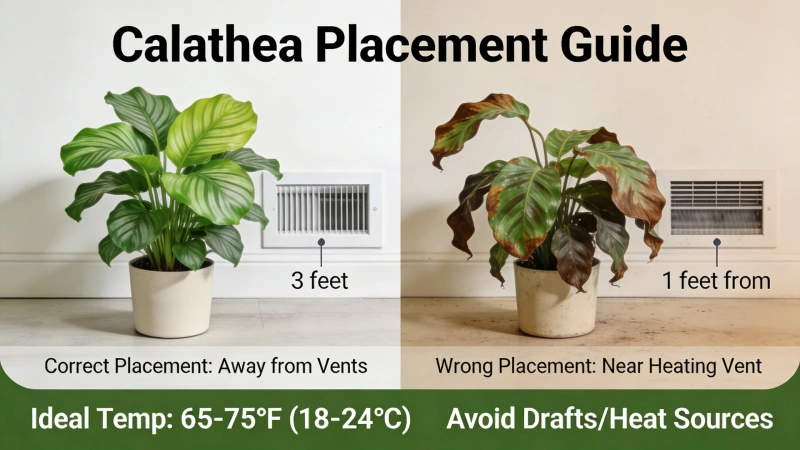
Ideal temperature: 65-85°F (18-30°C)
Good news: if your home is comfortable for you, it’s probably fine for your Calathea temperature-wise. The bigger issue is stability—these plants hate sudden changes.
Placement Mistakes to Avoid
- Near heating vents: The hot, dry air will devastate your Calathea faster than anything else. I learned this the hard way when my apartment’s heat kicked on in November.
- Near AC units: Cold drafts stress the plant and can cause leaf drop.
- Drafty windows or exterior doors: Temperature fluctuations cause curling and browning.
- On top of radiators or heat sources: This dries out the soil unevenly and cooks the roots.
The golden rule: Once your Calathea is happy somewhere, don’t move it. These plants adjust slowly to new environments and resent being relocated frequently.
Step 5: Soil and Fertilizer
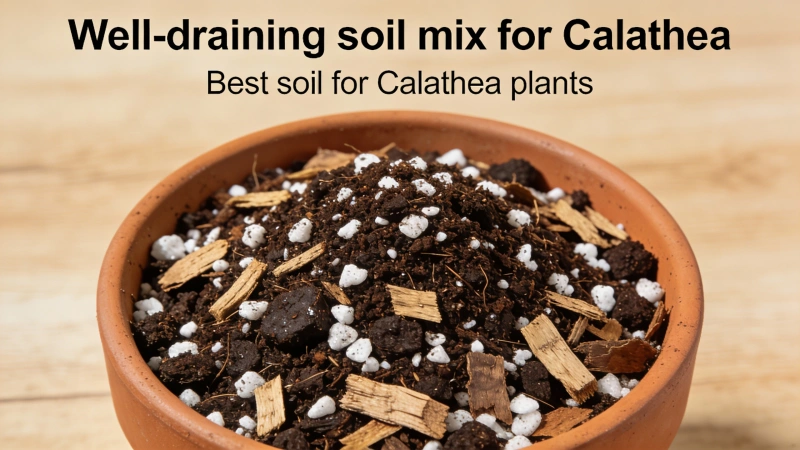
The Right Soil Mix
Calathea needs soil that stays moist but drains well—a tricky balance. Standard potting soil often holds too much water, which leads to root rot.
My formula:
- 50% regular potting mix
- 25% perlite (for drainage and aeration)
- 25% orchid bark (adds structure, prevents compaction)
Alternatively, you can use a pre-made African Violet mix, which has similar drainage properties.
Fertilizing Tips
- When: Only during the growing season (spring through early fall)
- Frequency: Once a month maximum
- Strength: Dilute to 1/4 to 1/2 the recommended dose
- Type: Balanced liquid houseplant fertilizer
- Winter: Don’t fertilize at all—the plant is dormant
Warning: Over-fertilizing causes salt buildup in the soil, which leads to—you guessed it—brown leaf tips. When in doubt, skip the feeding. Calatheas aren’t heavy feeders.
My Real Experience: From Nearly Dead to Thriving
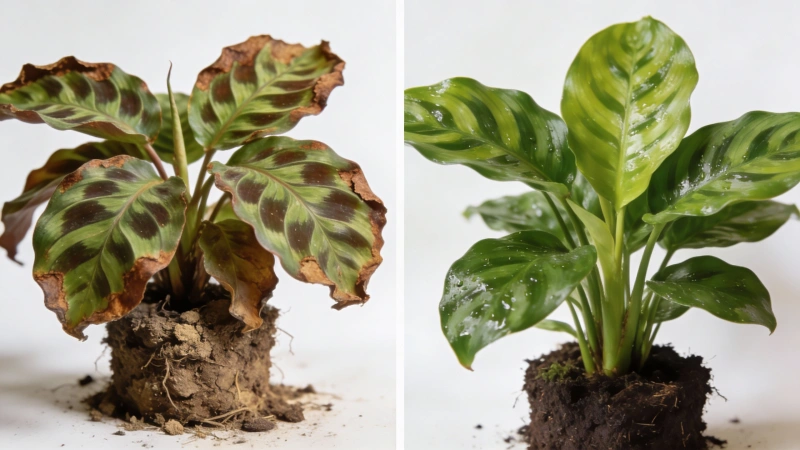
The Starting Point (October 2023)
I bought my first Calathea Medallion at a local plant shop. It looked stunning—dark green leaves with pink markings, that deep purple underside. The shop owner said it wasn’t too difficult.
I placed it near my south-facing window. Watered it once a week with tap water, like my other plants. I was confident.
What Went Wrong
Week 2: Brown, crispy edges appeared on several leaves. I assumed it needed more water, so I watered more frequently.
Week 4: The bottom leaves turned yellow and mushy. Now I was confused—was it too much water or too little?
Week 6: On a whim, I bought a $12 hygrometer. My living room humidity? 28%. I finally understood the problem.
November (heat kicks on): Things got worse. Leaves started curling tightly. Some dropped entirely. I honestly considered giving up on this “drama queen.”
Comment
byu/Sweet-Title4842 from discussion
incalatheas
How I Fixed It
Instead of giving up, I got serious about research. I joined plant forums, read dozens of articles, and experimented. Here’s what actually worked:
- Bought a small tabletop humidifier — Kept it running near my plants, targeting 55-60% humidity
- Switched to filtered water — Stopped using tap water completely
- Moved to an east-facing window — Away from the afternoon sun and heating vents
- Grouped my plants together — Created a little humidity microclimate
- Started checking soil moisture — Finger test instead of a schedule
The Results
- Within 1 week: Leaves stopped curling
- Within 1 month: First new leaf without brown edges
- Within 6 months: 8 new healthy leaves, plant doubled in size
- 18 months later: I now own 4 different Calathea varieties (Medallion, Rattlesnake, Orbifolia, Ornata)—all thriving
What I Learned
The moment I stopped treating Calathea like my other houseplants and started respecting its humidity needs, everything changed.
This experience taught me that most “dying” houseplants can be saved with the right diagnosis. I used a similar troubleshooting approach when I wrote about How I Saved My Dying Dracaena.
Troubleshooting: What’s Wrong With My Calathea?
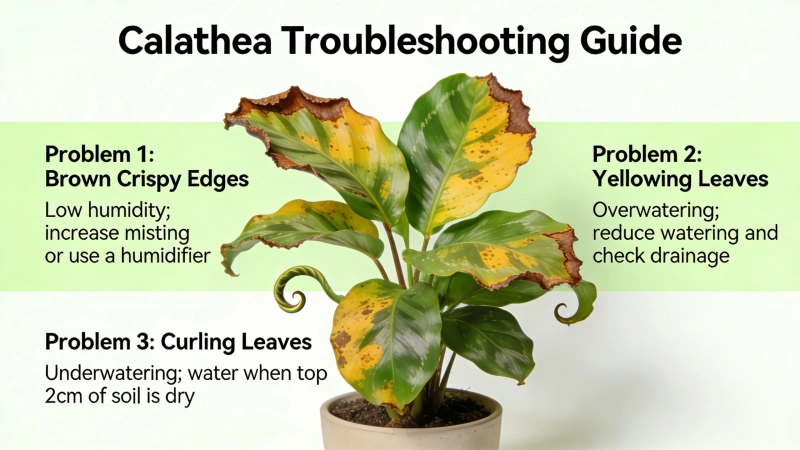
Calathea is actually great at communicating when something’s wrong—you just need to know how to read the signs.
| Symptom | Most Likely Cause | Solution |
|---|---|---|
| Brown, crispy leaf edges | Low humidity or tap water minerals | Increase humidity to 50%+; use filtered water |
| Leaves curling inward | Underwatering or low humidity | Water thoroughly; add humidifier |
| Yellow leaves (bottom) | Overwatering / root rot | Let soil dry more; check drainage |
| Faded leaf patterns | Too much direct light | Move to indirect light location |
| Drooping leaves | Underwatering or cold damage | Check soil moisture; move away from cold |
| Fine webbing on leaves | Spider mites | Wash leaves; increase humidity; treat with neem oil |
| New leaves damaged when unfurling | Humidity fluctuations or pests | Stabilize environment; check for hidden pests |
The troubleshooting process for houseplants is often similar—identify the symptom, find the cause, fix the environment. I break down this diagnostic approach in detail in How I Saved My Dying Aloe Vera.
5 Calathea Care Mistakes I Made (So You Don’t Have To)
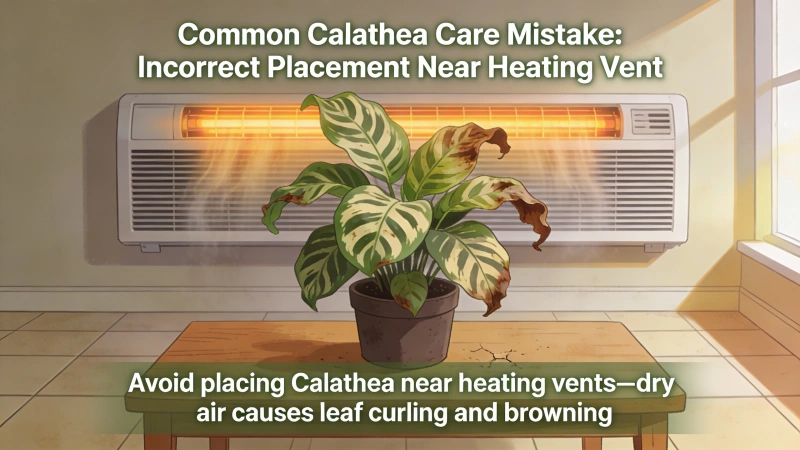
- Thinking misting was enough for humidity
❌ Spraying leaves daily to “increase humidity”
✅ Misting only wets leaves temporarily—use a humidifier for real results - Using tap water without a second thought
❌ Watering straight from the faucet
✅ Tap water minerals cause brown tips—use filtered or distilled water - Placing near heating vents in winter
❌ Wanting to keep my plant “warm”
✅ Heating vents blast dry air—keep your Calathea far away! - Watering on a fixed schedule
❌ “Every Sunday I water my plants”
✅ Check the actual soil moisture—needs vary by season and environment - Chasing direct sunlight
❌ Putting it in my brightest south-facing window
✅ Calathea needs bright INDIRECT light—direct sun burns and fades the leaves
4 Stunning Calathea Varieties for Your Collection
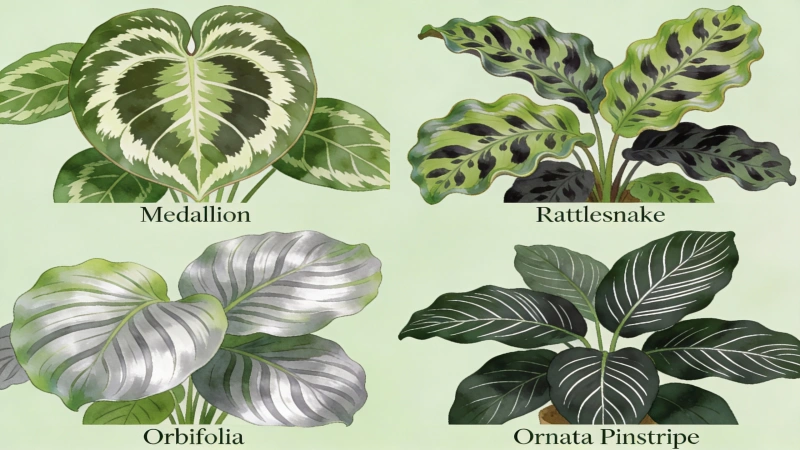
Once you’ve mastered the basics, you might want to expand your collection. Here are four of my favorites:
1. Calathea Medallion
The classic. Round leaves with dark green edges, lighter green patterns, and that signature purple underside. Great for beginners (relatively speaking).
2. Calathea Rattlesnake (Lancifolia)
Long, wavy leaves with dark green markings that look like snake skin. Burgundy undersides. Slightly more forgiving than some varieties.
3. Calathea Orbifolia
Large, round leaves with silvery-green stripes. Absolutely stunning—but needs higher humidity (60%+) than most.
4. Calathea Ornata (Pinstripe)
Dark green leaves with delicate pink or white pinstripes. Dramatic and elegant. Can tolerate slightly lower light.
Care tip: All Calathea varieties have essentially the same care requirements. Orbifolia is slightly more demanding on humidity, while darker-leaved varieties like Ornata can handle lower light.
Love Calathea? Try These Similar Plants
If you enjoy the look of Calathea but want to explore similar plants:
- Maranta (Prayer Plant): Same family, similar care, but generally more forgiving. Great stepping stone.
- Stromanthe Triostar: Pink, white, and green variegation with similar humidity needs.
- Snake Plant: If you want something with dramatic leaves but much lower maintenance, this is your plant.
For those who love Calathea’s look but want something more forgiving, the Snake Plant is incredibly low-maintenance. Check out my complete guide on How to Care for a Snake Plant.
Great News for Pet Owners!
Calathea is non-toxic to both cats and dogs.
According to the ASPCA’s Toxic and Non-Toxic Plants Database, Calathea plants are safe for households with pets. This makes them one of the best options if you have curious cats or dogs who like to investigate (or nibble) your plants.
That said, eating any plant material can cause mild stomach upset, so it’s still best to keep them out of reach if your pet is particularly mouthy.
Watch: Calathea Care Visual Guide
Sometimes it helps to see proper care techniques in action. This video does a great job covering the essentials:
Frequently Asked Questions
How often should I water my Calathea?
There’s no fixed schedule—it depends on your environment. Use the finger test: water only when the top inch of soil feels dry. This typically means every 7-10 days in summer and every 2-3 weeks in winter, but always check first rather than watering on autopilot.
Why are my Calathea leaves turning brown on the edges?
Brown, crispy edges are almost always a humidity issue or a water quality issue. Your Calathea needs 50%+ humidity (most homes are 30-40%), and tap water minerals can build up in the soil. Get a humidifier and switch to filtered or distilled water—these two changes usually solve the problem.
Can I use tap water for my Calathea?
It’s not recommended. Tap water contains chlorine, fluoride, and minerals that accumulate in the soil and cause brown leaf tips. Use filtered water, distilled water, or at minimum, let tap water sit out for 24 hours before using (though minerals will remain).
Why are my Calathea leaves curling?
Curling leaves usually indicate dehydration—either from underwatering or low humidity. The plant curls its leaves to conserve moisture. Check if the soil is dry and water thoroughly. Also check your humidity levels and increase if below 50%. Leaves typically unfurl within 24-48 hours once conditions improve.
Is Calathea toxic to cats and dogs?
No! Calathea is non-toxic to both cats and dogs according to the ASPCA. It’s one of the safest decorative houseplants for pet owners, though eating any plant material may cause mild stomach upset.
Why isn’t my Calathea growing?
Calathea are naturally slow to moderate growers—don’t expect rapid growth. If yours seems completely stagnant, check: light levels (too dark = no energy for growth), feeding schedule (needs monthly fertilizer in growing season), and whether it’s root-bound (may need repotting). Also remember that growth naturally slows or stops in winter.
Start Your Calathea Journey Today

Let me leave you with the three things that made the biggest difference in my Calathea journey:
- Humidity is non-negotiable. Get a humidifier. Seriously.
- Water quality matters more than you think. Switch to filtered or distilled water.
- Stability beats perfection. Find a good spot with indirect light, away from vents, and leave your plant there.
Calathea has a reputation for being difficult, but I’ve learned it’s really just specific. Once you understand its tropical origins and give it consistent conditions, these plants reward you with some of the most stunning foliage in the houseplant world.
Eighteen months ago, I almost gave up on my first Calathea. Today, I have four healthy plants and counting. If I can do it, you can too.
Got questions about your Calathea? Drop a comment below—I’d love to help!
Happy growing! 🌿
This article was created by a professional team. AI tools were used during the research and writing process to enhance efficiency and quality. All information has undergone manual verification and editing to ensure accuracy and practicality. We are committed to providing readers with objective and valuable content.
Publisher::meiruth558@gmail.com,Please indicate the source when reposting:https://gardeningtoolsgarden.com/how-to-care-for-calathea/
