

I killed my first three succulents within two months. Overwatered them, kept them in a dark corner, used the wrong soil—basically did everything wrong while thinking I was doing everything right.
If you’ve ever watched your succulent slowly turn to mush, stretch into a leggy mess, or just mysteriously die despite your best efforts, I know exactly how frustrating that is. Succulents are supposed to be “impossible to kill,” right? That’s what everyone says.
Here’s the thing I’ve learned after two years of trial and error: succulents are easy—but only if you understand the few critical things they actually need. Most of the common advice is either too vague or just plain wrong.
After going from 3 dead plants to a thriving collection of 30+ healthy succulents, I’m sharing everything that actually works. In this guide, you’ll learn the exact watering method that prevents root rot, where to place your plants for best growth, the soil mix that makes a real difference, and how to multiply your collection for free through propagation.
Quick Answer: How to Care for Succulents
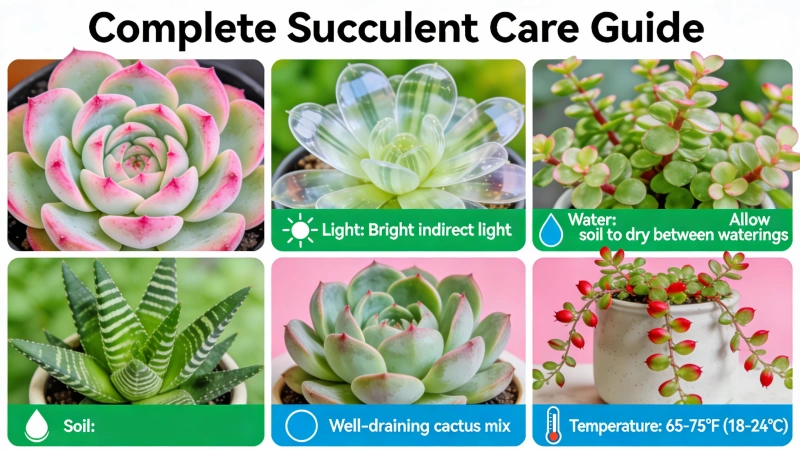
Succulent care comes down to five essentials:
- Water: Only when soil is completely dry (every 2-3 weeks typically)
- Light: 4-6 hours of bright, indirect light daily
- Soil: Well-draining succulent mix with added perlite
- Container: Always use pots with drainage holes
- Fertilizing: Monthly during spring/summer only
Below, I’ll explain exactly how I learned these lessons—and how you can skip the mistakes I made.
Succulent Care at a Glance
| Care Factor | What to Do | Common Mistake |
|---|---|---|
| Watering | Soak when soil is bone dry | Fixed weekly schedule |
| Light | 4-6 hours bright indirect | Dark corners or windowless rooms |
| Soil | Fast-draining succulent mix | Regular potting soil |
| Container | Pot with drainage hole | Cute but hole-free containers |
| Fertilizing | Monthly in growing season | Year-round feeding |
Step 1: Watering—The #1 Succulent Killer
Let me be direct: overwatering kills more succulents than anything else. This is where I went wrong with my first plants, and it’s probably why yours are struggling too.
The mistake I made? Watering on a schedule. “Every Sunday I water all my plants” seemed logical. But succulents don’t care about your calendar—they care about soil moisture.
The Right Way to Water Succulents
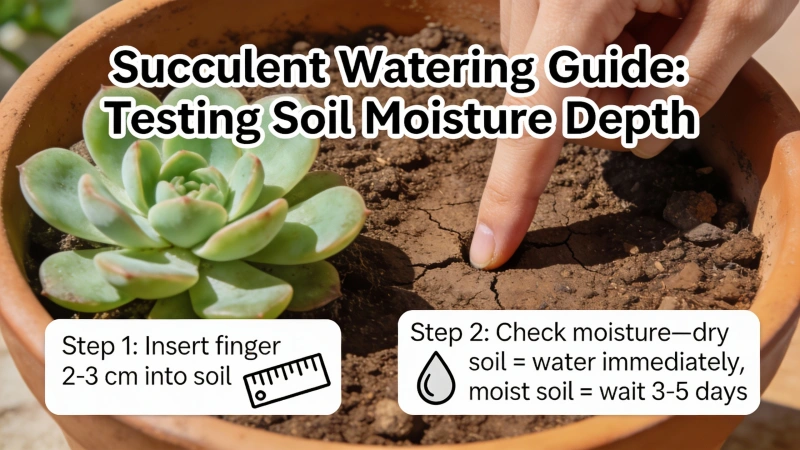
Use the “soak and dry” method: When the soil is completely dry (not just the surface—all the way down), water thoroughly until it drains from the bottom. Then wait until it’s completely dry again before watering.
The finger test: Stick your finger 1-2 inches into the soil. If there’s any moisture at all, wait. If it’s bone dry, water thoroughly.
For most homes, this means watering every 2-3 weeks in summer and every 4-6 weeks in winter. But your specific timing depends on your light, humidity, and pot size.
Reading Your Succulent’s Signals
I discovered that succulents actually tell you when they need water:
- Leaves slightly soft or less plump: Time to water
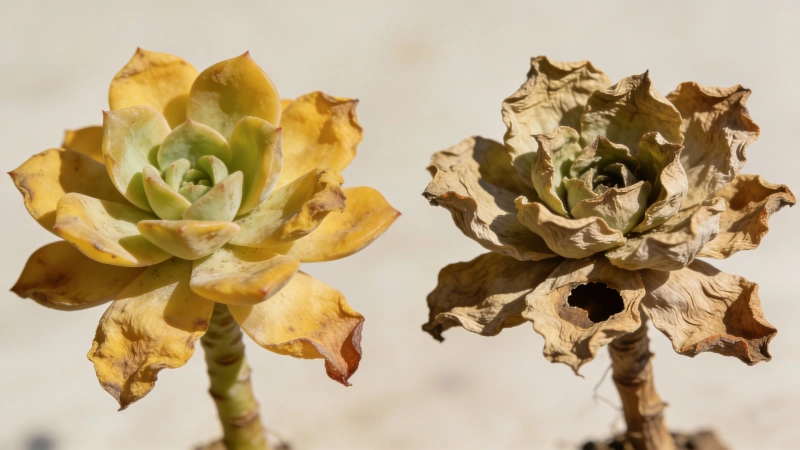
- Wrinkled, shriveled leaves: Underwatered—needs water now
- Yellow, mushy, translucent leaves: Overwatered—stop immediately
One thing I learned: the thicker the leaves, the less water they need. My Echeveria can go weeks without water, while my Aeonium shows droopy leaves when thirsty—and perks right back up after watering.
Seasonal Watering Guide
| Season | Frequency | What to Watch For |
|---|---|---|
| Spring | Every 2-3 weeks | Active growth starting |
| Summer | Every 1-2 weeks | Faster drying, peak growth |
| Fall | Every 2-3 weeks | Growth slowing down |
| Winter | Every 4-6 weeks | Dormant period—go easy! |
💡 Pro tip: Never use a spray bottle for watering. It only wets the surface and creates weak, shallow roots. Plus, wet leaves can lead to rot and mold. Always water the soil directly and thoroughly.
Step 2: Light—Finding the Sweet Spot
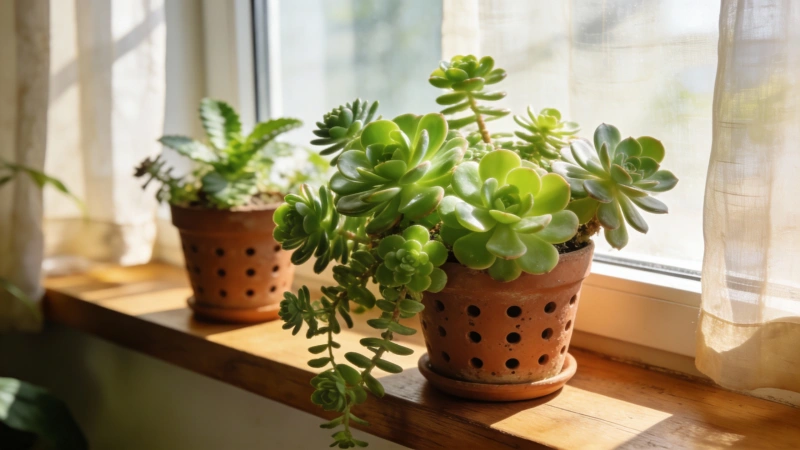
According to Wikipedia, succulents are native to arid regions around the world—places with intense sunlight and minimal rainfall. Indoors, they need at least 4-6 hours of bright light daily to thrive.
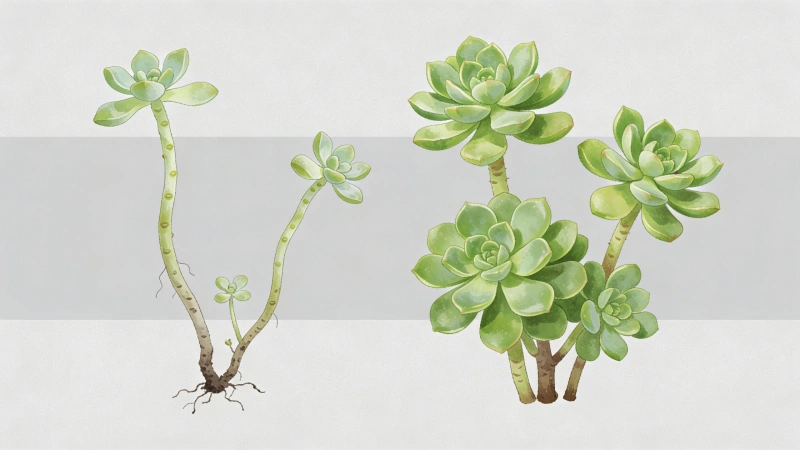
My first succulents sat on my desk near a north-facing window. They survived for a while, but they quickly became tall, stretched out, and leggy. The leaves were spaced far apart, and the whole plant looked weak and sad.
When I moved them to a south-facing window, the transformation was dramatic. Within weeks, the new growth was compact and healthy.
Signs Your Succulent Needs More Light
- Tall, stretched stems (called etiolation)
- Leaves spaced far apart on the stem
- Pale, faded color
- Leaning toward the light source
Best Light Conditions
- Ideal: South or west-facing window, 4-6 hours of bright light
- Acceptable: East-facing window (morning sun)
- Avoid: North windows, dark corners, windowless rooms
Good news sign: If your succulent’s leaf edges turn slightly red or pink, that’s “stress coloring”—a healthy sign that it’s getting plenty of light! This is completely normal and actually makes many varieties more beautiful.
Watch out for sunburn: If you’re moving a plant from low light to bright light, do it gradually over 1-2 weeks. Sudden exposure can cause brown or black patches on leaves.
Step 3: Soil—Drainage is Everything
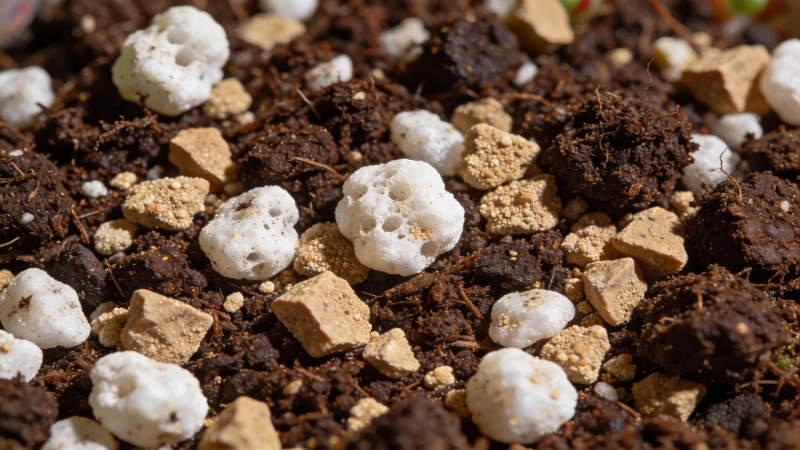
Never use regular potting soil for succulents. This was one of my biggest mistakes. Standard potting mix is designed to retain moisture—exactly what kills succulents.
Here’s what I didn’t understand at first: even if you water correctly, the wrong soil will stay wet for too long and rot the roots. The type of soil matters just as much as how often you water.
Best Soil Options
Easiest option: Buy a pre-made cactus/succulent mix at any garden center.
DIY option (what I use): Mix your own with this ratio:
- 50% regular potting soil
- 25% perlite
- 25% coarse sand or small gravel
The goal is soil that dries out within about a week. If your soil is still wet after 7-10 days, it needs more drainage material.
Container Requirements
Drainage holes are absolutely non-negotiable. I learned this the hard way with a beautiful ceramic pot that had no hole. The plant looked great for about two months, then suddenly rotted from the bottom up.
Best pot materials:
- Terra cotta: My top choice—porous, dries quickly, affordable
- Ceramic with drainage: Works well, just make sure there’s a hole
- Avoid: Glass containers, pots without holes, anything that traps water
Step 4: Temperature and Placement
Ideal temperature: 65-85°F (18-29°C) during the day. Most succulents are comfortable in the same temperatures you are.
The key is avoiding extremes and sudden changes:
- Avoid cold drafts: Don’t place near AC vents or drafty windows in winter
- Avoid heat sources: Keep away from radiators and heating vents
- Watch for frost: Below 40°F can damage most succulents; frost is fatal to many varieties
Once you find a good spot, leave them there. Succulents don’t like being moved around constantly. They take time to adjust to new environments.
Step 5: Fertilizing—Less is More
Succulents evolved in nutrient-poor soils, so they don’t need much fertilizer. In fact, over-fertilizing is more common than under-fertilizing.
My Fertilizing Routine
- When: Only during growing season (spring through early fall)
- Frequency: Once a month maximum
- Strength: Dilute to half the recommended dose
- Type: Balanced liquid fertilizer or succulent-specific formula
- Winter: Don’t fertilize at all—the plants are dormant
Signs of over-fertilizing: Brown leaf tips, white salt deposits on soil surface, weak leggy growth despite good light.
Step 6: Propagation—Free Plants Forever
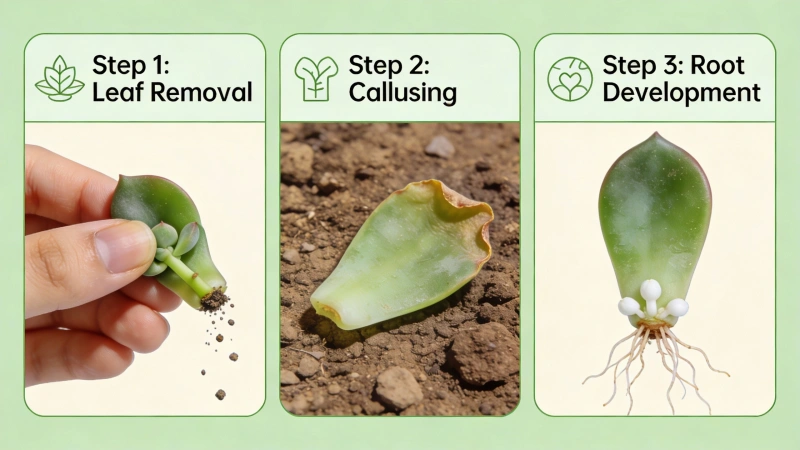
One of my favorite things about succulents is how easy they are to propagate. I’ve grown most of my collection from leaves and cuttings—completely free.
Leaf Propagation Method
- Choose a healthy leaf: Pick plump, firm leaves—avoid damaged or dried ones
- Remove it cleanly: Gently twist the leaf off the stem. Make sure you get the whole base—a torn leaf won’t root
- Let it callus: Set the leaf aside for 1-3 days until the end dries and forms a callus
- Place on soil: Lay the leaf on top of dry succulent soil (don’t bury it)
- Wait: Roots and tiny plants will develop in 2-4 weeks
- Mist occasionally: Once roots appear, mist lightly every few days
Stem Cutting Method
For faster results, stem cuttings work great:
- Cut a 3-4 inch stem with clean scissors
- Remove the bottom leaves to expose 1-2 inches of stem
- Let the cut end callus for 2-3 days
- Plant in dry succulent soil about 1 inch deep
- Wait a week before watering lightly
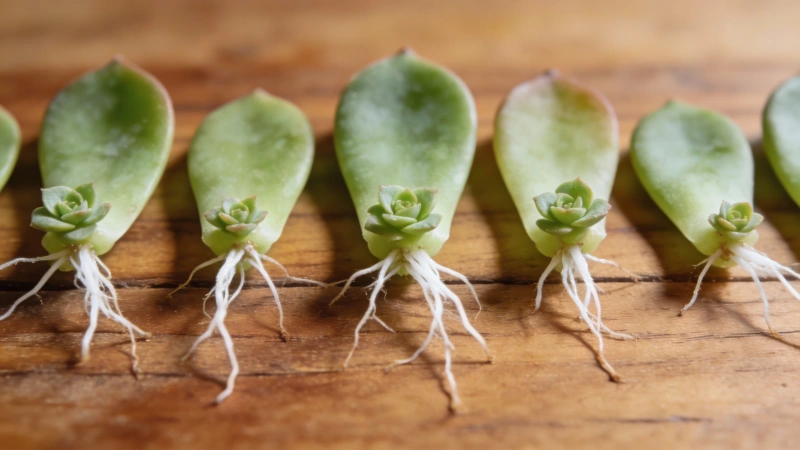
Success rates: My leaf propagation success rate improved from about 30% to 70% once I learned to take leaves cleanly and let them callus properly. Stem cuttings have an even higher success rate—close to 90% for me.
Best timing: Spring and summer during active growing season.
Not all succulents propagate from leaves. Aeoniums, for example, only work from stem cuttings. If your leaf isn’t producing anything after a month, try cuttings instead.
If you want more tips on propagating succulents, I share similar techniques in my guide on How I Saved My Dying Aloe Vera—aloe is a succulent too, and the propagation principles are the same!
My Real Experience: From Killing Plants to 30+ Thriving Succulents
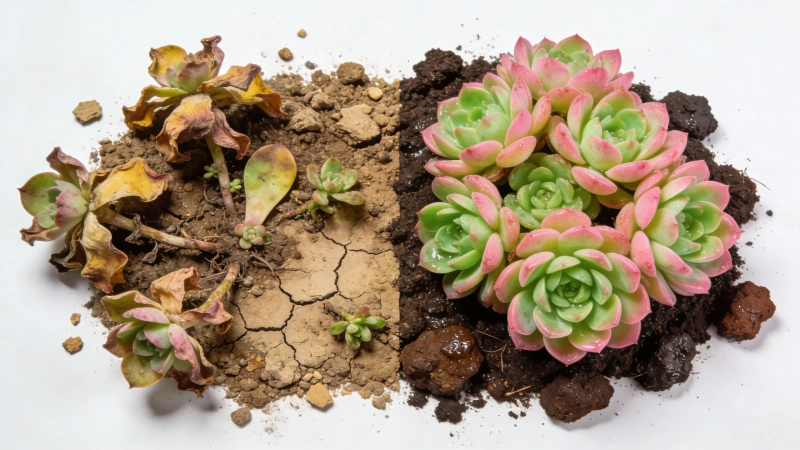
The Starting Point: April 2022
A friend gave me three small Echeveria as a housewarming gift. I was excited—succulents are supposed to be the easiest plants, right? Perfect for a beginner.
I placed them on my desk near a north-facing window (not enough light, as I’d later learn). I watered them every Sunday along with my other houseplants. I used a spray bottle because I thought that was gentler. And I kept them in the cute decorative pots they came in—which had no drainage holes.
I was doing literally everything wrong.
What Went Wrong
Month 1: The leaves started looking soft and a bit pale. I assumed they needed more water, so I watered more frequently. Big mistake.
Month 2: The bottom leaves turned yellow and translucent, then started falling off. The soil was always damp. I was confused—wasn’t I taking good care of them?
Month 3: I finally pulled one plant out of its pot to check the roots. They were dark brown, mushy, and smelled bad. Root rot. Two of the three plants were beyond saving. The third was barely alive.
Month 6: The surviving plant started stretching out, growing tall and leggy with huge gaps between leaves. It looked terrible, but at least it was alive.
How I Turned It Around
I decided to actually research succulent care instead of assuming I knew what they needed. Here’s what I changed:
- Moved to a south-facing window → The stretching stopped immediately
- Switched to succulent soil + 50% perlite → This was the game-changer
- Got terra cotta pots with drainage holes → Soil dried out much faster
- Stopped watering on a schedule → Started using the finger test instead
- Tried leaf propagation as “backup” → In case the main plant didn’t make it
The Results
- 6 months later: The surviving plant had fully recovered. My first propagated leaves had rooted and started growing.
- 1 year later: I had 8 healthy plants—all from that one survivor
- 2 years later: My collection has grown to over 30 succulents across 12+ varieties
- Propagation success rate: Improved from 30% to over 70%
What I Learned
Succulents need “benign neglect.” Once I stopped trying so hard—stopped overwatering, stopped moving them around, stopped worrying—they thrived. The key is doing a few things right and then leaving them alone.
Troubleshooting: What’s Wrong With My Succulent?
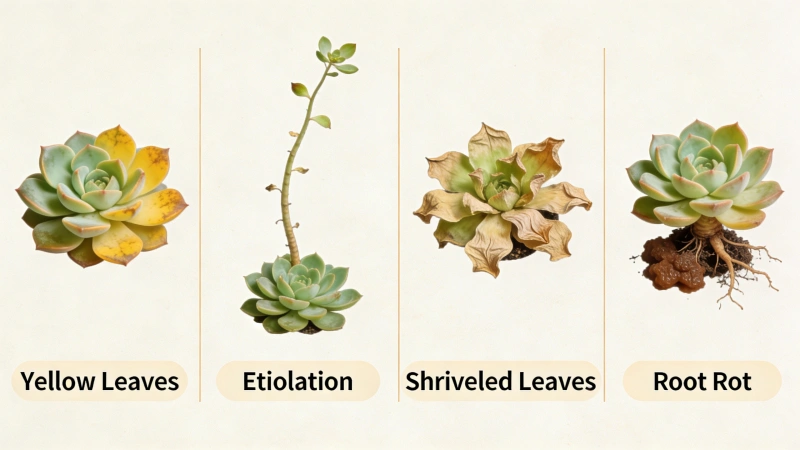
Succulents are great communicators—their leaves tell you exactly what’s wrong. Here’s how to diagnose common issues:
| Symptom | Most Likely Cause | Solution |
|---|---|---|
| Yellow, mushy leaves | Overwatering | Stop watering; check for root rot |
| Wrinkled, shriveled leaves | Underwatering | Water thoroughly; leaves should plump up in days |
| Tall, stretched growth | Not enough light | Move to brighter location gradually |
| Brown/black spots | Sunburn | Move to indirect light; acclimate slowly |
| Black stem or leaves | Root rot (severe) | Cut above rot, let callus, replant |
| Leaves falling easily | Overwatering or stress | Check watering; avoid moving plant |
| Red/pink leaf edges | Good light exposure (normal!) | No action needed—healthy sign! |
| Dried bottom leaves | Natural aging (normal!) | Gently remove; no concern |
5 Succulent Mistakes I Made (So You Don’t Have To)
- Watering on a schedule
❌ “Every Sunday I water all my plants”
✅ Check soil moisture first—let the plant tell you when it’s thirsty - Using regular potting soil
❌ Standard mix retains too much moisture
✅ Use succulent/cactus mix or add perlite and coarse sand - Cute containers with no drainage
❌ Water pools at the bottom and rots roots
✅ Always use pots with drainage holes—no exceptions - Using a spray bottle to water
❌ Only wets the surface, creates shallow weak roots
✅ Water the soil thoroughly until it drains from the bottom - Thinking succulents need no water
❌ Completely neglecting them for months
✅ They need less water, not no water—watch for soft leaves
Comment
byu/gentle_chili_flake from discussion
insucculents
⚠️ Important: Some Succulents Are Toxic to Pets
If you have cats, dogs, or other pets, this matters:
According to the ASPCA’s Toxic Plant Database, several popular succulents can be harmful to pets if ingested.
Toxic Succulents (Keep Away from Pets)
- Jade Plant (Crassula ovata): Can cause vomiting, depression, incoordination
- Aloe Vera: Causes vomiting, diarrhea, lethargy
- Kalanchoe: Can affect heart rhythm—potentially serious
- Snake Plant (Sansevieria): Causes nausea, vomiting, diarrhea
Pet-Safe Succulents
- Echeveria ✅
- Haworthia ✅
- Sempervivum (Hens and Chicks) ✅
- Burro’s Tail (Sedum morganianum) ✅
Recommendation: Keep toxic succulents on high shelves or in hanging planters out of reach. If you suspect your pet has eaten any plant, contact your vet immediately.
For detailed care on one popular (but toxic) variety, check out my guide on how to care for a jade plant—just be sure to keep it away from curious pets!
Popular Succulent Varieties for Beginners
If you’re just starting out, these varieties are forgiving and easy to find:
- Echeveria: Beautiful rosette shapes, tons of color options, very forgiving
- Haworthia: More shade-tolerant than most succulents—great for lower-light spots
- Jade Plant: Classic, can grow into a small tree, very long-lived
- Sedum: Huge variety, propagates incredibly easily
- Sempervivum: Cold-hardy, multiplies readily, nearly impossible to kill
All of these have similar basic care requirements—the main differences are light tolerance and growth patterns.
Love Succulents? Try These Similar Plants
If you enjoy easy-care plants like succulents, you might also like:
- Snake Plant: Even more tolerant of low light and neglect
- Cacti: Related to succulents but need even less water
- ZZ Plant: Nearly indestructible, thrives on neglect
If you want something different, check out my guide on how to care for Chinese money plant—another trendy, easy-care option that’s perfect for beginners.
For a bigger challenge, you might try how to care for calathea. These humidity-loving plants have stunning patterned leaves, but they’re definitely more demanding than succulents!
Watch: Succulent Care Visual Guide
Sometimes it helps to see proper care techniques in action. This video covers the basics well:但是
Frequently Asked Questions
How often should I water my succulents?
There’s no fixed schedule—it depends on your environment. Use the finger test: water only when the top 1-2 inches of soil are completely dry. This typically means every 2-3 weeks in summer and every 4-6 weeks in winter. Watch your plants too: slightly soft leaves mean it’s time to water.
Can succulents survive in low light?
They can survive, but they won’t thrive. Most succulents need 4-6 hours of bright light daily. In low light, they’ll stretch out and become weak. If you only have low-light spaces, try Haworthia or Snake Plants—they’re more shade-tolerant than most.
Why are my succulent leaves falling off?
Usually it’s a watering issue. Yellow, mushy leaves that fall easily = overwatering. Shriveled, dry leaves = underwatering. Bottom leaves drying and falling off naturally is normal—that’s just aging. Check your soil moisture first to diagnose the problem.
How do I propagate succulents?
For leaf propagation: gently twist off a healthy leaf (get the whole base), let it dry for 1-3 days to callus, then lay it on dry succulent soil. Roots and a baby plant will develop in 2-4 weeks. For stem cuttings: cut a 3-4 inch piece, let it callus, then plant in soil. Spring and summer have the best success rates.
Are succulents toxic to cats and dogs?
Some are, some aren’t. Jade plants, aloe, kalanchoe, and snake plants are toxic to pets according to the ASPCA. Pet-safe options include Echeveria, Haworthia, and Sempervivum. If you have curious pets, stick to non-toxic varieties or keep toxic ones out of reach.
Why are my succulent’s leaf edges turning red?
This is actually a good sign! Red or pink leaf edges are called “stress coloring” and indicate your succulent is getting plenty of light. It’s completely normal and makes many varieties more colorful and beautiful. Only be concerned if the entire plant looks burned or damaged.
Start Growing Healthy Succulents Today
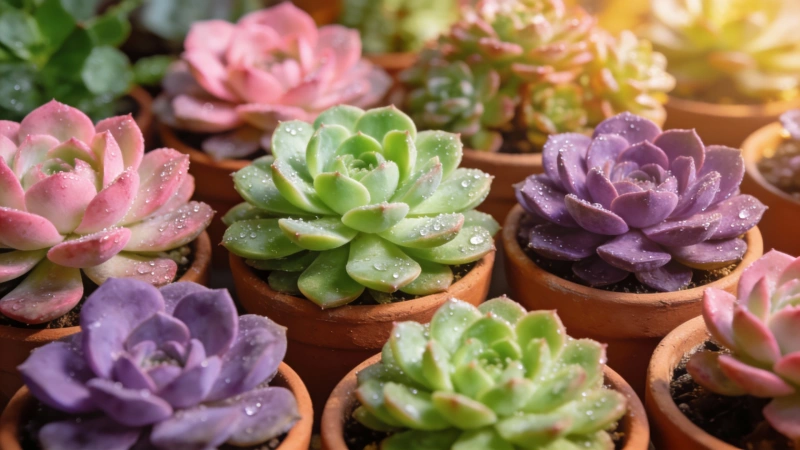
Here are the three things that made the biggest difference in my succulent journey:
- Water less than you think. Wait for the soil to dry completely, then wait a bit more.
- Light matters more than you’d expect. South or west windows are your friends.
- Drainage is non-negotiable. Fast-draining soil + pots with holes = happy roots.
Succulents really are easy plants once you understand what they need. The key is remembering they’re desert plants—built to survive on very little. Stop trying to “care” for them so much, and they’ll thrive.
My collection went from 3 dead plants to 30+ healthy ones in two years. If I can do it, so can you.
Got questions about your succulents? Drop a comment below—I’d love to help!
Happy growing! 🌵
This article was created by a professional team. AI tools were used during the research and writing process to enhance efficiency and quality. All information has undergone manual verification and editing to ensure accuracy and practicality. We are committed to providing readers with objective and valuable content.
Publisher::meiruth558@gmail.com,Please indicate the source when reposting:https://gardeningtoolsgarden.com/how-to-care-for-succulents/
