
I almost killed the “unkillable” plant.
Three months after bringing home my first ZZ plant, its leaves turned yellow and one entire stem went black and mushy. So much for the plant that “thrives on neglect.”
If you’ve heard that ZZ plants are impossible to kill and wondered why yours isn’t doing so well, you’re not alone. I learned the hard way that “easy to care for” doesn’t mean “impossible to mess up.”
After two years of trial and error—including nearly losing my plant to root rot—I’ve finally figured out what actually works. In this guide, I’ll share the 12 care tips that saved my ZZ plant and helped it grow from 3 struggling stems to 8 thriving ones.
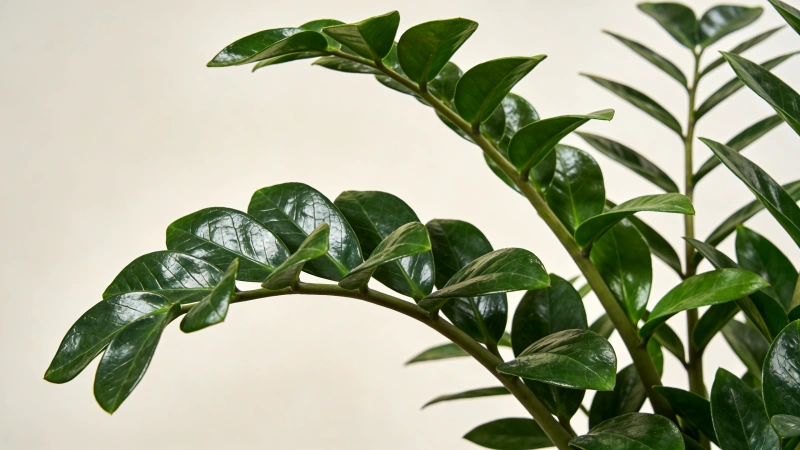

Quick Answer: ZZ Plant Care Basics
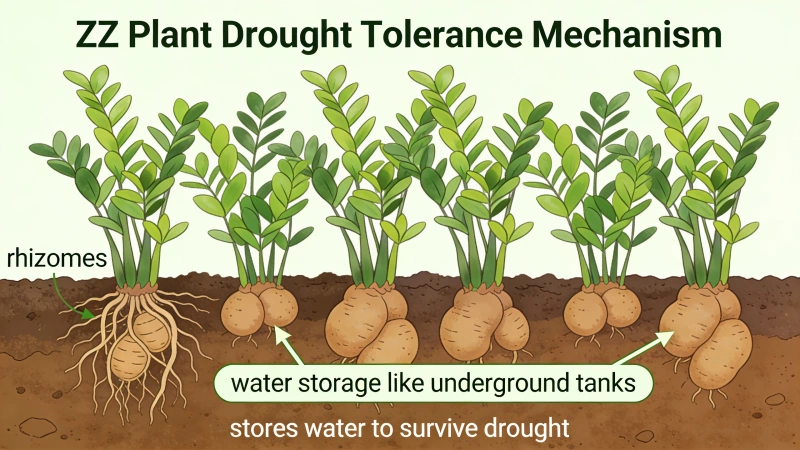
Here’s what ZZ plants need to thrive: water only when soil is completely dry (every 2-4 weeks), place in low to bright indirect light, use well-draining soil, and keep away from pets. The golden rule? When in doubt, don’t water. Overwatering is the #1 cause of ZZ plant death. These drought-tolerant plants store water in their rhizomes and genuinely prefer neglect over attention.
| Care Factor | Ideal Conditions |
|---|---|
| Light | Low to bright indirect (no direct sun) |
| Water | Every 2-4 weeks (when soil is bone dry) |
| Soil | Well-draining (cactus mix + perlite) |
| Humidity | Average household (40-50%) |
| Temperature | 65-75°F (18-24°C) |
| Fertilizer | Monthly in spring/summer only |
| Toxicity | Mildly toxic to pets and humans |
What Is a ZZ Plant?
The ZZ plant (Zamioculcas zamiifolia) goes by many names: Zanzibar Gem, Eternity Plant, or simply “that shiny plant in every office.” It’s native to Eastern Africa, from Kenya down to northeastern South Africa.
What makes this plant so drought-tolerant? The secret lies underground.
ZZ plants have rhizomes—potato-like structures that store water beneath the soil. Think of them as built-in water tanks. This adaptation allows ZZ plants to survive months without water in their native habitat.
Understanding this is key: your ZZ plant is basically a camel. It doesn’t want frequent drinks—it wants to store water and use it slowly.
1. Light Requirements: More Flexible Than You Think
One of the ZZ plant’s superpowers is its ability to tolerate a wide range of light conditions.
According to the Brooklyn Botanic Garden, ZZ plants can even survive in windowless rooms with only fluorescent lighting. I’ve seen them thriving in office cubicles that never see natural light.
But here’s what I’ve learned: “survive” and “thrive” are two different things.
Best Light Conditions
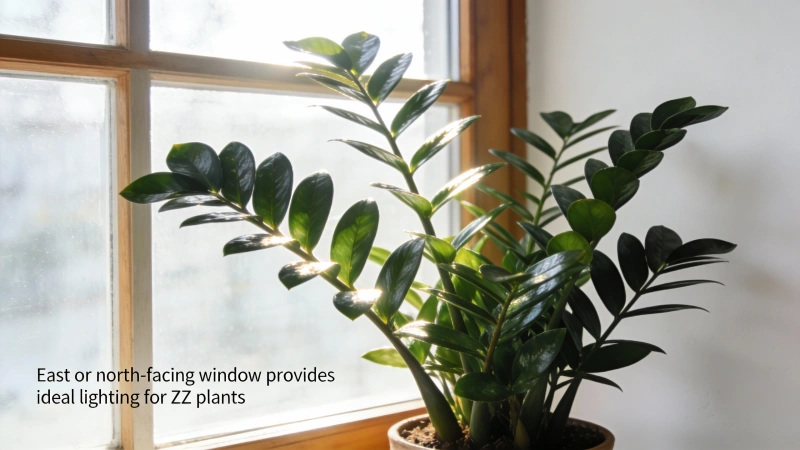
- Ideal: Medium to bright indirect light
- Acceptable: Low light (growth will be slower)
- Avoid: Direct sunlight (can scorch leaves)
Signs Your ZZ Needs More Light
- New leaves are spaced far apart on the stem (leggy growth)
- Stems look thin and weak
- Growth has completely stopped
My first ZZ sat in a dark bathroom corner for two months without producing a single new leaf. After I moved it near an east-facing window, it pushed out two new stems within three months.
If your home doesn’t get much natural light, don’t worry—ZZ plants are still a great choice. They’re far more tolerant than most houseplants. For other low-light options, check out my guide on how to care for a peace lily—another excellent plant for darker spaces.
2. Watering: The #1 Killer of ZZ Plants
Comment
byu/R_O_1994 from discussion
inhouseplants
Let me be direct: overwatering kills more ZZ plants than anything else.
I learned this the hard way. When I first got my ZZ plant, I watered it weekly—the same as my other houseplants. Big mistake.
Remember those rhizomes I mentioned? They’re already full of water. Adding more on top of that creates a soggy environment where roots rot and die.
The Golden Rule
“When in doubt, drought it out.”
This phrase saved my ZZ plant. If you’re not sure whether to water, don’t. Wait another week.
How to Know When to Water
Method 1: The Finger Test
Stick your finger 2-3 inches into the soil. If there’s ANY moisture, don’t water. Only water when the soil is completely dry.
Method 2: Watch the Plant
ZZ plants will tell you when they’re thirsty. Look for slightly drooping leaves or stems, or leaves that look a bit wrinkled. These are signs it’s time to water.
| Season | Typical Frequency | Notes |
|---|---|---|
| Spring | Every 2-3 weeks | Growth begins; slight increase in water needs |
| Summer | Every 2 weeks | Most active growth period |
| Fall | Every 3-4 weeks | Growth slows down |
| Winter | Every 4-6 weeks | Dormant period; water very sparingly |
How to Water Properly
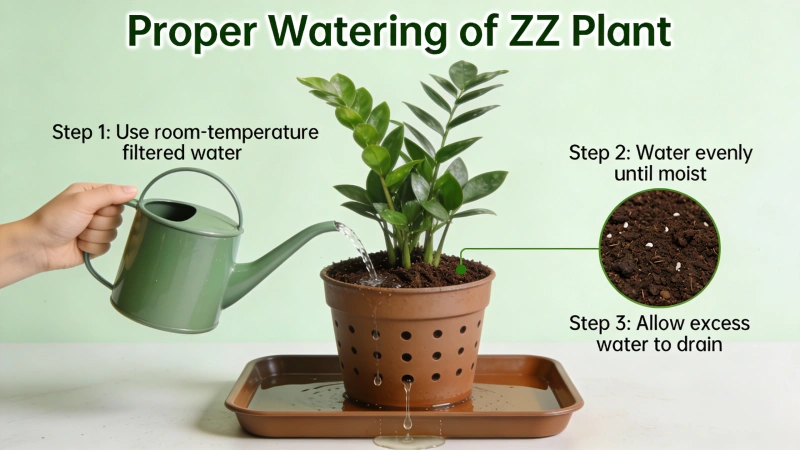
- Water thoroughly until it drains from the bottom
- Wait 30 minutes, then empty the saucer
- Never let your ZZ sit in standing water
- Use room-temperature water
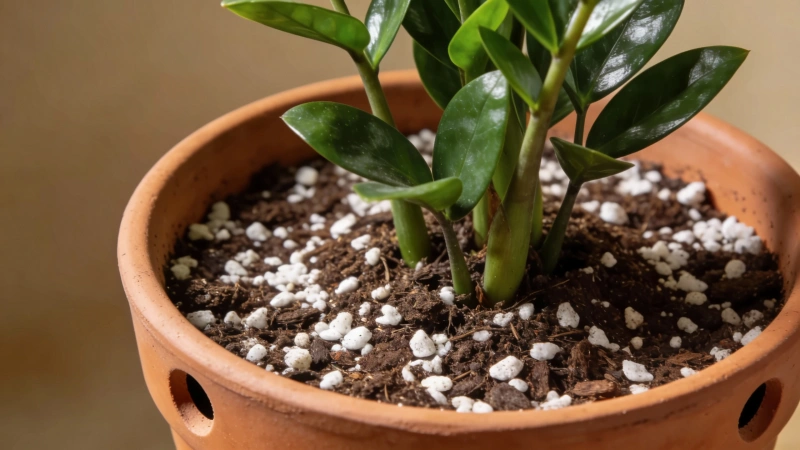
3. Soil and Pot Selection
Good drainage is non-negotiable for ZZ plants. Here’s what I use:
Best Soil Mix
- 60% cactus/succulent potting mix
- 30% perlite
- 10% coarse sand (optional)
You can also just buy cactus mix and add extra perlite. The goal is soil that drains quickly and doesn’t hold water.
Pot Requirements
- ✅ Drainage holes are mandatory—no exceptions
- ✅ Terracotta pots (breathable, helps soil dry faster)
- ✅ Slightly snug fit (ZZ plants like being a bit rootbound)
- ❌ Avoid decorative pots without drainage
- ❌ Avoid pots that are way too big
4. Temperature and Humidity
Good news: ZZ plants are remarkably unfussy about temperature and humidity.
Temperature
- Ideal range: 65-75°F (18-24°C)
- Minimum tolerance: 50°F (10°C)
- Avoid: Cold drafts, heating vents, and AC blasts
Humidity
Unlike many tropical plants, ZZ plants don’t need extra humidity. Average household humidity (40-50%) is perfectly fine. No misting required.
This makes them ideal for homes with central heating or air conditioning that tends to dry out the air.
5. Fertilizing: Less Is More
ZZ plants are light feeders. They grow slowly and don’t need much nutrition.
When to Fertilize
- Spring and Summer: Once a month
- Fall and Winter: Don’t fertilize at all
What to Use
- Balanced liquid fertilizer (like 10-10-10 or 20-20-20)
- Dilute to half the recommended strength
Over-fertilizing can cause salt buildup and leaf burn. When in doubt, skip a feeding.
My 2-Year Journey: From Nearly Killing It to Successful Propagation
Let me share exactly what happened with my ZZ plant—including all my mistakes.
The Beginning (January 2023)
I bought a 4-stem ZZ plant from Home Depot for about $15. The employee told me it was “the easiest plant ever—basically impossible to kill.”
I put it in a decorative ceramic pot (no drainage hole, because it was pretty) in my bathroom corner. I watered it every Sunday, just like my other plants.
The Disaster (April 2023)
Three months later, things went wrong:
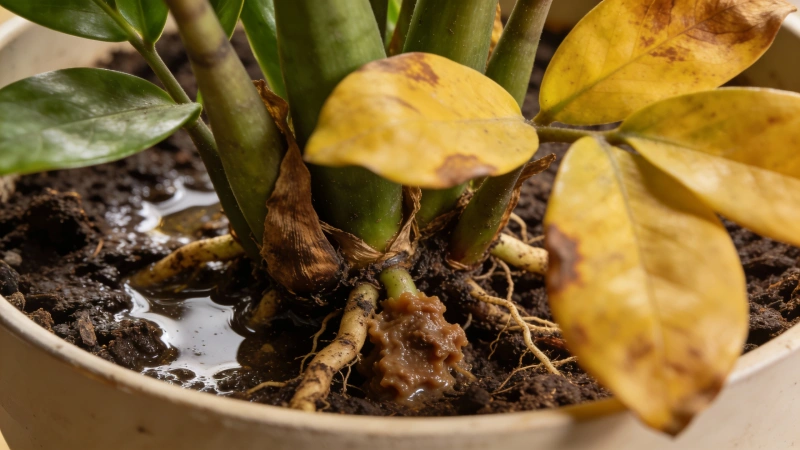
- Three leaves turned bright yellow
- One entire stem turned black and mushy at the base
- The whole plant looked droopy and sad
My reaction? I watered it MORE. I figured it must be thirsty.
That was exactly the wrong thing to do.
The Turning Point
I finally did what I should have done from the start: research. That’s when I discovered the truth—I was drowning my plant.
Here’s what I changed:
- Immediately stopped watering for 2 weeks
- Removed the plant from its pot and inspected the roots
- Found black, mushy, rotten sections (root rot confirmed)
- Cut away all the rotten parts with clean scissors
- Let the roots air dry for 24 hours
- Repotted in a terracotta pot with drainage holes
- Used fresh cactus soil mixed with perlite
- Moved it to my living room near an east-facing window
The Results
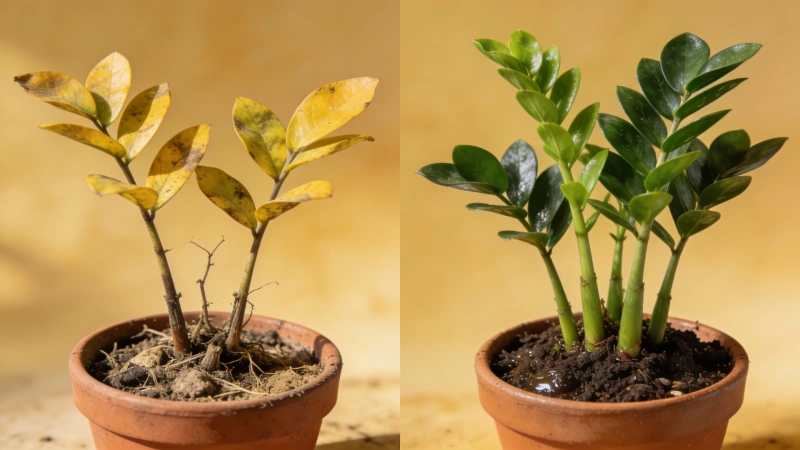
| Metric | April 2023 | December 2024 |
|---|---|---|
| Number of stems | 3 (1 died) | 8 (+5 new ones!) |
| New leaves per year | 0 | 15+ |
| Overall health | Dying | Thriving |
| Propagation success | N/A | 2 new baby plants! |
What I Learned
ZZ plants are “easy” because they tolerate neglect—not because they tolerate overcare. The less I fussed over my plant, the better it did.
Common Problems and How to Fix Them
Comment
byu/goodbeanz from discussion
inplantclinic
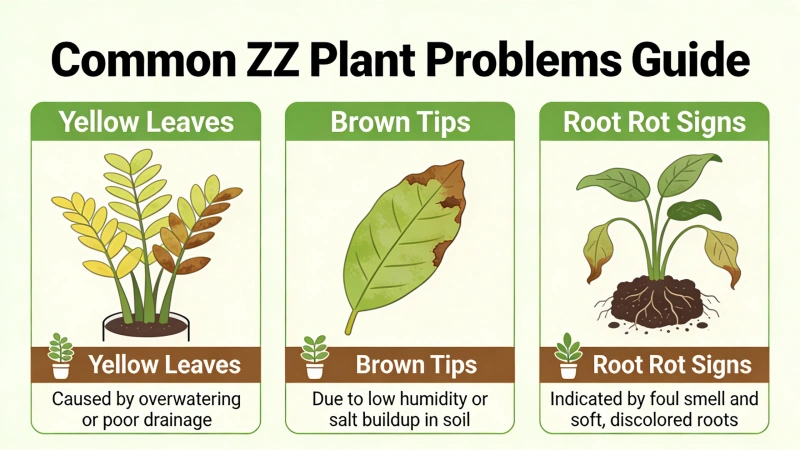
Here’s a quick reference guide for diagnosing ZZ plant issues:
| Problem | Likely Cause | Solution |
|---|---|---|
| Yellow leaves | Overwatering | Stop watering; let soil dry completely; check for root rot |
| Black, mushy stems | Root rot (severe overwatering) | Remove plant; cut off rotten parts; repot in fresh dry soil |
| Brown leaf tips | Underwatering or low humidity | Check if soil is bone dry; water if needed |
| Drooping leaves | Needs water OR root rot | Check soil—if dry, water; if wet, check for rot |
| No new growth | Low light or winter dormancy | Move to brighter spot; be patient in winter |
| Leggy growth | Insufficient light | Move to brighter location |
| Pale/scorched leaves | Too much direct sun | Move away from direct sunlight |
About Root Rot
Root rot is the most serious problem ZZ plants face. Here’s how to identify and treat it:
Signs:
- Stems turning black and soft at the base
- Foul smell from the soil
- Yellow leaves that keep appearing despite not watering
Treatment:
- Remove the plant from its pot immediately
- Cut away all black, mushy roots with clean scissors
- Let the remaining roots air dry for 24 hours
- Repot in fresh, dry soil with good drainage
- Don’t water for at least a week
Propagation: Patience Is Everything
Want more ZZ plants? You can propagate them—but fair warning, it requires serious patience.
Method 1: Division (Fastest)
When repotting a mature ZZ with multiple stems, you can separate the rhizomes into individual plants. This gives you established plants immediately.
Method 2: Stem Cuttings (Medium Speed)
- Cut a healthy stem at the base
- Place in water or directly in soil
- Wait 6-8 weeks for roots to develop
- Wait another 3-6 months for new growth to appear
Method 3: Leaf Cuttings (Slowest—But Fun)
- Remove a leaf with a small piece of stem attached
- Insert about 1/2 inch into soil
- Wait 3-6 months for a tiny rhizome to form
- Wait another 3-6 months for a new shoot to emerge
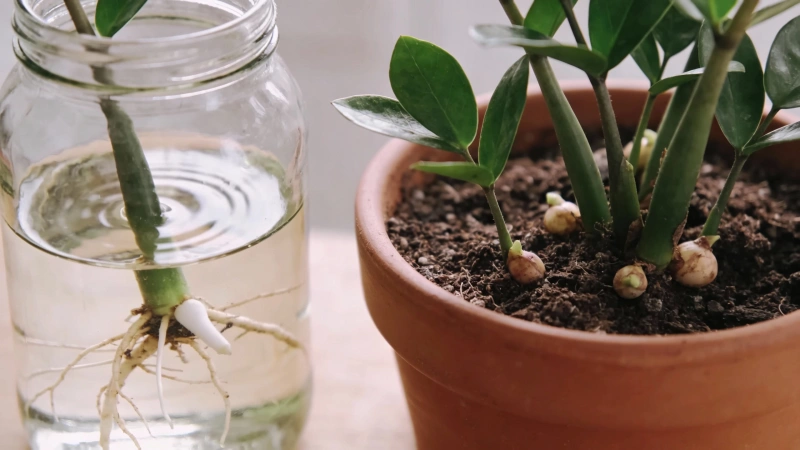
I propagated two new plants using leaf cuttings. Honestly, for the first six months, I thought they were dead—nothing happened. Then in month seven, tiny shoots finally appeared. Total time from cutting to visible baby plant: about 9 months.
If you want faster propagation results, how to care for Monstera covers a plant that roots much more quickly—stem cuttings can root in just a few weeks.
Is ZZ Plant Toxic to Pets?
Yes, ZZ plants are mildly toxic to cats, dogs, and humans.
According to the ASPCA, ZZ plants contain calcium oxalate crystals. These microscopic sharp crystals cause irritation when touched or ingested.
Symptoms in Pets
- Drooling
- Vomiting
- Oral irritation (pawing at mouth)
- Decreased appetite
The good news: ZZ plant toxicity is usually mild and rarely life-threatening. But it’s still uncomfortable for your pet.
How to Keep Pets Safe
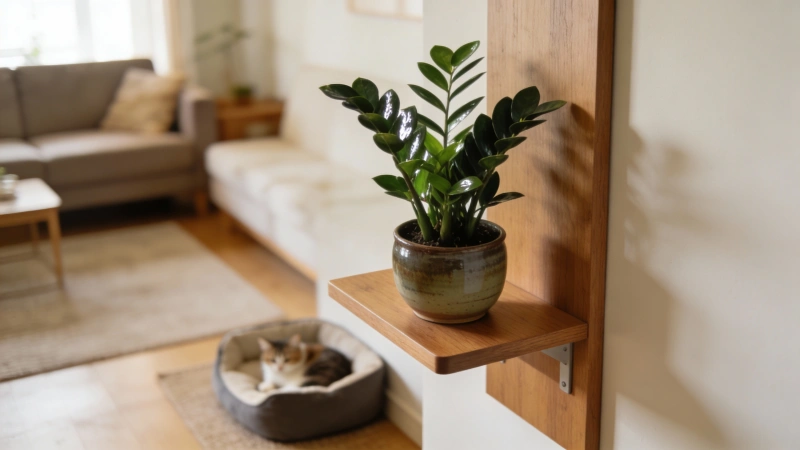
- Place ZZ plants on high shelves pets can’t reach
- Use hanging planters
- Consider natural deterrents like citrus peels around the pot
- If your pet frequently chews plants, choose a different plant
If you have pets and want a completely non-toxic alternative, check out my guide on how to care for a spider plant. Spider plants are safe for cats and dogs and just as easy to care for.
Frequently Asked Questions
How often should I water my ZZ plant?
Every 2-4 weeks, but only when the soil is completely dry. In winter, you might only need to water once a month or even less. Always check the soil before watering—if in doubt, wait.
Can ZZ plants grow in a room with no windows?
Yes, they can survive in rooms with only fluorescent lighting. However, growth will be very slow, and the plant may become leggy over time. For best results, try to provide at least some indirect natural light.
Why is my ZZ plant not growing?
ZZ plants are naturally slow growers—they may only produce a few new stems per year. If yours isn’t growing at all, check: (1) Is it getting enough light? (2) Is it winter/dormant season? (3) Is the pot way too big? Be patient.
Can I put my ZZ plant in the bedroom?
Absolutely! ZZ plants make excellent bedroom plants. They tolerate the typically lower light conditions of bedrooms and don’t need much attention.
How big will my ZZ plant get?
Indoors, ZZ plants typically reach 2-4 feet tall and wide over several years. They’re slow growers, so don’t expect rapid changes.
Should I mist my ZZ plant?
No. ZZ plants are adapted to dry conditions and prefer average household humidity. Misting is unnecessary and can actually promote fungal issues.
Helpful Video Guide
Want to see ZZ plant care in action? This video does a great job demonstrating the basics:
Final Thoughts
Caring for a ZZ plant comes down to a few simple principles:
- Water less — Let soil dry completely between waterings
- Skip the direct sun — Indirect light is best
- Ensure good drainage — Pots must have holes
- Leave it alone — Neglect beats overcare every time
My ZZ plant went from nearly dead to thriving once I learned to stop “helping” it so much. Sometimes the best thing you can do for a plant is nothing at all.
Once you’ve mastered the ZZ plant, you might be ready for something more challenging. If you want to level up your plant parent skills, check out how to care for fiddle leaf fig—but be prepared to put in more effort!
Happy growing! 🌿
This article was created by a professional team. AI tools were used during the research and writing process to enhance efficiency and quality. All information has undergone manual verification and editing to ensure accuracy and practicality. We are committed to providing readers with objective and valuable content.
Publisher::meiruth558@gmail.com,Please indicate the source when reposting:https://gardeningtoolsgarden.com/how-to-care-for-zz-plant/
