A soil moisture meter shows how moist the potting mix is around its probe, which gives you one more piece of information when you’re deciding whether a houseplant needs water. To use one, push the probe gently into the mix, wait as long as the manufacturer directs, and read the result in light of your plant’s moisture needs.
A meter is a reference, not a signal to water. Probe placement, the device’s scale, and moisture differences within the same pot all affect how you should interpret a reading, so compare what the meter says with the actual condition of the mix.
What Does a Soil Moisture Meter Tell You?
A soil moisture meter indicates how moist the potting mix is near the probe. It can help you decide whether the soil needs more time to dry or may be ready for water, but it can’t tell you whether every part of the pot has the right amount of moisture. Treat it as one way to check soil conditions, not a replacement for watching your plant and its growing medium.
Your plant’s moisture preferences, the potting mix, the container, and the growing conditions all shape how to read the result. A reading that’s fine for one plant may call for a different watering decision for another.
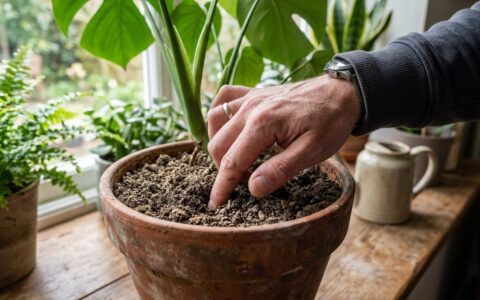
A meter is also optional. You can judge moisture by feeling the potting mix with your finger or by checking the pot’s weight, and both are useful when a reading seems off.
For general guidance on deciding when to water, see our guide to how to water houseplants.
How to Use a Soil Moisture Meter Step by Step
Follow the instructions for your specific device. Probe depth, reading time, and care requirements vary by model, so don’t assume every meter works the same way.

- Read the manufacturer’s instructions. Check how the meter should be used, how long to wait for a reading, and whether the probe needs special handling.
- Choose a spot in the pot. Pick an area where you can check moisture without disturbing the roots more than necessary. In a larger pot, you may need to check more than one location if the first reading seems unrepresentative.
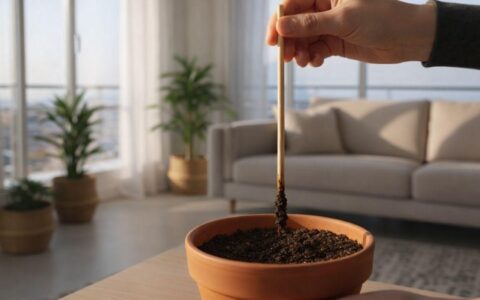
- Insert the probe gently. Push it into the mix to a depth appropriate for your plant and device. Don’t force it through roots, hard objects, or compacted material. If you meet resistance, pull the probe out and try another spot.
- Wait for the reading. Allow the time the instructions specify, since models differ.
- Read the display. Interpret the result using the manufacturer’s guidance and your plant’s moisture preferences, rather than treating the number as an automatic signal to water.
- Remove and care for the probe. Follow the manufacturer’s directions for removal, cleaning, and storage. Many handheld probe meters should be removed and wiped after use, but the exact requirements depend on the device.
If the first reading doesn’t match the condition of the mix, check another spot before deciding whether to water.
How to Read the Moisture Meter Scale
Start with the scale or display instructions for your specific meter. Some devices use numbered scales, others use labels or digital readings, and no universal number means every houseplant needs water.
Follow Your Meter’s Scale
Check the manufacturer’s instructions to see what the displayed reading means. A given number doesn’t necessarily represent the same moisture level across brands or models.
Then interpret the reading against your plant’s moisture preferences. A plant that likes its mix to dry between waterings calls for a different approach than one that prefers consistently moist soil.
Consider Where You Take the Reading
A reading reflects conditions near the probe, not necessarily the whole pot. The upper layer may be dry while the soil deeper down stays moist, or moisture may vary across the root zone.
When you check the same plant over time, take readings at similar depths and locations where practical. Comparing under similar conditions can show you how the mix changes between waterings.
Look for Patterns Rather Than a Universal Number
Repeated readings can help you get to know the moisture conditions in a particular pot. Compare them with what you find by touch or by checking the pot’s weight.
If the meter says the soil is dry but the mix still feels moist, check another spot before watering. Rely on the combined observations rather than a fixed threshold. This is especially useful in winter, when many houseplants use water more slowly. For seasonal guidance, see our article on watering houseplants in winter.
What to Do When the Reading Seems Wrong
If the meter says the mix is dry but it still feels moist, or a reading otherwise doesn’t match what you observe, don’t water based on that number alone. Repeat the measurement in another spot and cross-check the result before deciding what to do.
Check Another Spot in the Pot
Moisture may not be evenly distributed in a container, so a single reading may not represent the whole root zone. Choose another spot, insert the probe gently, and compare. Keep the depth reasonably consistent between readings, and avoid repeatedly inserting the probe where it could damage roots.
If the readings differ, the mix may hold different amounts of moisture in different areas of the pot.
Cross-Check With the Potting Mix
Use another method to assess the soil before deciding whether to water.

- Feel the potting mix: Check the soil with your finger where you can reach it comfortably.
- Check the pot’s weight: Compare how heavy the pot feels with what you’ve noticed when the mix is wetter or drier.
- Consider the plant’s needs: Interpret these observations according to the plant’s moisture preferences rather than applying the same threshold to every houseplant.
Consider a Problem With the Reading
If repeated readings stay inconsistent, probe placement, uneven soil moisture, or a problem with the device may be to blame. Follow the manufacturer’s troubleshooting instructions if the readings remain confusing, and don’t treat an unexpected number as a diagnosis of root rot or another plant health problem.
Common Soil Moisture Meter Mistakes
A meter works best when you use it consistently and follow the instructions for your device. These mistakes can make the readings less meaningful:
- Inserting the probe incorrectly. A probe pushed in too shallowly may not tell you much about moisture deeper in the mix. Follow the manufacturer’s guidance on depth, and don’t force the probe into compacted soil or through roots.
- Relying on just one reading. A single reading reflects moisture near the probe, not necessarily the whole pot. If the result seems unexpected, check another spot before deciding whether to water.
- Treating every meter scale the same. Devices differ in their scales and instructions. Don’t assume a particular number always means it’s time to water. Interpret the reading using your meter’s guidance and your plant’s moisture needs.
- Leaving the probe in the soil against the manufacturer’s instructions. Some handheld meters are designed to be removed after each reading. Follow your model’s instructions rather than leaving the probe in the pot between checks.
- Neglecting cleaning and storage. Follow the manufacturer’s directions for cleaning and storing the probe, since maintenance requirements vary by model.
- Watering automatically when the meter indicates dry soil. A reading is one clue, not a command. If the mix still feels moist or the pot is still relatively heavy, cross-check the result before adding water.
Over time, repeated observations can help you interpret readings for your own plants without relying on a universal watering threshold.
Editorial Note: This article was written and edited by Spring Mei. AI tools may be used to assist with research and organizing information. The final content is reviewed before publication, and important factual claims are checked against reliable sources where appropriate. Personal experience is distinguished from general guidance, and methods are described as personally tested only when they have actually been tested.
Please indicate the source when reposting:https://gardeningtoolsgarden.com/how-to-use-a-soil-moisture-meter/
Author: Spring Mei