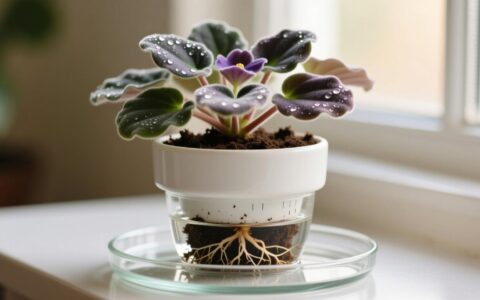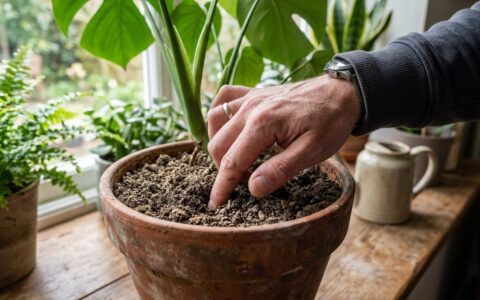
For most houseplants, tap water is a practical choice, and filtered water isn’t automatically better. The right option depends on your local water quality, your plant’s sensitivity to particular substances, and what a filter is designed to remove.
Before you switch to filtered or distilled water, ask whether your plants have a water-quality problem at all. Some are sensitive to specific substances, such as fluoride, while others grow fine on ordinary tap water. Knowing how the options differ can keep you from paying for treatment you don’t need.
Is Tap Water Okay for Houseplants?
Yes. Tap water is generally fine for most houseplants, and you don’t need filtered or distilled water to keep them healthy. Local supplies do vary in mineral content and treatment methods, though, and some plants are more sensitive than others to particular substances.

Dracaena, for example, is known to be sensitive to fluoride, which can contribute to brown leaf tips or edges. If you grow a sensitive plant and keep seeing damage, find out whether your water supply contains a relevant substance before you change your routine. Brown leaf tips alone don’t prove that tap water is the cause. Other growing conditions and fertilizer salt buildup can produce similar symptoms.
For most indoor gardeners, tap water is a reasonable starting point. For the basics of watering frequency, soil moisture, and technique, see our guide to how to water houseplants.
What Does Filtered Water Actually Remove?
“Filtered water” isn’t one standardized thing. What a filter removes depends on its technology and the specific product, and a filter that improves taste and odor shouldn’t be assumed to remove fluoride or the dissolved minerals that may matter to certain houseplants.
Before using filtered water on your plants, check what the filter is designed to reduce and whether its documented performance covers the substance you’re concerned about.
Carbon Filters vs. Reverse Osmosis
Carbon filters are commonly used to reduce chlorine, taste, and odor. A standard carbon filter shouldn’t be assumed to remove fluoride or dissolved minerals. That depends on the filter’s design and its specific performance claims.

Reverse osmosis (RO) systems use a membrane to reduce total dissolved solids in water. Performance varies by system, so if you’re concerned about a particular substance, including fluoride, check the documentation for the specific model.
For more detail, see the NSF overview of water treatment system standards and its explanation of NSF/ANSI 58 for reverse osmosis systems.
How to Read a Filter’s Performance Claims
If you’re considering filtered water because your plants are sensitive to certain substances in tap water, look past labels such as filtered or purified. Check the manufacturer’s documentation for the specific model and the substances it has been tested or certified to reduce.
Watch for three things:
- The substance being reduced: A claim about chlorine reduction doesn’t establish that the filter also reduces fluoride or dissolved minerals.
- The filtration technology: Don’t assume a pitcher filter, a faucet-mounted filter, and a reverse osmosis system produce equivalent water.
- The specific performance claim: A certification applies to defined criteria, not necessarily every substance you might want to remove.
You don’t need a filtration system just because you keep houseplants. A filter is worth considering when you have a specific water-quality concern and can verify that the system addresses it.
Which Houseplants May Benefit from Lower-Mineral Water?
Some houseplants are more sensitive than others to substances in tap water, particularly fluoride. If you grow a sensitive plant and suspect your water supply is contributing to recurring leaf damage, a water source with lower levels of the relevant substance may be worth considering.
Dracaena
Dracaena is known to be sensitive to fluoride, which can contribute to brown leaf tips or edges. If the symptoms keep coming back, fluoride in your water supply could be a factor, along with watering practices and other growing conditions.
If fluoride is a concern, confirm that an alternative water source or filtration system can actually reduce it before you switch. A standard carbon filter shouldn’t be assumed to.
Learn more about growing this plant in our Dracaena care guide.
Some Calathea and Goeppertia Species
Some Calathea and Goeppertia species can also be sensitive to fluoride in water. In susceptible plants, exposure may contribute to brown leaf tips or edges.
If you grow these plants, watch for recurring symptoms instead of switching water sources after a single damaged leaf. Brown edges can have other causes, including growing conditions and fertilizer salt buildup, so the symptom alone can’t confirm a water-quality problem.
Our Calathea care guide has more on caring for these plants.
Does Every Sensitive Plant Need Filtered Water?
No. A plant’s sensitivity doesn’t automatically mean your tap water is unsuitable. What matters is whether your water contains a substance that affects that plant, and whether the alternative you choose actually reduces it.
The goal is to match the water to the plant, not to assume all houseplants grow better on filtered or distilled water.
Tap Water vs. Filtered, Distilled, and Rainwater: Which Should You Choose?
Tap water is a practical starting point for most houseplants. Filtered, distilled, and rainwater can be useful alternatives when your plants have specific water-quality needs, but each comes with its own considerations.
| Water source | Main consideration | When to consider it |
|---|---|---|
| Tap water | Mineral content and disinfectants vary by location. | A practical choice for most common houseplants. |
| Filtered water | What it removes depends on the filtration technology and specific model. | When you need to reduce a particular substance and can verify the filter’s performance. |
| Distilled water | Contains very little dissolved mineral content. | When a plant’s specific needs make low-mineral water a useful option. |
| Rainwater | Quality depends on collection and storage conditions. | When you can collect and store it appropriately. |
| Water from a conventional sodium-based softener | May contain additional sodium, which can contribute to salt buildup. | Generally avoid it as your default watering source when a more suitable alternative is available. |
What About Water From a Water Softener?
Be cautious with water from a conventional sodium-ion exchange softener. These systems replace calcium and magnesium ions with sodium ions, so the water isn’t equivalent to water from a typical drinking-water filter.
Because sodium can contribute to salt accumulation in potting mix, softened water generally isn’t the best default for houseplants. If your home has a water softener, check whether a suitable alternative water source is available.
The best choice depends on your plants and your water supply. If your existing tap water suits the plants you grow, there’s no need to buy distilled water or install a filter.
Does Letting Tap Water Sit Overnight Help?
Letting tap water sit overnight may allow some free chlorine to dissipate, but it won’t reliably remove chloramine, fluoride, or dissolved minerals. Whether it helps depends on what’s in your local water supply and what you’re trying to reduce.
The substances behave differently:
- Free chlorine: Some free chlorine can dissipate from water over time, although the rate depends on conditions. Leaving water out overnight doesn’t guarantee all of it will be gone.
- Chloramine: This disinfectant is more stable than free chlorine and doesn’t readily disappear through ordinary standing. Check your water supplier’s information to find out whether chloramine is used.
- Fluoride: Leaving water in an open container doesn’t remove fluoride. If you’re growing fluoride-sensitive plants, consider an alternative water source or a filtration system specifically designed to reduce it.
- Dissolved minerals: The minerals that contribute to water hardness don’t disappear because the water sits overnight.
You can check your local water supplier’s annual report through the EPA’s Consumer Confidence Reports resource. For more about chloramine, see the EPA’s guidance on chloramines in drinking water.
Letting water sit overnight isn’t a universal fix. If you’re concerned about a particular substance, identify it first, then choose a treatment method designed to reduce it.
How to Check Your Local Water Quality
Before you switch water sources, check your local water quality report to see what’s in your tap water. It can show whether a particular substance may matter for your plants and whether a change is worth considering.
Find Your Local Water Quality Report
If your home uses a public water system in the United States, start with the EPA’s Consumer Confidence Reports resource. These annual reports describe local drinking water quality and the substances detected or regulated in the supply.
You can also contact your water supplier to ask about its treatment methods, particularly whether it disinfects with free chlorine or chloramine.
Focus on the substances relevant to your plants rather than assuming every component of tap water is a problem. Fluoride may matter for sensitive plants such as Dracaena, for example, while dissolved minerals may be relevant if you’re investigating mineral deposits.
Check What Your Water Filter Can Actually Remove
If you already use a water filter or are thinking about buying one, compare its performance claims with the water-quality information you’ve found.
- Check the specific model: Different filters have different treatment capabilities.
- Look for the substance you want to reduce: A filter that reduces chlorine doesn’t necessarily remove fluoride or dissolved minerals.
- Verify the performance claims: Consult the manufacturer’s documentation and relevant certifications rather than relying on a general label such as filtered water.
The NSF guide to water treatment system standards explains why certifications and performance claims should be read against a filter’s specific treatment capabilities.
Keep in mind that a public water quality report describes the water as supplied. It doesn’t necessarily reflect the water after it passes through your home’s plumbing or a particular filter.
When Should You Consider Changing Your Water Source?
Consider changing your water source when you have a specific reason to suspect your tap water is affecting a sensitive plant. Don’t switch to filtered or distilled water over a single symptom such as brown leaf tips, which can have several causes, including fertilizer salt buildup and growing conditions.
Before changing your water, work through these checks:
- Identify the plant’s sensitivity. Some plants, including Dracaena, are sensitive to fluoride. If you grow a sensitive species, check whether the relevant substance is present in your water supply.
- Look for recurring symptoms. Repeated leaf-tip damage or mineral deposits on the potting mix may justify investigating water quality, but neither proves that tap water is the cause.
- Review your watering and growing conditions. Check soil moisture, drainage, indoor humidity, and fertilizer use before attributing plant problems to water quality.
- Verify the alternative water source. If you decide to use filtered water, confirm that the specific filter is designed to reduce the substance you’re concerned about.
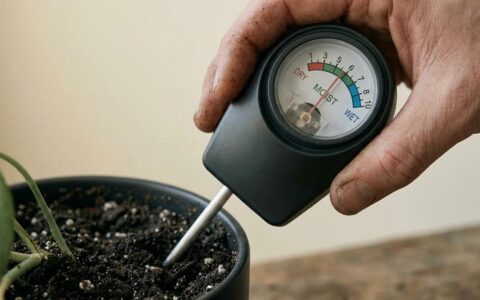
If you’re reviewing soil moisture as part of the diagnosis, our guide to how to use a soil moisture meter explains how to interpret readings alongside the plant’s condition. If you’re seeing brown leaf tips, our guide to common causes of brown leaf tips on houseplants can help you rule out other explanations.
Change your water source for a clear reason, not because filtered water sounds better. If your plants are growing well and your tap water suits their needs, there may be no benefit to switching.
Sources
- Virginia Tech Extension: Properly Watering Container Houseplants
- University of Maryland Extension: Watering Indoor Plants
- University of Maryland Extension: Mineral and Fertilizer Salt Deposits on Indoor Plants
- NC State Extension: Dracaena
- NC State Extension: Goeppertia orbifolia
- U.S. EPA: Consumer Confidence Reports
- U.S. EPA: Chloramines in Drinking Water
- NSF: Water Treatment System Standards
- NSF: Reverse Osmosis Drinking Water Treatment Systems
Editorial Note: This article was written and edited by Spring Mei. AI tools may be used to assist with research and organizing information. The final content is reviewed before publication, and important factual claims are checked against reliable sources where appropriate. Personal experience is distinguished from general guidance, and methods are described as personally tested only when they have actually been tested.
Please indicate the source when reposting:https://gardeningtoolsgarden.com/tap-vs-filtered-water-for-houseplants/
Author: Spring Mei