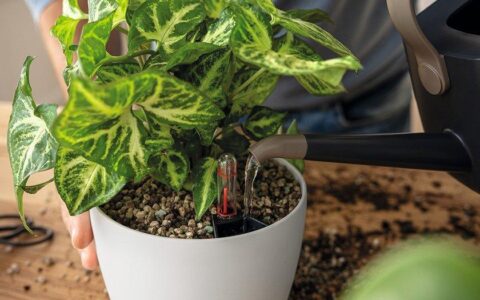
Most houseplants need water less often in winter, but no single schedule works for every plant. Shorter days and slower growth often mean the potting mix takes longer to dry, while bright windows, warm rooms, and heating vents can change how fast individual pots lose moisture.
Rather than following a fixed weekly schedule or automatically cutting your summer watering frequency in half, check the moisture in each pot and water when the mix has dried to the level that suits that plant.
How Often Should You Water Houseplants in Winter?
The right timing depends on your plant’s moisture preferences, the condition of its potting mix, and its growing environment. Many houseplants need water less often in winter than in spring and summer, but how much less varies from plant to plant.
A drought-tolerant plant and one that likes consistently moist soil shouldn’t share a schedule. Check your plants regularly, but don’t water just because a certain day of the week has arrived. If the root zone is still moist, wait when the plant’s needs allow it. If the mix has dried to the appropriate level, consider watering.
For the general principles behind checking soil moisture and deciding when to water, see our guide to how to water houseplants.
Why Winter Changes Watering Needs
Winter changes the amount of light many houseplants receive and can affect how quickly their potting mix dries. Your indoor conditions, the plant’s location, and the container all influence how often you need to check for moisture.

Less Light Often Means Slower Water Use
Many houseplants get less natural light in winter. Reduced light can slow growth and lower water use, so the mix may stay moist longer than it did in brighter months.
Plants in dim corners may therefore need water less often. A houseplant near a bright window or under a grow light, though, may keep growing actively and use water at a different rate. Check each pot rather than applying one schedule to every plant.
Indoor Heating, Temperature, and Airflow
Heating systems can lower indoor relative humidity and increase moisture loss from plant leaves. But dry indoor air doesn’t automatically mean the potting mix is dry.
A plant can develop dry leaf edges while its root zone stays moist. Warm air from a nearby heating vent can also create different conditions from those elsewhere in the room.
Assess the root zone separately from the humidity around the leaves. Don’t water more just because the air feels dry. Instead, keep an eye on plants near heat sources and check their potting mix before making changes.
Pot Size, Material, and Potting Mix
The container and the growing medium also affect how quickly a pot dries. These differences can help you decide which plants need more frequent checks:
- Small pots: A smaller volume of potting mix may dry faster than a larger volume under similar conditions.
- Unglazed terracotta pots: Their porous walls let moisture escape, which can make the mix dry faster than in comparable nonporous containers.
- Larger plastic pots: These may hold moisture longer, depending on the potting mix, drainage, plant, and growing conditions.
These are clues, not guarantees. A large pot can still dry quickly in warm, bright conditions, and a small pot in a cool, dim spot may stay moist longer than expected. Assess each pot individually.
How to Check Soil Moisture Before Watering
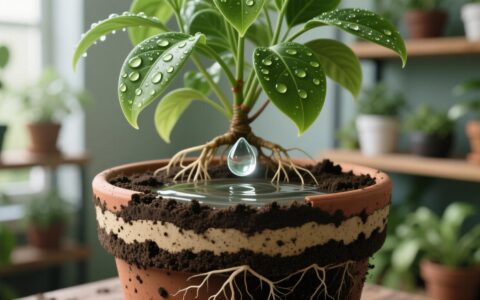
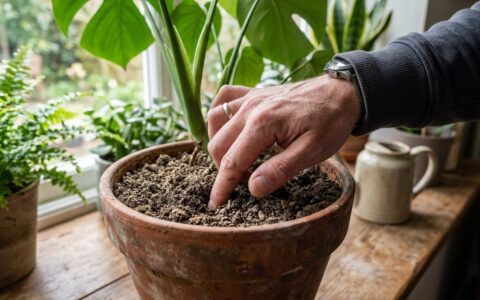
Check the moisture below the soil surface rather than going by appearance alone. The top layer may feel dry while the mix underneath is still moist, and using more than one clue helps you make a better call.
Check the Soil With Your Finger
Push your finger into the potting mix to feel for moisture below the surface. Checking about 1–2 inches down is a useful starting point for many houseplants, but the right depth depends on the plant, the pot size, and the root zone.
Plants that prefer consistently moist soil shouldn’t be allowed to dry out as much as drought-tolerant plants. The aim is to check moisture at a depth that makes sense for your particular plant, not to apply the same dryness threshold to every pot.
Use a Wooden Skewer for Deeper Pots
If your pot is too deep to check comfortably with a finger, a clean wooden skewer can help you gauge moisture farther down.

Push the skewer into the mix, pull it out, and look at the part that was buried. Damp mix clinging to it suggests the surrounding soil is still moist. A relatively clean, dry skewer may mean the soil at that depth has dried.
Treat this as an extra clue, not a precise measurement, and consider the plant’s moisture preferences and other signs before watering.
Compare the Pot’s Weight
Pot weight can give you a sense of how much moisture remains in the mix. After watering thoroughly and letting the excess drain, notice how heavy the pot feels. As the mix dries, the pot generally gets lighter.
Comparing over time helps you tell a recently watered plant from one that has lost more moisture. It’s a supporting clue, not a precise measurement, since pot materials, plant sizes, and growing mixes all affect overall weight.
Use a Moisture Meter as an Additional Clue
A soil moisture meter can show moisture near the probe, which helps when deeper mix is hard to judge by touch. Follow the instructions for your specific device, and don’t treat a reading as an automatic signal to water.
For more detail, see our guide to how to use a soil moisture meter for houseplants.
A Quick Winter Watering Check
Use these observations together to decide what to do next:
| What you notice | What to do |
|---|---|
| The root zone is still moist. | Wait before watering if your plant’s moisture preferences allow it, then check again later. |
| The surface is dry, but deeper soil remains moist. | Don’t water automatically. Consider the moisture deeper in the pot and the plant’s needs. |
| The root zone has dried to the level appropriate for the plant. | Water thoroughly and allow excess water to drain. |
| The pot feels noticeably lighter than it did after watering. | Use the change in weight as a supporting clue, and check the potting mix before deciding. |
For more on winter watering decisions, see Iowa State University Extension’s advice on watering houseplants during winter.
How to Water Houseplants When They Need It
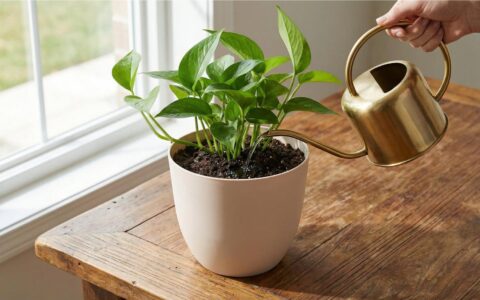
When a plant’s potting mix has dried to the level that suits it, water thoroughly rather than giving it a small splash. Winter watering is mainly about adjusting when you water, not automatically giving every plant less water each time.
- Check the root zone. Confirm that the potting mix has dried enough for your particular plant. Don’t go by the calendar or the soil surface alone.
- Water the potting mix thoroughly. Apply water evenly so the whole root ball becomes adequately moist, not just a small area of the surface.
- Allow excess water to drain. For pots with drainage holes, let surplus water escape freely.
- Empty the drainage tray. Don’t leave the pot standing in collected water, since prolonged excess moisture can contribute to root problems.
If a plant is growing directly in a pot without drainage holes, see our guide to watering plants in pots without drainage holes for options to manage excess moisture more safely.
Many houseplants need water less often in winter, but that doesn’t mean they should get only a little when they do need it. Avoid keeping the mix constantly saturated, but don’t force every plant to dry out completely, either.
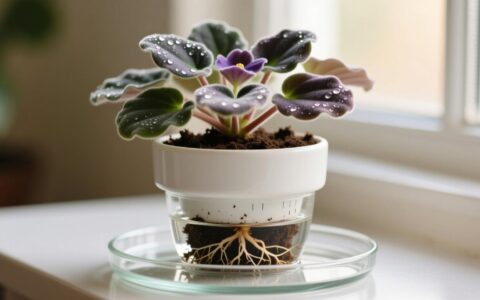
If you’d rather not water from the top, bottom watering is another option for suitable pots and plants. See our guide to how to bottom water houseplants for the step-by-step process.
Winter Watering Problems: Wet Soil vs. Dry Soil
Yellow leaves, drooping foliage, and dry leaf edges don’t automatically mean a houseplant needs more water. These symptoms can have different causes, so check the potting mix before changing your routine.
What If the Soil Is Wet but the Plant Is Wilting?
Wilting doesn’t always mean a plant needs more water. When the mix is already wet, damaged roots or other growing problems may keep the plant from taking up water effectively.
If your plant is wilting while the soil stays moist:
- Hold off on additional watering until you’ve assessed the soil and drainage.
- Check whether excess water can escape through the pot’s drainage holes.
- Consider whether the potting mix has stayed wet for an extended period.
- Look at the plant’s overall condition rather than diagnosing the problem from one symptom.
Adding water to an already wet pot can prolong excessive moisture and contribute to root damage. If you suspect root rot, see our guide to root rot treatment.
What If the Leaf Edges Are Dry but the Soil Is Moist?
Dry leaf edges can show up when indoor air gets less humid during the heating season. But dry air around the leaves doesn’t necessarily mean the roots need more water.
If the potting mix is still moist, don’t increase watering to fix dry leaf edges. Assess the root zone separately, and consider whether the plant is exposed to dry indoor air or a nearby heating vent.
For more context, see Illinois Extension’s guidance on winter watering and humidity.
Sources
- University of Maryland Extension: Winter Indoor Plant Problems
- Iowa State University Extension: How Often Should Houseplants Be Watered During Winter Months?
- Illinois Extension: Houseplants, Winter Watering, and Humidity
Editorial Note: This article was written and edited by Spring Mei. AI tools may be used to assist with research and organizing information. The final content is reviewed before publication, and important factual claims are checked against reliable sources where appropriate. Personal experience is distinguished from general guidance, and methods are described as personally tested only when they have actually been tested.
Please indicate the source when reposting:https://gardeningtoolsgarden.com/watering-houseplants-in-winter/
Author: Spring Mei