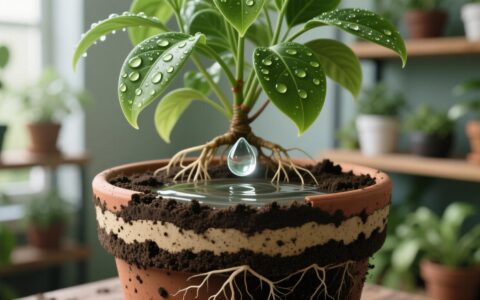
The best way to water houseplants is to check the potting mix first, water when the plant actually needs it, moisten the whole root zone, and let the excess drain away. Skip the fixed weekly schedule, because different plants and growing conditions dry out at different rates.
How Often Should You Water Houseplants?
No single watering schedule works for every houseplant. Instead of watering once a week by default, check the potting mix and water when it has dried to the level that suits that plant.
Some houseplants prefer soil that stays slightly moist, while others need the mix to dry out more between waterings. Even the same plant may need water at different intervals as its growing conditions change.
Why There Is No One-Size-Fits-All Watering Schedule
How quickly a houseplant uses water depends on several factors:
- Plant type: Succulents and other drought-tolerant plants generally need less frequent watering than many tropical houseplants.
- Light: Plants in brighter conditions often use water faster than those in lower light.
- Temperature and humidity: Warm, dry air can increase water loss, while cooler or more humid conditions may slow it.
- Potting mix: Some mixes retain moisture longer, while others drain and dry more quickly.
- Pot size and material: Small containers can dry out quickly, and unglazed terracotta usually loses moisture faster than plastic.
- Season: Many houseplants need less frequent watering during winter, although indoor growing conditions still matter.
That’s why a watering schedule should work as a reminder to check your plants, not an automatic instruction to water them.
If you’ll be away from home, don’t assume your usual routine will keep every plant watered. Our guide to watering houseplants while on vacation explains how to plan around the length of your trip and your plants’ needs.
A pothos plant growing in bright, indirect light, for example, may dry out differently from one in a cooler, shadier room.
How to Tell When Your Houseplant Needs Water
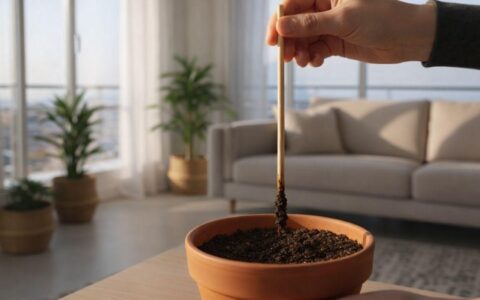
Checking the potting mix is more reliable than going by the calendar. For many common houseplants, start with a simple finger test:

- Insert your finger about 1–2 inches into the potting mix, adjusting the depth for the pot’s size.
- Feel whether the mix below the surface is moist or dry.
- Consider how much drying your particular plant tolerates before deciding to water.
Don’t judge moisture by the soil surface alone. The top may look dry while the mix around the roots still holds plenty of water.
Not every plant should be watered as soon as the top inch feels dry, either. Some prefer more consistent moisture, while others do better drying out more thoroughly between waterings. If you’re unsure, check again rather than adding water automatically.
Can You Tell by the Weight of the Pot?
Yes. Pot weight is another useful clue, especially for smaller houseplants you can lift comfortably. A freshly watered pot usually feels heavier because the mix holds more water, and it gets lighter as the mix dries.
To learn the difference, notice how the same pot feels right after watering and again as the soil dries. Over time, that can help you spot changes in moisture without disturbing the roots each time you check.
However, pot weight is a supporting clue, not a replacement for checking the soil. A heavy container or large plant can make the difference hard to judge, and different potting mixes hold different amounts of water. Use soil moisture, pot weight, and the plant’s needs together.
If touch and pot weight aren’t giving you enough information, a soil moisture meter can provide another clue. See our guide to how to use a soil moisture meter for advice on interpreting its readings.
How to Water Houseplants Correctly
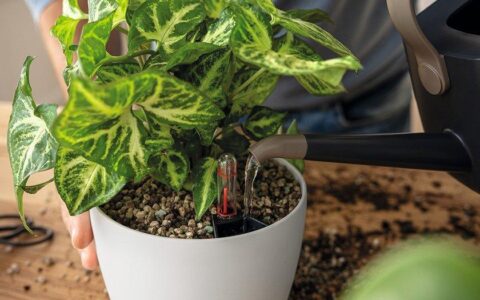
Once a houseplant needs water, the goal is to moisten the potting mix throughout the root zone and let any excess drain away. For most houseplants in pots with drainage holes, watering from the top is a straightforward, effective method.
How to Water From the Top
Follow these steps to water a potted houseplant:

- Check the drainage holes. Make sure excess water can escape from the bottom of the pot. If the plant sits inside a decorative outer pot, you’ll also need to empty any water that collects there.
- Water the potting mix directly. Use a watering can with a narrow spout to direct water onto the soil rather than deliberately soaking the leaves.
- Pour slowly and evenly. Move the spout around the soil surface so water reaches different parts of the mix instead of concentrating in one spot.
- Continue until the mix is thoroughly moistened. For a typical pot with drainage holes, water until some excess begins to drain from the bottom.
- Allow the pot to drain. Let excess water escape before returning the plant to its usual location.
Avoid pouring so quickly that water pools on the surface and spills over the rim.
How Much Water Should You Give a Houseplant?
There isn’t a universal amount of water, measured in cups or ounces, that works for every houseplant. The amount depends on the pot size, the volume and condition of the potting mix, and how much moisture it already holds.
For a typical houseplant in a pot with drainage holes, focus on thoroughly moistening the mix rather than measuring a fixed amount. A few practical points can help:
- Don’t just wet the surface. A small splash may leave much of the root zone dry.
- Water evenly. Spread water across the potting mix to encourage more uniform moisture.
- Check that the water is being absorbed. Water emerging from the drainage holes is a useful indicator during normal watering, but it doesn’t always prove the entire root ball is wet.
A thorough watering when a plant needs one is different from watering too often. Problems are more likely when the root zone stays excessively wet for too long.
What to Do After Watering
After watering, let excess water drain completely. If the plant sits on a saucer, empty any standing water once drainage has finished, and do the same with decorative outer pots that collect runoff.
Before returning the plant to its spot, make sure the drainage holes aren’t blocked and the pot isn’t sitting in accumulated water.
If you’d like to use a container with a built-in water reservoir, read our guide to how self-watering planters work. A reservoir can help supply moisture gradually, but you still need to choose a setup suited to the plant and check how the potting mix responds.
What If Water Runs Straight Through the Pot?
If water runs straight through the pot but the soil still feels dry, the potting mix may not be absorbing moisture properly. This can happen when certain mixes get extremely dry and hard to rewet.
Fast drainage isn’t always a problem, though. Some well-draining mixes naturally let water pass through quickly. What matters is whether the mix around the roots has actually absorbed enough moisture.
Why Very Dry Potting Mix Can Repel Water
Some potting mixes, particularly those containing peat or bark, can become hydrophobic when they dry out excessively, meaning they resist absorbing water. Instead of soaking evenly into the mix, water may:
- Run down the inside walls of the pot.
- Flow through gaps or channels in the dry mix.
- Escape through the drainage holes while portions of the root ball remain dry.
This creates a misleading situation: water comes out of the bottom, but the plant may still not get enough moisture.
To check, gently feel the mix below the surface after watering. If deeper areas stay dry even though water drained from the pot, the mix may need to be rewetted more carefully.
How to Rehydrate Extremely Dry Potting Mix
If the mix has become difficult to rewet, try these steps:
- Water slowly. Apply a small amount of water evenly across the soil surface rather than pouring it all at once.
- Allow time for absorption. Give the mix a chance to take up moisture before watering again.
- Repeat if necessary. Several slow passes may help extremely dry mix absorb water more evenly.
- Check below the surface. Gently test different areas to see whether moisture has reached the root zone.
- Let excess water drain. Once the mix has been adequately rewetted, allow the runoff to escape and empty the saucer.
If repeated top watering doesn’t rewet the mix adequately, bottom watering may be another option for a pot with drainage holes. Water enters from below and moves upward through the mix. For the full process and guidance on when to stop soaking, see our guide to how to bottom water houseplants. Whichever method you use, don’t leave the pot standing in water afterward.
The key is to confirm that the mix has absorbed water, not just that water has passed through the pot.
Top Watering vs. Bottom Watering: Which Is Better?
Neither method is automatically better for every houseplant. Both can moisten potting mix effectively, but they work differently and suit different situations.
Top watering is a practical choice for most everyday care. Bottom watering can help when you want to keep water off sensitive foliage or help certain dry mixes absorb moisture. The best method depends on your plant, its container, and the condition of the mix.
When Top Watering Makes Sense
Top watering is generally the simplest option for houseplants in pots with drainage holes. It works particularly well when:
- The soil surface is accessible. You can direct water onto the mix without soaking the foliage.
- The potting mix absorbs water readily. Moisture can move through the mix without immediately running around dry areas.
- You need to flush accumulated salts. Thorough watering from above allows some dissolved minerals and fertilizer salts to leave through the drainage holes.
For many houseplants, it’s a convenient default because you can spread water across the surface and watch how the mix absorbs it.
When Bottom Watering Can Be Useful
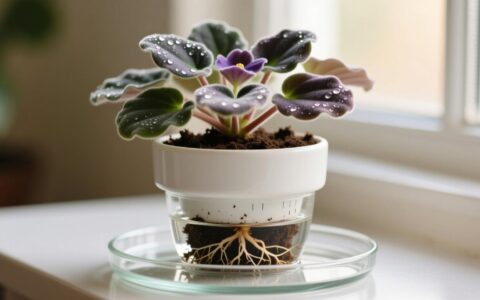
Bottom watering lets moisture enter through the drainage holes and move upward through the mix by capillary action. It can be particularly useful in these situations:
Plants with moisture-sensitive foliage
Some plants, including African violets, can develop problems when water stays on their leaves. Bottom watering keeps water off the foliage, although carefully directed top watering can also work.
Plants with dense foliage
When leaves cover much of the soil surface, watering from below may be easier than trying to reach the mix with a watering can.
Potting mix that has become difficult to rewet
For certain extremely dry mixes, absorbing water from below may help restore moisture when water applied from above keeps running through without wetting the root ball adequately.
Bottom watering requires a pot with drainage holes. Let the mix absorb moisture, check whether it’s adequately moist, and take the pot out of standing water afterward. Don’t rely on a fixed soaking time, since the time required varies with the container, the mix, and its starting moisture level.
A Limitation of Bottom Watering
The two methods differ in how they affect accumulated salts in the potting mix. Fertilizers and dissolved minerals in irrigation water can leave soluble salts behind over time, and thorough watering from above can carry some of them out through the drainage holes.
Bottom watering doesn’t flush the mix in the same way, because water enters from below rather than moving down through it. If you regularly bottom-water, an occasional thorough top watering may help flush accumulated salts, provided the pot drains properly and the plant tolerates it.
The practical takeaway: Use top watering as a convenient everyday method for most houseplants, and choose bottom watering when it offers a specific benefit. Neither technique replaces checking whether the plant actually needs water.
How Plant Type and Growing Conditions Change Watering
Houseplants need different amounts of water because their moisture requirements and growing conditions vary. A succulent in a porous terracotta pot may dry out much faster than a tropical houseplant in a moisture-retentive mix.
To understand your plant’s needs, consider its natural preferences, its container, and its surroundings.
Moisture-Loving Plants vs. Drought-Tolerant Plants
Some houseplants prefer their mix to stay lightly moist, while others tolerate longer dry periods.
Moisture-loving houseplants, such as many ferns and prayer plants, generally do better when their mix doesn’t dry out completely. Consistently moist shouldn’t mean waterlogged, though.
Drought-tolerant houseplants, including many succulents, cacti, and snake plants, can store water in their leaves, stems, or other tissues. They generally tolerate more drying between waterings than moisture-loving tropical plants.
Here’s a simple comparison:
| Plant type | General watering approach |
|---|---|
| Ferns and prayer plants | Maintain appropriate, relatively consistent moisture without waterlogging |
| Pothos and many common tropical foliage plants | Allow some drying between waterings, depending on the species |
| Snake plants and many succulents | Allow the potting mix to dry more thoroughly between waterings |
These are general guidelines, not universal rules. Individual species within each group may have different requirements.
For more specific advice, see our Succulent Care Guide or Prayer Plant Care Guide.
How Pot Size and Pot Material Affect Watering
The container itself can change how quickly the mix loses moisture.
Pot size
Smaller pots hold less potting mix and have a smaller water reserve, so they may dry out more quickly. Larger pots can retain moisture longer, particularly when the container holds considerably more mix than the roots occupy.
Pot size alone doesn’t determine watering frequency, though. A larger, actively growing plant may use water faster than a smaller plant in a similar container.
Pot material
Different container materials also affect moisture loss:
- Unglazed terracotta: Its porous walls allow moisture to evaporate through the container, often causing the mix to dry faster.
- Plastic: Its nonporous walls limit evaporation through the sides, helping the mix retain moisture longer.
- Glazed ceramic: The glazed surfaces generally reduce moisture loss through the container walls.
Potting mix matters, too. A coarse, well-draining mix behaves differently from one that holds more moisture, even in identical containers.
When you move a plant to a different pot or change its mix, reassess how quickly the root zone dries rather than assuming the old watering pattern still fits.
How Light, Temperature, Humidity, and Season Affect Watering
A houseplant’s surroundings influence how fast it uses water and how long its mix stays moist.
Light
Plants in brighter conditions often use more water because light supports photosynthesis and can increase transpiration. A plant moved from a low-light corner to a brighter spot may need more frequent moisture checks.
Temperature
Warmer conditions can increase evaporation from the mix and water loss through the leaves. Cooler conditions often slow both, so the mix may stay moist longer.
Humidity
Dry indoor air can increase water loss from leaves, while higher humidity generally reduces transpiration. Humidity is only one factor, though. The plant, potting mix, temperature, and light all matter.
Season
Many houseplants grow more slowly in winter as natural daylight decreases, and their mix may take longer to dry, so they often need water less frequently.
Winter conditions aren’t the same in every home, though. Indoor heating can create warm, dry air, while supplemental grow lights may help plants keep growing actively. Rather than cutting back on a set date, watch how the plant and its mix respond to the season.
For a more detailed seasonal approach, see our guide to watering houseplants in winter.
For plant-specific examples, see our Calathea Care Guide and Snake Plant Care Guide.
How to Recognize Overwatering and Underwatering
Overwatered and underwatered houseplants can show similar symptoms, including wilting and yellowing leaves. The most reliable way to tell them apart is to examine the potting mix, drainage, and recent watering history rather than relying on leaf appearance alone.
An underwatered plant may struggle because its roots can’t reach enough moisture. An overwatered plant may struggle because prolonged saturation limits oxygen around the roots, potentially damaging their ability to absorb water. That’s why adding more water to a wilting plant isn’t always the right response.
Why Wilting Doesn’t Always Mean Your Plant Needs Water
Wilting happens when plant tissues lose the firmness that adequate water pressure inside their cells maintains. The underlying cause isn’t always a lack of water in the soil.
Underwatering
When the mix gets too dry, roots may not absorb enough water to replace what the plant loses through its leaves. Possible clues include:
- Potting mix that feels dry well below the surface.
- A container that feels noticeably lighter than usual.
- Drooping leaves, sometimes accompanied by dry or crispy edges.
Overwatering
When the mix stays saturated for too long, less oxygen reaches the roots. Damaged roots may struggle to absorb water even though the surrounding soil is wet. Possible clues include:
- Potting mix that stays wet for an unusually long time.
- A container that stays heavy after watering.
- Wilting or yellowing despite consistently moist soil.
These signs are useful clues, but none can confirm the cause by itself.
| What to check | Possible underwatering | Possible overwatering |
|---|---|---|
| Potting mix | Unusually dry around the root zone | Persistently wet or saturated |
| Pot weight | Noticeably lighter than usual | Remains heavy for an extended period |
| Leaf appearance | Wilting; sometimes dry, crispy edges | Wilting; sometimes yellowing leaves |
| Watering history | Long periods without sufficient moisture | Frequent watering before the mix dries appropriately |
| Next step | Check whether the root zone needs rehydration | Check drainage and whether the roots have remained excessively wet |
If your plant is wilting while the mix is still wet, don’t automatically water it again. First, check whether the container drains properly and whether the mix has stayed saturated.
If the plant is severely declining or you suspect root damage, see our Root Rot Treatment Guide for a more detailed diagnosis and recovery process.
Why Yellow Leaves Don’t Automatically Mean Overwatering
Yellow leaves can appear when a houseplant gets too much water, but yellowing alone can’t tell you whether the plant is overwatered. It can also be associated with insufficient moisture, natural leaf aging, environmental stress, and other growing problems. The location and pattern of yellowing may offer clues, but they aren’t enough to diagnose the problem without checking growing conditions.
For example:
- Yellow leaves with persistently wet soil: Excess moisture may be contributing to the problem.
- Yellow leaves with very dry soil: Insufficient moisture may be involved.
- A single older leaf turning yellow: This may be part of normal leaf aging rather than a watering problem.
Before changing your watering routine, check the moisture around the roots, review recent watering, and consider whether the plant’s environment has changed. If yellowing continues despite appropriate watering, the cause may lie outside the watering routine.
For a broader look at possible causes, see Why Is My Plant Turning Yellow?.
Leaves show that a plant may be stressed, but the condition of the potting mix and roots helps explain why.
What Kind of Water Should You Use for Houseplants?
Regular tap water is suitable for most houseplants, but some plants are more sensitive to dissolved minerals and other substances in their water. You usually don’t need to buy special water unless your plant has particular requirements or your local water quality is a concern. The best choice depends on your water source and the type of houseplant you’re growing.
- Tap water: Generally works well for most common houseplants. Its mineral content and treatment methods vary by location, though.
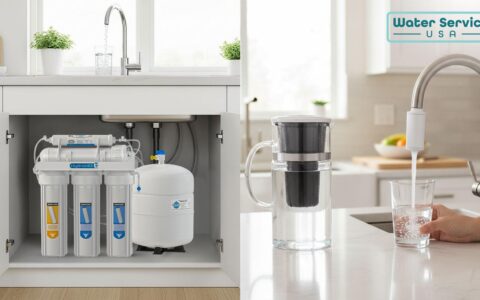
- Filtered water: May help with specific water-quality concerns, depending on the filtration system. Not all filters remove the same substances.
- Distilled water: Contains very few dissolved minerals and can be useful for certain sensitive plants. It isn’t automatically necessary or better for every houseplant.
- Water from a household water softener: May contain elevated sodium levels, depending on the treatment system. Regular use can contribute to salt buildup in potting mix.
Some houseplants are particularly sensitive to certain substances in water. Water quality can matter for Calathea and Dracaena, for example.
Should You Let Tap Water Sit Before Watering Plants?
You may have heard that leaving tap water out overnight makes it safer for houseplants. But letting water stand doesn’t remove every type of drinking-water disinfectant. Free chlorine can dissipate from standing water, but chloramine, which some municipal water systems use, is much more persistent. Leaving water out overnight also won’t remove dissolved fluoride or mineral salts.
If you’re concerned about your tap water, check your local water utility’s water-quality report before deciding whether you need another source.
For most houseplants, ordinary tap water is a practical starting point. Change sources when you have a specific reason, rather than assuming filtered or distilled water is always better.
If you’re comparing water sources, our guide to tap water vs. filtered water for houseplants explains what filtration may and may not change.
Common Houseplant Watering Mistakes to Avoid
Most houseplant watering mistakes come from watering without checking what the plant actually needs. Even a well-meant routine can cause problems if the mix stays too wet or doesn’t get enough moisture.
Here are five common mistakes and what to do instead.
1. Watering on a Fixed Schedule
Watering every Sunday might be convenient, but your houseplant may not need water that day.
What to do instead: Use your schedule as a reminder to check the potting mix. Water only when it has dried to the level that suits your plant.
2. Watering Only the Soil Surface
A small splash of water may make the surface look moist while leaving much of the root zone dry.
What to do instead: When watering is needed, apply enough water to moisten the mix thoroughly. For containers with drainage holes, let the excess drain.
3. Ignoring Drainage Problems
Even appropriate watering can cause trouble when excess water can’t escape. Containers without drainage holes need particularly careful moisture management.
What to do instead: For most houseplants, choose containers with drainage holes and make sure they aren’t blocked. If you’re already using a sealed decorative pot, see our guide to watering plants in pots without drainage holes for safer options.
4. Leaving Plants Sitting in Water
Water that collects in a saucer or decorative outer pot can keep the bottom of the mix saturated for too long.
What to do instead: Let the pot drain after watering, then empty any accumulated water from the saucer or outer container.
5. Assuming Yellow or Drooping Leaves Always Mean a Watering Problem
Yellowing and wilting can occur for several reasons, and both too little moisture and excessively wet conditions may produce similar symptoms.
What to do instead: Check the potting mix, drainage, and recent watering history before making changes. Don’t automatically add water when a plant looks stressed.
A useful habit is to check first, water according to the plant’s needs, and watch how the mix dries afterward.
Editorial Note: This article was written and edited by Spring Mei. AI tools may be used to assist with research and organizing information. The final content is reviewed before publication, and important factual claims are checked against reliable sources where appropriate. Personal experience is distinguished from general guidance, and methods are described as personally tested only when they have actually been tested.
Please indicate the source when reposting:https://gardeningtoolsgarden.com/how-to-water-houseplants/
Author: Spring Mei