You can water a plant in a pot without drainage holes, but it’s harder to manage soil moisture because excess water has no easy way out. For most houseplants, a pot with drainage holes is the safer choice.
If you like a decorative planter that has no holes, the simplest fix is usually to leave the plant in a nursery pot with drainage holes and set that inside the decorative container. If the plant is already growing directly in a pot without holes, consider repotting it, or adding drainage holes if the material can be modified safely.
Can You Water Plants in Pots Without Drainage Holes?
Yes, but the setup matters. A decorative planter without holes can work well as an outer container, while planting directly in it makes excess water harder to manage.
Two situations are common:
- The plant is in a nursery pot inside a decorative planter. You can lift out the inner pot to water, let the excess drain, and put it back in the decorative container.
- The plant is planted directly in a pot without drainage holes. Excess water has no normal outlet, so it’s harder to tell how much moisture remains around the roots.
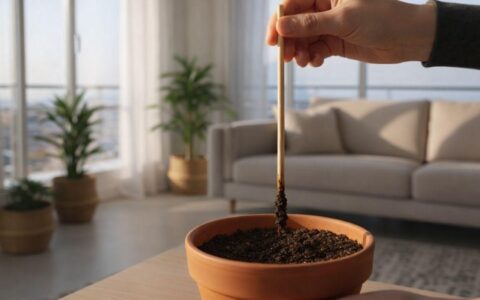
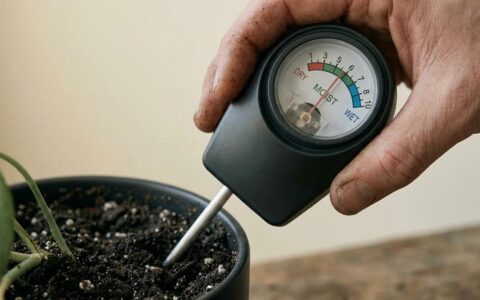
Too much water can leave the potting mix saturated and raise the risk of root damage, while too little can leave the plant dehydrated. Neither is easy to judge from the soil surface alone. A soil moisture meter can provide another clue about moisture near its probe, but it can’t create an outlet for excess water. See our guide to how to use a soil moisture meter for guidance on interpreting readings alongside other observations.
If you’re choosing a container for a new houseplant, pick one with drainage holes. If you already have a favorite decorative planter without them, using it as an outer container is a practical alternative to planting directly in it.
For more on deciding when and how to water, see our guide to how to water houseplants.
Why Drainage Holes Matter
Drainage holes let excess water leave the pot so the potting mix doesn’t stay saturated for long. Without them, it’s harder to judge how much water the root zone can hold and how much is left after watering.
Excess Water Can Damage Roots
Roots need both moisture and air in the growing medium. When the potting mix stays overly wet, the air around the roots can become limited, which raises the risk of root damage and root rot.

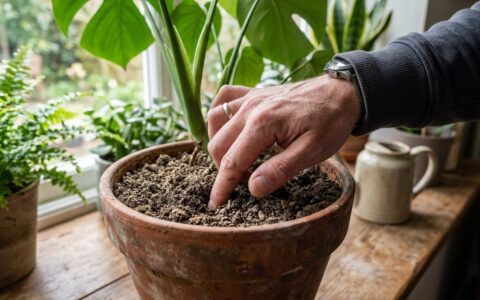
In a pot without drainage holes, excess water can collect at the bottom instead of escaping, and the soil surface may look dry while the lower part of the pot stays wet. That makes it hard to know when to water again, particularly when the plant is growing slowly or using less water.
Watering Becomes Harder to Judge
In a pot with drainage holes, excess water runs out the bottom. That’s a practical sign that water has passed through the growing medium, though it doesn’t guarantee that every part of the mix is evenly moist.
A pot without holes gives no such signal. Too much water can leave the lower soil saturated, while too little may not moisten the root ball adequately. A fixed amount of water isn’t a reliable fix for every plant in a pot without holes, because how much the pot retains depends on the plant, the potting mix, and the container size.
Bottom watering is another option for suitable containers, but it doesn’t solve the problem of excess water having nowhere to drain. Learn how the method works in our guide to bottom watering houseplants.
The Safest Method: Use a Nursery Pot Inside a Decorative Pot
The easiest way to use a planter without drainage holes is to keep your houseplant in a nursery pot with drainage holes and set it inside the decorative container. You get the look of the planter without depending on it to handle excess water.

Follow these steps:
- Keep the plant in its nursery pot. Choose an inner pot with drainage holes that fits comfortably inside the decorative planter and can come out without damaging the plant.
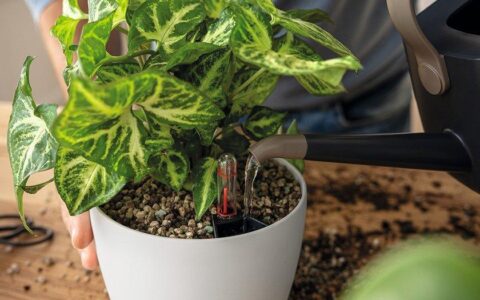
- Remove the inner pot before watering. Lift the plant out of the decorative container and water it over a sink or another spot where excess water can drain away.
- Water the potting mix thoroughly. Moisten the whole root ball evenly instead of adding a small splash to the surface.
- Let excess water drain. Give the inner pot time to release surplus water through its drainage holes.
- Empty the outer pot. Check for collected water and remove it before returning the nursery pot to the decorative planter.
The inner pot gives excess water a route out, and the outer planter hides the nursery pot and catches any remaining drips. The key step is emptying the decorative container after watering, because even a well-draining nursery pot can sit in trapped water if the outer container stays full.
What If the Plant Is Already Planted in a Pot Without Holes?
If your plant is growing directly in a pot without drainage holes, consider moving it to a container with holes. If you want to keep the existing planter, you may be able to add drainage holes, provided the material can be modified safely.
Option 1: Repot Into a Container With Drainage Holes
Repotting into a container with drainage holes gives excess water a way out and makes moisture easier to manage. Choose a suitable container and transfer the plant. If you want to keep the original decorative planter, use it as an outer container rather than planting directly in it.
Option 2: Add Drainage Holes if the Pot Can Be Modified Safely
Some containers can be modified to add drainage holes. Before you try, consider the pot’s material and whether it can be drilled without cracking or breaking.
Don’t assume every ceramic or glass planter can be modified safely. If you’re unsure the container can withstand drilling, use a separate pot with drainage holes instead.
Option 3: Let Excess Water Escape From an Already-Planted Pot
If you can’t repot the plant right away, Illinois Extension’s container drainage guidance describes a temporary approach for plants already growing in containers without drainage holes:
- Take the pot to a sink.
- Water the plant carefully.
- Wait a few minutes.
- Carefully turn the pot onto its side to allow some excess water to escape.
This is a workaround, not a substitute for proper drainage. It may not be practical for large, heavy, or fragile containers, and it doesn’t guarantee that all excess water will leave the potting mix.
Don’t rely on a fixed amount of water, such as a certain number of cups or a percentage of the pot’s volume. What a container retains varies with the plant, the potting mix, and the pot size.
If you can’t modify the pot safely, plan to move the plant into a container with drainage holes when practical. That manages excess moisture more reliably than careful pouring alone.
Editorial Note: This article was written and edited by Spring Mei. AI tools may be used to assist with research and organizing information. The final content is reviewed before publication, and important factual claims are checked against reliable sources where appropriate. Personal experience is distinguished from general guidance, and methods are described as personally tested only when they have actually been tested.
Please indicate the source when reposting:https://gardeningtoolsgarden.com/watering-plants-without-drainage-holes/
Author: Spring Mei